|
 Log in |
Register Log in |
Register
|

|
|

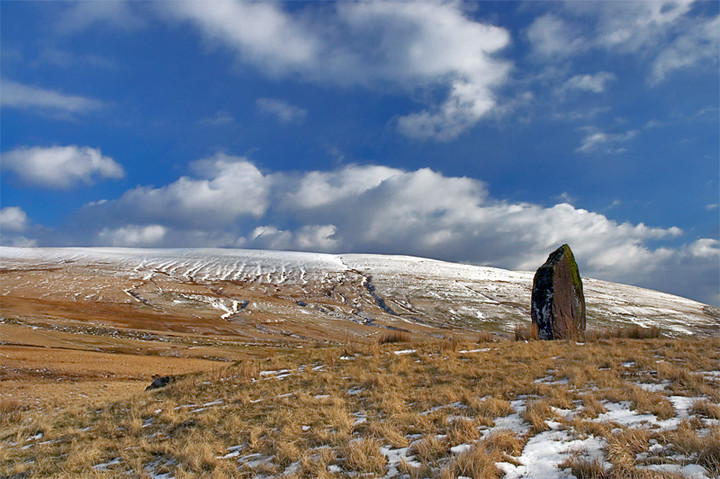
Maen LliaStanding Stone / Menhir
|


 Show map (inline Google Map)
|
|
|
News |
 Add news Add news |
|
Maen Llia on the tele http://www.bbc.co.uk/programmes/b06wrhn5 |
Posted by cerrig 8th March 2016ce Edited 8th March 2016ce |

Vandals hit Bronze Age Maen Llia standing stoneVandals who daubed a Bronze Age stone in the Brecon Beacons National Park with a smiley face have been criticised. The 3.7m (12ft) Maen Llia standing stone is recognised as a site of national archaeological importance... continues... |
 Posted by moss
27th June 2013ce |
Images (click to view fullsize) |
Add an image |
Photographs: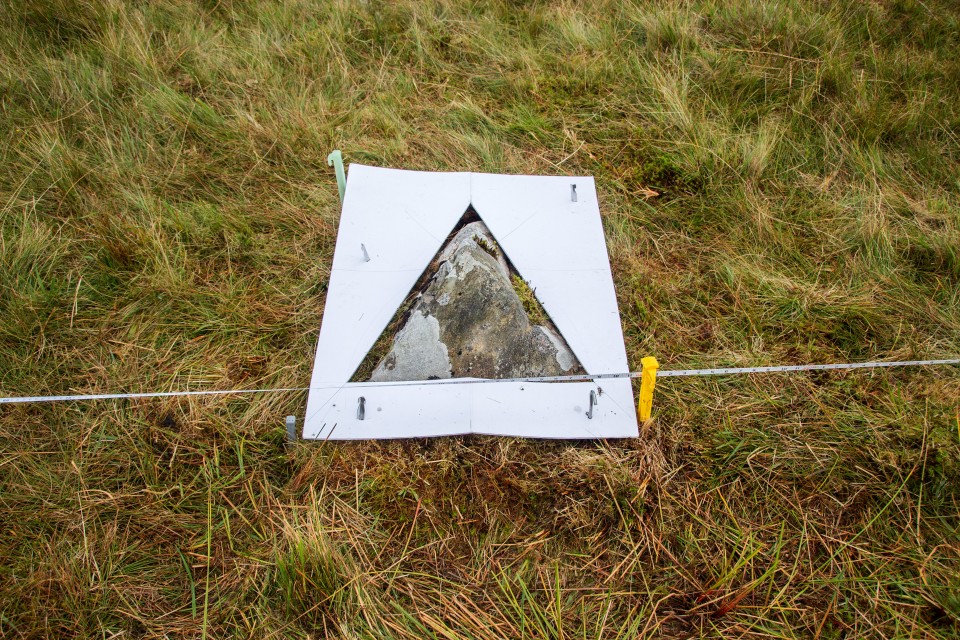

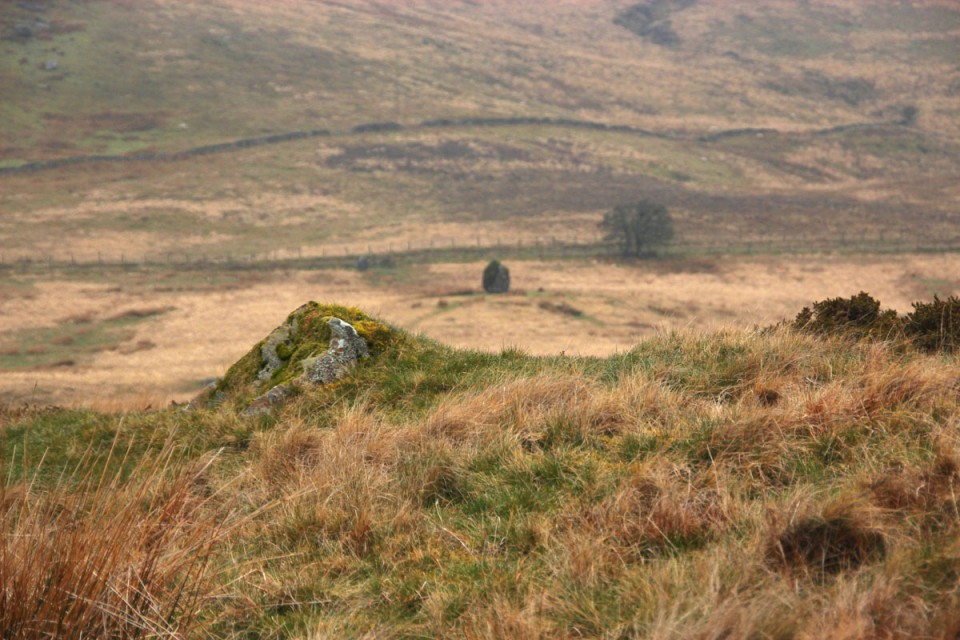
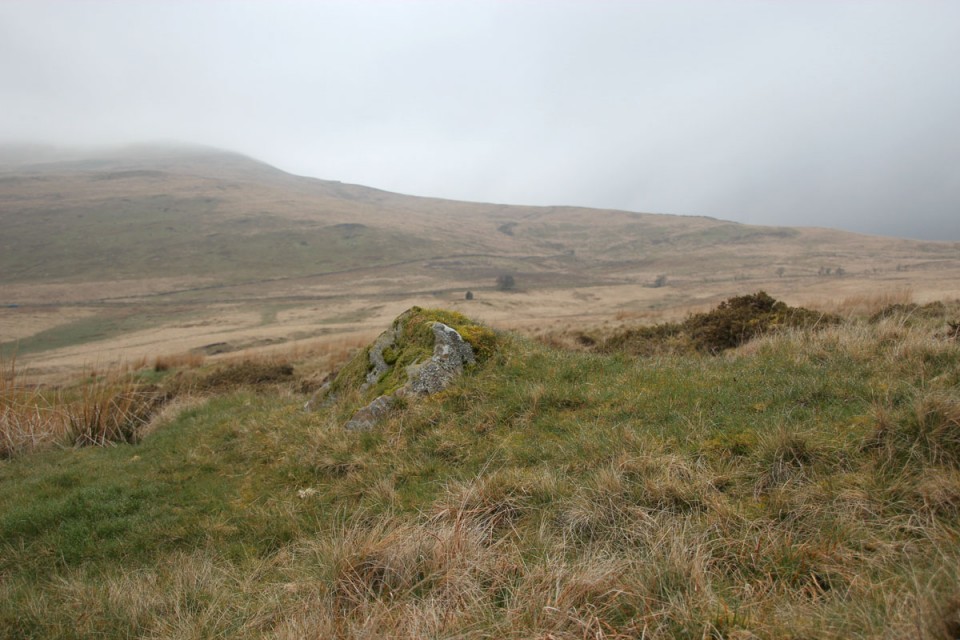
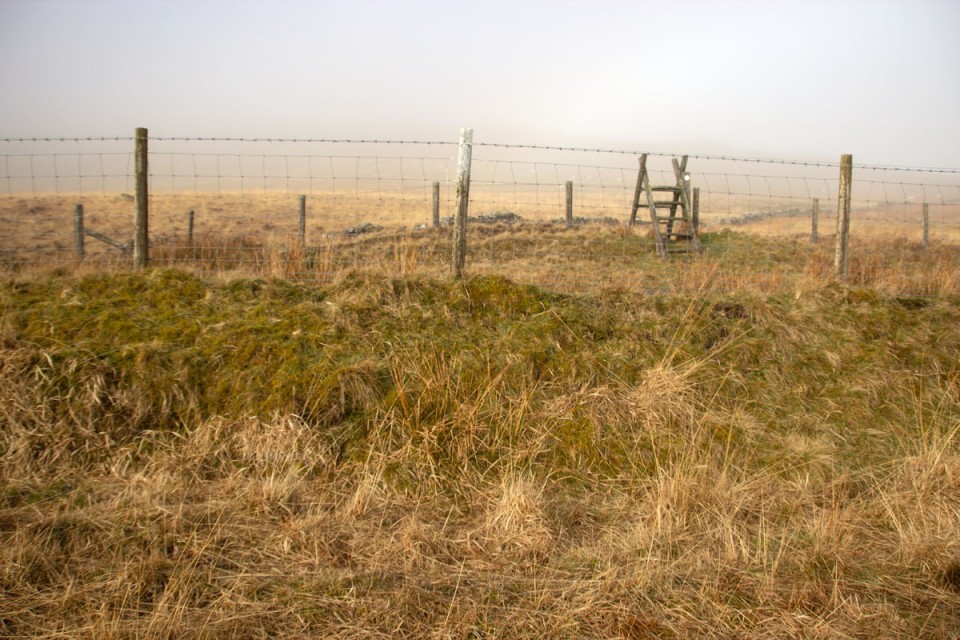
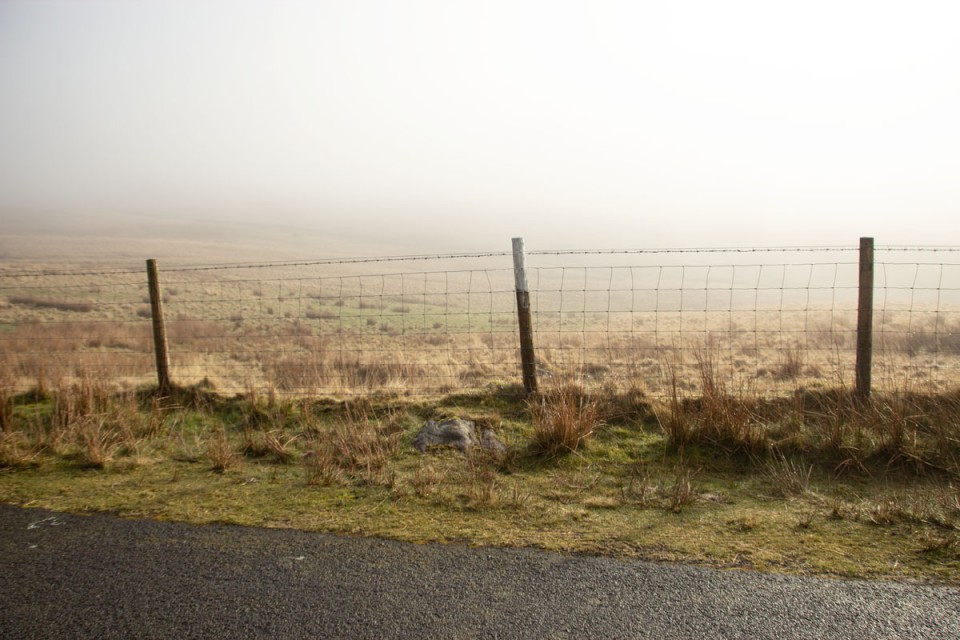


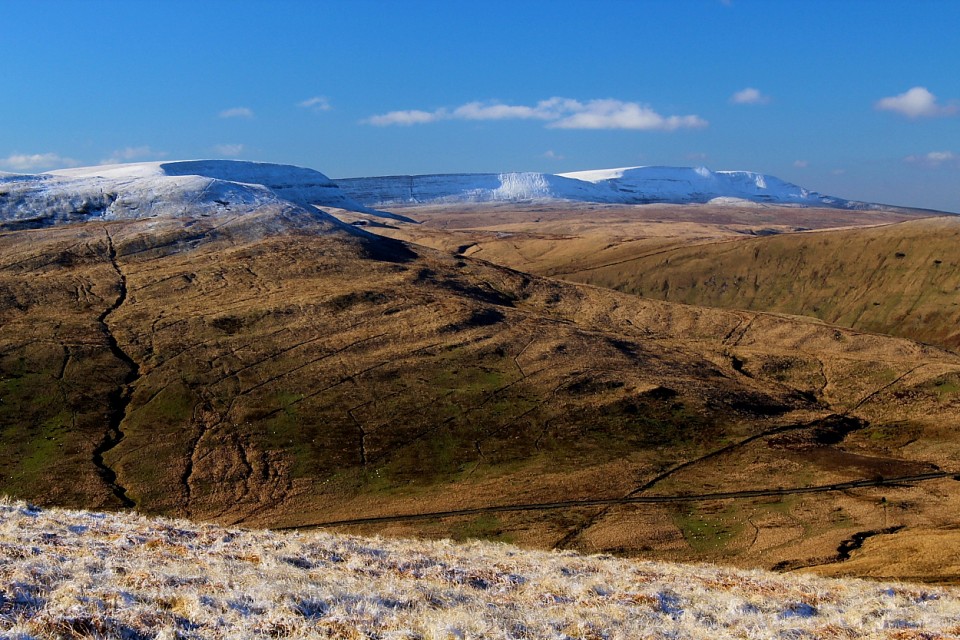
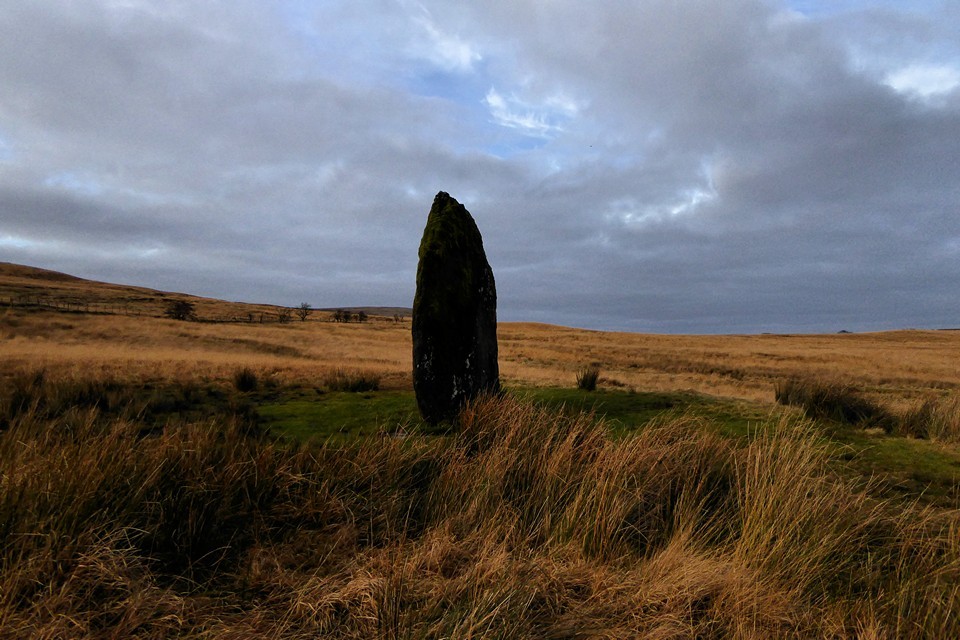
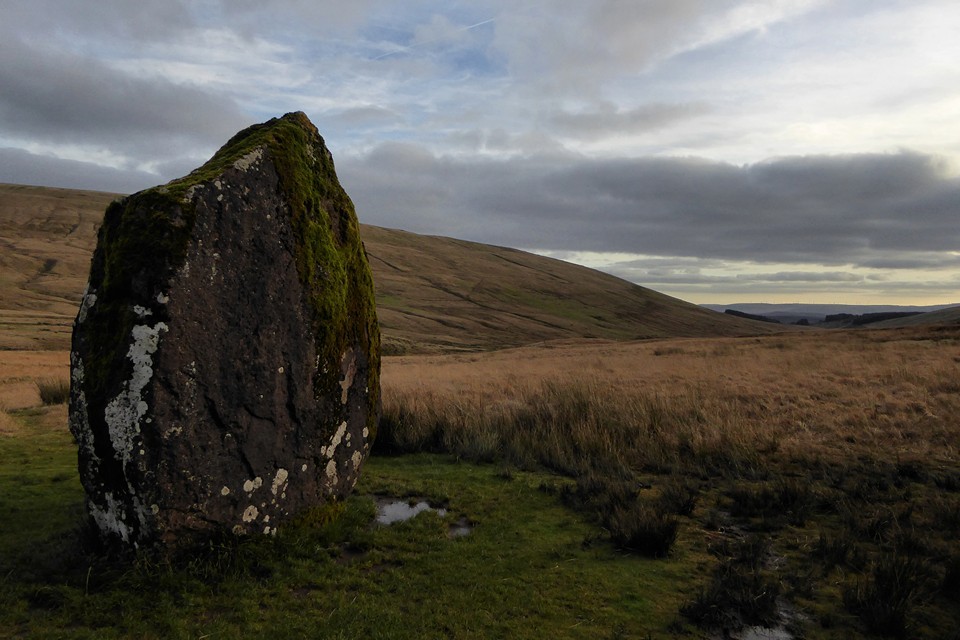
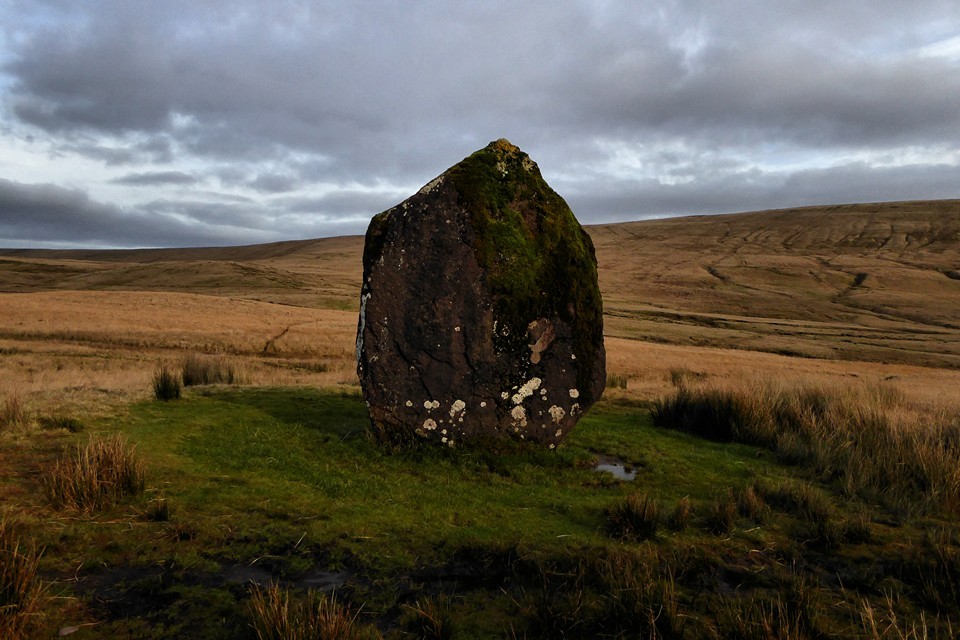
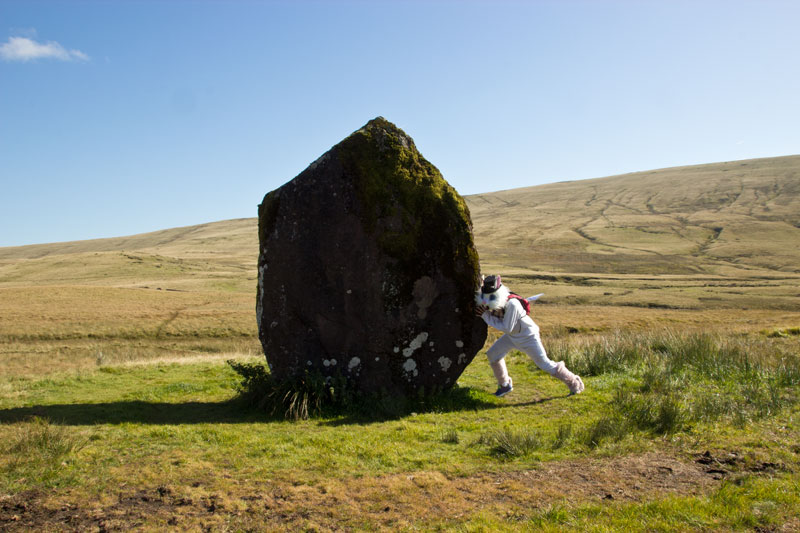

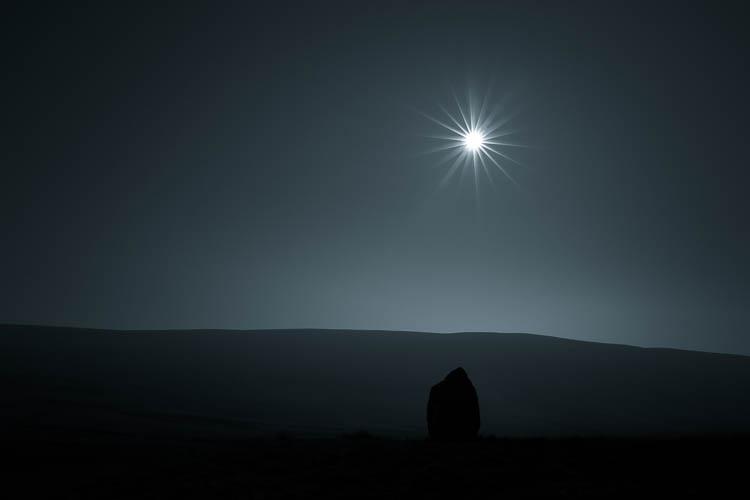
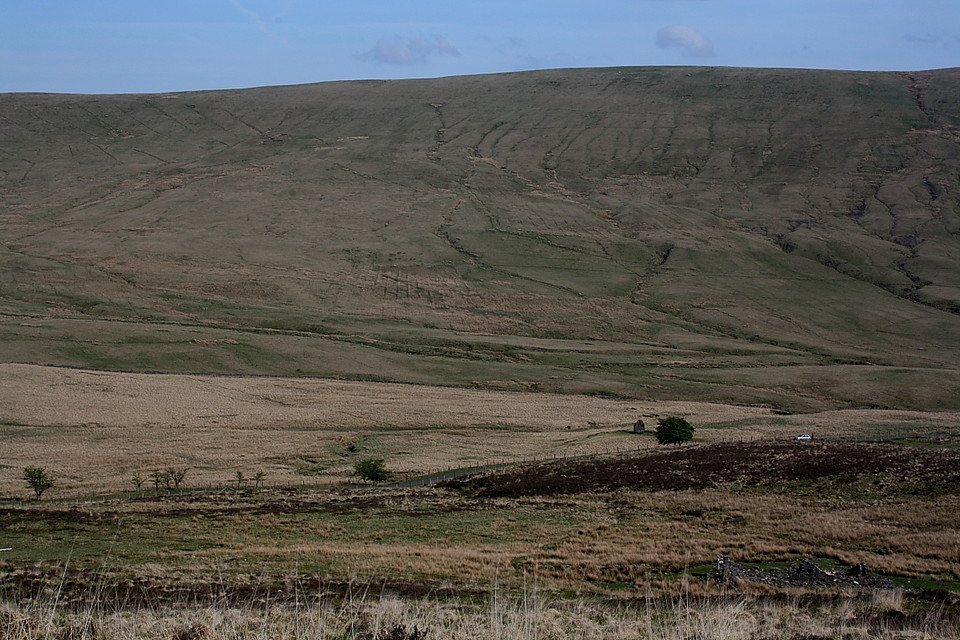
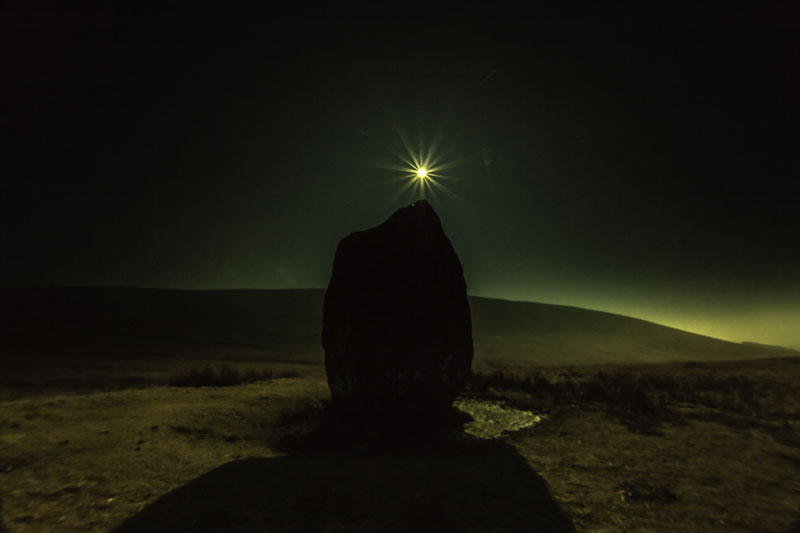
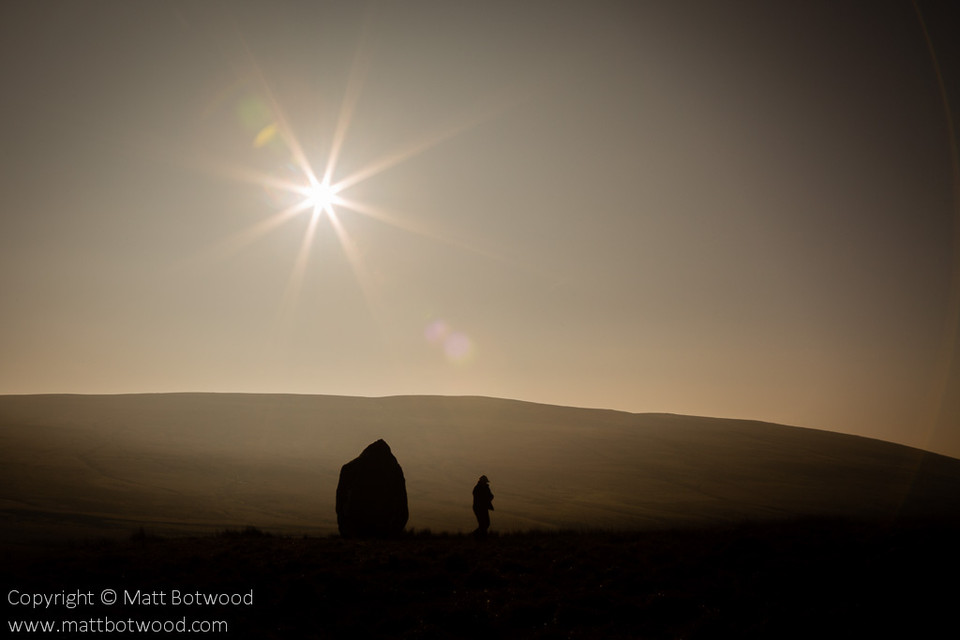

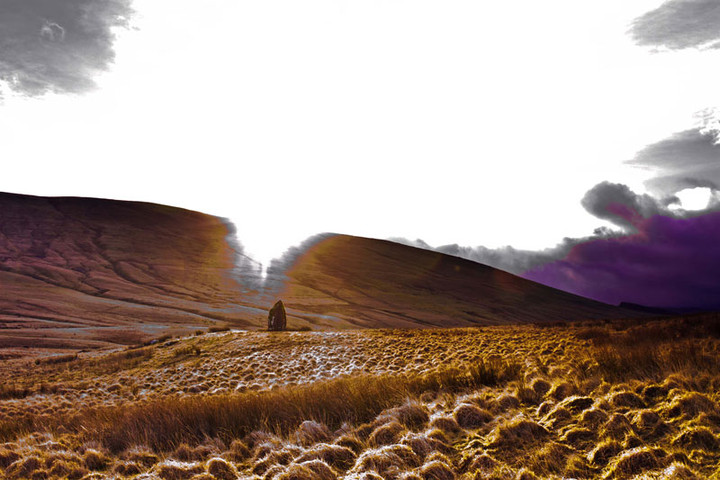
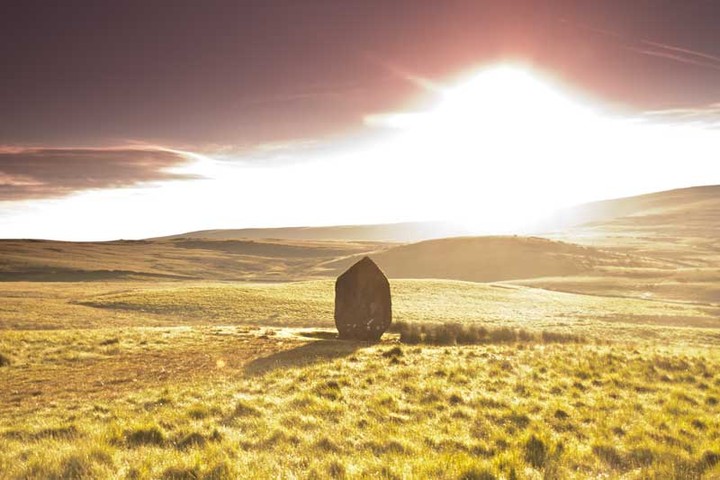
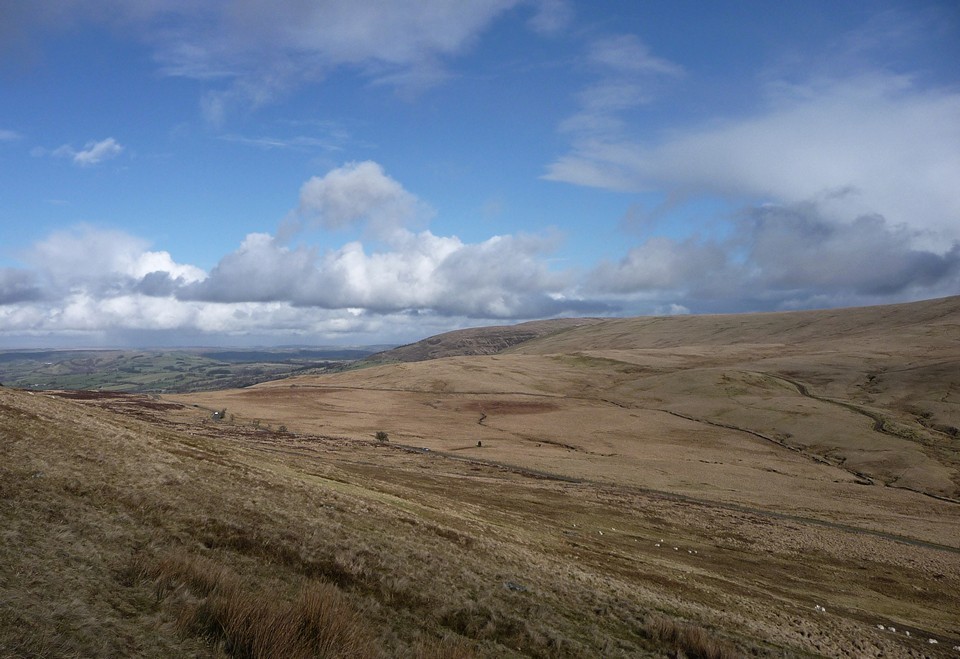
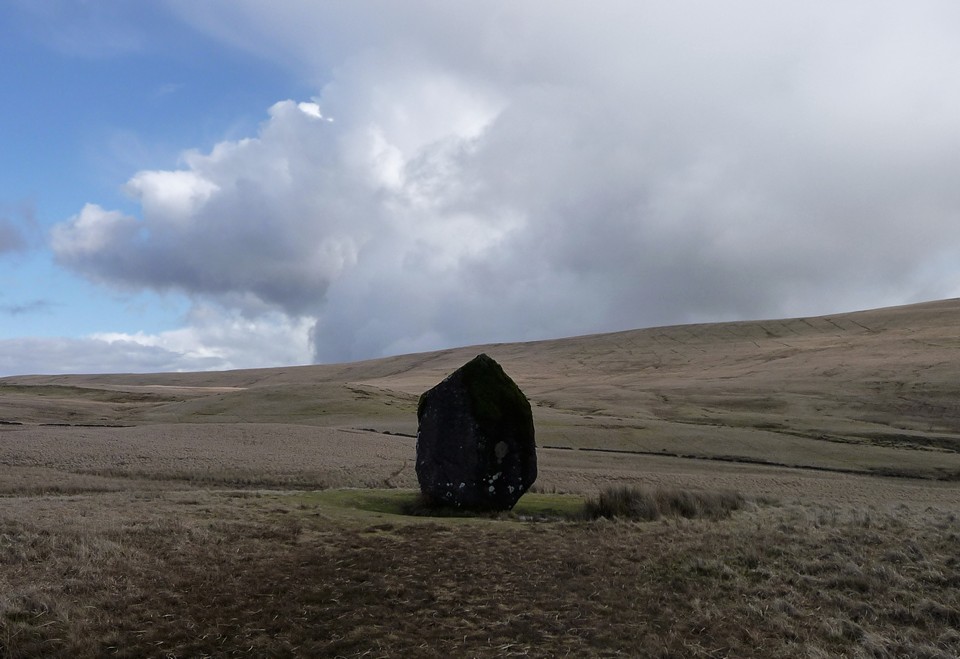

 Artistic / Interpretive:
|
Fieldnotes |
Add fieldnotes |
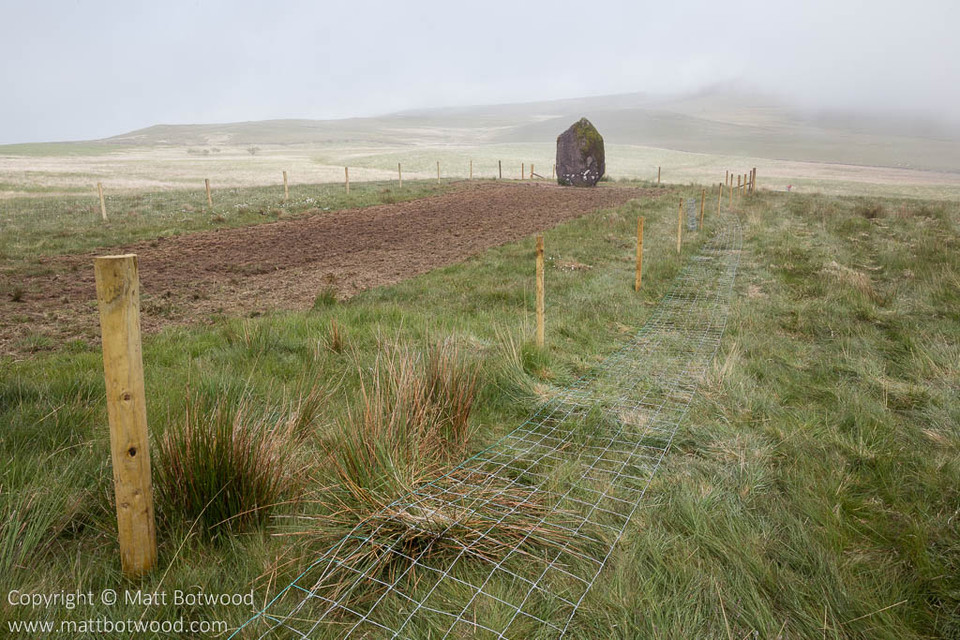
| The temporary fence surrounding the stone has now been taken down. |
Posted by mattbotwood 15th October 2015ce |

|
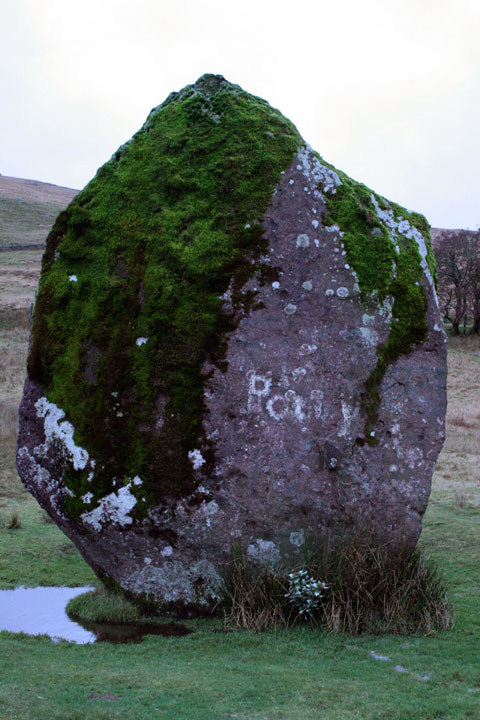
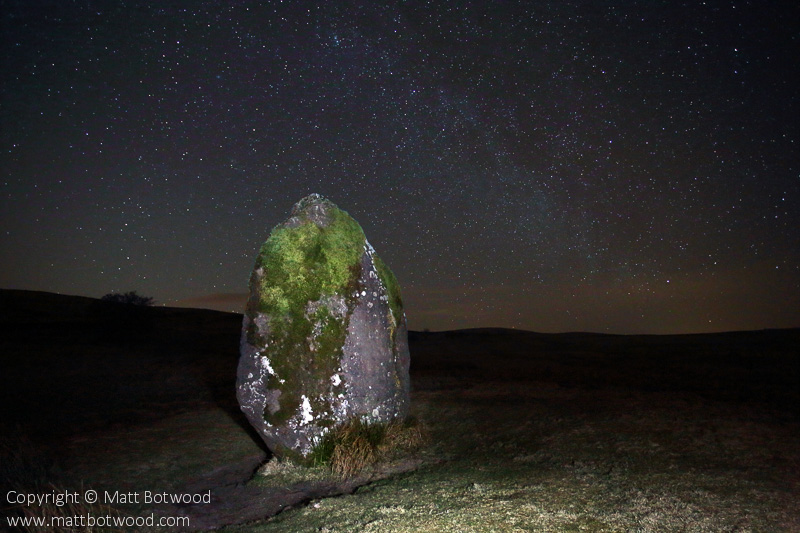
Visited 1.10.15. A visit to Maen Llia is an obvious stop-off when showing someone the prehistoric highlights of this part of the Brecon Beacons. After reading Cerrig's notes on the damage recently caused I was fearing the worst. To my pleasant surprise and relief I couldn't see anything obvious. In fact, at first, I couldn't see any damage at all. I then saw the initials T D chiseled into the stone (the side opposite the road) but (thankfully) these are small and looked old to me. They certainly didn't look fresh, nor was I able to see any others. Perhaps the sun was at the wrong angle? Ironically enough Danielle was quite taken be the carved initials G Hay 1869? on the other side of the stone. She liked the quality of the 'work'. It has to be said it is well done. However, that was then, this is now. No defacing (however well done or not) is excusable in this day and age. I hope the initials I saw are the ones Cerrig reported and that I haven't somehow missed something much more serious. Maen Llia is an outstanding stone and one of the gems of prehistoric South Wales. I just wish everyone had as much appreciation for it as we do. At least we now have one new member of the Maen Llia appreciation club! |
Posted by CARL 2nd October 2015ce Edited 2nd October 2015ce |
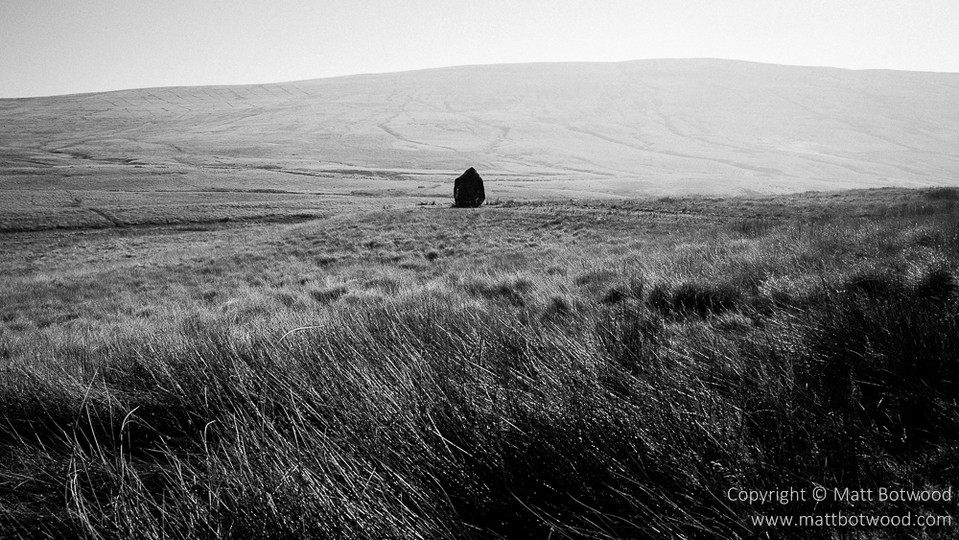
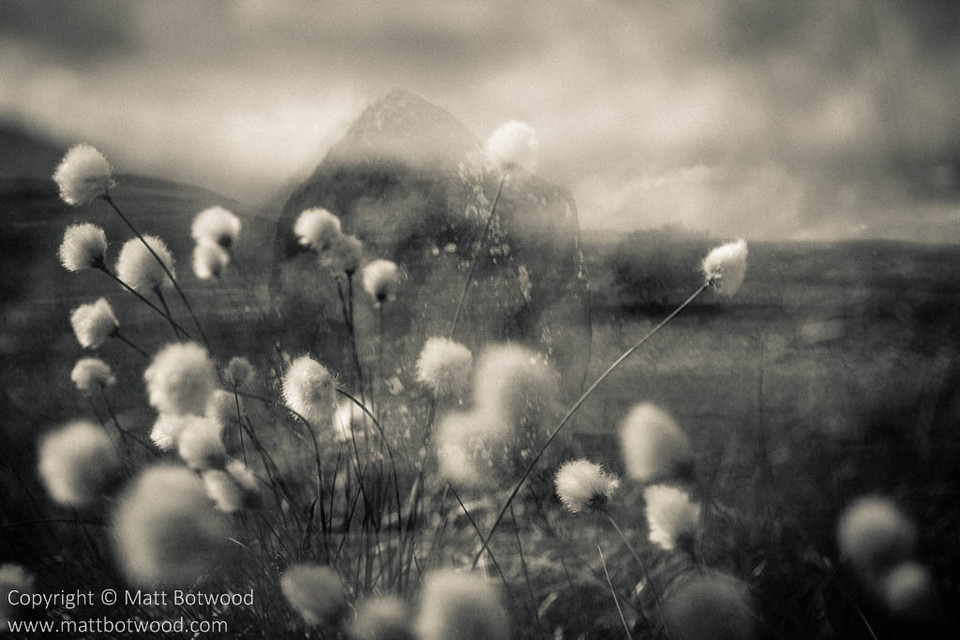
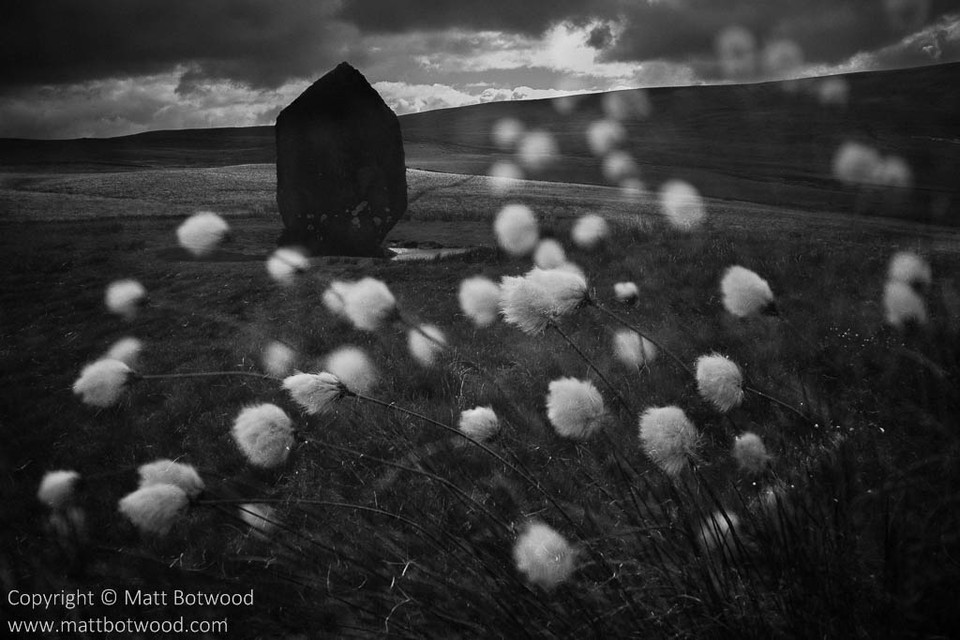
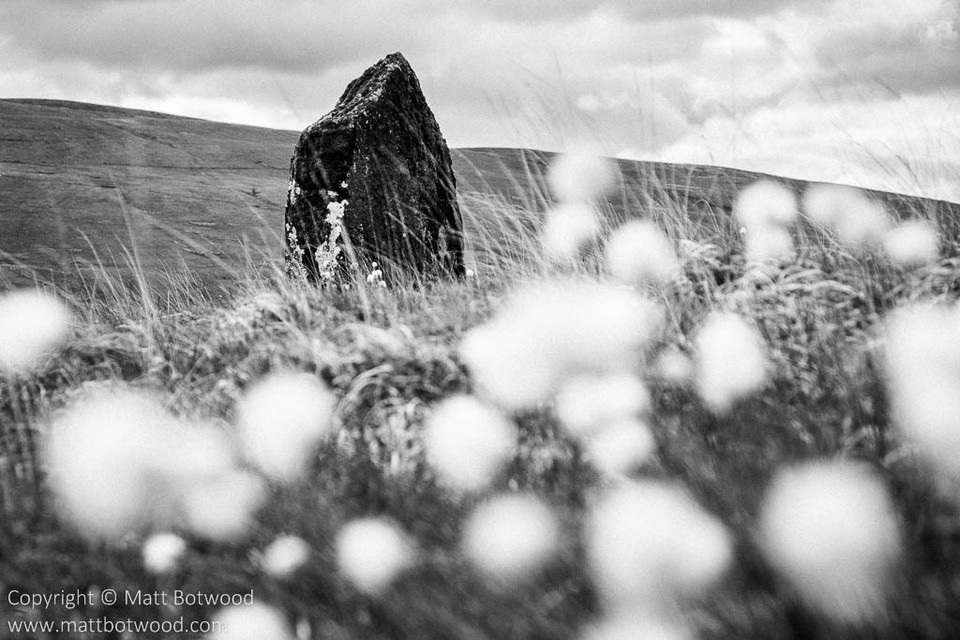
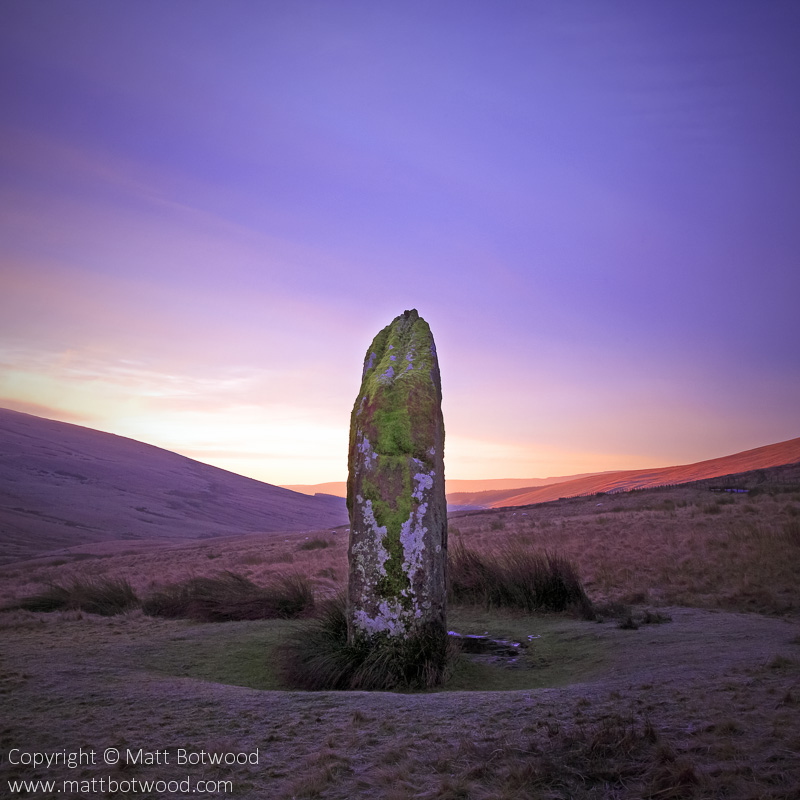
| Visited three times in the last week and the cotton grass is looking particularly nice up there at the moment. I've posted a few images including this which were captured as part of my ongoing visits to the stone (https://twitter.com/search?q=%23maenllia2015&src=typd&vertical=default&f=tweets) |
Posted by mattbotwood 10th June 2015ce |
|
Visited 6.4.15 After visiting the ancient yew tree in Defynnog it required only a (relatively) slight detour in order to visit the mighty Maen Llia – one of my favourite prehistoric sites. The recent excellent photos of the stone on TMA only heightened my longing to re-visit. (Thanks Matt) The sky was a deep blue with small white fluffy clouds. High above could be seen the trails of several airplanes. The weather was unusually hot and it was a relief to both myself and Sophie’s to be able to get out of the car. The first thing I noticed was a new information board. I am sure the addition of an information board will not be to everyone’s taste but it is well done. The Perspex board is semi-see through and is in the shape of the standing stone. It gives basic information about Maen Llia and shows a time-line of events over the 4,000 years since the stone was erected. It is mad to think that the yew tree I had just visited was a thousand years old when someone decided to put the stone up! After reacquainting myself with the stone (which by now seems like an old friend) we headed to the small stream nearby. As quick as a flash Sophie had her socks and wellies off and was knee deep in icy water! Once she got over the initial cold water shock she happily splashed around and amused herself. I sat on a grass knoll next to the stream and soaked the atmosphere up. The weather was gorgeous. Above me two red kites floated silently on the thermals. Away in the distance a saw a paraglider doing the same thing. We spent a really relaxing time here and the only thing I regretted was not brining a flask of tea! I could feel my inner batteries being recharged and any stress I had before I arrived soon evaporated in the breeze. A magical visit to a magical place. |
Posted by CARL 8th April 2015ce |
| 28/1/15 - I'm visiting this stone probably at least once a week this year as part of a long term photographic study of the location. See my latest images here: https://twitter.com/search?v=stream&q=%23maenllia2015&src=typd&mode=photos |
Posted by mattbotwood 28th January 2015ce |
|
Visited 16.2.14 Good news – the ‘smiley face’ and sprayed graffiti on the other side of the stone has now been removed. The only graffiti I could now see were the chiselled names/dates of over 150 years ago – which doesn’t seem so bad. This great old stone is now back looking at its best. Hats off to CADW for their efforts. |
Posted by CARL 17th February 2014ce |
|
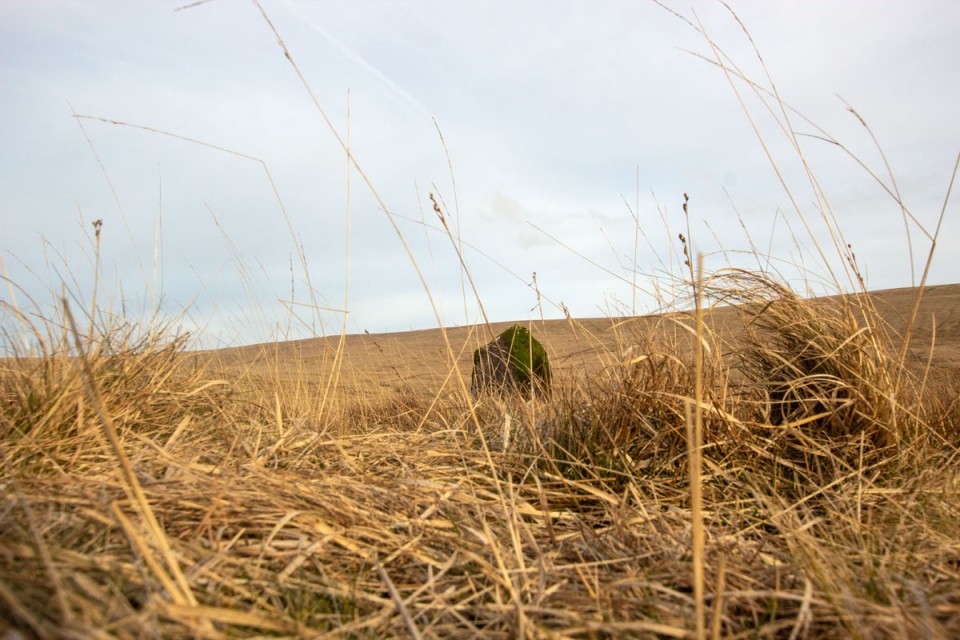
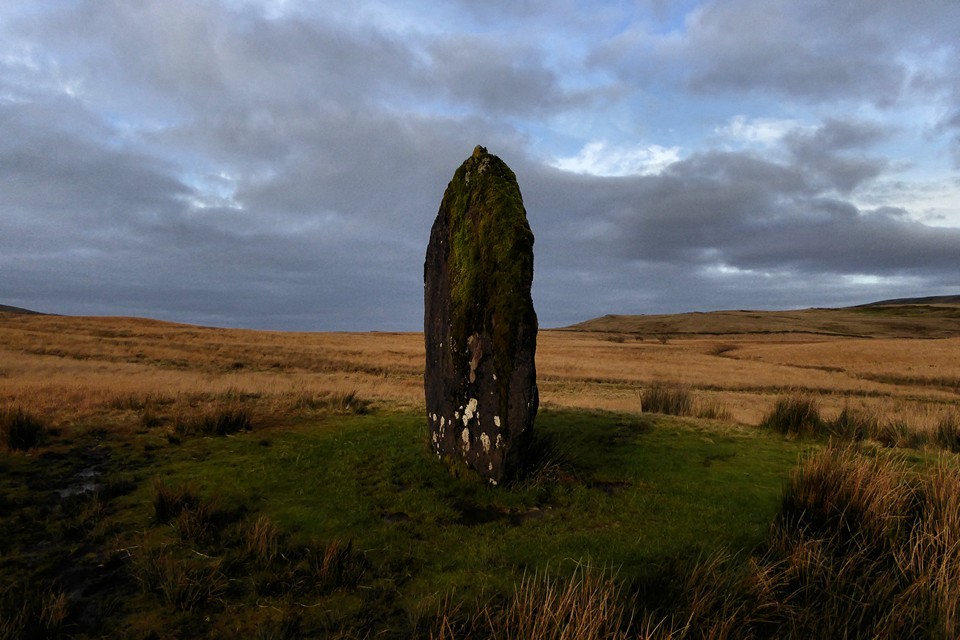
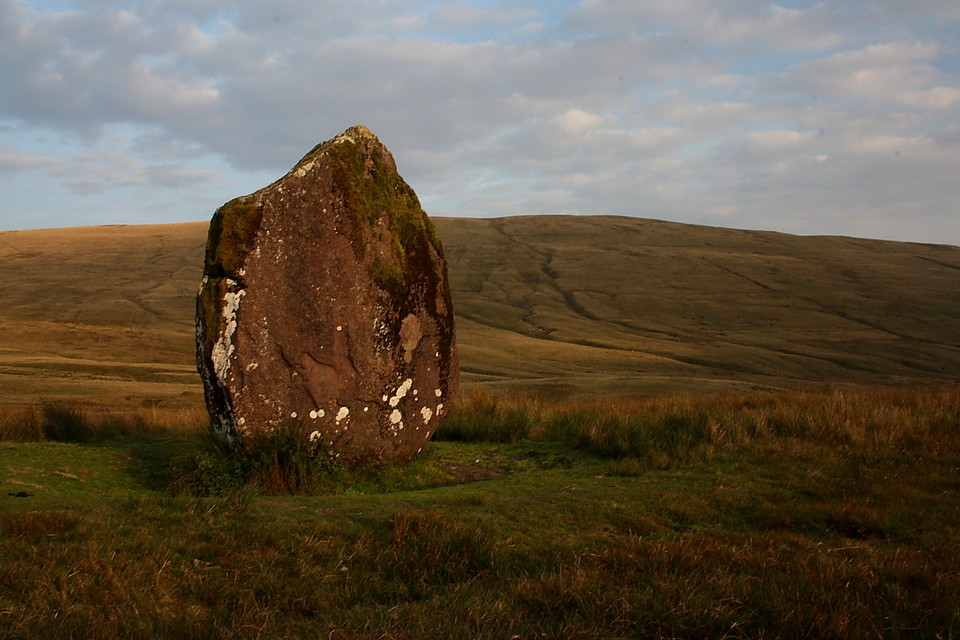
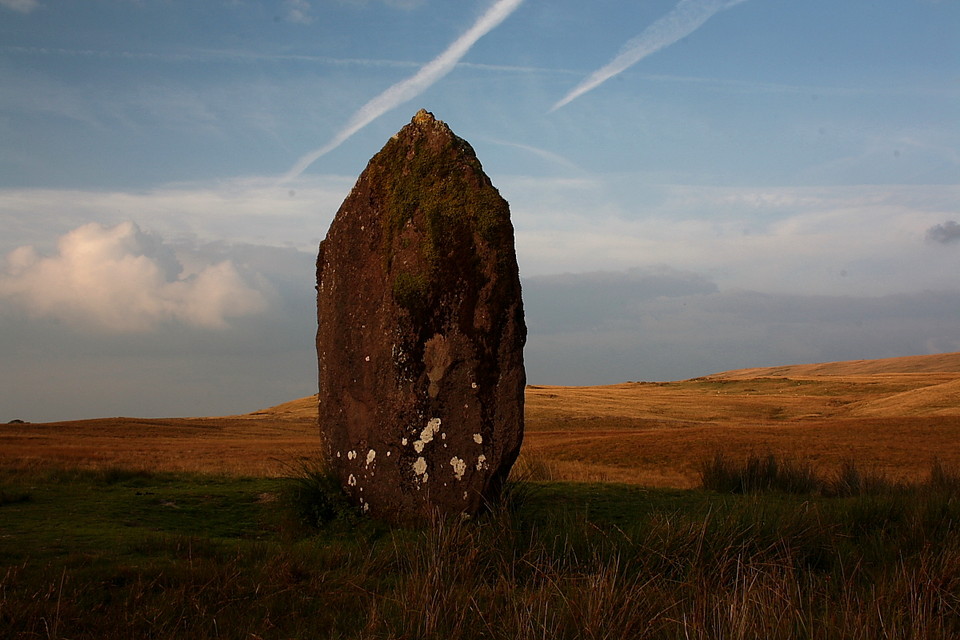
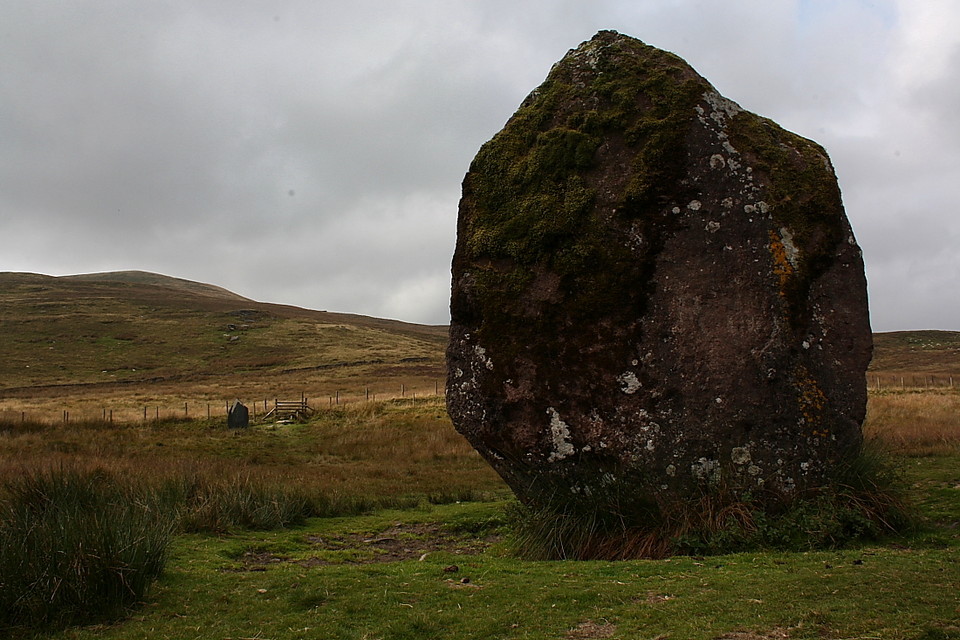
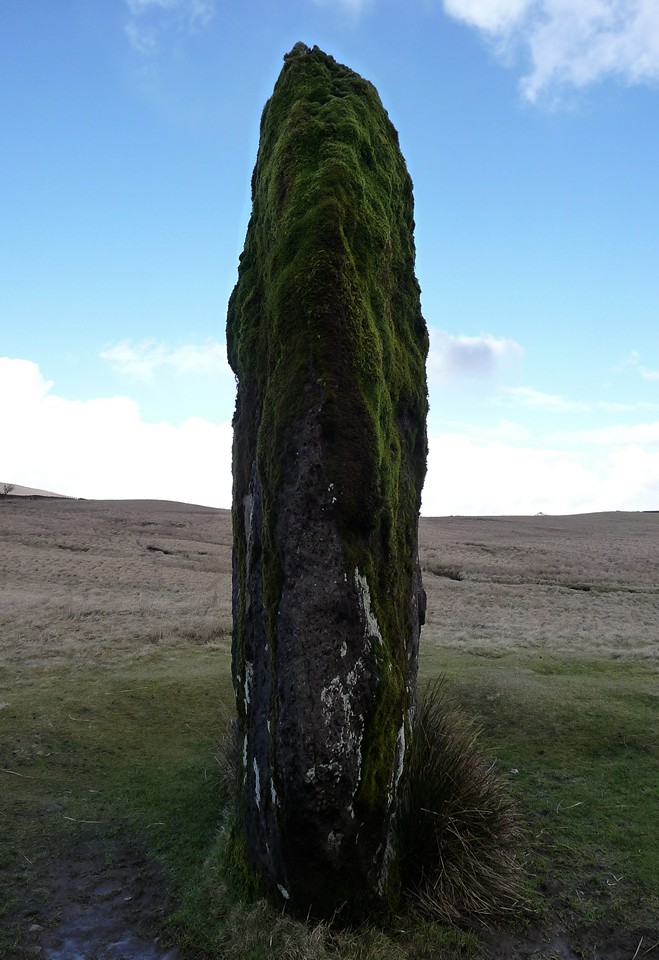
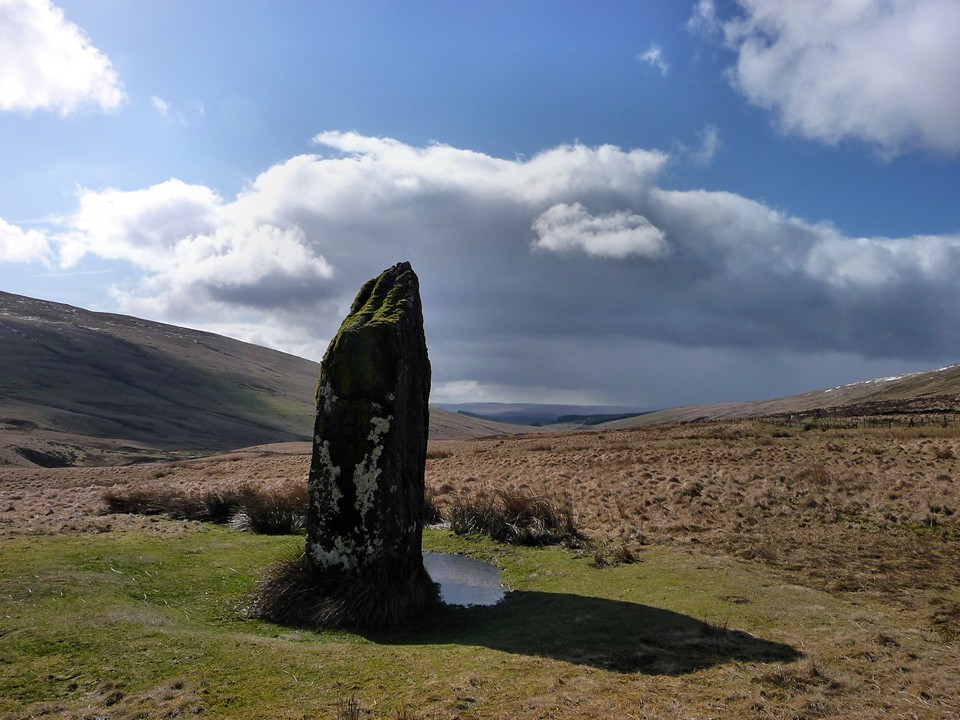
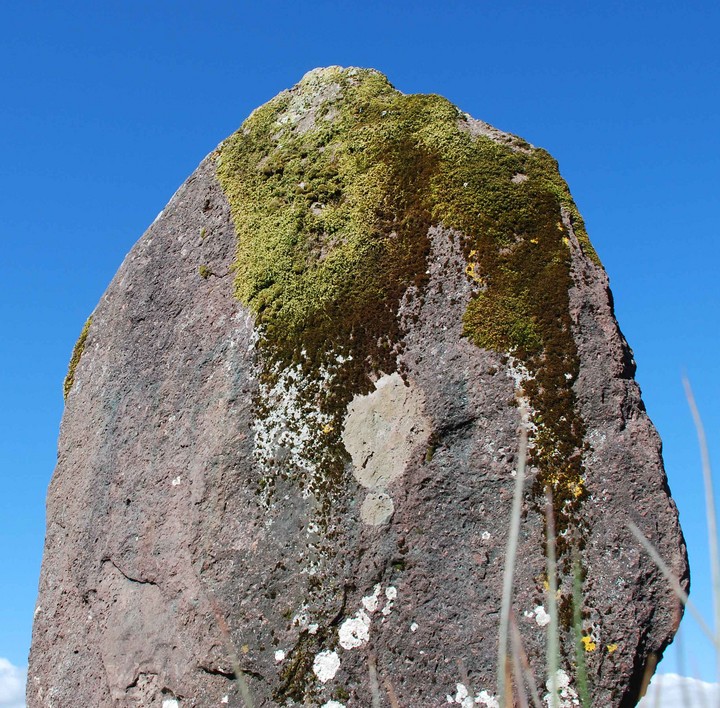
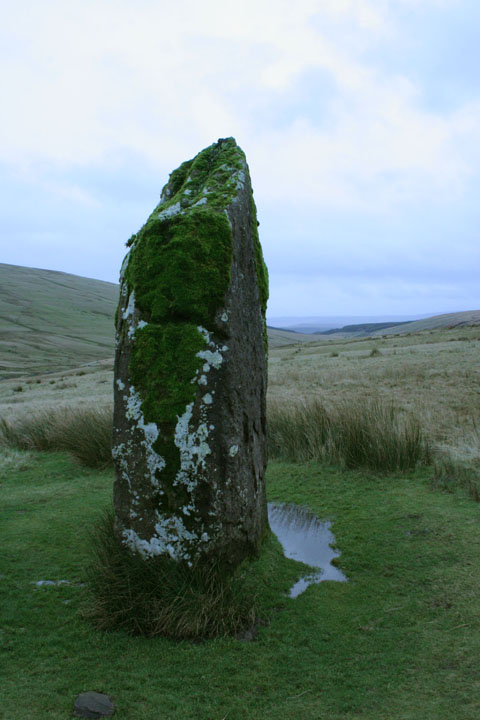
Visited 16.6.13 ‘As it’s Father’s Day, where would you like to go today?’ asked Karen. So here we are, at probably my favourite standing stone, the mighty Maen Llia. On the way up to the Beacons I have waxed lyrical to Karen about how lovely this part of the Beacons is and much quieter than the busy A470. The drive up through Ystradfellte is gorgeous and even on a wet, murky day like today is well worth a visit. We had the granddaughter with us and she was happy enough watching the sheep perched on the side of the road as we drove north. Dafydd and Sophie of course are well used to such sights. ‘There it is’ I pointed out to Karen as the stone came into view and we quickly parked up next to the stile. Arghhhhhhhhhhhhhhh………………!!!!!!!!! Someone had sprayed a large ‘smiley face’ in silver on the road facing side of the stone Who could have done this? Why would someone have done this? Let’s be honest, this isn’t the easiest place in the world to drive to. In fact, you have to go out of your way to get here. There’s not even a farm nearby! At first Karen thought someone had scarped the ‘face’ using a stone. I hoped not as that would have left permanent damage. Luckily (sort of) it was ‘only’ spray paint which I know will eventually wear off. On the other side of the stone is further sprayed graffiti of someone’s name but this is a lot older and is already starting to wear off. I reported this crime to CADW and to be fair they E-Mailed me straight back. They said they would pass my report onto their Regional Inspector. Whether they choose to remove the paint or let nature do the job for them I don’t know? I will keep you informed of any progress. Despite all this, the stone is magnificent, in a great location and its top covered in dark green moss which adds to its character. The sweeping valley views are wonderful. This is a ‘must see’ site and well worth the effort required to visit. Hopefully when you visit the graffiti will have gone and the stone back to looking its best. Visit if you can – you won’t be disappointed. |
Posted by CARL 17th June 2013ce |
|
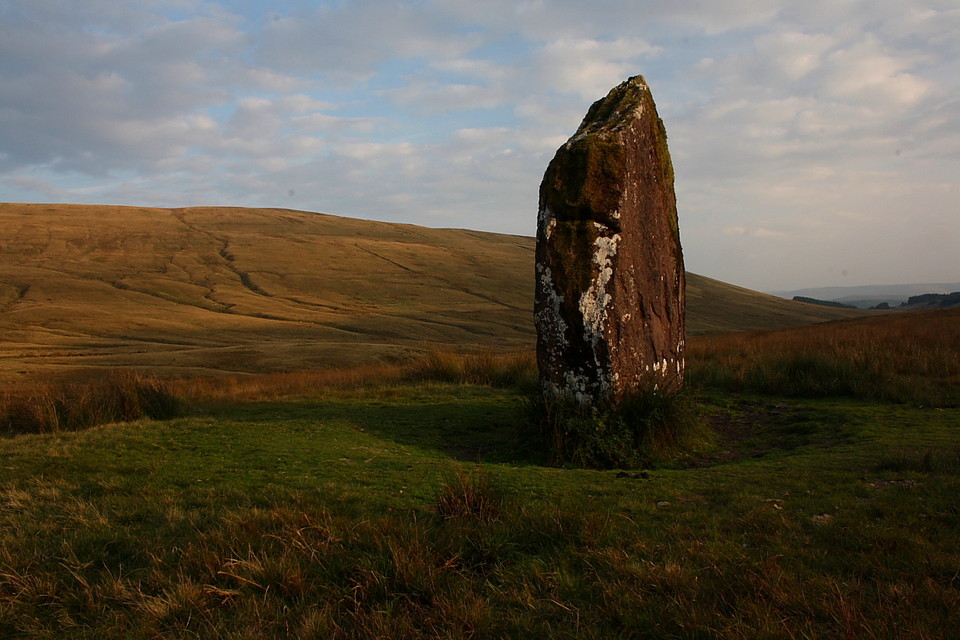
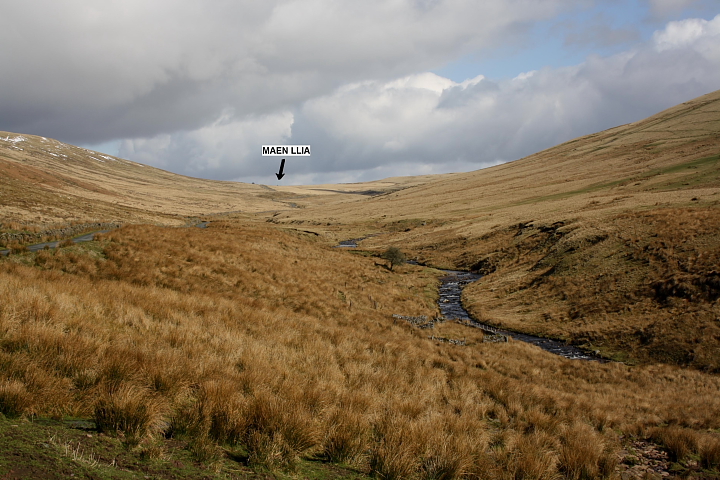
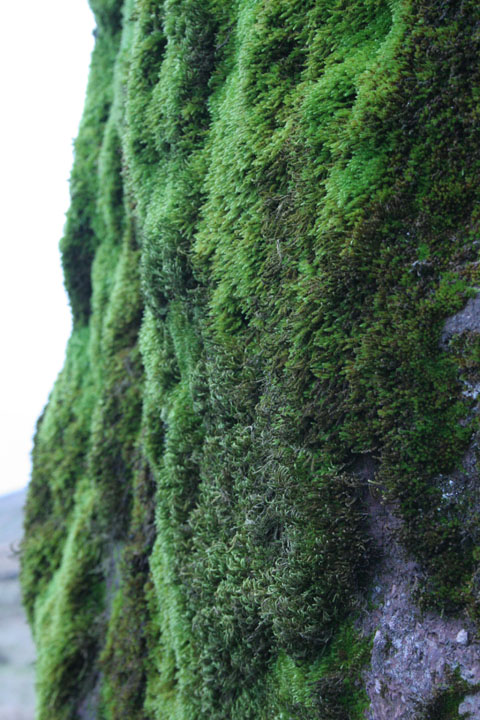
The cairn is separated from the Maen Llia monolith by the Afon Llia itself, fast-flowing and not as easy to cross as it looks, with peaty banks quick to crumble underfoot. But cross I must, as the pull of the stone, one of South Wales’ undoubted megalithic stars, is too much to avoid for long. This will be my second visit here. The last time I came with a friend by car and to be honest I had little hope of ever making it back here under my own steam. It’s a wonderful, wonderful stone, enjoying a lovely view down the valley between the two steeply rising mountains that flank its either side. The shaggy coat of moss gives it a primordial look, and even years’ old graffiti can do little to undermine its towering charm. I spend a good while here, undisturbed by any other visitors, although an empty car is parked nearby. Time stops briefly, and I recharge for the next and steepest of today’s climbs. When the time comes to bid farewell – adieu hopefully – I do so with some sadness. This is a site that rewards the effort of getting here tenfold. This post appears as part of the weblog entry Lost in a Fforest – Storey Arms to Glyntawe 12 February 2011
|
 Posted by thesweetcheat
12th February 2013ce |
|
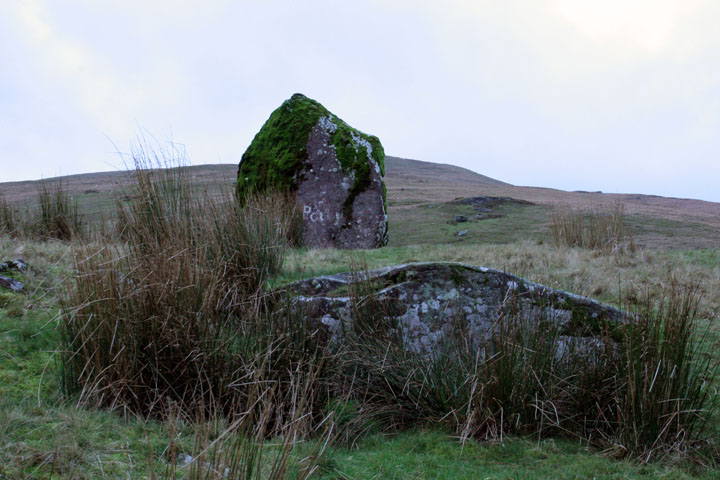
Re-Visit 30.10.10 Visiting Maen Llia is like visiting an old friend. Since my last visit I have visited many standing stones up and down the country but this remains a favourite of mine. I think it's a combination of the size, shape, colour and dramatic setting. As a bonus it is very, very easy to access. I notice that on the far side of the stone some moron has used spray paint to graffiti his name. I notice that this isn't a modern form of vandalism as there is a name carved in the other side of the stone dates 1869! I am sure the stone will survive such minor irritations. This is a fab stone, in a fab location – visit, visit, visit. You won't be disappointed. |
Posted by CARL 2nd November 2010ce |
| I drove past this in Wales and didn't have time to stop, but it's always stayed in my memory as it was a very beautiful stone almost sculptural and the location is very wild and scenic as well |
 Posted by Circlemaster
25th April 2010ce |
|
Visited Easter Sunday (4.4.2010), coincidentally within an hour or so of Gladman's visit! On the walk up from Blaen Llia we saw a red kite hovering right overhead, which just about made my day straight away, but then this wonderful monolith topped even that. A huge slab of stone, with great views south down the valley of the Afon Llia river. Oddly, the name Maen Llia may derive from the Welsh word for "less" or "least" (llai), but this huge stone is anything but! A terrific start to the day. The surrounding hills are largely trackless and from here we climbed Fan Nedd, into a hailstorm on the summit. I love this countryside, it is utterly inspirational and requires much more exploration on my part. (Access note - I came out today with a walking friend by car - I do not think that there is easy access to this part of the Brecon Beacons by public transport, sadly.) [Access update 13.2.2011: There are indeed no buses running to anywhere very close, but a good walk from either Storey Arms or Glyntawe/Dan yr Ogof makes it accesible on foot, taking in mountains on the way.] |
Posted by thesweetcheat 18th April 2010ce Edited 13th February 2011ce |
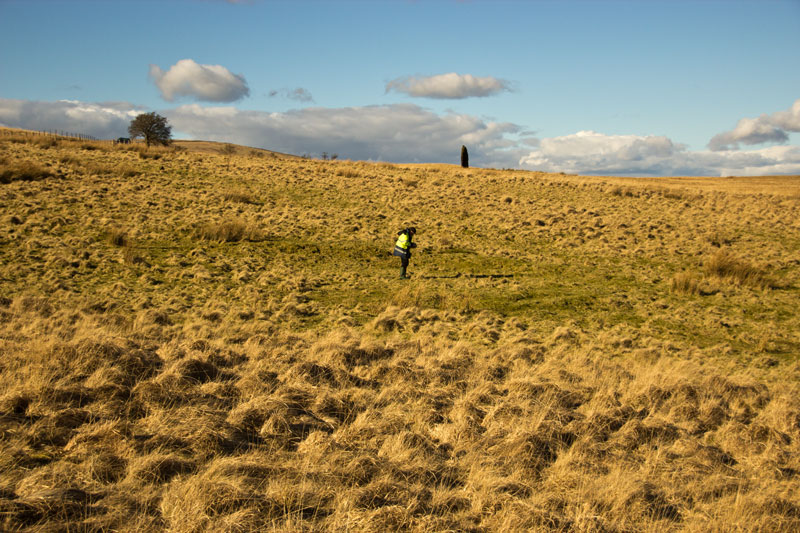
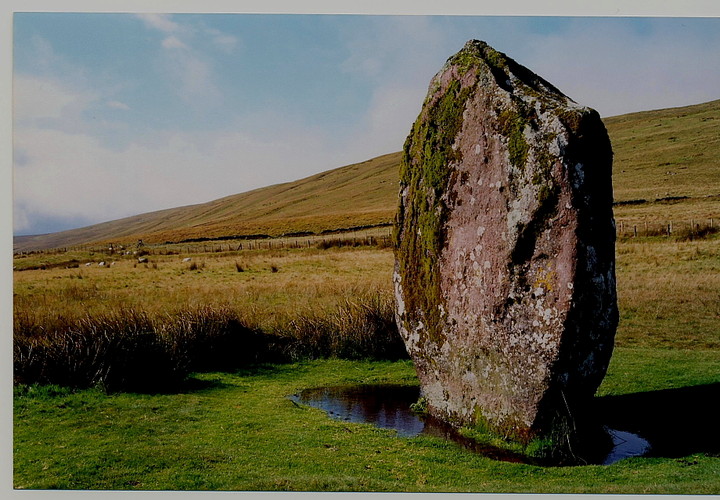
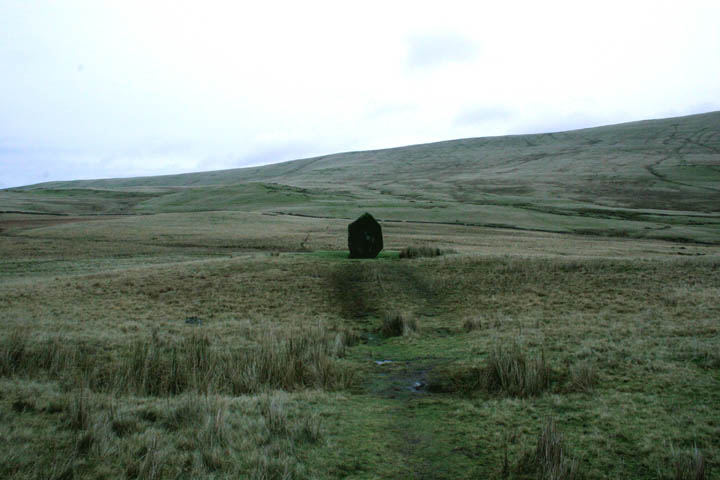
| A lovely looking stone and a lovely colour only 30 yards from the road (small layby). If it has been raining take your wellies as the ground around the stone is very wet. |
Posted by CARL 16th March 2010ce Edited 2nd November 2010ce |
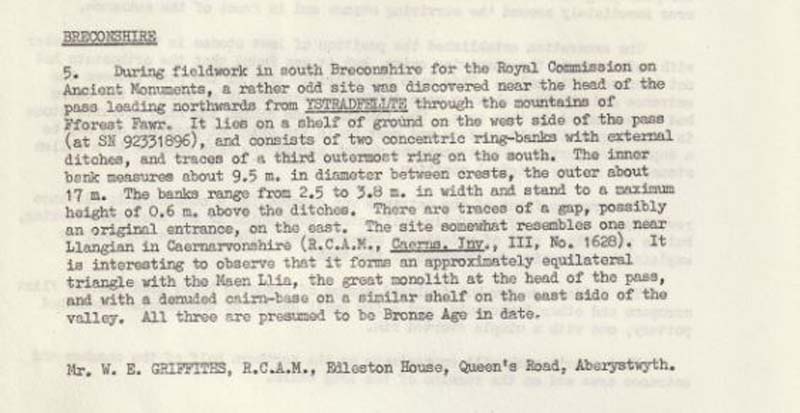
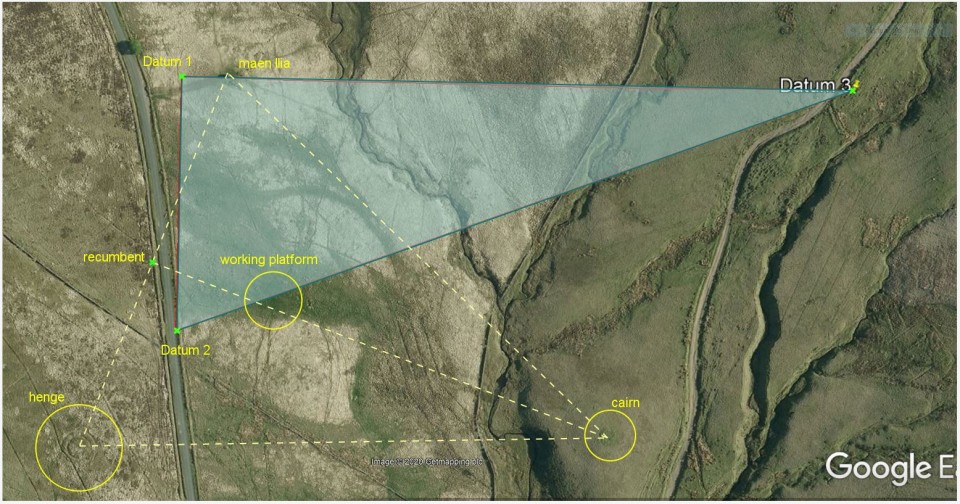
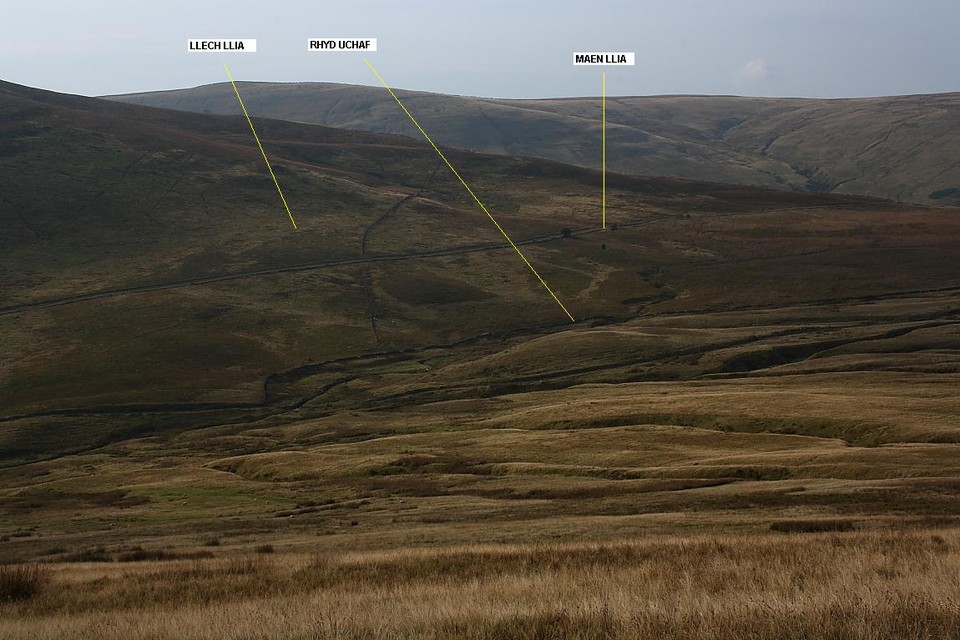
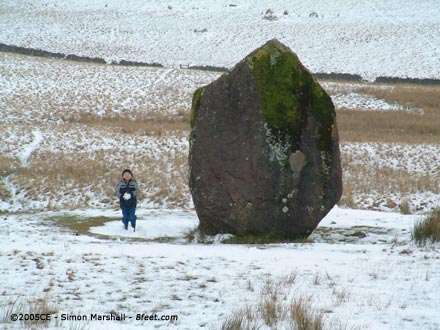
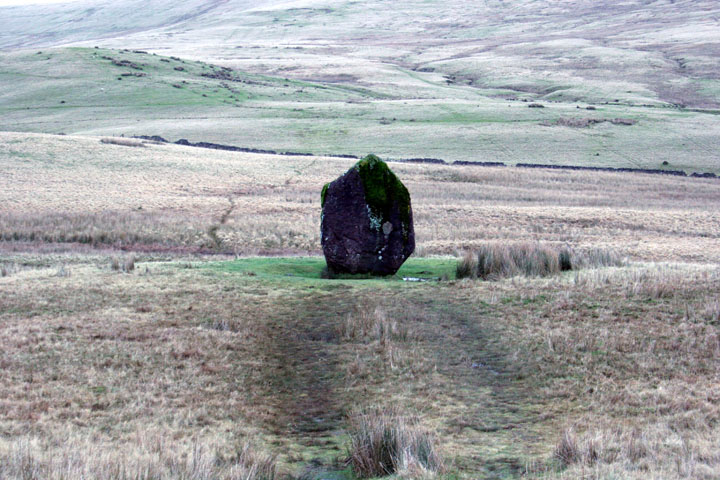
| This standing stone is one of the better known megalithic sites in the Brecon Beacons national park. It stands around 12 ft high and probably dates to the Bronze Age. It is a very impressive site, surrounded by the atmospheric mountains and is clearly positioned in order to direct ones gaze down the valley to the south. It does appear to be aligned with cairns to the SE and SW. The alignment to the SE passes through the cairn on nearby Fan LLia. I am unsure if this is original, but there is a white qaurtz pebble that can be seen on top of the stone. White qaurtz is often found at megalithic sites and is still used by farmers today as a form of protection. |
Posted by pauluk72 23rd December 2009ce |
|
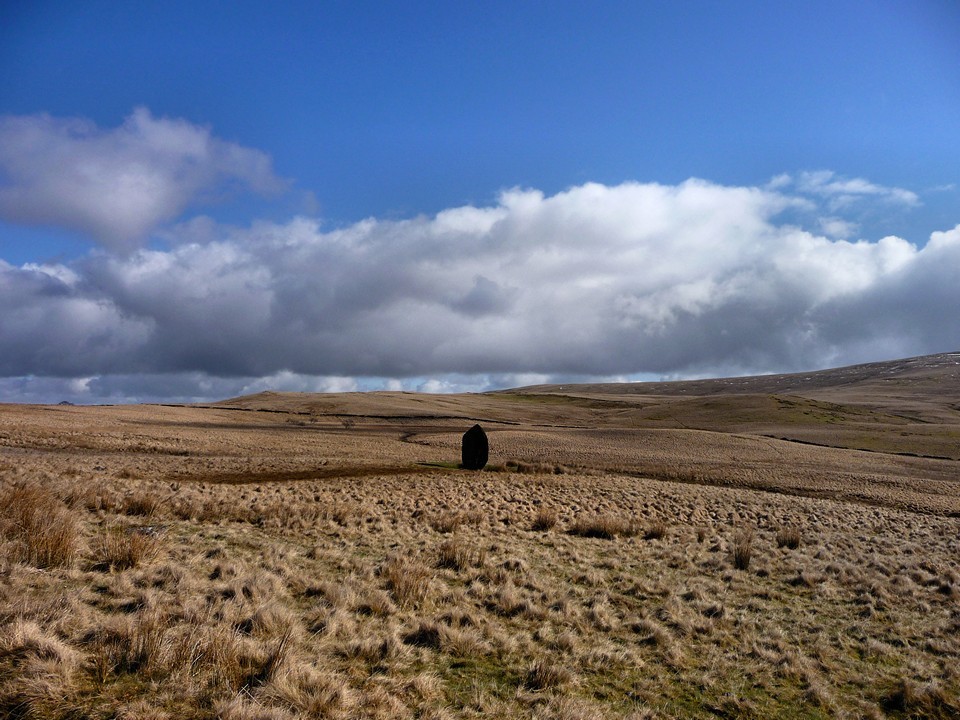
A favourite monolith and one of the first I came across as a 'stone-illiterate' walking Fan Nedd and Fan Llia during the mid-Nineties. Remember them? Completely dominates the valley, guiding travellers along the nearby ancient track - later bastardised by the Romans to become Sarn Helen - and perhaps serving as a place to stop and offer up a few, er, offerings...... Daubed in graffiti by mindless fools several years back, a few Welsh Winters - not to mention Summers (!) - have made light work of that. Maen Llia will still be guarding its mountain pass when they are long gone and forgotten. |
 Posted by GLADMAN
16th June 2009ce |
| More than the average energy here. Tie off, jacket off, back from work, meant to visit and spend a short time, not expecting much but bought a couple of beers anyhow. Sat in the sun aiming for solitude, two girls arrive one Ukraine one Australia. Aussie lass, "what's the significance?". "Dunno", I still haven't touched the beast yet. It's a bit too hairy. Next two more girls come, better, both well into it . She into energy being blasted, me sympathetic but not really able to get too close to Maen Llia, sit in sun, drink ale, try again. Not all uppity about whole deal but understand enthusiasm. Quiet hour is filled with people, but they're all good folk. Calm moment, go for it walk round, touch, energy drops, still explosive, very rare place this, hard to fathom, beneficial, still living off it. |
Posted by stegnest 18th August 2004ce Edited 18th August 2004ce |
|
The stone appeared worn out today. Litter again (aargh!) at it's base added to an overall unkempt feel. I am undecided if this is an individual stone, or the remains of what were once many, perhaps resurrected in the distant past after it's companions had been moved or destroyed. However, I still believe this is man made, and it's slim lines astonish upon closer inspection. From the road it appears immense, but closer inspection reveals a positively sylph like stone, the super model of its age. The positioning in relation to the nearby Roman road intrigues. This must have been one of the most foreboding tracks in the empire, the location being one of desolation. What role this site played in the dynamics of this landscape can only be guessed at, but psychologically speaking, it's appearance must have struck fear into visting soldiers, especially ones who had been reassured 'the old ways' were no more. Walking the Roman road, the stone strikes an unusual juxtaposition with its surroundings, appearing to play optical illusions as you walk south to north, appearing like a slender spear point at first before rounding itself into an axe head upon approach. Intentional? I can only guess, but it certainly unsettled me and my companion. I left, cursing again the visitors who are too idle to reclaim their rubbish, and deposited a bootful of recovered junk in nearby Sennybridge. A worthwhile, but unsettling site, with many answers still to give up. Park at the side of the road (a layby waits) and the stone is no more than 20 yards 'inland', open for all. Beware of visiting in wet weather - very boggy. |
 Posted by Dominic_Brayne
11th August 2003ce Edited 15th January 2004ce |
| Maen Llia feels right, but it worries me that this may be a natural boulder that just happens to be upstanding in an attractive location. |
Posted by the fear 24th January 2003ce |
|
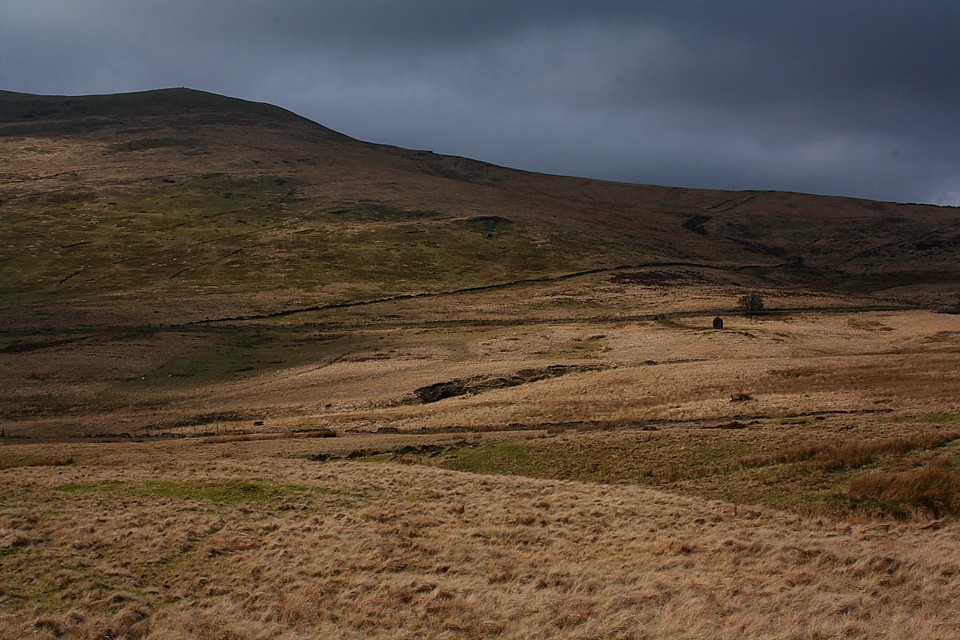
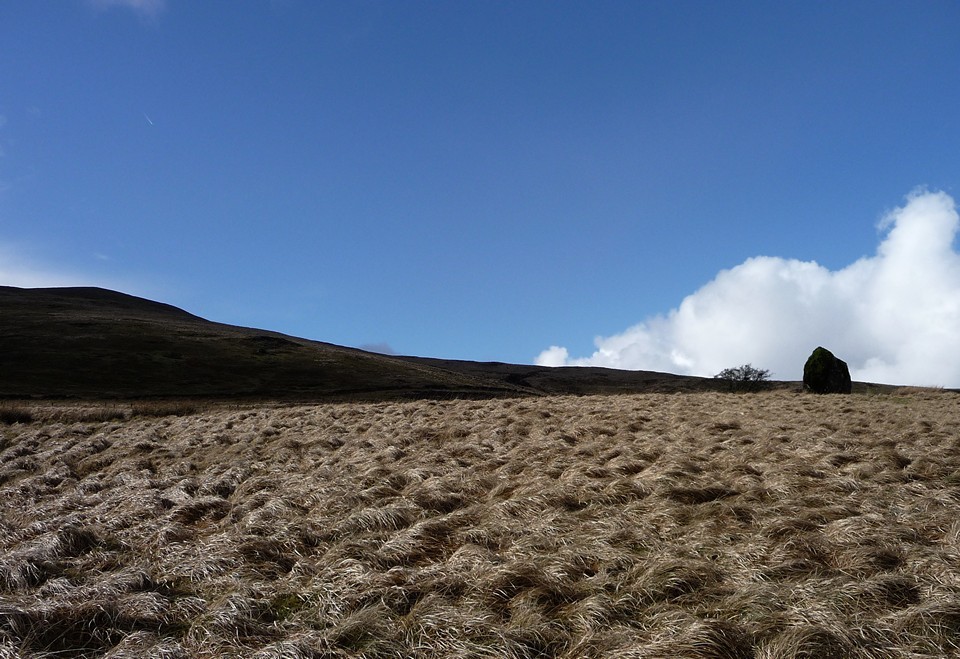
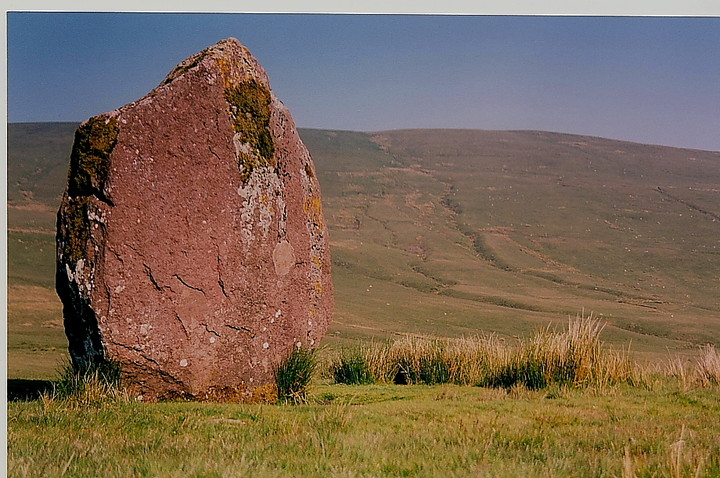
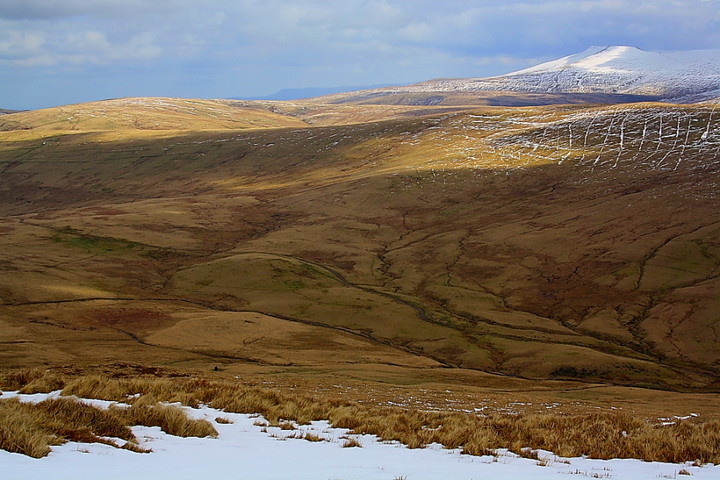
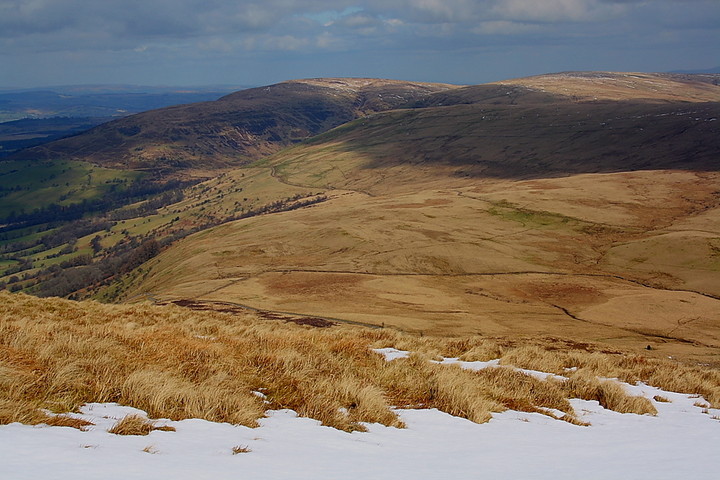
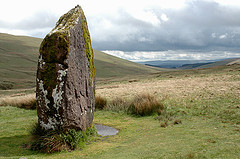
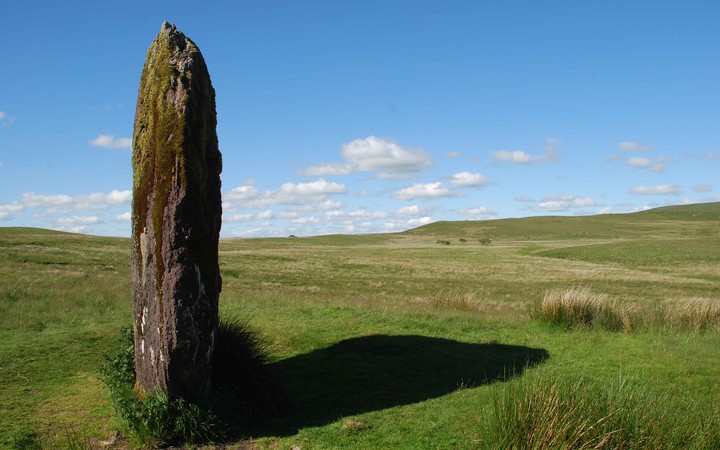
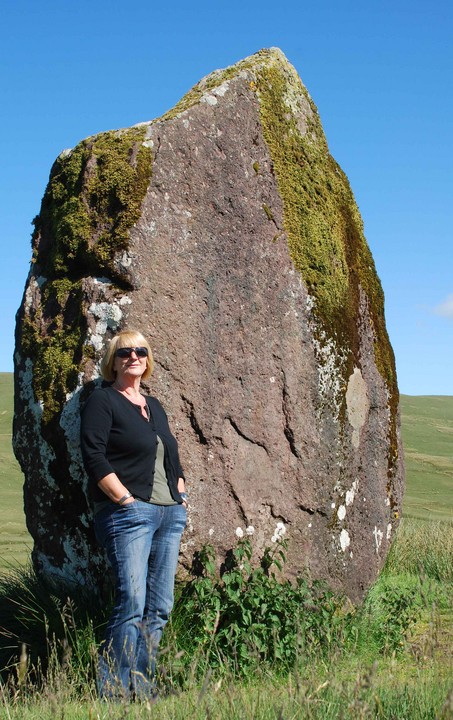
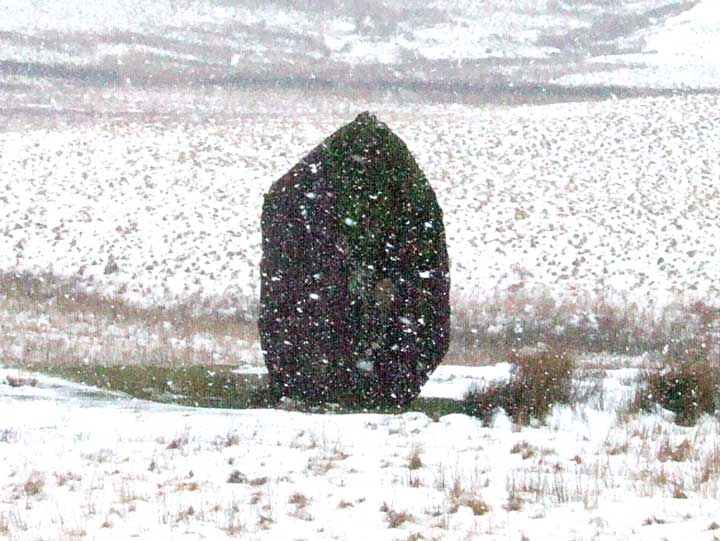
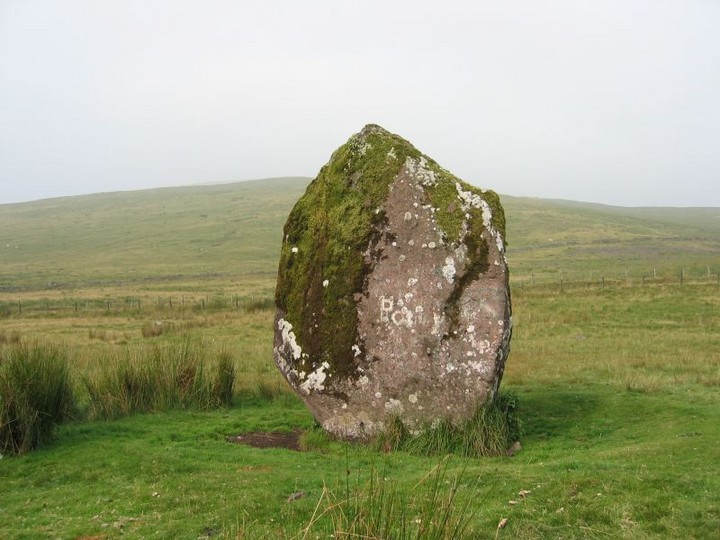
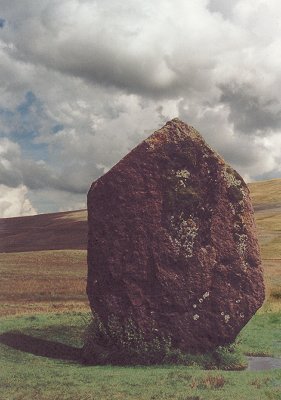
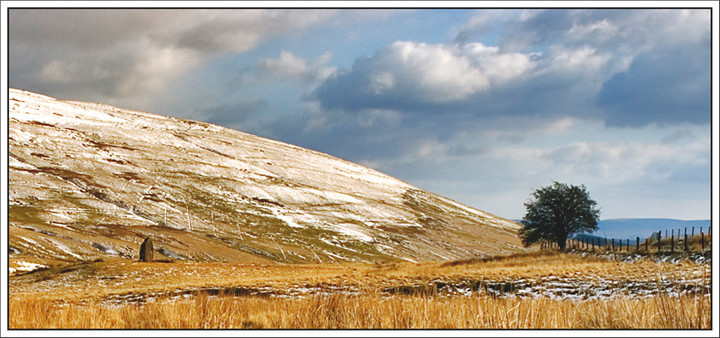
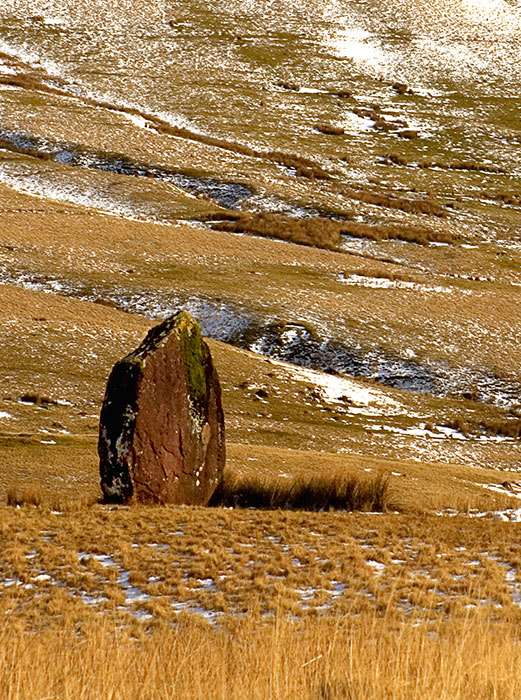
Notes from the stone, 26 Aug 00 Visible on the skyline for quite some distance when approached from the South, Maen Llia is an imposing and isolated stone. Despite it being, as Julian Cope's poem would have it, miles from anywhere, there's a stile over the fence and a well-worn path to the stone, which has been slightly vandalised by people carving their names into it (one appears to be dated 1860). The stone stands facing the valley sides and its edges align with the valley. Although the predominant stone of the area is grey, Maen Llia is a deep wine-red, and very pitted and pock marked. The stone is huge - some four metres tall - and surrounded on three sides by upward slopes; getting it from wherever such rare stone was found to here was a mighty task. The top is gently rounded and comes to a point. One side of the point is very straight indeed. I don't know how to tell if it's tooled or not, but either way it's an odd shape. The sense of position is really weird; as you look down the valley toward Ystradfellte there are impressive layers of hills, but that is true of pretty much anywhere round here. If the stone were 500m north there'd be the same view down the valley, but it'd also look down another valley too. The stone was clearly not positioned with a wish for the most impressive position on the landscape. To the northeast of Maen Llia there's a notably anomalous mound on the landscape that goes halfway up to the horizon, not overly dramatic but unusual for the shape of the land round here. It's kind of like a squashed Silbury (but is too big to be the work of humans). To extend the comparison with Silbury, the mound here also has a Roman road running directly beside it, Sarn Helen. This implies that the hill may have had some significance. |
Posted by Merrick 5th September 2000ce |
Folklore |
Add folklore |
|
The StonePages link below mentions two apparently standard folklore tales connected with Maen Llia. But are they more complex than at first sight? One legend has it that whenever a cock crows, the stone goes to drink in the River Nedd. Look at the map and you will find this is rather perverse, because the stream that runs right near the stone isn't the Nedd Fechan at all. It would require a strenous walk up over the hill Fan Nedd, and then down the other side. According to another story, the stone visits the River Mellte for a swim on Midsummer morning. The Mellte runs through the village of Ystradfellte to the south - it's the same watercourse as that near the stone, but up there it is surely called Afon Llia? So does the stone wander all the way down to Ystradfellte? I have read that the stone is actually visible from there. Besides, it's probably worth the trek - it's a pretty strange river. The whole area is full of caves and shake holes, and the river actually disappears into a cave (Porth yr Ogof) - to flow underground for 300 yards before reappearing at the surface in the mysterious Blue Pool! |
 Posted by Rhiannon
26th April 2005ce Edited 27th April 2005ce |
Miscellaneous |
Add miscellaneous |
|
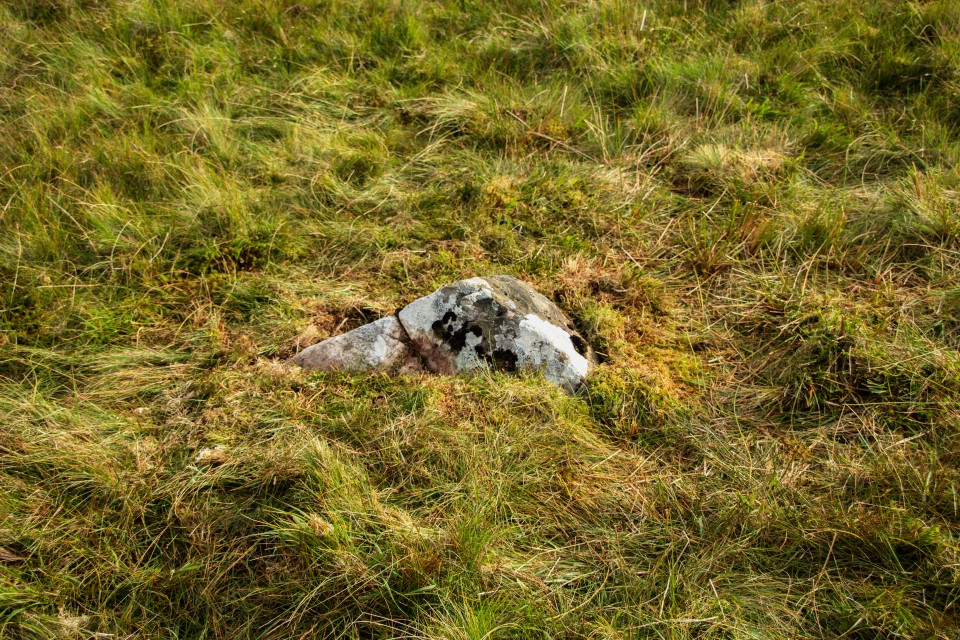
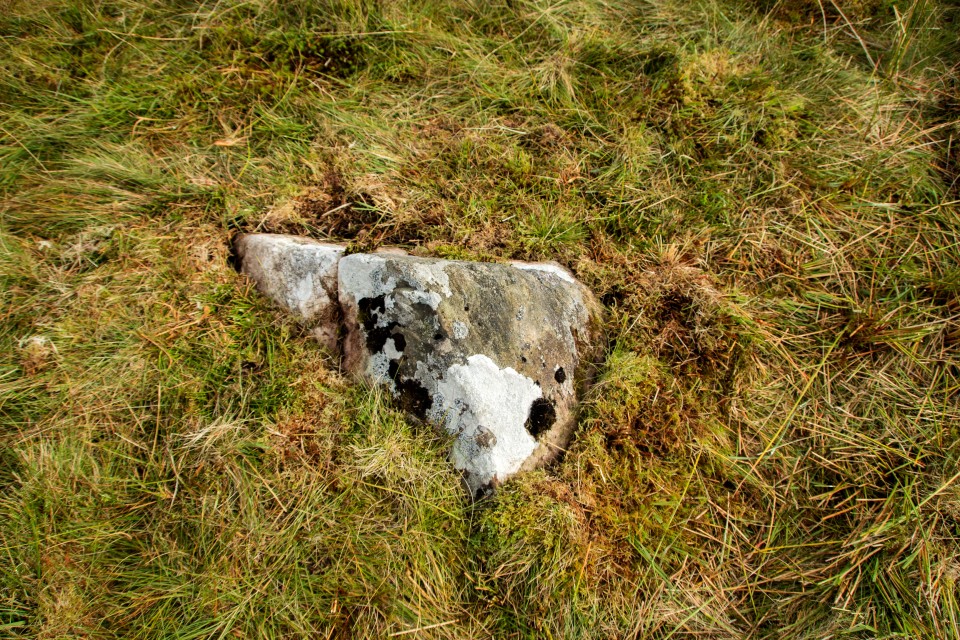
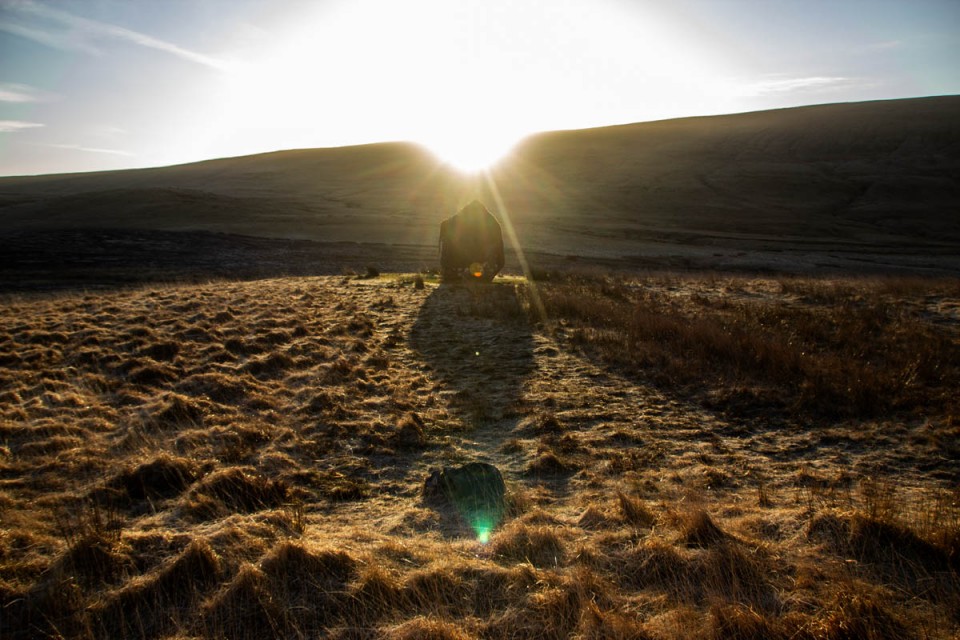
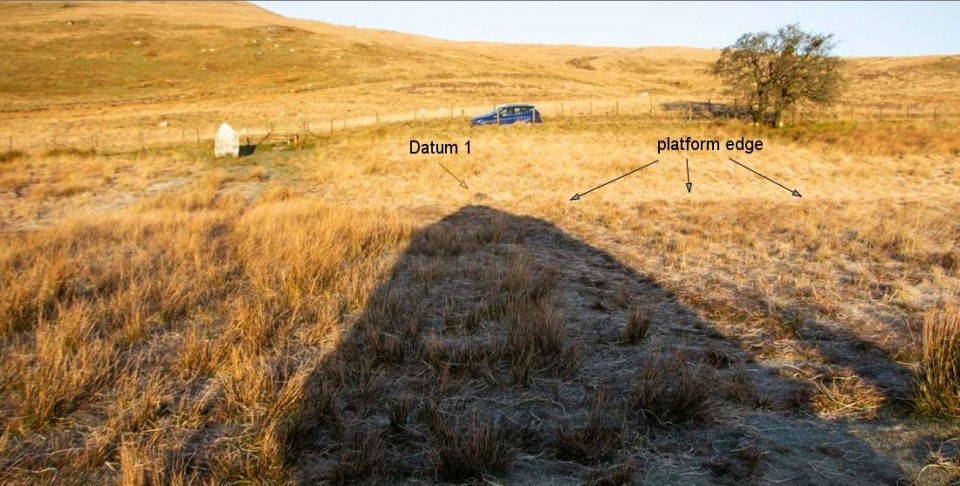
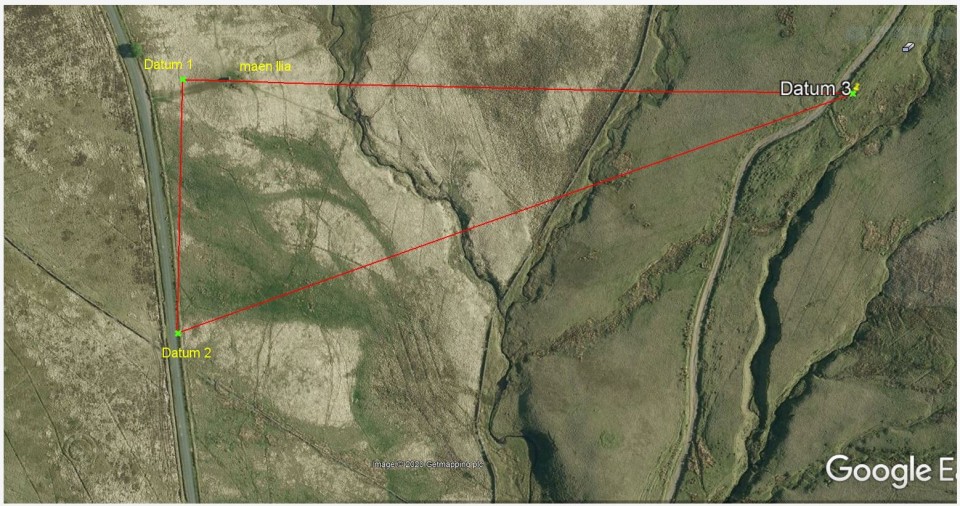
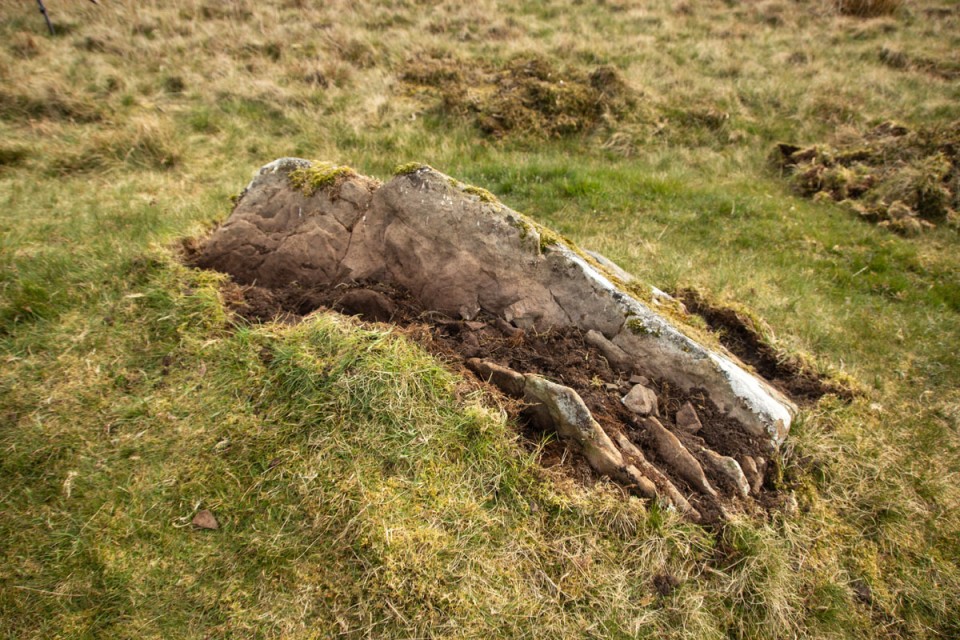
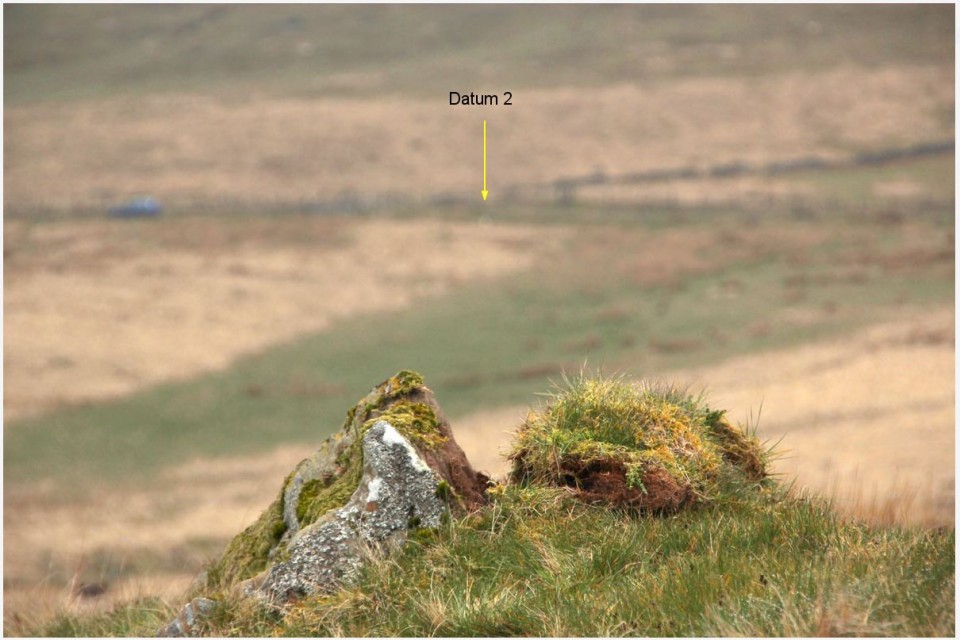
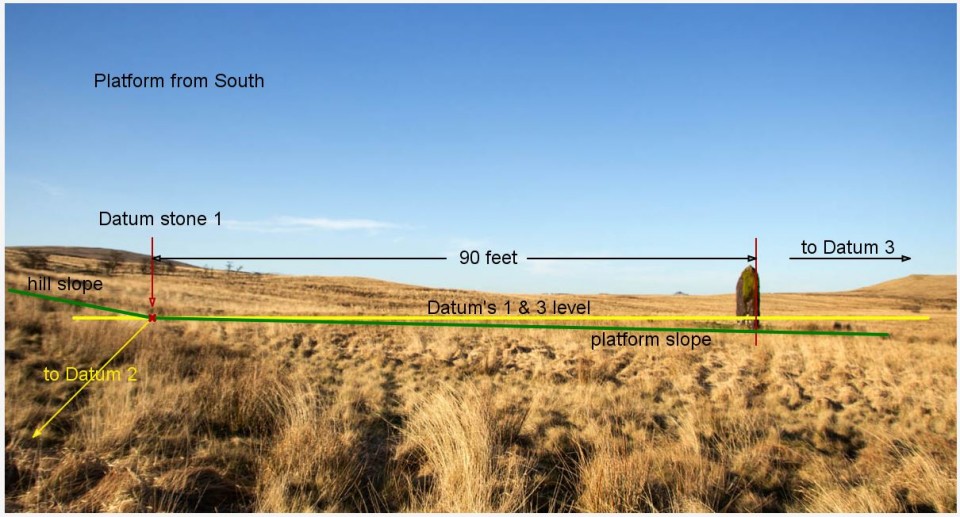
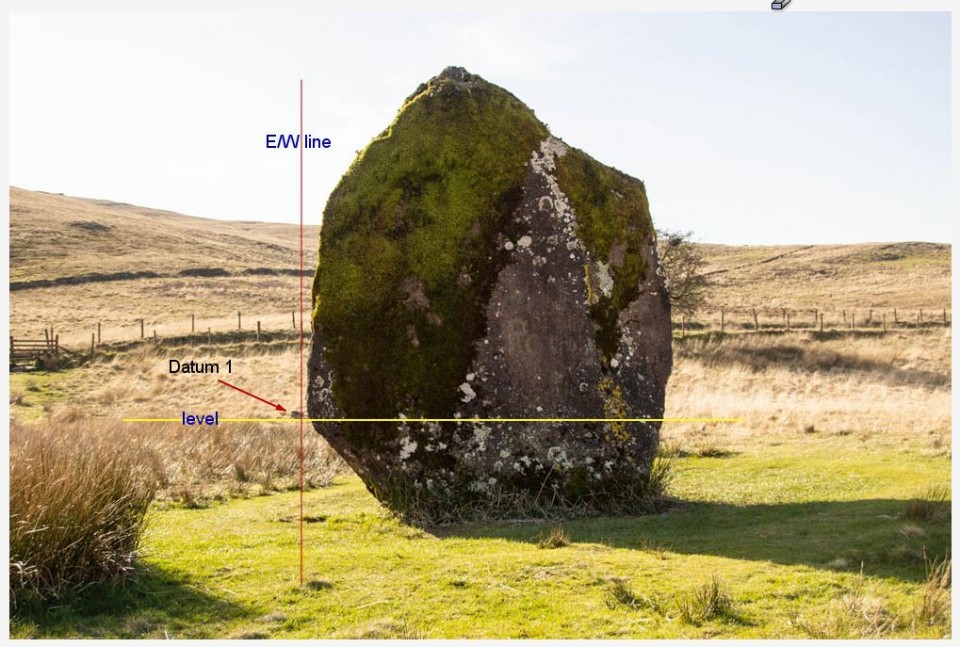
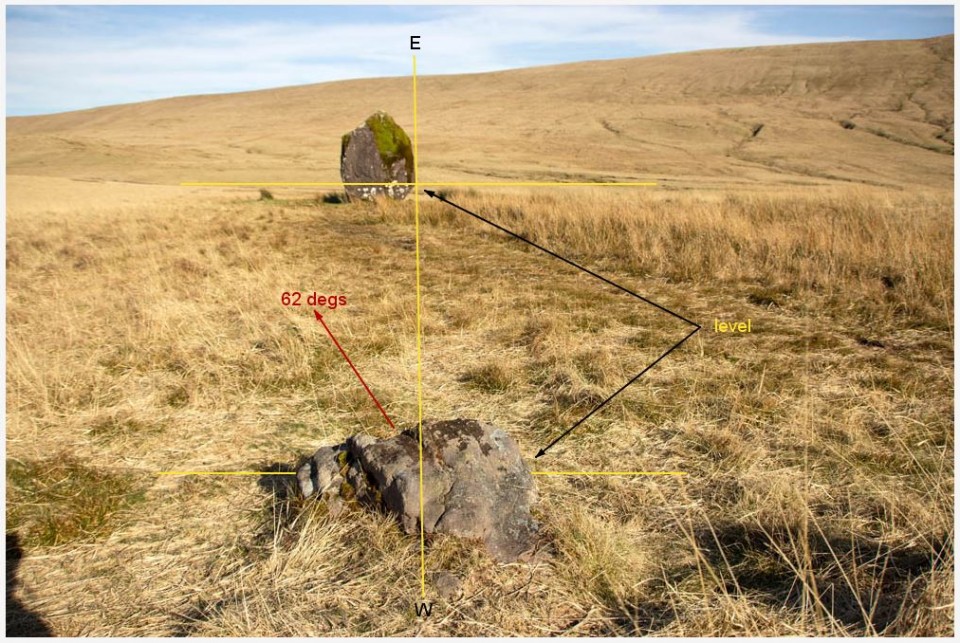
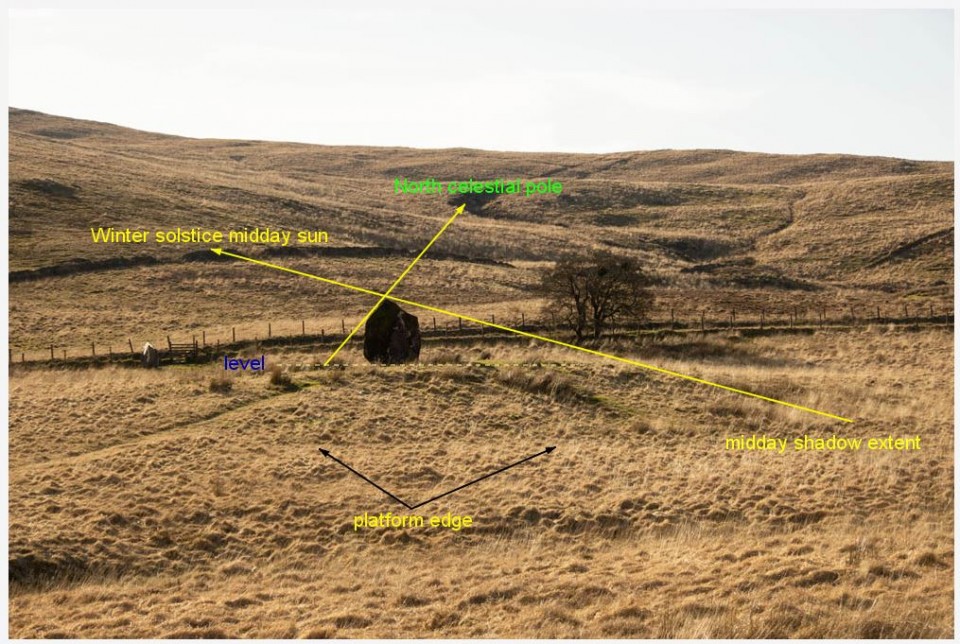
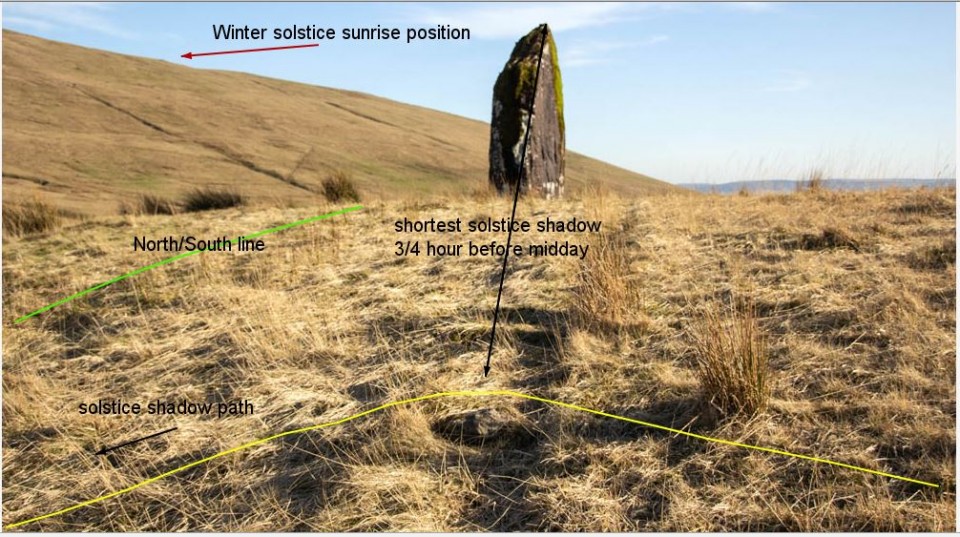
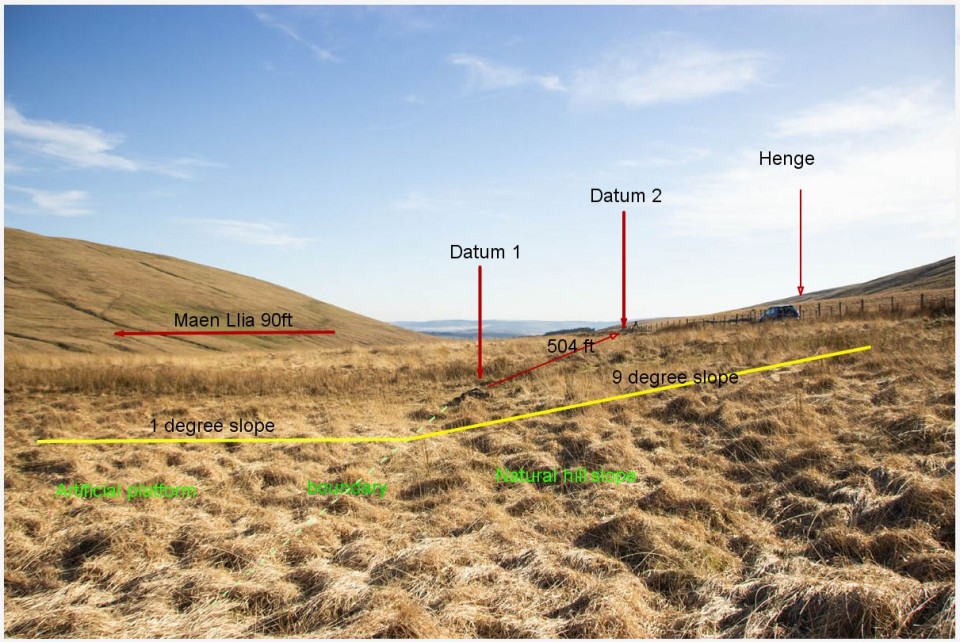
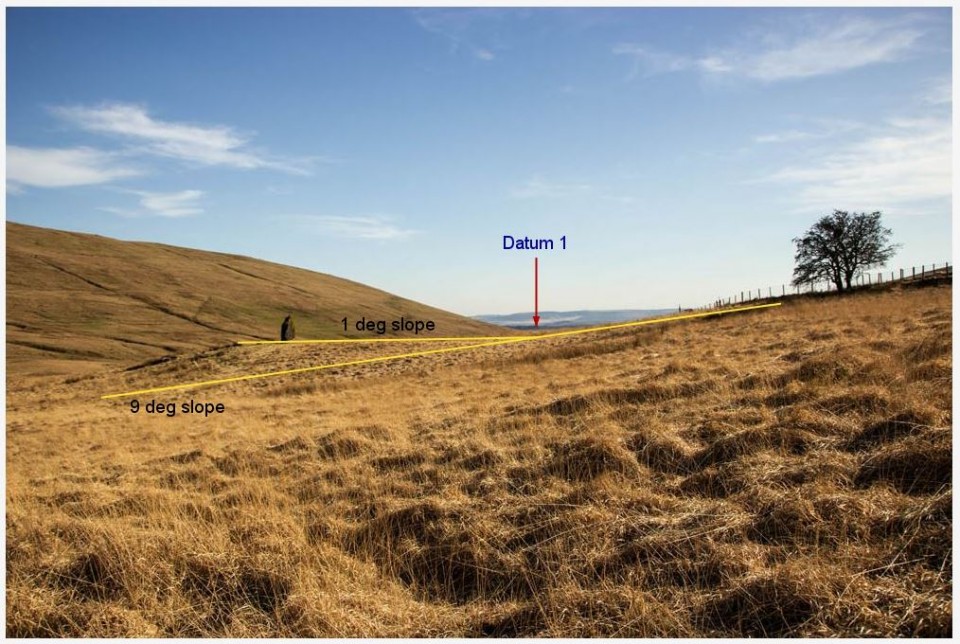
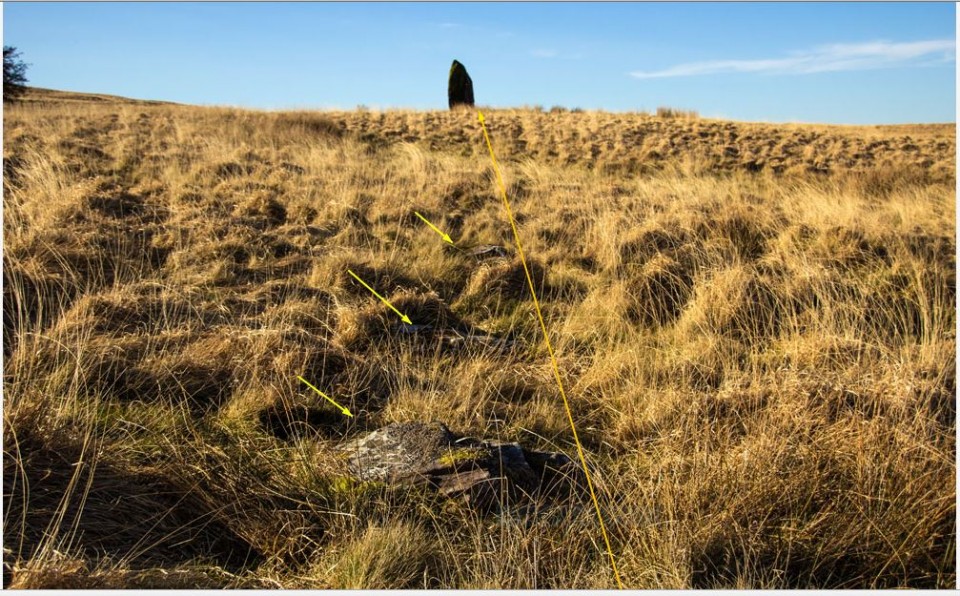
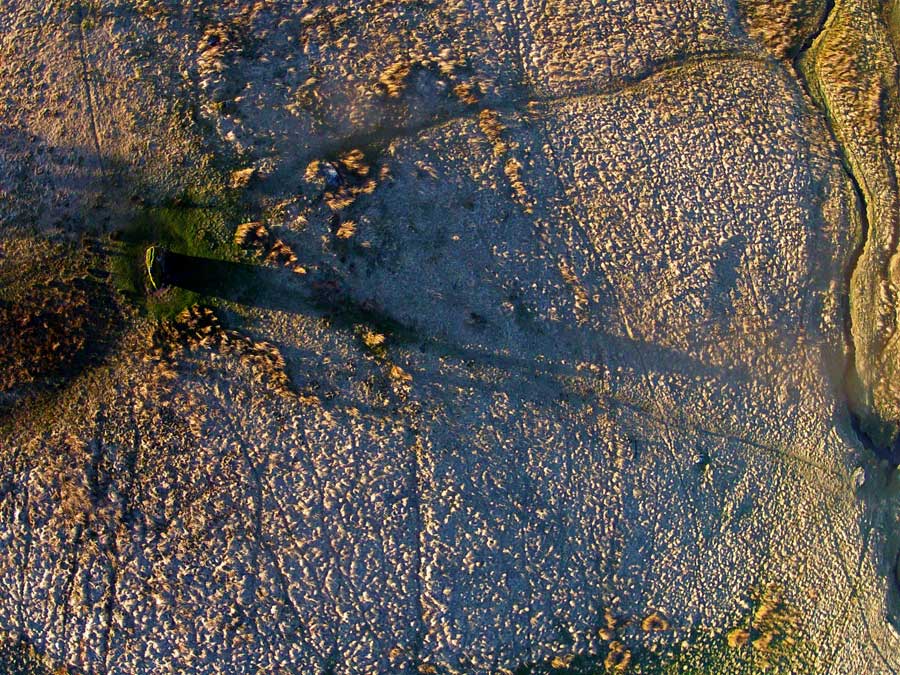
It seems to me that Maen Llia is not a natural shape. In the distant past it was almost certainly tooled, and sited, very deliberately. The reasons for this aren't clear to me , but some of its secrets have emerged. The stone is oriented north/south. this isn't approximate, it is n/s. the diamond shaped top is a right angle. The slope that runs uphill from north to south is 38 degrees, which means that at midday at the equinox it is pointing directly at the sun. The slope that runs downhill from the apex to the south is between 51 and 52 degrees. which means if you look up it to the north on a clear night you are looking directly at the pole star. this means that the angle of this slope is the same as the latitude of the site, which it is. Anyone who has a horizontal sundial will be familiar with this shape. To work properly the sundial must be aligned n/s and the slope of its nodus must equal the latitude of its site, otherwise it doesn't accurately measure the hours. Maen Llia might just be the oldest horizontal sundial in the world( if i'm right) Strangely enough if you stand by a small triangular shaped stone about 40meters south west of maen llia at sunrise on midsummers day( about 10 meters from the road) the shadow cast by the apex of maen llia just touches the stone, and the azimuth of the sun at that moment is spookily between 51 and 52 degrees. At the southern edge of the stone from ground level is another slope, this one believe it or not is once again the same angle? I think this angle was important to the people who sited this stone, but i havn't come up with any use for it , other than a very crude calender. There must be more to it than that. someone with a bit more grey matter than me can maybe take it further, (or discredit what i've come up with) i don't mind which as long as the argument is sound. One more thing, this angle has been used on other ancient monuments too. Theres one in Egypt that uses it 4 times. there may be others, i dont know. There are other angles on maen llia too. I can't find anything for them yet. If anyone can suggest anything else going on here i'd like to know about it. Please don't take my word for it , these are just my observations and i'm just an amateur at this. Check it out for yourself, theres more to be found here i'm sure. Good luck |
Posted by cerrig 6th June 2009ce |
Links |
Add a link |
Stone Pages: Maen LliaThis page contains a photo of the stone, a short description and directions. It also links to a high resolution version of the photo. |
 Posted by Kammer
30th January 2003ce |
 Top of page