|
 Log in |
Register Log in |
Register
|

|
|

AchnabreckCup and Ring Marks / Rock Art
|


 Show map (inline Google Map)
|
|
|
News |
 Add news Add news |
|
Rock carvings found after recent storm.. Just found a report from this weekend regarding new carvings found at Achnabreck after a recent storm. New carvings found at Achnabreck |
 Posted by rockartwolf
18th February 2008ce |
Images (click to view fullsize) |
Add an image |
Photographs: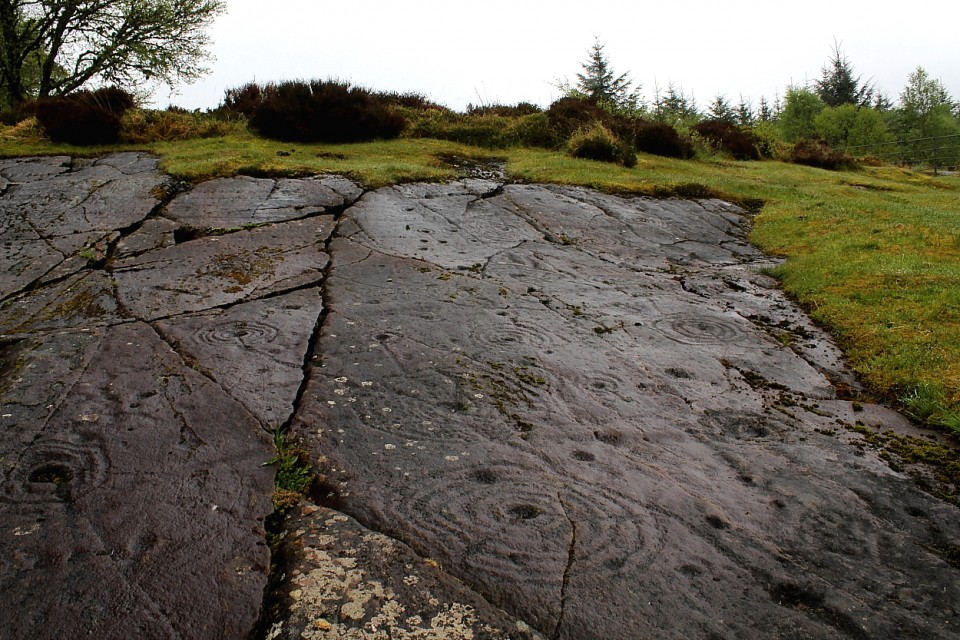
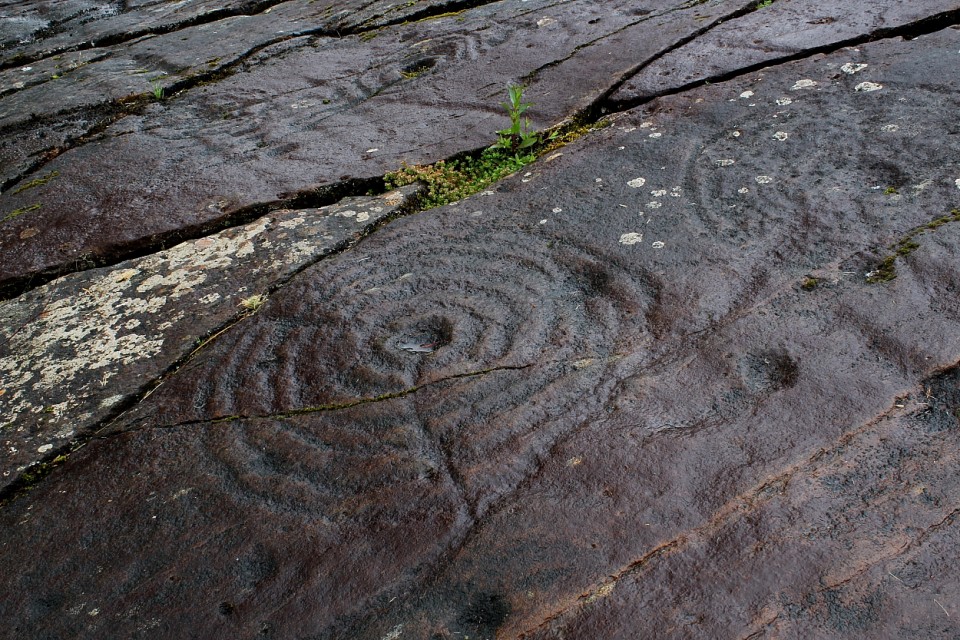
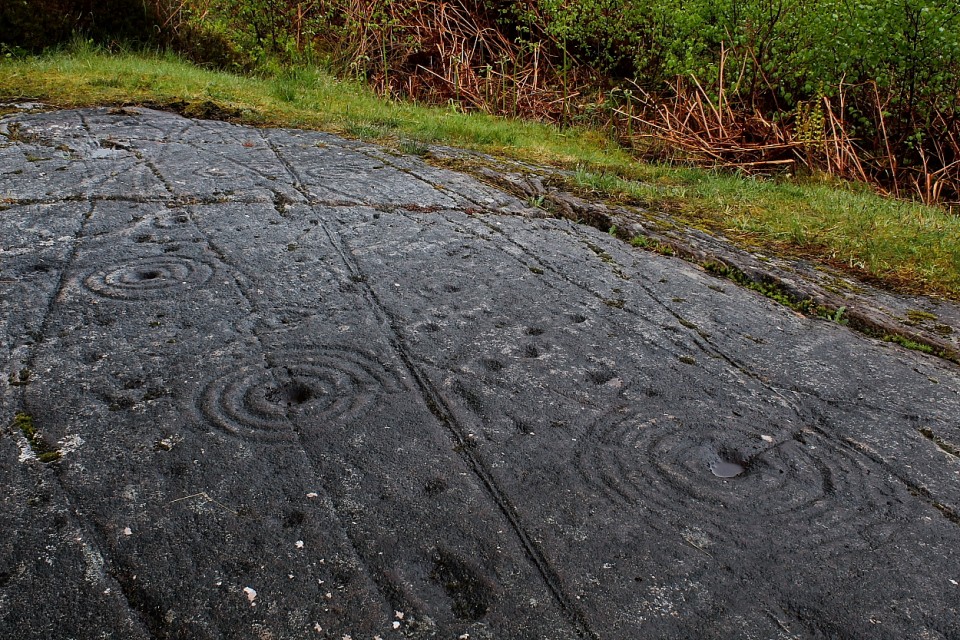
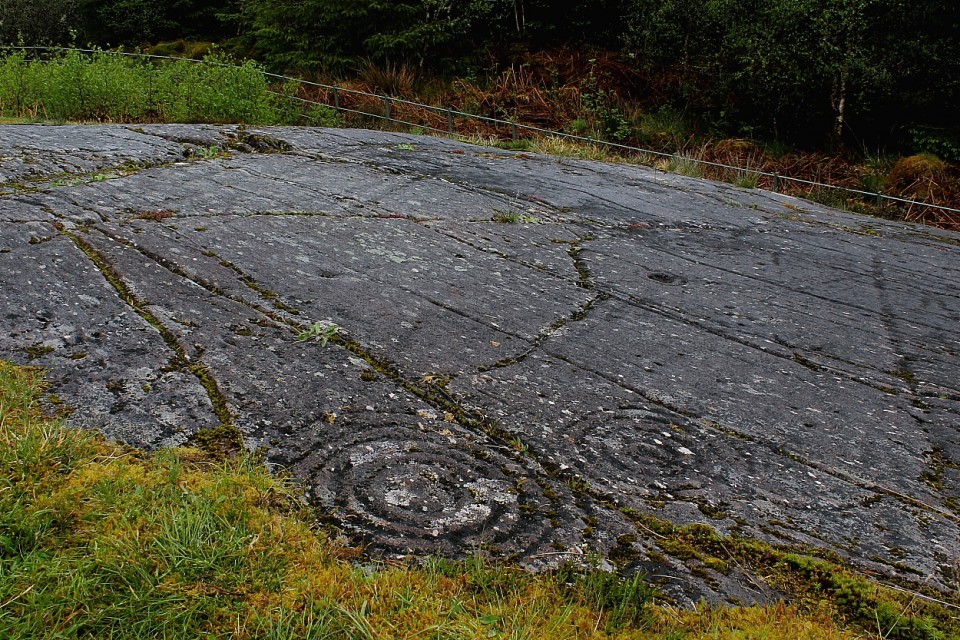
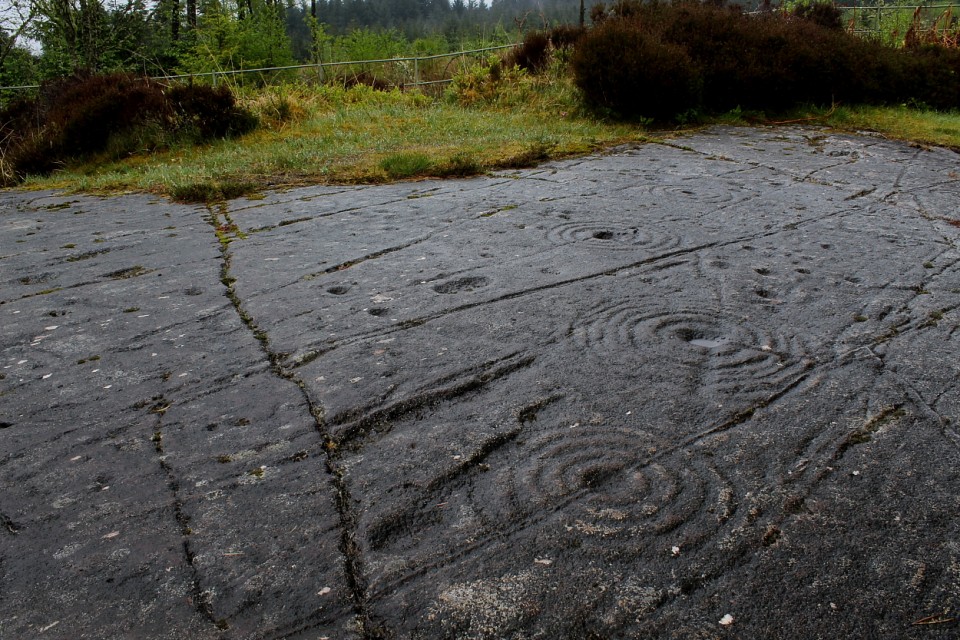
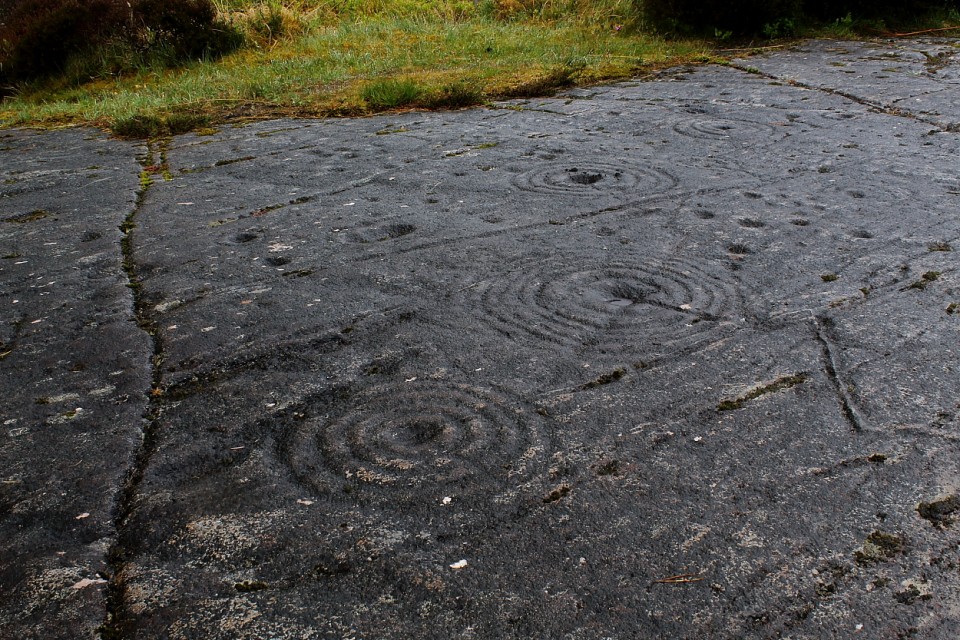

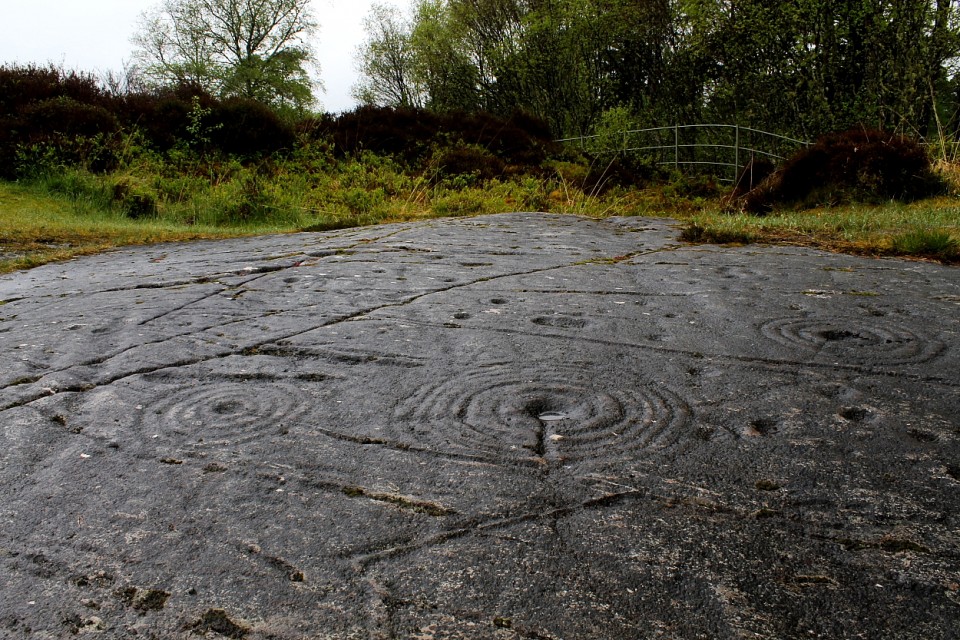

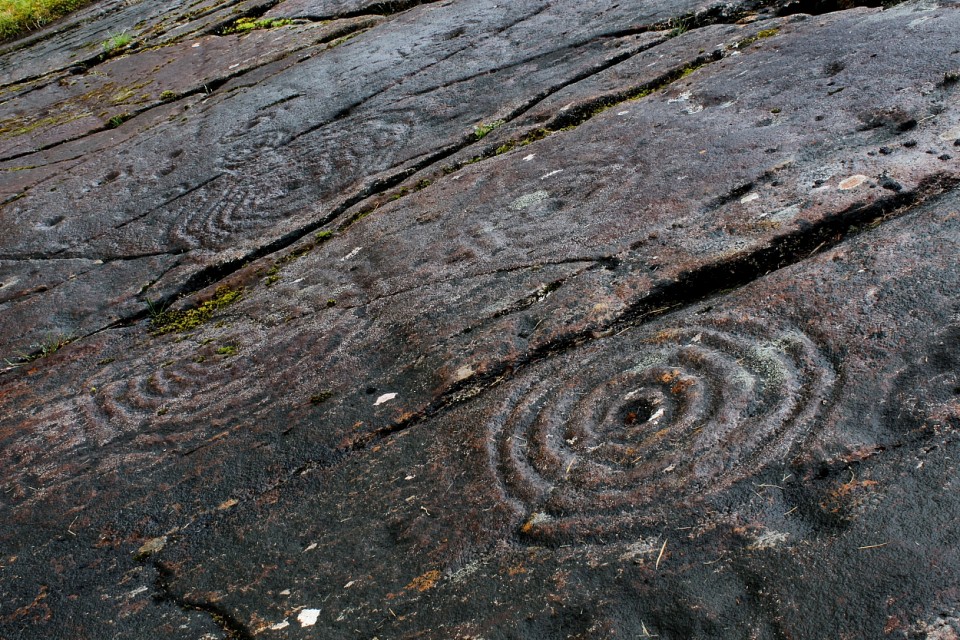
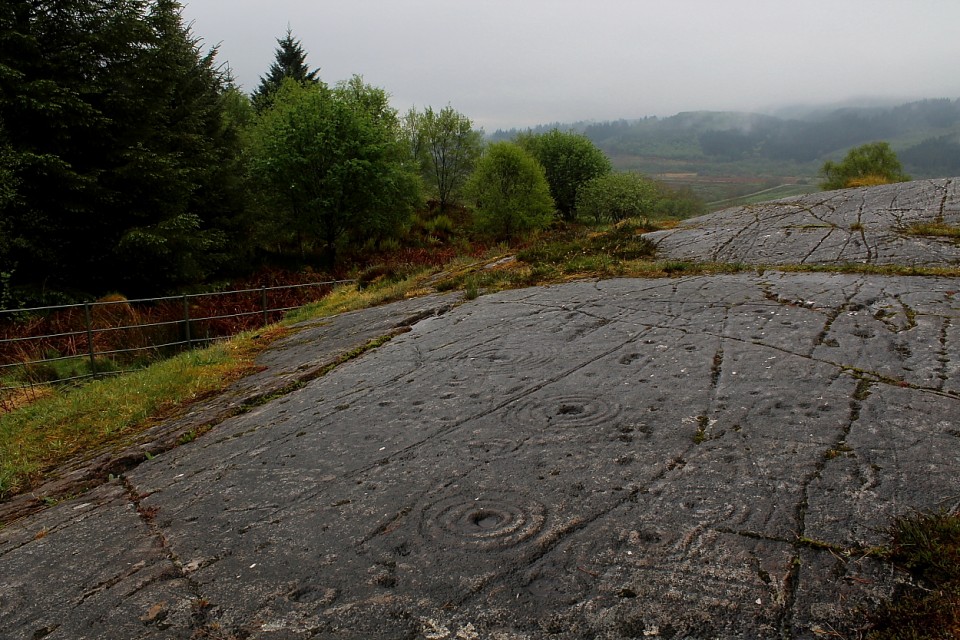

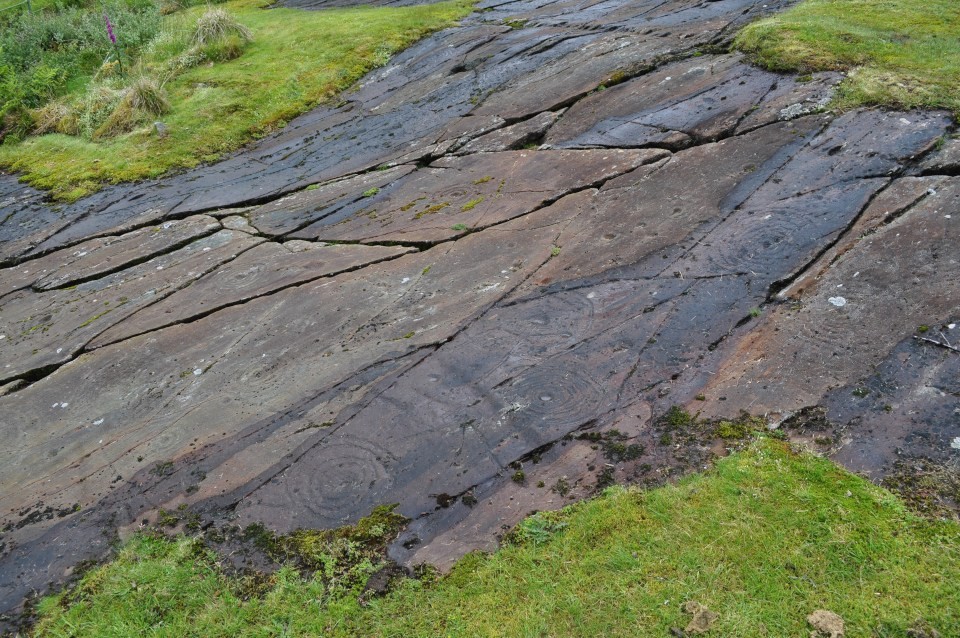
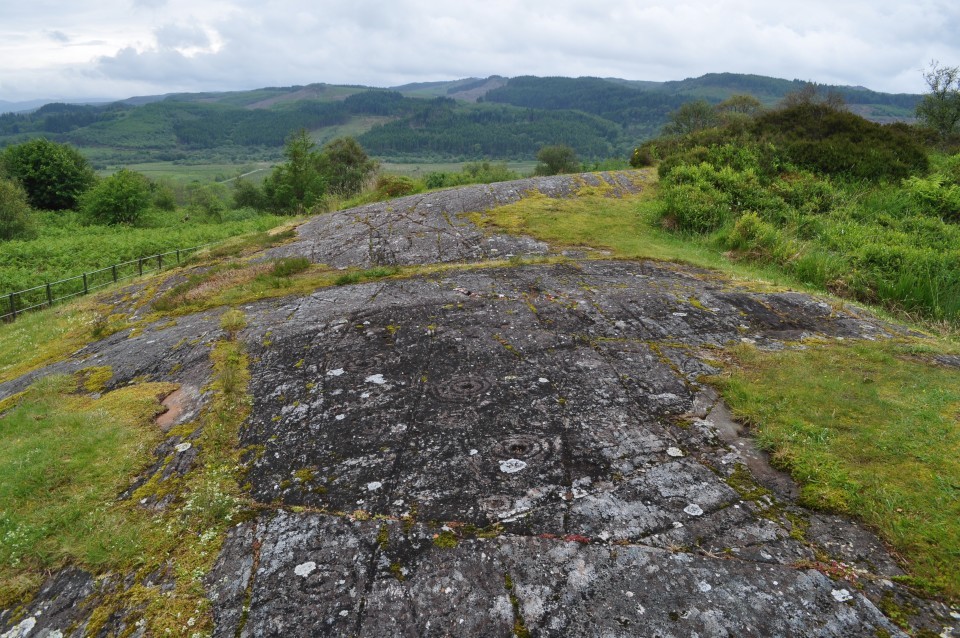
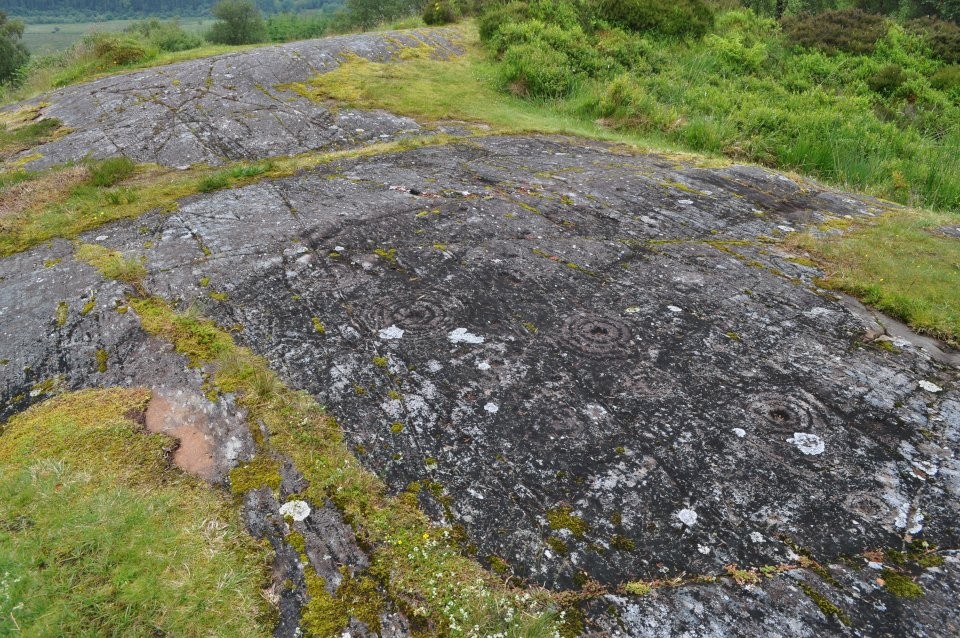



 Maps / Plans / Diagrams: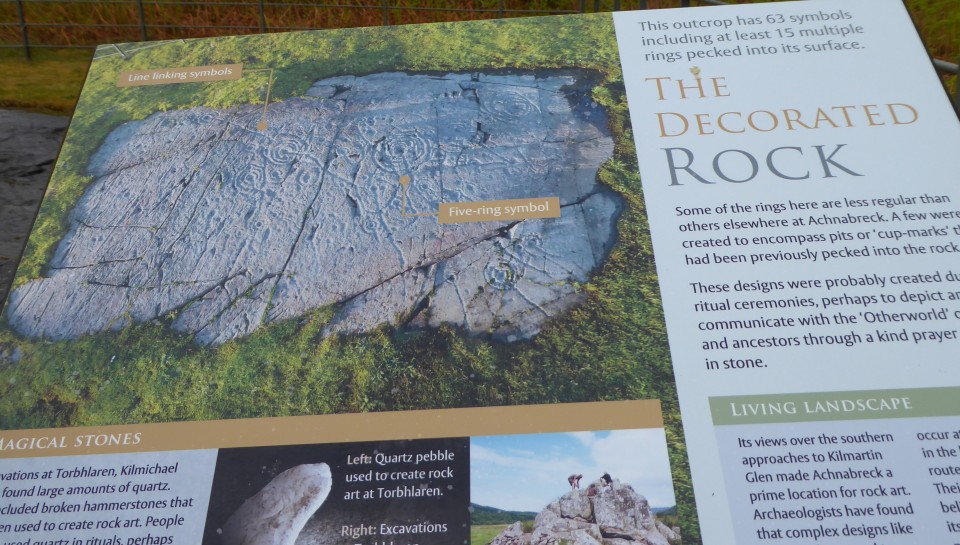

 Artistic / Interpretive: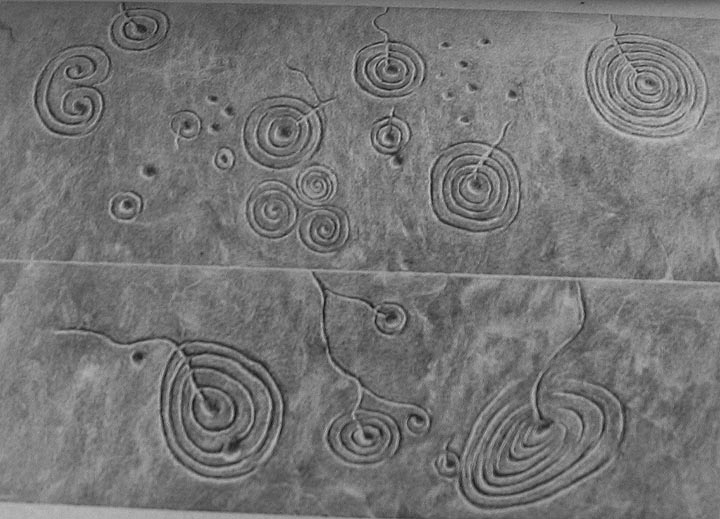


|
Fieldnotes |
Add fieldnotes |
|
Visited 21/5/17: We passed the sign for Achnabreck on our way to the accommodation we were going to be staying in at Cairnbaan so it was with no difficulty we drove back there the next day. We could have walked but that morning it was raining ... heavily. We were undeterred and, after a bumpy drive up the forest track, found the designated parking area. The information/interpretation boards are abundant and full of useful information. We followed the clearly marked trails up to Acknabreck 1. In no way did the rain spoil the enjoyment of seeing my first Kilmartin rock art panels although my photos didn't do them justice. On then to Achnabreck 2. A smaller though as equally impressive panel. We understood there was third panel further on and did walk on a bit to find it, unsuccessfully. Very much wanted to walk back up there from Cairnbaan - as there is a narrow short-cut road just past Cairnbaan Hotel which comes out opposite the sign for Achnabreck - in better weather but one week just wasn't long enough. Achnabreck - also known as Achnabreac in Gaelic which might contain elements that mean 'speckled'. |
 Posted by tjj
31st May 2017ce Edited 31st May 2017ce |

|
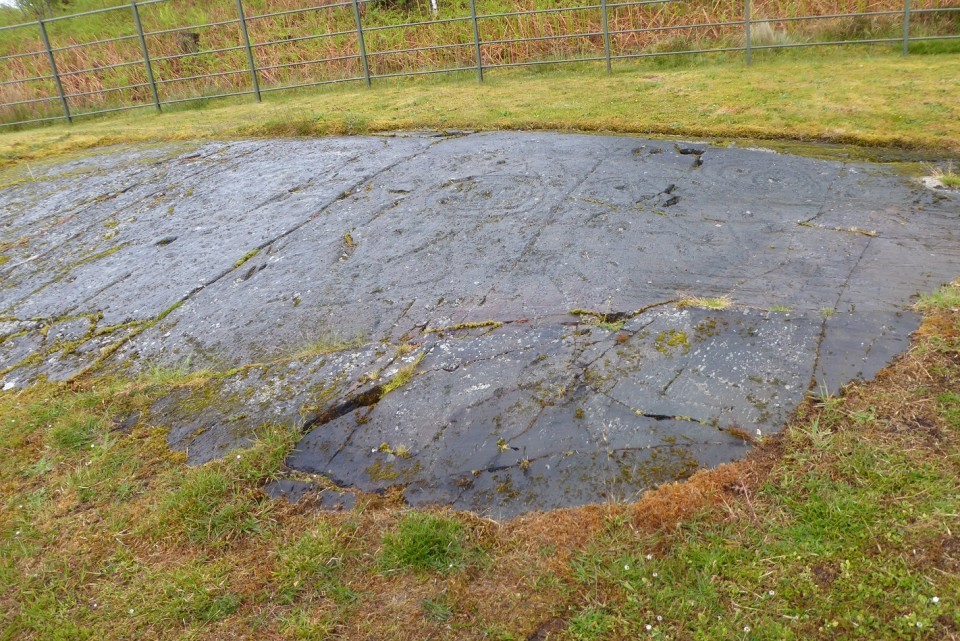
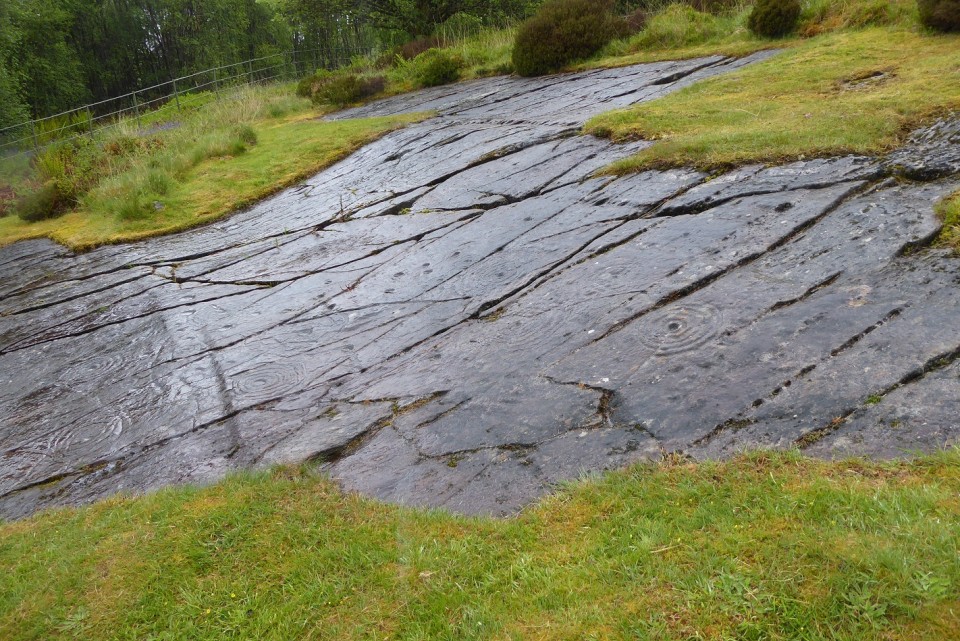
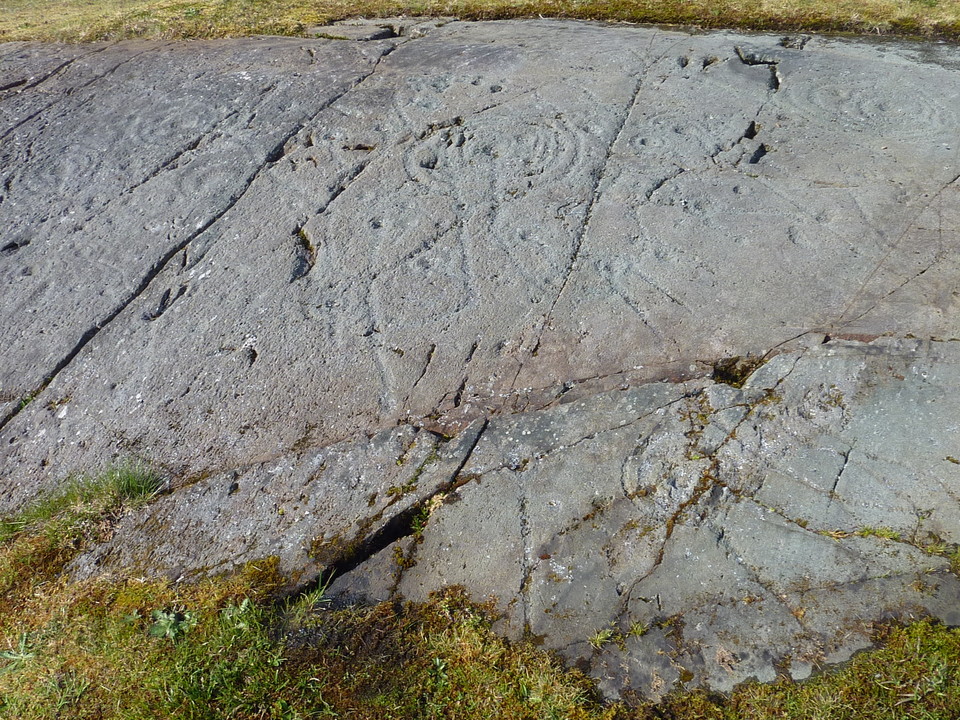
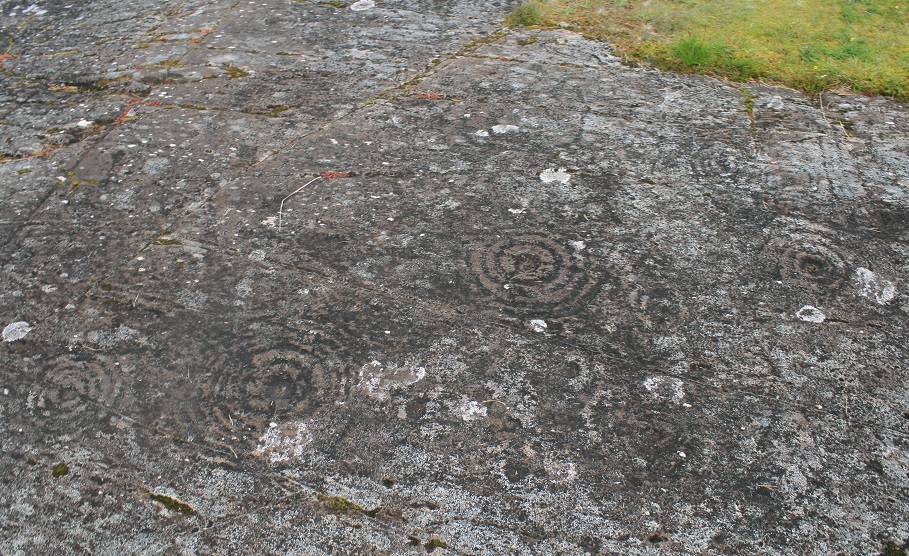
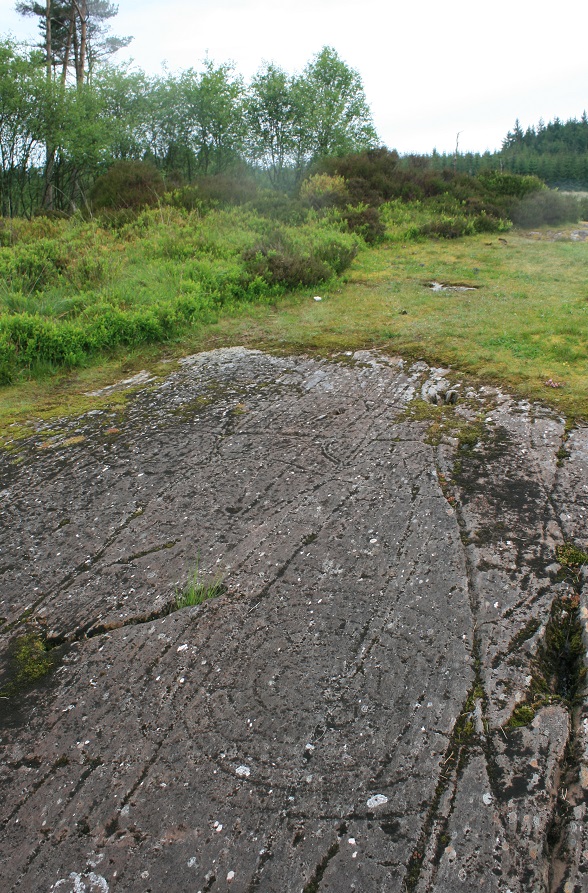
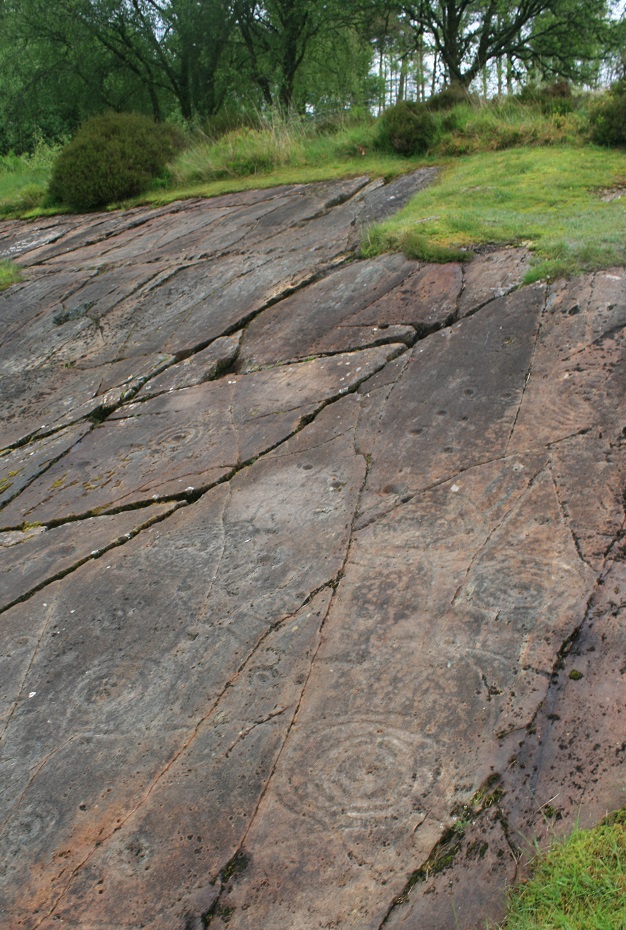
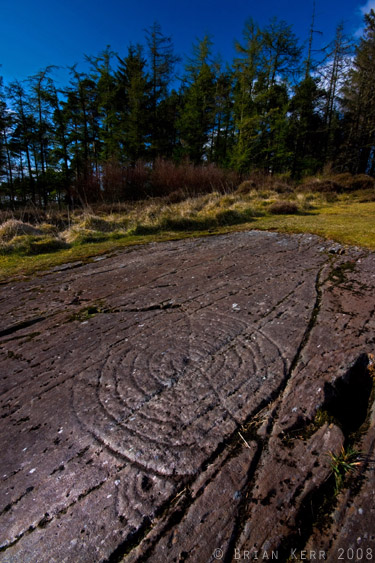
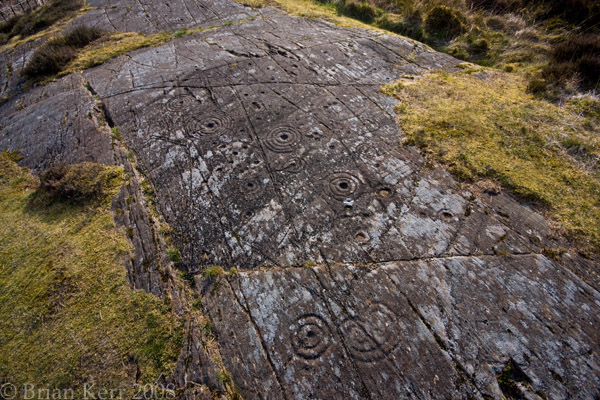
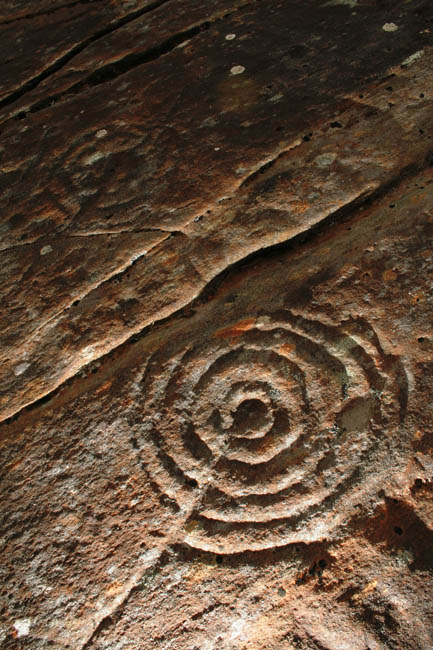
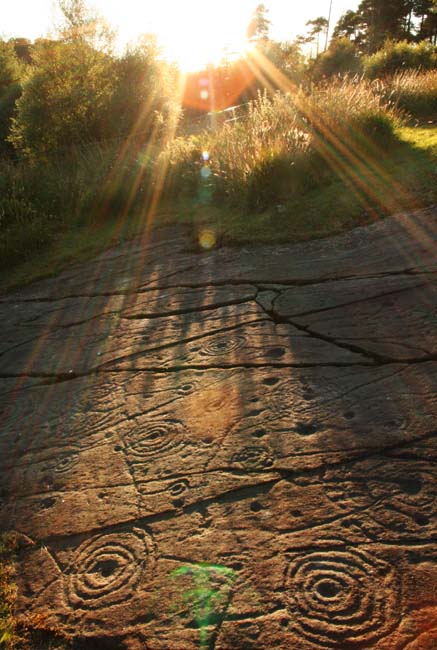
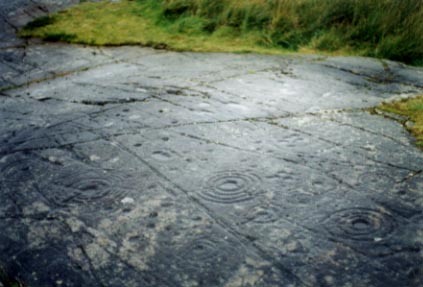
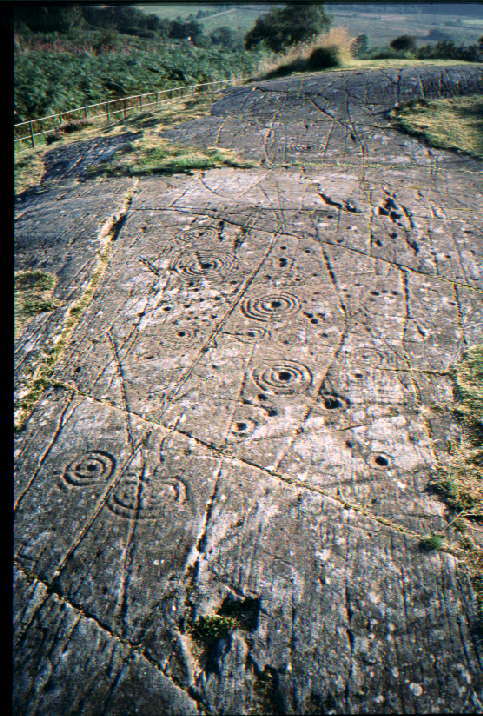
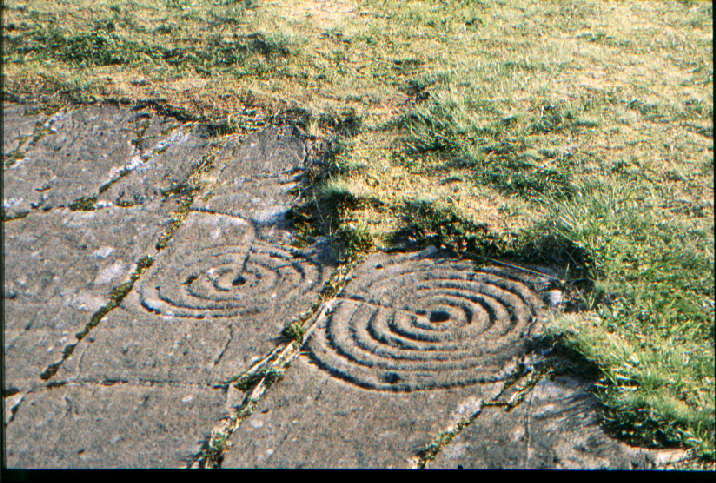
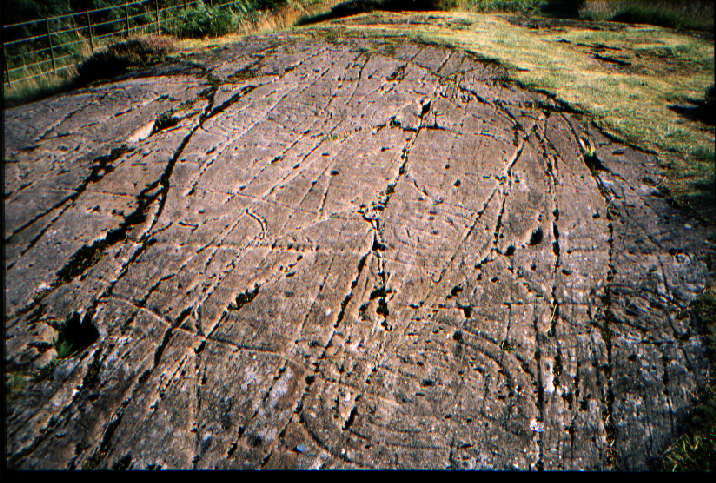
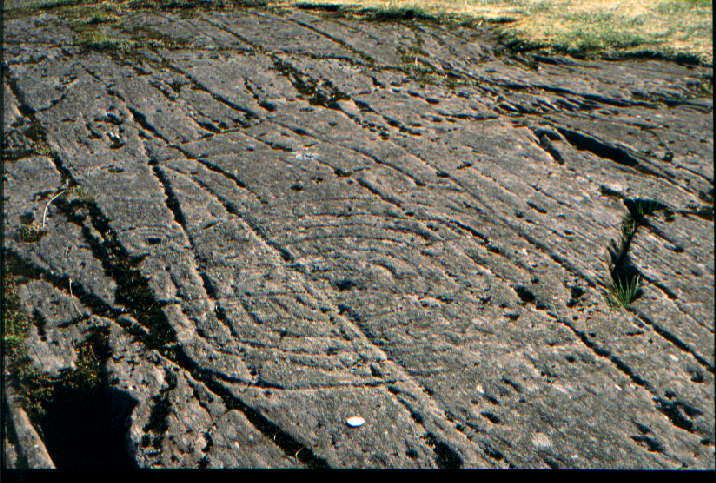
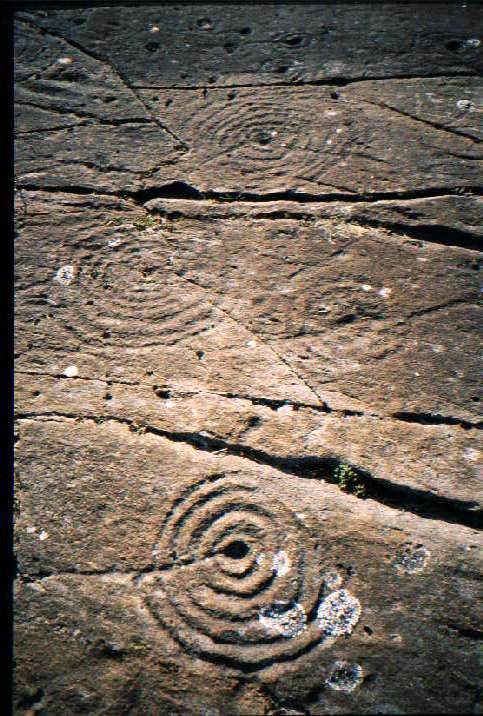
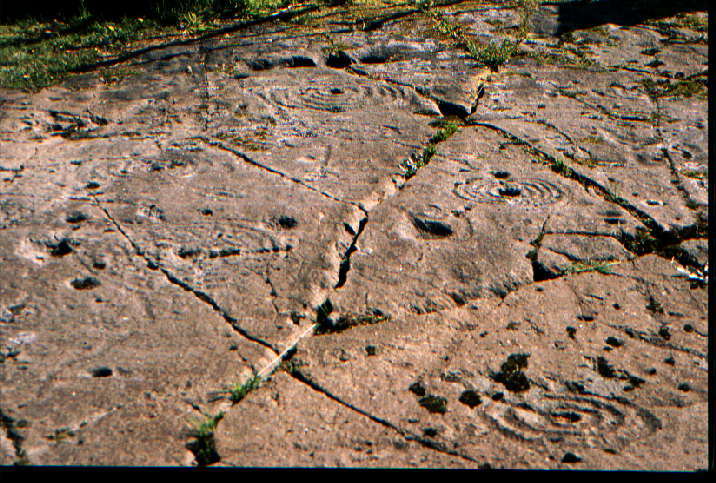
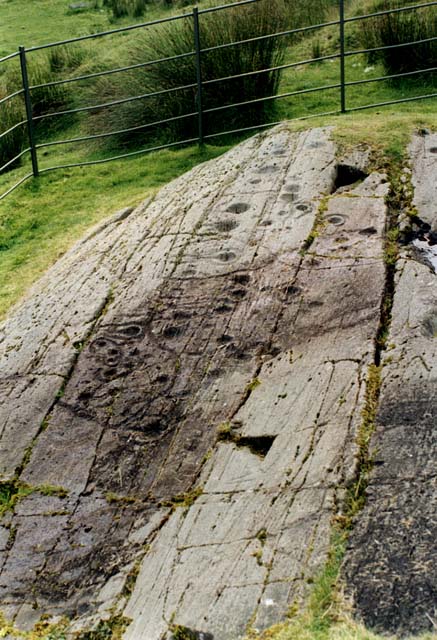
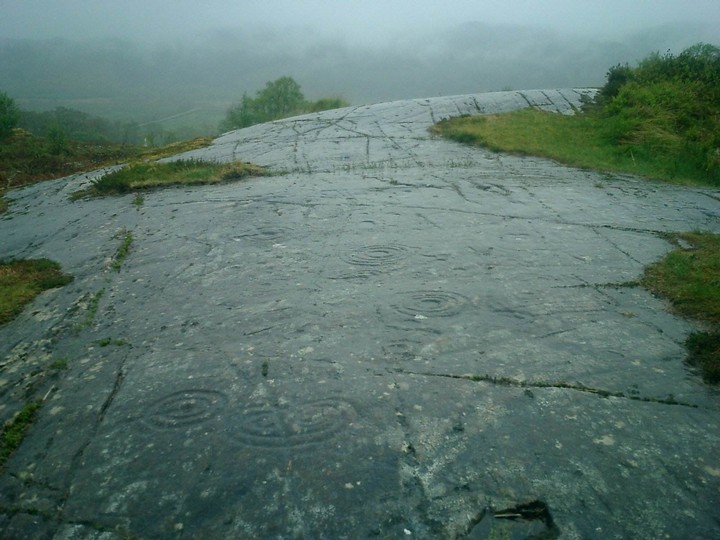
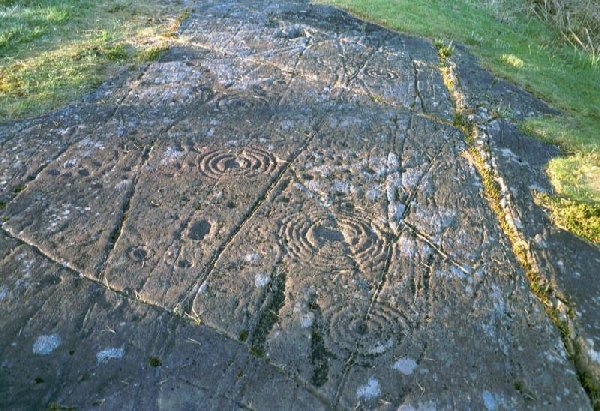
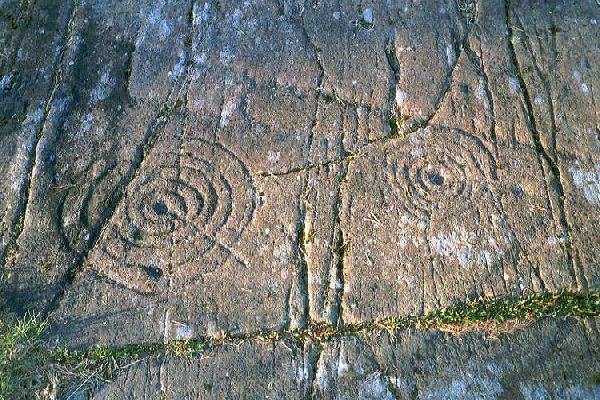
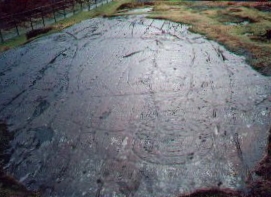
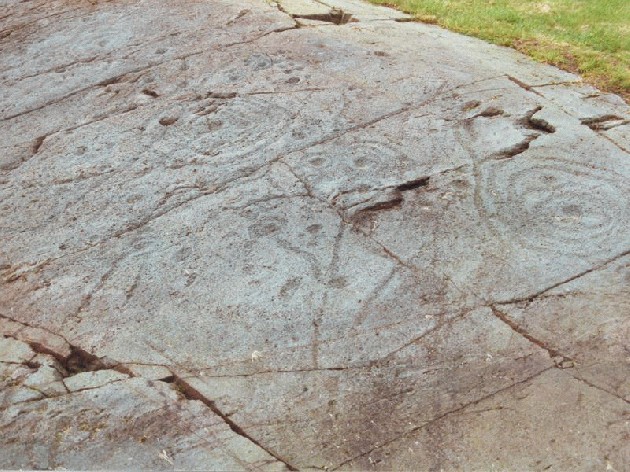
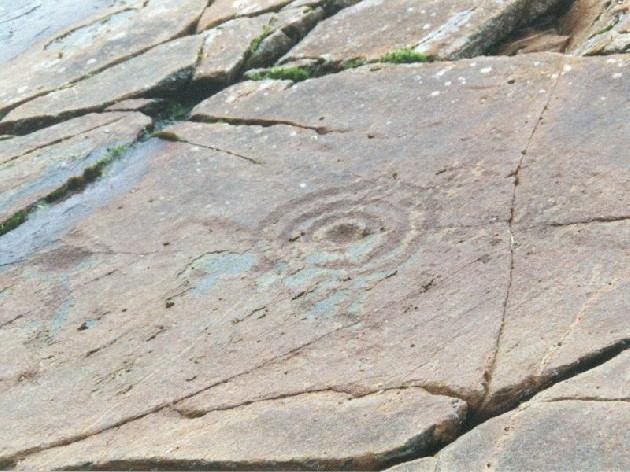
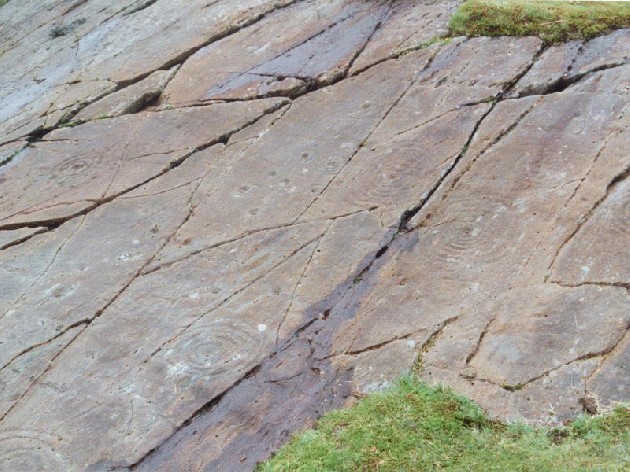
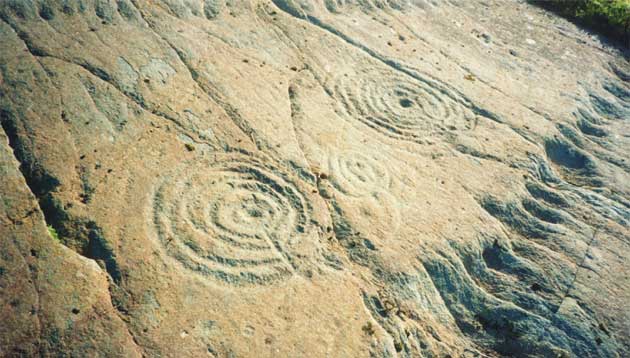
I didn't find this place easy to find at all. After the depot on the forests edge I turned right instead of going straight on. Accordingly I ended up south of the fort Dun na Maraig on a track that takes you to Achnabeck farm house and standing stone(fallen). We saw a sign for the rock art pointing into the trees, so it seemed all would be well. But somehow we ended up on what looked like a BMX track which took us to who knew where. But with map and compass and the high fort to get our bearings from we soon found our selves back on the right track. It took us straight to the rock art, Yaay. I've been to Kilmartin several times now and seen the sign on the road pointing the way here but always I've gone off to see the stones instead. But not this time, it is high on the must see list. To say that the rock art panels are extensive is to say that the kilmartin glen has some stones in it. I wasn't expecting it to go on so far, the first panel is quite massive, inclined at 45 degrees, perhaps. It has many interesting forms upon it. But round the corner and you can see just how much further it goes. I'm afraid to say it was at this point that the fence jumper in me got the better of me. Over we go, no one saw us, i think we got away with it. Needless to say we didn't trample on the carvings, we always trod on grass. One of the spirals is a meter across, huge, comparatively, it's the overgrown mutant of the rock art spiral world. Plus, there's the view down into and across the valley, it's a nice place, a very nice place indeed. But just then the swarm came, the real monster of the highlands, those god damn midges. Eric earlier in the day had pointed out some midge hat net thingies, but I said we could cope without them. We couldn't, they fair chased us away, there was more midges than there was vacant air, run for the hills, damn were already there. The way back was more straight forward than coming. |
 Posted by postman
15th June 2014ce |
| I got absolutely drenched visiting this site (days before I had my waterproofs!) but it was well worth it as the rock art is amazing and the rock face is so large. I doubt a place like this would have survived this long if it was easier to get to! In saying that, the path from the car park is obvious. Just keep walking and it takes you right there. |
Posted by CARL 8th June 2010ce |
|
Came here as part of the Half Life event. blogged about it here. |
 Posted by pebblesfromheaven
6th September 2007ce |
|
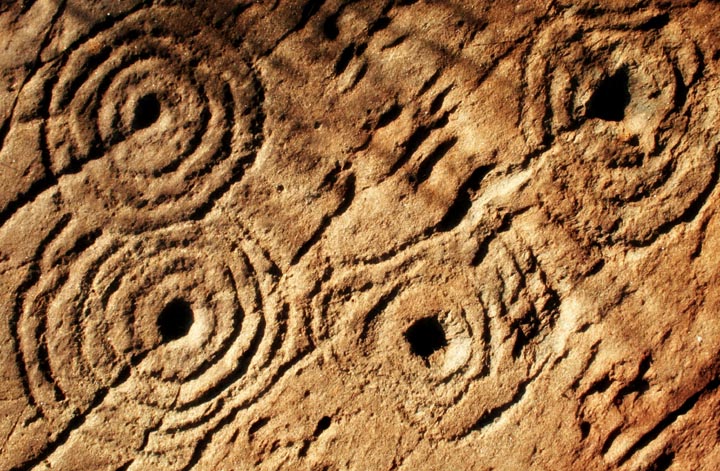
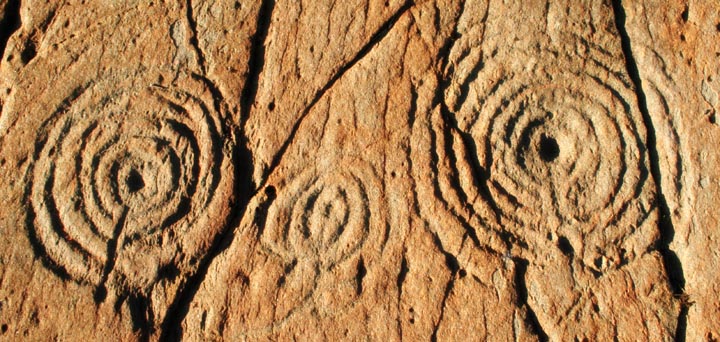
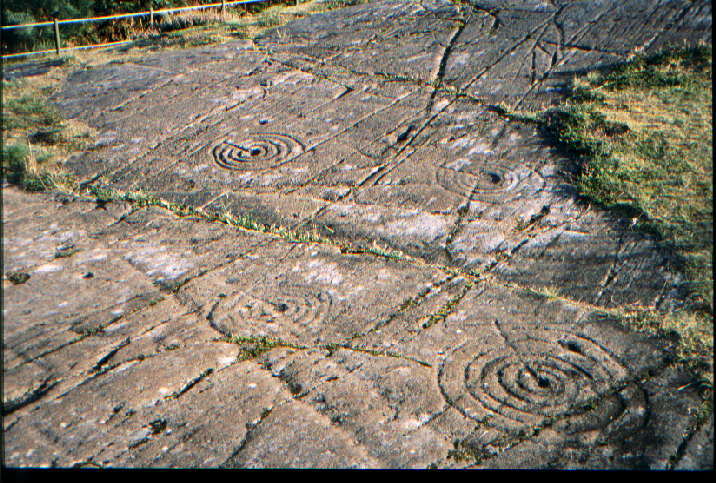
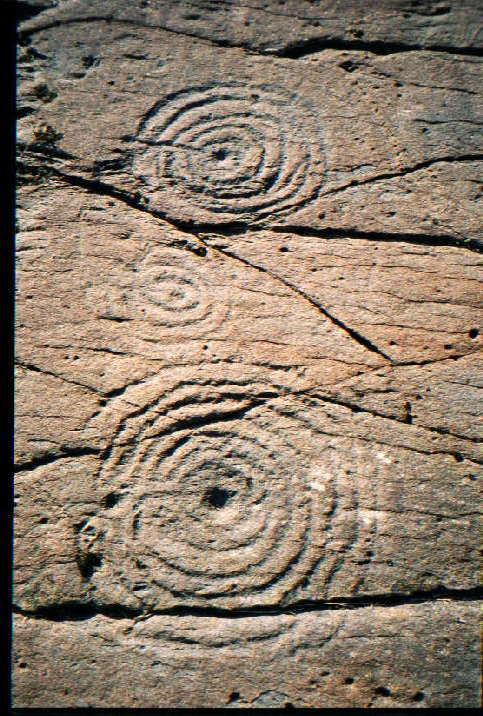
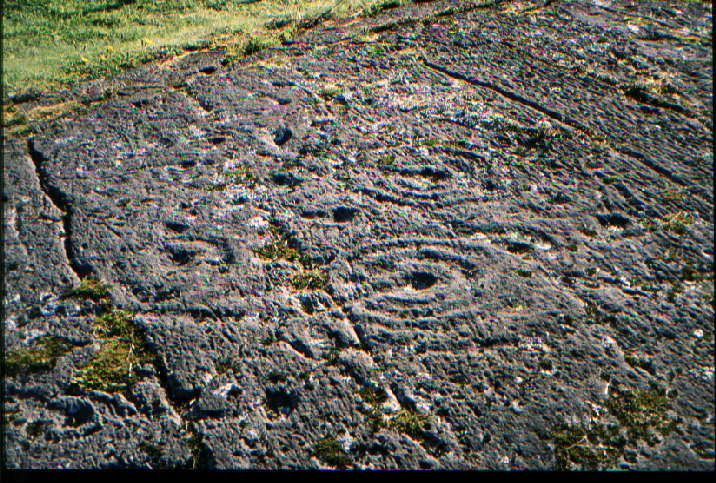
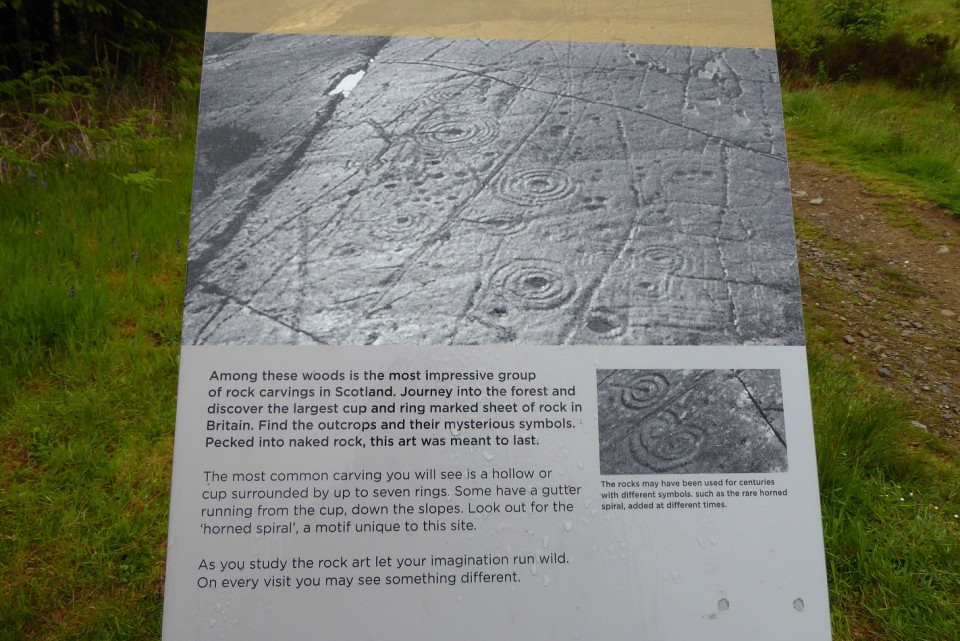
August 2006 Summertime again, but this time low overcast, terrible light for viewing rock art. Headed home before it got properly dark, precluding fancy photos. Still enjoyed it though. Made the acquiaintance of a couple of supremely weird looking Germanic fellas, who had visited not to see the rock carvings per se, but because they had been told that from this spot, the whirlpool of Coryvreckan could be seen. This ties in with thoughts of spiral motifs both here and at Templewood. For apparently Coryvreckan is a formidable natural feature, maybe worthy of note back in the days of rock carving and circle building. August 2005 Summertime, clear sky, late evening, just before the sun hits the horizon, midge central, but the light hits at the perfect angle, and no-one else there. Lovely. If you ain't into climbing over the railings, the camera-onna-stick method of monopod assisted photography can get some nice closeups. I was interested in some motifs which looked like they'd been 'had at' in ancient times. As if their meaning or creator had become unwanted, resulting in the deliberate and public desecration (if that's an applicable word?) of the carvings. As far as I'm concerned, Achnabreck lived up to the hype. (But it still dunt beat Ketley Crag for sheer CnR loveliness!) |
 Posted by Hob
13th November 2005ce Edited 2nd September 2006ce |
|
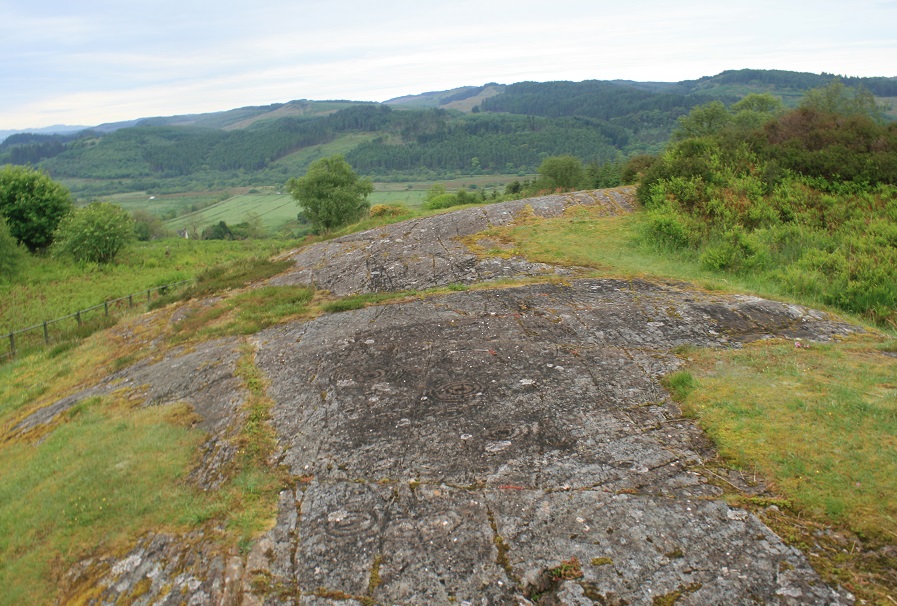
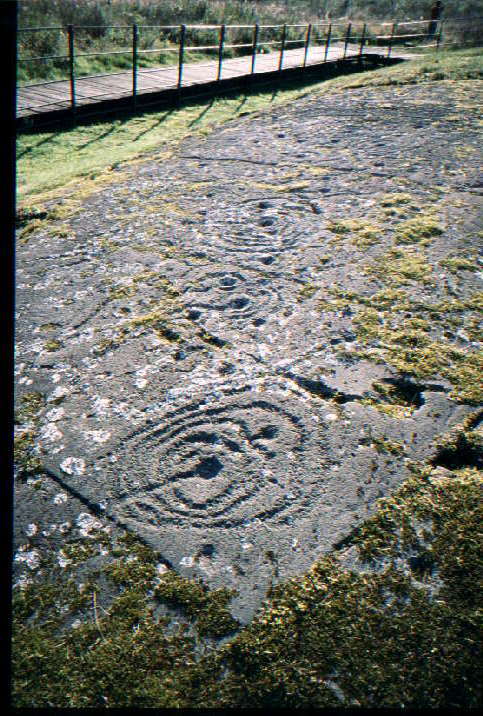
Easy to find as are all the Kilmartin sites - just watch your cars suspension on the forest track. There's a dedicated car park with picnic benches and great views to the west. Luckily, the main rock is far enough away from the carpark (400m) to give some sense of isolation. The site is fenced off and I don't think it's ok to just jump over it, as a previous poster has suggested - these carvings have survived for millenia because they have not been trampled on by thousands of boot-shod tourists still warm from the interiors of their metallic-painted MPVs. The top of the outcrop is not visible to someone of normal stature but the first slab encountered is breath-taking in its scale and intricacy. As mentioned, a recent shower of rain can really help you to see the carvings. Menhir-visiting mutt, Denis, appreciated the treck through the forest and had a good wee up a number of the surrounding fence-posts. |
Posted by stubbo 3rd October 2005ce |
|
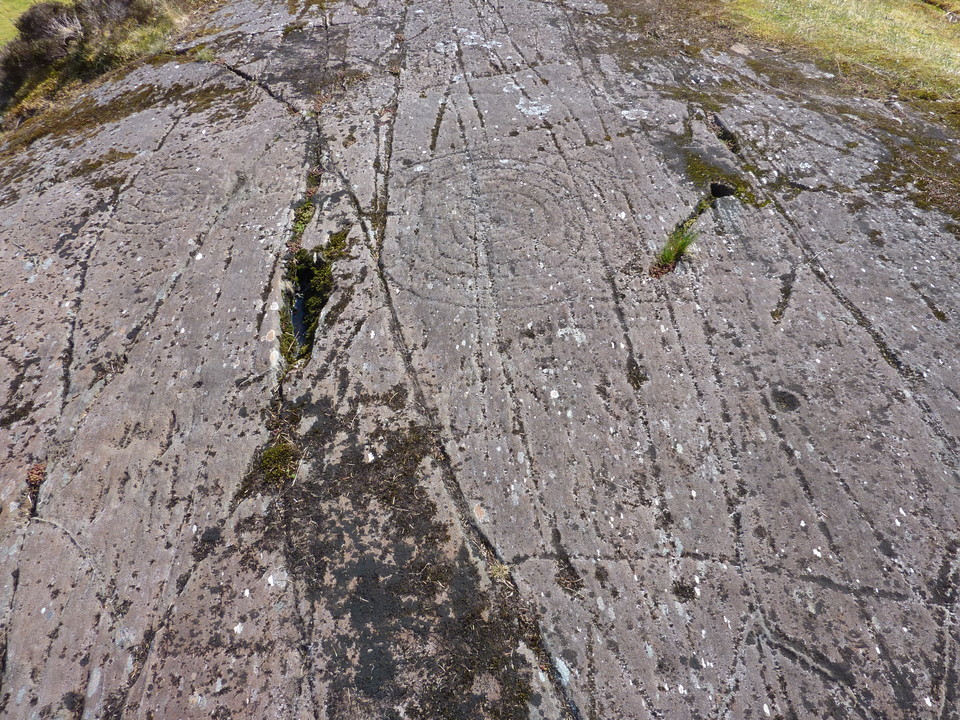
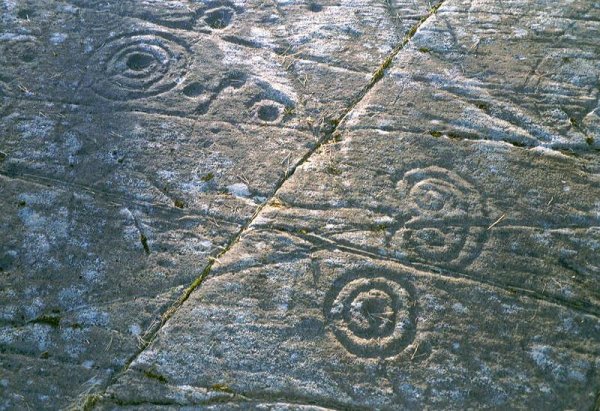
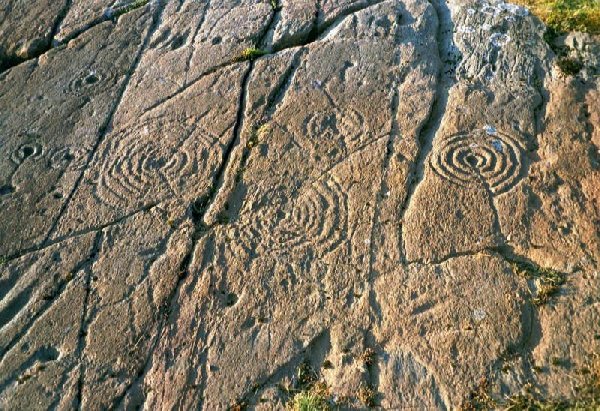
Revisited the Kilmartin area on this year's August Bank Holiday although why I chose this particular day when I could go there on any day remains a mystery to me. The main Kilmartin sites were overrun with visitors making anything from photography to contemplation well nigh impossible. Only at Ri Cruin was there a brief gap in the crowds. I had planned to leave Achnabreck to the last to get any low sun that might be around. A good strategy as it turned out since all remaining clouds disappeared (along with the visitors) and I had over an hour to become aquainted with the carvings before another group arrived just as I was packing up. I've cross-referenced the posted images with the drawings and location plans in the PSAS 103 article. References to Achnabreck Wood are to the panel further up the path from the main panels (NR857906) - named, of course, before the Forestry Commission cleared away the surrounding trees. |
 Posted by greywether
11th December 2003ce |
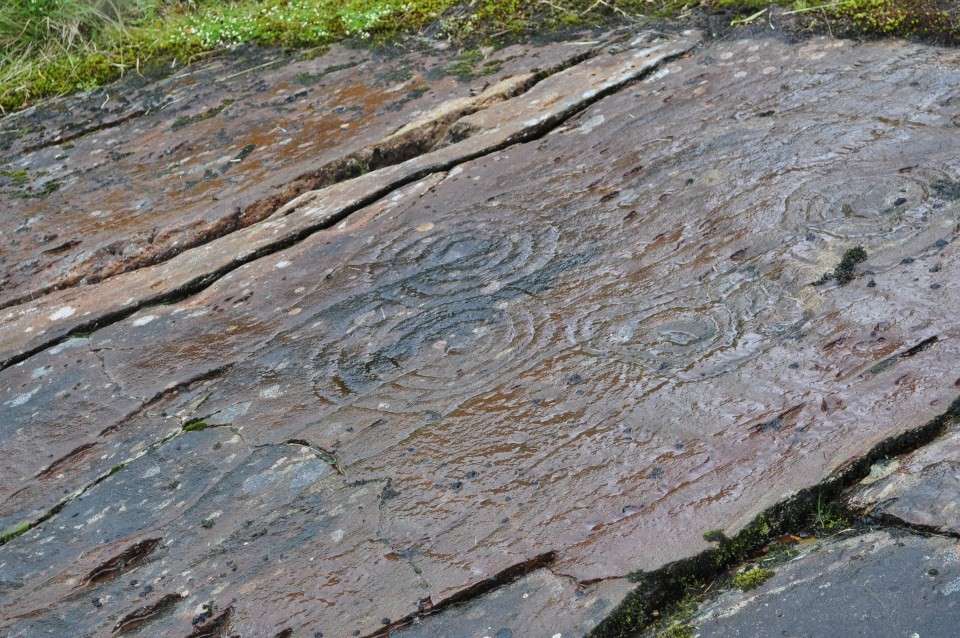
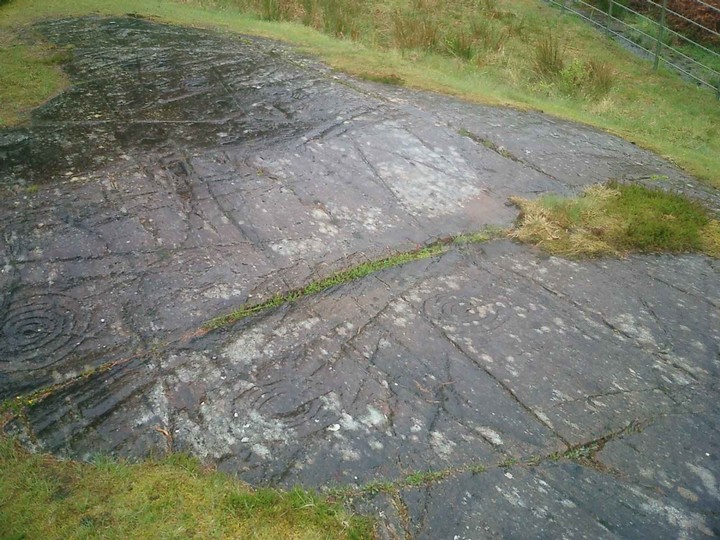
| The photos submitted above are from my second visit to Achnabreck. There had been some discussion previously as to what the artwork would look like in the rain and I got to find out this time as it was chucking it down. I can report that the surface of the rock takes on a sheen that does reveal the patterns to a slightly greater degree than on a dry day. The only problem was that the gradual soggy feeling I had was interfering with my contemplation of this amazing place. I don't think though that you can come here (even in the rain) and fail to be impressed. |
 Posted by wee_malky
7th October 2002ce Edited 11th June 2003ce |
|
We visited this place in Feb. 2000. I dont know what this is. And I dont have theories that set me on fire. But one thing is for sure - this is a very amazing place and I'm glad we came here. |
Posted by winterjc 9th December 2001ce |
|
I camped beside Achnabreck with my friend Ant in 96. There's a convenient tent-sized break in the tree stumps next to the higher of the two stone outcrops. Kilmartin Valley is an amazing place. You can spend a week inwhat is a relatively small area and still not have enough time to take it all in. The landscape changes with the light and the weather and the whole vicinity is capable of sucking you in and making you feel an existence that is somehow detached from modern living. We spent many nights just watching the sea mist gradually encroaching on the valley plain below, leaving just the twinkling lights of Lochgilphead as a reminder that it was the twentieth century we were escaping from. The carvings themselves exert a powerful pull and you would find yourself wandering back to inspect them on your own, whenever the chance arose. Taking a spray bottle filled with water is highly reccomended as this makes them stand out from the rock face itself. The only way to really see them is to climb into the fenced off areas and sit above them. It's one of the most evocative places I've ever spent any time in, and one that I was afraid to revisit for two or three years in case the magic had dissipated. I needn't have worried. It's a very special site and all the more unspoiled for not being overrun with visitors. If you do get the chance to go there, be silent and enjoy one of the most magical sacred places in our ancient isle. |
Posted by marc w 14th September 2000ce |
|
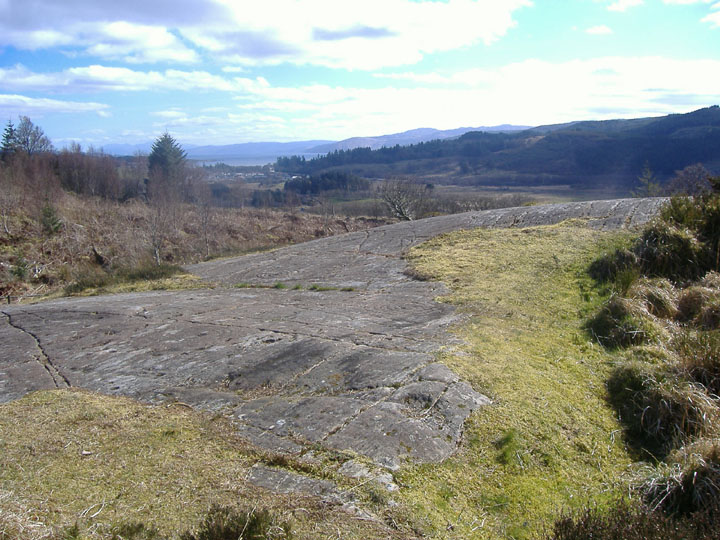
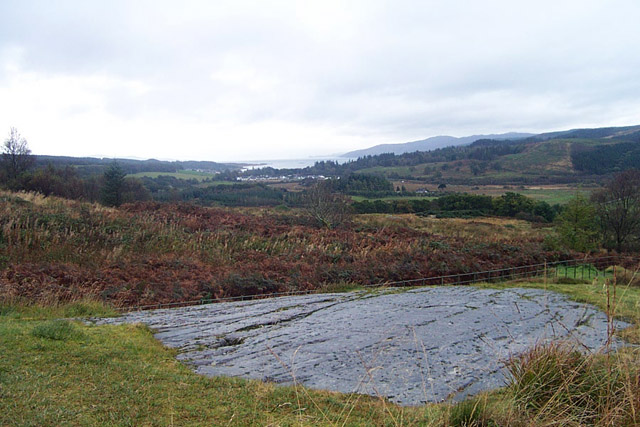
Ungraspably large, the first carved outcrop you come across here is one to boggle at. Yes, there's fences, but see my entry on Cairnbaan for why I think they've done things quite well here. There's no steps to go over the fence as there are at Cairnbaan, but I think the general idea is that you can hop over to be close - just take the fence as a reminder to be careful. Walking back down to the car park, the present path gave the distinct impression of heading towards the hill at Cairnbaan (which can be seen from the upper groupings of carvings at Achnabreck). I got a strong sense that these two sites relate to each other, possibly as part of a system of tracks, and possibly as kind of 'gateway points' into the ritual landscape proper in the Kilmartin Glen to the north. |
Posted by gyrus 27th August 2000ce |
|
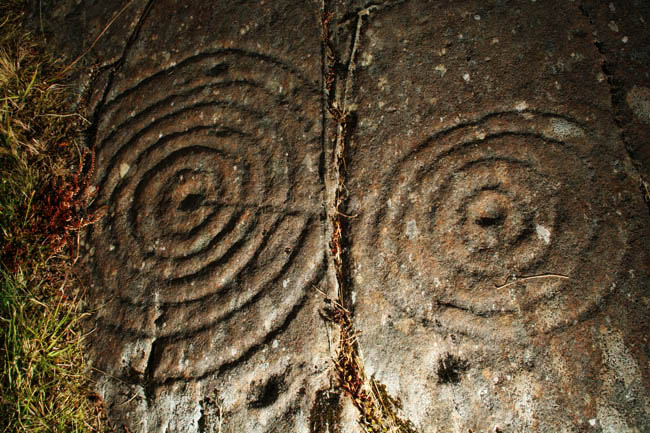
August 1998, Achnabreck Cup-and-Ring Marked Rocks, Argyll. About 15 years ago I started becoming interested in stone circles, monoliths, cairns etc. and one of the first books I bought was a small paperback (which still goes everywhere with me!) called "Scotland Before History" by Stuart Piggot. I was only really familiar with the ancient monuments around Perthshire's country and often read about and gazed at many of the photos of other sites. I tried to imagine positions of the monuments in the land in which they are found- Achnabreck is described as a "spectacular area of cup and ring markings on the edge of a forest". Now its August 1998 and I find myself in the magickal country of Argyll. We're battling through clouds of flying ants (believe it or not) up a well trod path next to some fine forest. We made it through the insects and now the country around starts to open up and we are greeted with beautiful views down to the Crinan Canal and the fields and forests around us. Ahead of us I can see them- the area is made just a bit obvious due to the massive stone outcrop being surrounded by the Hisoric Scotland-grey fence and wooden walkways. At first all the designs are half-hidden in the late summer sun, but once I move along the path the shadows start to pick out the circles in the stone and then its as if a great veil is lifted and the whole great stone slab resonates with circles and cup-marks. Before I know it I'm over the fence and crouching beside the rock. I know I should really not be on this side but these places belong to us as much as they are cared for by Historic Scotland. Of course I'm extremely careful not to tread or kneel on the rock face but I manage to stretch across the rock from my crouched perch on the grass. I need to feel the rough stone with my own hands and to trace a circle with my fingers..... |
Posted by Martin 1st April 2000ce |
Folklore |
Add folklore |
| Also known as "Leachd-nan-sleagher" - the rock of the spears, variously translated as really meaning "Leach-nan-sluagh" - the rock of the hosts or gatherings, and "Leachd-nan-slochd" - the rock of the pits or impressions. |
Posted by Branwen 19th February 2010ce |

|
Sir James Y Simpson (the first surgeon to use chloroform) was apparently also interested in rock art. In the 1864/66 volume of the Proc. Soc. Antiquaries of Scotland Simpson wrote an article about cups and rings on stones in Scotland. This extract is from that article, but quoted indirectly from http://www.geocities.com/newtonwinchell/scot.pdf which is an article by Kevin L Callahan on ethnographic analogy and the folklore of cup and ring rock art. (on the naming of Achnabreck) ..The rock upon which the first and largest collection of concentric rings and cups at Auchnabreach is placed has a Gaelic name, which, according to John Kerr, an old shepherd brought up on the farm, is 'leachd-nan-sleagher' - the rock of the spears. Mr Henry D Graham, to whom I am much indebted for drawings of the Auchnabreach sculptures and others, believes the word to be 'leach-nan-sluagh' - the rock of the hosts or gatherings. The rev. Mr M'Bride has perhaps more happily suggested it to be 'leachd-nan-slochd' - rock of the pits or impressions. The rock itself, let me add, is in a position which commands a charming view of the waters of Loch Gilp and Loch Fyne, with the distant and magnificent hills of Arran as a gigantic background... er. hope that clears that up then. |
 Posted by Rhiannon
21st August 2002ce |
Miscellaneous |
Add miscellaneous |
|
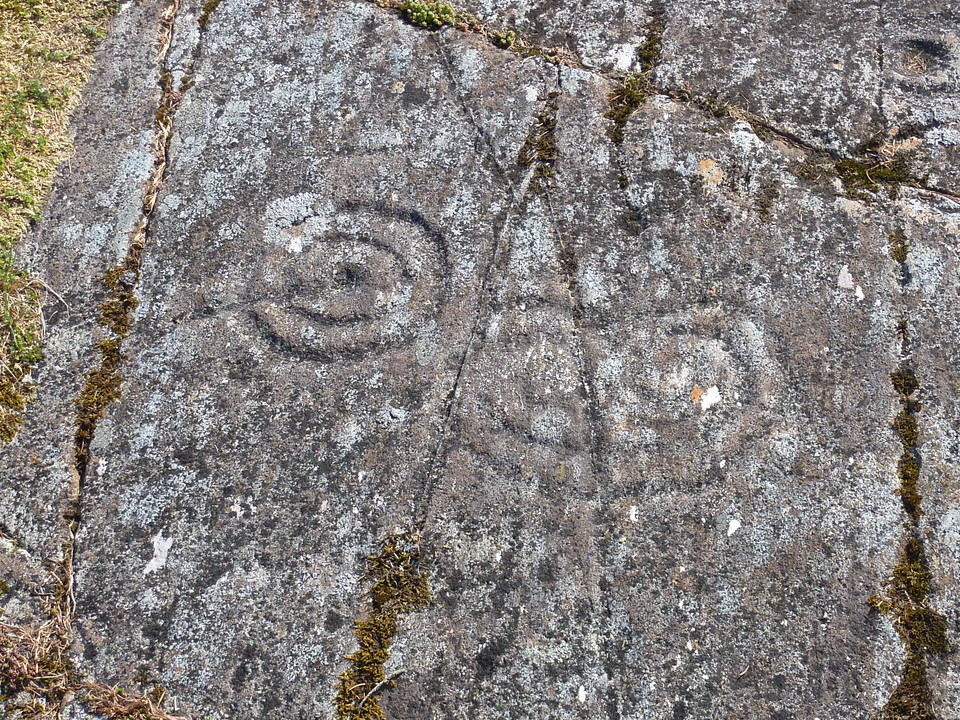
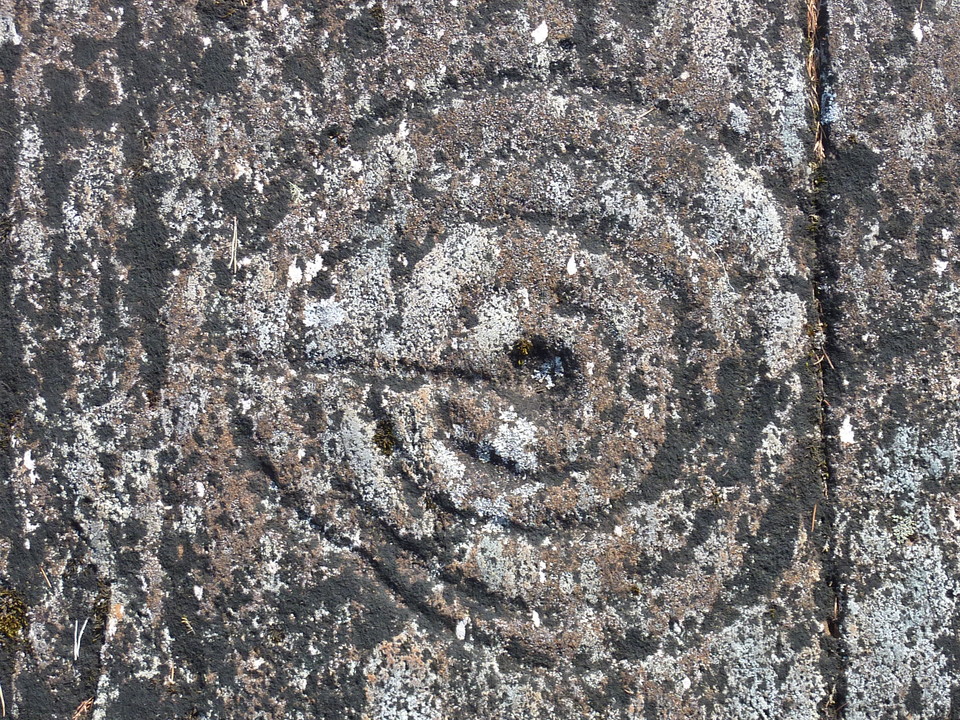
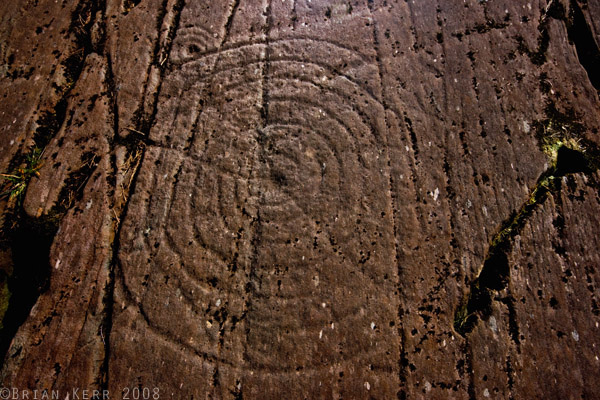
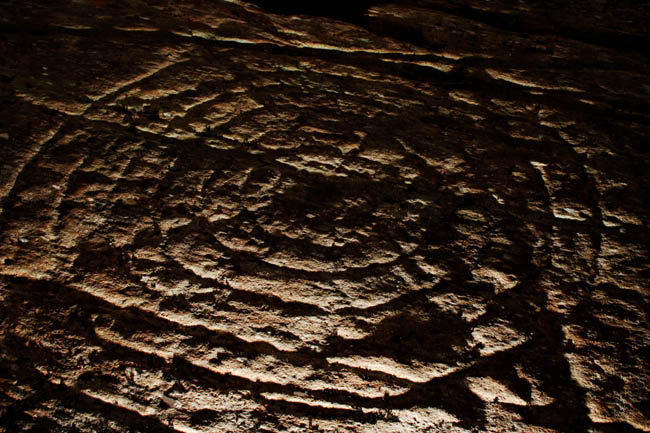
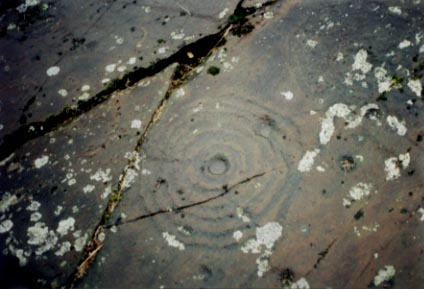
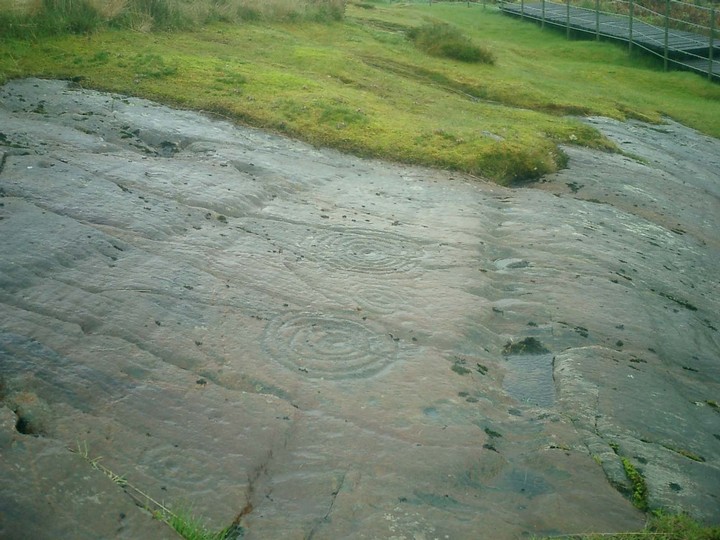
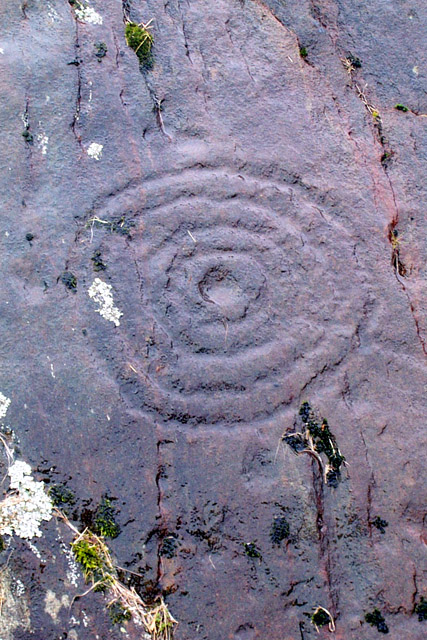
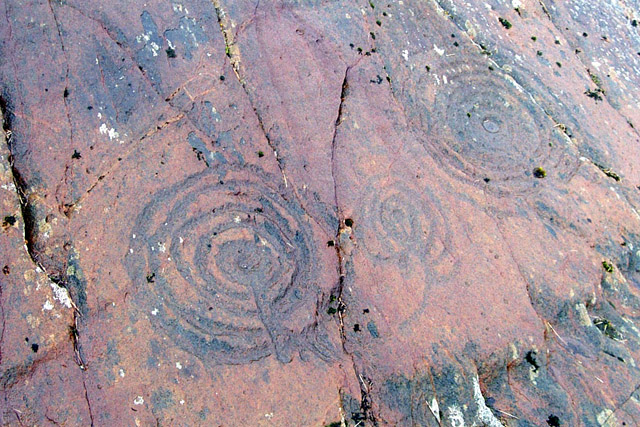
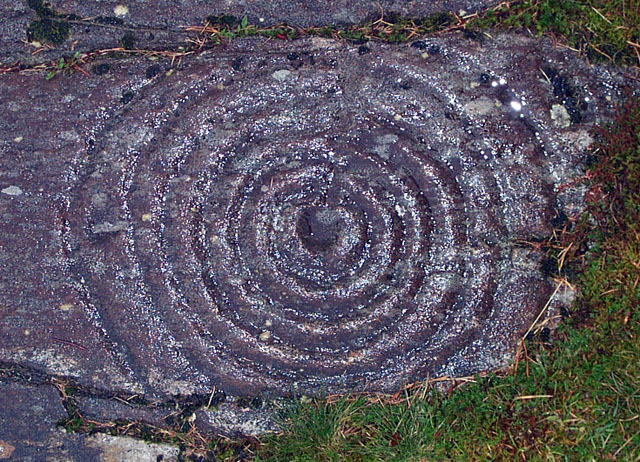
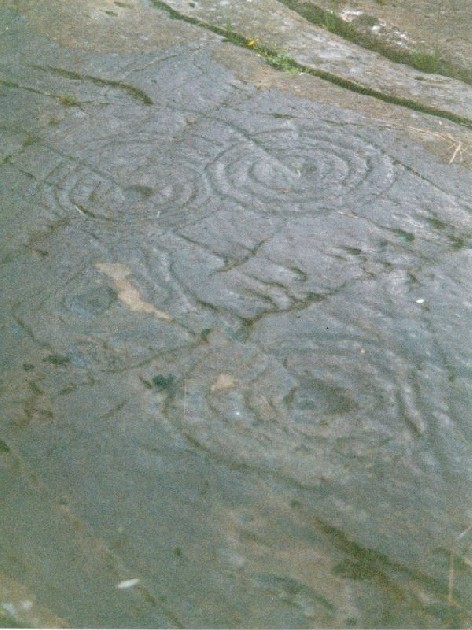
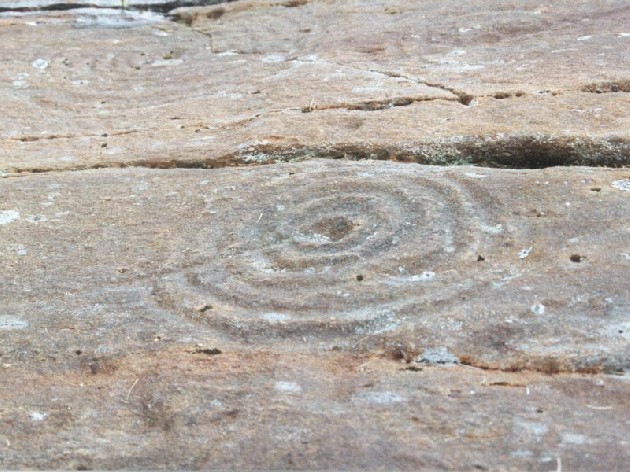
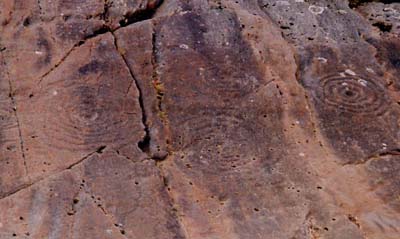
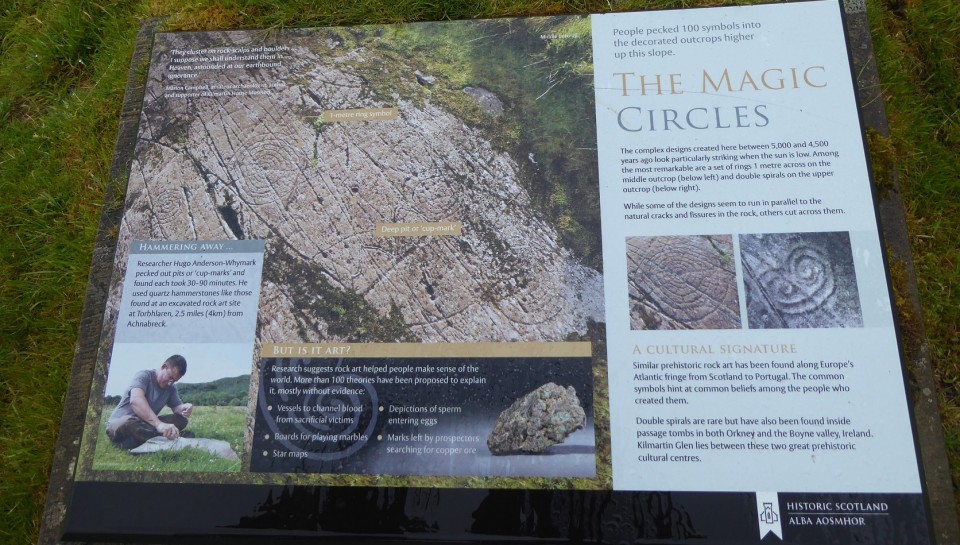
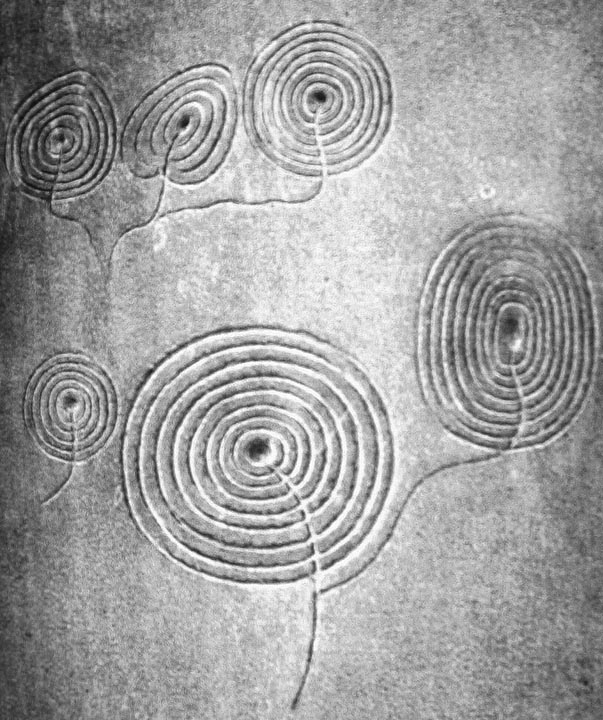
Achnabreck has the largest cup-and-ring mark in Scotland measuring 0.97m diameter over its seven rings. It is in the middle panel and is pictured here. In England, a similarly-sized carving is said to exist at Chatton - presumably this one and a larger one at around 1m (but nearer 1.2m prior to weathering) is at Gled Law (which I've not visited yet but it could be http://www.themodernantiquarian.com/post/13611">this one). (Information from the PSAS 103 link below.) |
Posted by greywether 11th December 2003ce Edited 11th December 2003ce |
Links |
Add a link |
Achnabreck (East) on BRAC UpdatedAchnabreck (East) on BRAC. There are 5 additional pages on Achnabreck in Argyll and Bute on BRAC. |
Posted by markj99 9th January 2021ce Edited 9th January 2021ce |

AchnabreckPhotograph from, The Mystery of Scotland's Earliest Sculptures Ronald W B Morris 1975 |
Posted by rockartwolf 4th February 2007ce Edited 4th February 2007ce |
Achnabreck on BRACWith links to separate collections of the Lower-, Middle-, Upper and East panels. |
 Posted by rockartuk
21st July 2006ce |
PSAS 103Full plans and descriptions of the carvings. |
Posted by greywether 5th December 2003ce |
Jenny's Heathen HearthJenny's page shows two long shots which really give you an idea of the expanse of rock some of the carvings cover. |
Posted by Rhiannon 21st August 2002ce |
Megalithic Walks |
Posted by winterjc 11th June 2002ce |
 Top of page