Forecourt of Cairnholy 1 Chambered Cairn viewed from NE. (28.03.25)
Image credit: Mark Johnstone

Forecourt of Cairnholy 1 Chambered Cairn viewed from NE. (28.03.25)

Recumbent Stone in Forecourt of Cairnholy 2 Chambered Cairn viewed from NE. (28.03.25)

Cairnholy 2 Chambered Cairn viewed from SE. (28.03.25)

Interior of Chamber of Cairnholy 2 Chambered Cairn viewed from SW. (28.03.25)

Winter sunset at Cairnholy I.


Final light at Cairnholy I.

Cairnholy II – The Tomb of Galdus, at dusk.

Cairnholy II – The Tomb of Galdus, at dusk.

Cairnholy I

It is July 2013. After a successful Galloway Hill Loch Trout Expedition my late brother and I stopped by Cairnholy. There was a person balanced on the top of the labia majora at Cairnholy 1. Strange.


Sunrise early July.

Joseph Proskauer, aka Cairnholy Joe, pointing out lighting effects from the midsummer sunrise. A quite unique and entertaining experience with a really nice guy. Recommended.


Cairn Holy II

Cairn Holy II


Cairn Holy I

Cairn Holy I

Cairn Holy I

Cairnholy 1
12 April 2019 CE


Cairnholy 1
12 April 2019 CE

Cairnholy 2
12 April 2019 CE

Cairnholy 2
12 April 2019 CE

Cairnholy 2. October 2010.

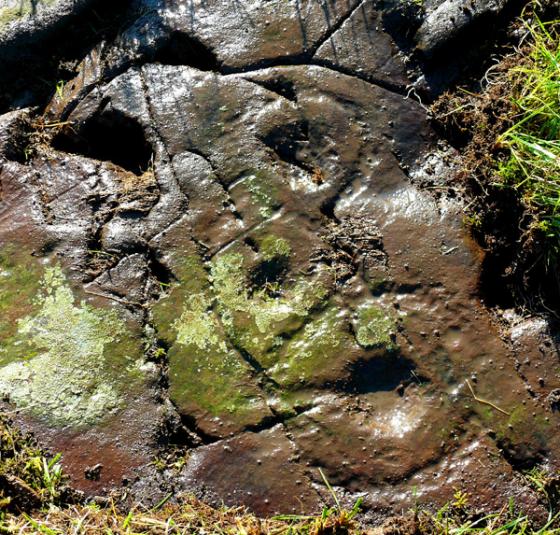
Cupmarks on the prominent longitudinal central rock forms at Cairnholy 1.
October 2014.

Cupmarks on the prominent longitudinal central rock forms at Cairnholy 1.
October 2014.

Cupmarks on the prominent longitudinal central rock forms at Cairnholy 1. October 2014.

Cupmarks on the prominent longitudinal central rock forms at Cairnholy 1.
October 2014.


Drumtroddan Standing Stones, 5pm, 13th October 2016


Yes, tweaked rather, but, on some autumn evenings there w i l l be a blazing sunset behind those stones. Try to experience that here, as well as Torhouskie. To get the best photographs of this place lie down.


Cairnholy 2 panoramic


Panoramic shot of Cairnholy 1


Cairnholy 2 Burial Chamber


Looking towards Wigtown Bay........


Cairnholy I portal stones flair up towards the sky.


Cairnholy II showing outcrop of bedrock on which it stands

Cairnholy I from the car park

er... can’t think of a caption ... ;-)


Perfect shot at the end of a perfect day, Cairnholy really is special.


Cairnholy1


Cairnholy2 Oct 05

Tomb with a view.?
(sorry)


Cairnholy2 sea views.


Cairnholy 1 – from SW


Cairnholy 1 – rear compartment of the chamber.
As there is no access to this compartment from the adjoining compartment, this is thought to have started off as the original stone structure at the site (the protomegalith) and subsequently extended into a fully-developed Clyde cairn.
A protomegalith is a rectangular, largely above-ground and largely-symmetrical burial structure with no architectural feature suggesting any one particular orientation. There was probably no associated cairn.
The next stage would be the addition of the two stones to the E (ie top left of the photo) as portal stones. These, the hypothesis goes, have no architectural or structural purpose (eg they do not support a capstone) but merely serve to mark the E end as ritually important.
Subsequent developments are: (1) creation of another compartment by extending the E portal stones; (2) the cairn; (3) the addition of a more complex entrance and facade.
A similar development from a protomegalith to a fully developed Clyde cairn has been put forward for Cairnholy 2

Cairnholy 2

Cairnholy 2

Cairnholy 2


10/03. Cairn Holy 1


10/03. Cairn Holy 2

Cairnholy 1 – the stones. That’s rain on the lens. Atmospheric huh?


Cairnholy 1 – the cairn. Still with rain on the lens.

Cairnholy 2 – the stones

Cairnholy 2 – the cairn

aken 21-3-02.
.o0O0o.

Taken 21-3-02.
.o0O0o.

Taken 21-3-02.
.o0O0o.

Taken 21-3-02. Close-up.
.o0O0o.

taken 21-3-02. Close-up.

Cairnholy Dream


Cairnholy1 Summer 2000


Cairnholy 1 Summer 2000

The stones lean forward to say something.......
Wee clip from a gaelic TV programme.
Friday 17/5/19: A rather pleasant early evening, after several gruelling hours on M6 we were heading towards Newton Stewart for an overnight stay before catching ferry to Northern Island. Spotted a brown heritage sign pointing towards Cairn Holy and pulled into a lovely woodland parking area. Started to walk the half mile uphill – the woodland was full of spring flowers, the birds were singing, we passed some cairn like stone in a field and a clear flowing spring. Then something happened – the earth tilted ever so slightly, the clouds parted and everything became infused with golden light. We rounded the curve in the lane not really knowing what to expect – before us stood a very fine neolithic chambered tomb, the grassy mound of which was covered in daisies.
The was a solitary man standing by the quite tall stones of the tomb. Initially we thought he was performing some sort of ritual but he was in fact doing some calculations. He came over and introduced himself as Joseph and it turned out he was very knowledgeable about Cairn Holy. He happily pointed out the various solar alignments for different times of the year. And that the low front stone appeared to mimic the distant Isle of Man. We left him for a bit and walked up to Cairn Holy II about 150 metres at a higher point up the lane. Another magnificent chambered tomb though slightly smaller than the first one. The notice board here mentioned spiral rock art so we went back to Joseph who showed one example of a very eroded spiral.
That evening this was one of the most peaceful places I have ever been to, as we reluctantly left to continue our journey it felt as if the ancient gods were smiling on us.
Visited 30.7.15
Am I really the first TMAer to visit this wonderful site for 10 years? Hardly seems possible?
Although Historic Scotland recommend parking on the A75 and walking up to the site (long walk) you can drive all the way up and park in the small car park. The road is in good order except for the last few metres before you reach the parking area – bit rough.
To put it (not very) quaintly – these are the ‘dogs’!
What a fantastic place to visit. The two chambered cairns are superb. One has an impressive facade of tall standing stones, the other a large capstone still pretty much in situ. Both cairns offer excellent coastal views with mountains in the background. Keep an eye out for the large prostrate stone near the wooden fate to Cairnholy 2. Surely once part of the chambered cairn?
The sun was shining (something we had seen all too little of on this year’s holiday) but the wind was cold. Dafydd was attempting to make a spear from a stick and sharp stone he had found whilst Sophie decided it was too cold and went back to the car. Although the site must have made some impression on her as later that afternoon on the beach she made a burial chamber instead of a sand castle – that’s my girl!
This really is an excellent place to visit, one of the best I have been to. Second only to Machrie Moor on Arran this holiday – and that;s no disgrace. I have really enjoyed my holiday in this south west corner of Scotland. It is easy to overlook this area whilst heading direct for the delights of the highlands. The countryside is pleasant more than spectacular although it does have some good coastal views. What is does offer (in spades) is a fine selection of both historic and prehistoric sites to visit. Some superb – such as this one. The next time you plan a trip to Scotland try to factor in some time here. You won’t fail to be impressed.
Both are in a great place to be noticed by anyone coming inland. Anyone doing so may have easily noticed the cairns silhouetted against the sky, perhaps they would then continue up into the rock art strewn landscape to the north, maybe even eventually arriving at Glenquickan. It would be great to have the time to walk such a route, but it would probably be a bit bleak and boggy these days.
Overall, I think it’s nice as it is now, that toothy jaggedyness isn’t quite as oppressive as I’d thought it would be from looking at photos. And there’s even rock art. Hoorah!
I was also chuffed that the chamber in Cairnholy2 is big enough to be able to stick your head in and look through to the sea. I dunno why, but I still am.
A wonderfully picturesque place with a very primeval appearance. Cairnholy 2 looks great perched atop it’s hillock.
This is about as perfect as it gets. Spent Saturday (30/10) afternoon and evening playing around the sites; watched the sun set over Wigtown Bay from Cairnholy 1 and Saturday night sat on the capstone of Cairnholy 2, bathed in moonlight, watching the most amazing nightsky. We were blessed with the warmest October day and the clearest nightsky I’ve seen for a longtime.
For those who like their comforts close to hand, Cairnholy Farmhouse offer B&B and I would thoroughly recommend it. Yes, the farm buildings intrude upon the 2nd cairn, but the couple who run the B&B are friendly and enthusiastic (as it Harry, the boxer dog!) and cook a mean evening meal, if you don’t want to stray too far from the stones.....www.cairnholy.co.uk for details.
In one of the adjoining fields, the local farmer had cobbled together a number of small “sheep cairns” – the remains of dead sheep, covered over with stones. On one of the smaller ones, a large stone with cup and rings marks is just visible.
In search of the protomegalith
This was one of several visits to this wonderful, evocative and photogenic pair of Clyde cairns. Today’s visit was enhanced by being the only visitors for nearly one hour and some of the bluest skies I have seen for a long time.
In addition to the usual pleasures, this trip had a specific purpose: to examine the theory of Clyde cairn evolution and the role of the protomegalith.
This theory suggests that some cairns did not develop beyond the early stages while others were built as fully-developed versions.
At Cairnholy, it is possible to see all the evolutionary stages. See one of the picture captions for more details.
Visited 8 September 2004
These two sites are intervisable with each other. I’m not sure as to the chronology of the tombs but I would guess that the uphill tomb was the first as it commands a better view.
If you try really hard and the light is on your side, you can just make out the large cup and ring carving on the capstone of No.1
Impressive stones, but spoilt for us by being fenced in and in close proximity to ugly farm buildings and road.
Visited 21-3-02 – Just found these pictures, some of the first I took with my digital camera, and before I changed my name to Pebblethief...
Wonderful to visit this site – one of my first.
.o0O0o.
Summer 2000
Carrying on my weird weekend, I came to Cairnholy 1&2. Up the narrow track, meeting some hoorahs in their 4WD on the way I eventually got out of the car in Brilliant Sunshine.
What nobody seems to mention is that Cairnholy 1 is in a fantastic position high above Wigtown Bay. The Sea was Sparkling Blue, a cool breeze lapped at me as I lay on the grass chilling.
Cairnholy II is further up the track in an equally cool location, but the nearby farm somehow spoils it for me.
A Cool place. Going Back soon!
Long and spooky drive up to the site through woods. Guess that’s what happens if you go at dusk, but the moonlight made it all look very atmospheric. The shape reminded me a little of Wayland’s Smithy with pointier uprights. A place to go and think.
we took smoke grenades to cairnholy 1, late one night in may 2000, for the opening scene of a shoestring film about the return of elvis from some other dimension.
as we came up the road through the forest, the vibe in the car suddenly changed, it all seemed a bit Blair Witch Project...when we cleared the forest, there was another car there.
it turned out not to be bloodthirsty masonic beer monsters, no, it was a bunch of hippies fae dundee, ken, makin’ a film...
we made ours...

An alternative theory has the English bishop Thomas losing a battle here:
The Bishop was interred near where he fell, on the top of a small knoll in front of the farm house; the grave is hewn out of the solid rock to a considerable depth, and its aperture is covered with a flat stone of more than two tons weight, and has given name to the farm on which it stands, (Cairn-holy); and another farm about a mile farther up the glen, still bears the name of “Claughred,” (Cleugh-raid,) it being in the line of the contending armies.
One edition of the legend calls him Prior instead of Bishop; but as Whithorn was a Bishoprick, and the seat of the Bishops of Galloway, we have given the latter the preference[..][..]It has been asserted by many, and among these some whose antiquarian researches entitle them to respect, that this was the burial place of “King Galdus,” or “Aldus MacGaldus,” a sovereign who made some noise in the fabulous era of our history, and who, it is alleged, fell in a bloody battle fought against the Picts. But against this we would object the posthumous ubiquity of “King Galdus,” whose place of sepulture has been.. the Standing Stones of Torhouse, in the parish of Wigtown.. [and] a cairn on the farm of Glenquicken in the parish of Kirkmabreck.
From
Legends of Galloway by James Denniston (1825), cp294.
Online at Google Books (though a few critical pages are missing. Like the one that introduces who Thomas the Bishop is).
Cairnholy might come from ‘Carn Ulaidh’ meaning ‘treasure cairns’.
Cairnholy II is the traditional burial spot of Galdus, a mythical king and bishop, who was killed in a battle in the 14th century.
(noted in J&C Bord’s ‘Atlas of Magical Britain’)
I have added an updated link to the restored BRAC Rock Art archive compiled by Jan Brouwer and Gus Van Veen. The Dutchmen used Rockartuk to record and report on Rock Art the length and breadth of the UK taking exceptional pictures of Rock Art.
Sadly, Jan Brouwer died in 2011. Coincidentally Fotopic.net who hosted the archive ceased trading and the archive was lost. However, the photos were rescued and reposted on a new BRAC platform.
There is a link to the extensive Cairnholy on BRAC collection of pictures at the end of the listing.
Cairnholy on BRAC
Pics of Cairn Holy II.
Pics of Cairn Holy I.
For more information on the rock art carvings at Cairnholy please contact me.
An entry from Ancient Stones, an online database that covers most of the standing stones, stone circles and other stones found in South East Scotland. Each entry includes details, directions, photograph, folklore, parking and field notes on each location.
See also entry 008.
Part of www.frankland.org.uk