Image credit: CoralJackz


Visited May 2013


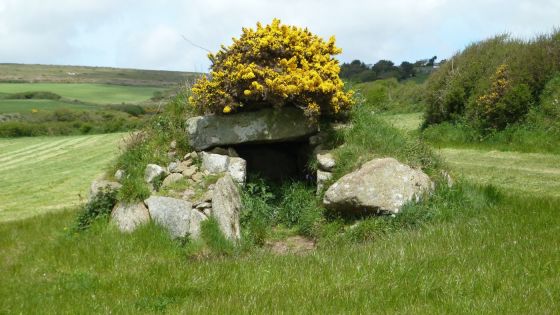
Lanyon Quoit with Greenborrow Engine House on the right.
Visited May 2013

Visited May 2013

Visited May 2013


Lanyon Quoit, photograph taken on 8 May 2004. © Chris Bond.


Lanyon Quoit, photographed from the north-north-east on 8 May 2004. © Chris Bond.

Lanyon Quoit, photographed from the north-east on 8 May 2004. © Chris Bond.

Lanyon Quoit, photographed from the south on 8 May 2004. © Chris Bond.

Lanyon Quoit, photographed from the south on 8 May 2004. © Chris Bond.

Lanyon Quoit, photographed from the south-south-east on 8 May 2004. © Chris Bond.

Lanyon Quoit, photographed from the south-east on 8 May 2004. © Chris Bond.

Lanyon Quoit, photographed from the south-east on 8 May 2004. © Chris Bond.

Lanyon Quoit, photographed from the east on 8 May 2004. © Chris Bond.

Lanyon Quoit, photographed from the north-north-east on 8 May 2004. © Chris Bond.

Lanyon Quoit, photographed from the north-west on 8 May 2004. © Chris Bond.

Lanyon Quoit, photographed from the west on 8 May 2004. © Chris Bond.

Photographer unknown: a family outing to Lanyon Quoit. Photograph on display in Penlee House, Penzance. With apologies for reflections in the glass.

Ephemeral Midsummer offerings of flowers and a slice of peach left on the slab in front of the chamber. Carn Galva and Ding Dong engine house on the skyline.

‘Lanyon Cromleh’ by William Cotton, from “Illustrations of stone circles, cromlehs and other remains of the aboriginal Britons, in the West of Cornwall : from drawings made on the spot, in 1826.”


11 November 2021 CE


11 November 2021 CE

11 November 2021 CE


The stones at the southern end of the mound.

Visited 9th May 2021. This is the site I looked for back in 2010 and could not find. It is only visible from the road when travelling towards Madron – we missed it completely on the journey to Men-An-Tol but spotted it on the way back. What can I say except that finding it after all this time made me very happy indeed.


Lanyon in its landscape, looking towards Carn Galva and Ding Dong mine. Traces of the mound can be seen surrounding the chamber.

From JT Blight’s ‘A week at the Land’s End’ (1876).

Lanyon Quoit (from farm nr. The Mine)

At Lanyon Quoit

From ‘The Celtic and Other Antiquities of the Land’s End District of Cornwall’ by Richard Edmonds. In Archaeologia Cambrensis 3.12 (Oct 1857).

From ‘Rodda’s Guide to Penzance...’ by the Rev W S Lach-Szyrma (6th edition 1894).
access.bl.uk/item/pdf/lsidyv365fcacb

September 2015


September 2015

September 2015


The foxgloves at Lanyon Quoit, summer has arrived at last.


25/09/2012 – Lanyon Quoit


25/09/2012 – Lanyon Quoit


July 2012

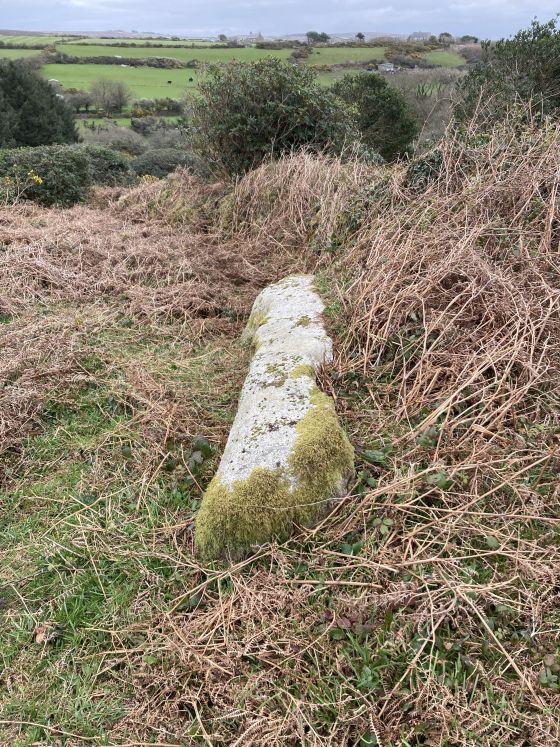
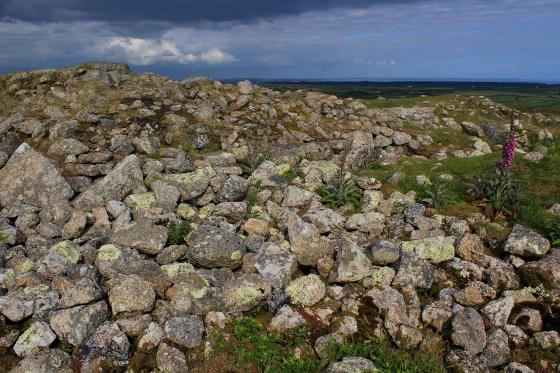
Stones on the mound.

The jumbled stones at the western end of the quoit mound.


A golden Lanyon Quoit... Bang On! Or perhaps Leslie Phillip’s ‘Ding Dong!’ is more apt, bearing in mind the engine house seen in the background, left.


Light on Lanyon


Ding Dong seen from Lanyon Quoit.


I read somewhere there’s an enclosure or something similar very close to the quoit, the remains of which I think are on the right of the picture.
Also, according to the book “Belerion” by Craig weatherhill, it could be a cist.


From the road

From “History of Cornwall” by CS Gilbert


Frontispiece to ‘Days in Cornwall’ C Lewis Hind 1907

From ‘Antiquities, Historical and Monumental, of the County of Cornwall’ 2nd Ed. (1769)


Nice old postcard of the Quoit.

Lanyon Quoit – 10th May 2004

..and this one was taken during an unbelievable downpour...


Lanyon Quoit framing Ding Dong Mine. 8th May 2006 6:25pm.

Sun setting behind Lanyon Quoit. 10th May 2006 8:43pm.

From Antiquities of England and Wales by Francis Grose (1783).
This rather rough looking sketch was drawn before that fateful night in 1815.


from some angles it looks almost impossibly balanced

As you walk round, not only does the appearance of the dolmen change from long and pointy to compact and short, the holes between the stones change too (I thought it was interesting)

Approaching Lanyon on path from Bosiliack Barrow


Lanyon Quoit May 2004. A glorious week in Cornwall.


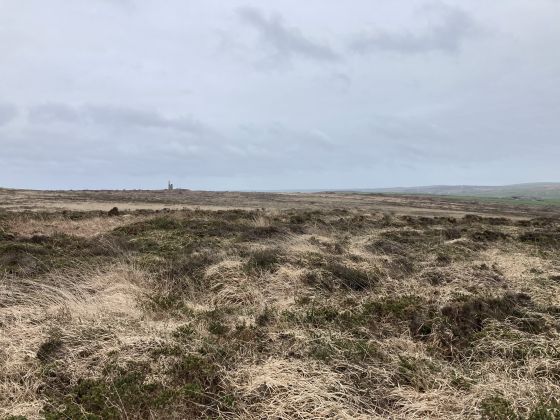
Wherever you go round here, the beacon that is the old engine house of Ding Dong tin mine provides a useful reference point in the landscape


Gratifying close to the road and signposted

15 mins after sunset


Lanyon Quoit. August 2001


The view of the mine through the legs of Lanyon Quoit :-)


Lanyon Quoit – getting dark – 27.12.2002


Lanyon Quoit – getting dark – there was a lovely red sunset going on (one time when I wish I didn’t use balck and white!) – 27.12.2002

A panoramic version (looks nice at full size)


Lanyon Quoit Sunday 9th September


Lanyon Quoit August 2000

May 2002

July 2001

May 2002


May 2002


September 1981


06/11/01CE

06/11/01CE


Lanyon Quoit with Carn Kenidjack and Ding Dong Mine on the horizon. 06/11/01CE.


How Sad Are We? But it had to be done! Sundown was fast approaching and the mood was right. Realise now we were totally wrong with the setup, but what the hell – it kept us out of mischief
The Sonic Chronicler & Mickstonecirclesandu


I visited Lanyon Quoit on 7th December 2013 (apologies this isn’t a recent visit) as part of a look around the Penwith area with my Father.
This was the first site we took a look at and I was blown away, all the pictures I had seen of it previously had left me expecting a site roughly as high as a kitchen table (why?)
It was a grey morning and the mist had not long lifted. Access to the site is very easy indeed and we spent a good bit of time hanging around this one checking it out from different angles, speculating on how it would have looked before being ‘repaired’ all those years ago.
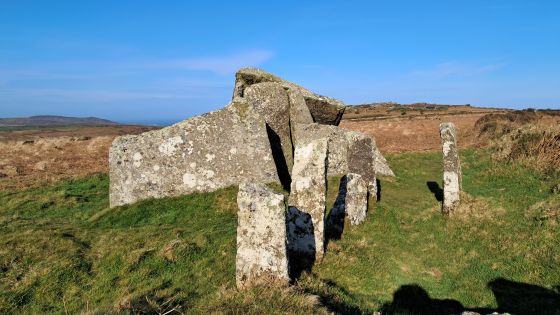
Along with Merry Maidens and Men-an-Tol, Lanyon Quoit is the most visited and most picture postcard perfect of West Penwith’s many ancient sites, despite being the least authentic of the four upstanding Quoits that the area boasts. Not much remains of its original mound and the capstone’s supports are rather shorter than they used to be. But so what? This is still a great spot and what’s not to like about a giant stone table?
At the western end of the mound, a cluster of stones may mark the position of a cist or small chamber that was built into the mound. But there’s too little left to really get any sense of what there might have been.
Visited 11.4.10.
Very easy to access. There is a small layby about 10 metres from the stone stile which gives access to the field in which the quoit sits. The quoit is only about 30 metres into the field – and a cracking thing it is too!!
Witnessing the sun set over Carn Gluze, I was aware that tonight the moon would be full. Moth suggested we witness the moon rise at Lanyon Quoit, as its so easy to get to.
En route, as we drove past Porthmeor standing stone, the moon jumped out at us, dazzling and low, and we knew we were in for a special treat. We were not to be disappointed.
Clouds scudded past the moon in the east illuminating the quoit with an eery light, and the last vestiges of the sunset silhouetted the site in the west. What a light show! What a quoit!
We returned here in the daylight twice, but neither time was the weather kind enough for me to paint it.
A great first call, apart from the pub, on an epic trip round the Lands End peninsula. No-one there at all, it was early morning and myself and my brother had hang-overs after 1 too many Scrumpies at the Newbridge Inn. Great shade and great setting as we watched the storm gathering a pace over Lands End. Although not a area of country where you want to be caught in a storm to see black clouds on one side of you and sunshine on the other is quite dramatic.
A wonderful site, worthy of the attention it gets. The re-positioning of the stones is quite obvious, but doesn’t in any way spoil it. We sat here for a while as the midday sun burnt away what was left of the cloud cover, and the day took a lighter turn.
Lanyon Quoit ? 27.12.2002
As this is right next to the main road and in the care of the National Trust I expected a huge neon signs above it and a pay and display car park. But actually it is very subtle and very low key (and very fitting), with just a make shift lay-by next to it and small plaque set in the field wall near a stone stile that leads into the field. The plaque reads “Lanyon Quoit – Given to the National Trust by Sir Edward Bolitho of Tiengwainion in 1952”. After the enormity of Trethevy Quoit this looks positively tiny, like it?s from the model village at Polperro, or Legoland in Windsor. Strange.
What a great place to visit.
I’m going back soon and I’ll post some more. Chill out here look at the tin mine in the distance and dance around for a bit.
Fantastic.
Lanyon Quoit
Another vist from our September 2000 Cornwal trip. It is a bloody cartoon Cromlech...yer right Julian ya know!! Not much more to say about such a famous MEGAlith.
Loads of tourist there at the time...including Herr & soon to be Frau Schlager. Gonna make sure i’am there for early morning next time.
Is this not one of the coolest places? Had such a top morning sat staring at this last summer.
Frosty morning, no one around – kind of misty too in that Cornish fashion.
Great to clamber under the top stone too and sit under it’s huge mass – thinking...
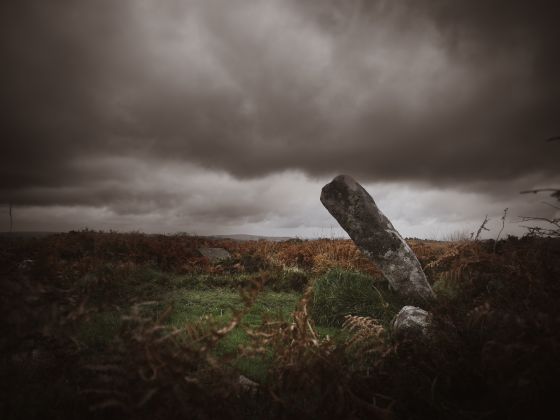
Visited the quoit in an autumn gale, the capstone poised ready to launch itself onto the surf of swelling grass.
Felt like I could ride that board to Men an Tol and out into the Atlantic!
Driving north from Penzance the quoite became visible on the skyline to the left after a number of bends we parked and had to ask an American for directions. It was over the fence on the right hand side of the road about 30 yards away. Took the postcard photos and on to Men-an-Tol
I travelled to Lanyon on a horrible,
rainy day to take away the dullness
of staying in Camborne for a week.
When i got there the whole place was shrouded in mist and i couldn’t see the quoit at all. After stepping in some horrible puddles i finally arrived – what a place, the atmosphere was amazing! After that i tried to find Men-an-tol, but as
i carried on up the path i heard a wild animal or something so i shit myself and ran back to the car!
wahwah
watch out for the ocean-like puddle! take your wellies if you’re going to go Quoit-squatting
that’s crouching under Quoit’s, like a little troll ...

According to Arthurian Legend Merlin and Arthur met under this quoit, Merlin told Arthur they would meet here again at the end of all things.
This is perhaps in reference to Arthur on his way to Camlann, his last battle.
The dimensions of the cap-stone are thus given by Borlase: – “This quoit is more than forty-seven feet in girt, and nineteen feet long; its thickness in the middle on the eastern edge is sixteen inches, at each end not so much, but at the western edge it is two feet thick.”
The cromlech is sometimes called by the country people the Giant’s Quoit, and occasionally the Giant’s Table. My measurement made the covering-stone forty-six feet in circumference, with a thickness varying from ten to eighteen inches. It is not improbable that the stone has been chipped off at one or two of the corners since the time of Borlase. Between the cromlech and the road are the remains of a stone and earth circular barrow about eighteen feet in diameter.There is an odd tradition that the first battle fought in England was decided in the locality of Lanyon Quoit.
From Rambles in Western Cornwall by the Footsteps of the Giants by J O Halliwell-Phillips (1861).
Many Cornish tourist sites on the internet point out that the quoit was where King Arthur stopped for a bite to eat before his last battle. Perhaps he was in his larger-than-life giant guise and used it as a table.
On the 10th instant, this celebrated stone, which weighs about thirteen tons, and which fell from its ancient situation on the night of the 19th October, 1815, during one of the most violent and destructive storms of wind ever remembered in that part of the country, was replaced by the united and indefatigable exertions of Lieut. GOLDSMITH and Capt. GIDDY, with the aid of the materials and machinery employed about the Logan Rock, and which the Honourable Navy Board consented to grant them for so laudable a purpose.
From ‘The Morning Post’, December 16th, 1824. Goldsmith and Giddy must have been on a roll and thought they might as well sort out the quoit after their success at the superb Treryn Dinas. I suppose Goldsmith thought people might then let him off for toppling the logan stone in the first place?!
Much reconstructed and abused by treasure hunters and mineral prospectors, the capstone was recorded as becoming dislodged during a violent thunderstorm in the early 19th century, when one of the supporting stones was broken. (Must’ve been one HELLUVA lightening strike!) The whole structure had already been weakened by soil removal during successive ‘explorations’.
The capstone was replaced in 1824, but a piece broke apparently broke off during reconstruction. The capstone was replaced upon repositioned uprights, buried to a deeper level for more stability.
Prior to the reconstruction, it is said that a man on horseback could pass with ease beneath the capstone.
Taken from Ian Cooke’s ‘Antiquities of West Cornwall’, 1990
A 360° panoramic tour of Lanyon Quoit