Visited May 2013
Image credit: Uwe Häberle 05/2013

Visited May 2013

Visited May 2013

Visited May 2013

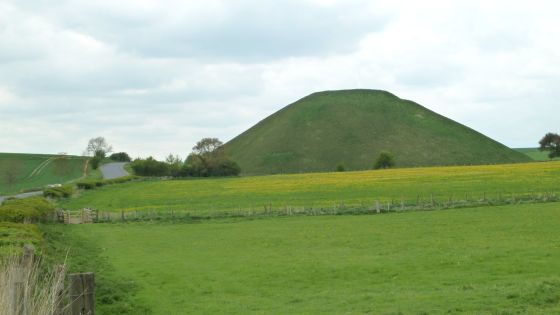
Looking towards Silbury Hill. West Kennet Long Barrow, 30th July 2020.


Looking out to chamber entrance, West Kennet Long Barrow, 30th July 2020.

Chamber entrance, West Kennet Long Barrow, 30th July 2020.

West Kennet Long Barrow, 30th July 2020.

Approach to West Kennet Long Barrow, 30th July 2020.

Get the feeling someone’s watching...?


1 September 2012 CE


From the south.

Looking east.

In midwinter mist.

October 2017


Zoomed at from the Sanctuary


Lichenography.


Midwinter sunset between the facade stones.

Midwinter moonrise from the barrow.

Open Source Environment agency LIDAR


Happy Solstice all – yesterday’s sunset at West Kennett.

Notice informing visitors West Kennett Long Barrow is closed for conservation work.


22/03/2015 – West Kennett Long Barrow


Summer sunrise at the barrow


May 2013

May 2013


Taken from the Sanctuary


....you guessed it!

Panorama of the WKLB in it’s landscape. Shame it wasn’t 13 days later!

Sunlight flooding the interior of the barrow.

Looking back through the entrance to the North East.

Just after sunrise.

Seen across fields from the south, visible but pleasingly inaccessible.

It’s often said that a facade is designed to mask something insubstantial. Not here. Some facade; some monument

Self pic as the sun was setting over West Kennet Long Barrow


Storm clouds over West Kennet long Barrow

Flowers in between the stones.

Floral tributes – and not a candle in sight!


Need I say more... except ‘tis a pity there weren’t ant crop circles around the long barrow on this balmy day in August...

Wildlife galore. Birds nesting inside the first chamber and the eleventh plague of insects just outside (see photo after next).


Took this while thinking of the rising Equinox full moon? The view to the horizon along the barrow axis.

Also looking East. Someone had left what appeared to be a chunk of meat (I may be wrong, I couldn’t get too close to it) on top of the blocking stone and it and the whole barrow opening area was smothered with insects.


West Kennet Long Barrow as excavated in 1859 by Dr. Thurnam. These excavations took the form of lifting the cap-stones of the chamber, excavating the material on the floor of it, and similarly clearing about fifteen feet of the passage, working outward from the chamber. These diggings leave much to be desired (no plans or sections of the burial deposits were made) and it is fortunate that no attempt was made to clear the outer end of the passage or the entrance forecourt. This plan made at the time by W. C. Lukis.

Close up of polisher stone.


Polisher mark on second chamber to the left.


A long exposure with no flash taken inside west kennet a couple of folk having a dance whilst teachings were in place.

Long lens From West kennet looking towards silbury Hill.

Taken inside west kennet longbarrow no flash,Nikon D200 mist added for effect,unsure about this but heh what the heck lol.

A reverse view of WKLB, taken while walking towards EKLB. No road, no cars, no visitors, just the sparse downland fields.

The large sarsen at the back of West Kennet Long Barrow, it is usually wet and appears to have a pinkish hue.

Entrance lintel.
Is it a calf, a deer or just a coincidence. ?

10th May 2009

Looking out from the entrance to the chambers.

... and yes, I positively love this place in the snow!

A View from the front, and six inches of snow – a rarity in these parts!

West Kennet gateau with the snow being the icing on the cake.

Snowtops in the sunshine. This was well worth the hike against a headwind up the hill in the snow to the tomb

2:45 on a crisp December afternoon

Does this capstone over the entrance to the barrow contain an animal’s head?
Some claim to have seen the carving of a deer, others a water buffalo. Is this natural or not?
If this stone is genuine, and replaced in its original position after restoration, it would have been visible even after the barrow was sealed up.

The incredibly long, longbarrow, with the old track gouged out near its centre


Ground plan of the chamber and gallery
Engraving of the excavations made by Dr. John Thurnam in 1859.
The excavation was made from the top of the barrow and out through the gallery to the courtyard. The side chambers were not discovered until the later excavations.

View of the gallery looking through the chamber
Engraving of the excavations made by Dr. John Thurnam in 1859.
The excavation was made from the top of the barrow and out through the gallery to the courtyard. The side chambers were not discovered until the later excavations.

View of the chamber looking through the entrance
Engraving of the excavations made by Dr. John Thurnam in 1859.
The excavation was made from the top of the barrow and out through the gallery to the courtyard. The side chambers were not discovered until the later excavations.

West Kennet with Silbury in background


...as seen from heaven?

Stone with added “artwork” – thank goodness it is only in chalk but how f*cking dare they??????? Grrrrrr.
There was evidence of noughts and crosses having been played on other stones too....
04/04/08


The lovely smooth polissoir on the right hand side of the central passage.


Sunset, September 2007

WK with the Swindon night sky lit up in the distance...

West Kennet Long barrow at Midnight on a sultry night in August 07... Lit entirely by moonlight.. the stars and atmosphere were an added bonus!!!

Detail of the Sarsen at West Kennet, the one that is often wet (is it over a spring?) Taken 2003


Stone & Sky

Looking down the passage into the rear chamber. Some flash was used to balance out the natural light.


The inner-most sanctum

Flint Scraper with stem. West Kennet. (illustration circa 1869)

Antiquarians fanciful intrepretation (circa 1869)


West Kennet Long Barrow


Having been rudely awakened that morning by a text saying “I’m snowed in!” I thought...’snow? what snow!’ but on looking out of my window I saw... SNOW... I quickly dashed out and before the thaw, took a few pix for the ‘family album’... West Kennet Long Barrow as I have longed to see it...

A selection of the tat we removed on just 1 visit to West Kennet longbarrow summer 06.

WKLB in its landscape. Curious that from a few yards further on it disappears and is not seen from the path until you are nearly upon it.
Jim.


Goodness knows what this is supposed to be. Looks as if someone has had a half hearted attempt to remove it. Difficult as it is scratched on.

I ask you, noughts and crosses! Less offensive than other graffiti elsewhere but mindless vandalism nevertheless.

View from West Kennett longbarrow painted in 1944 by John Piper (1903-1992).
wwwjohnpiper.org.uk


West Kennet Long Barrow Entrance


Festival!

Out in the Sunset

Inside...

Stones & rings, stones and rings, these are a few of my favourite things... fa la la...

Rings around the Stones...?

A skull like stone from the rear right side of the barrow. 15/8/2005.


A stone with cup markings on the left side of the barrow. 15/8/2005.

Soon after Summer Solstice sunrise in the SE chamber.

Soon after Summer Solstice sunrise from the SE chamber.

Sunrise, Summer Solstice.

WKLB from “Silbaby”.
Fully visible and exactly at right angles. An auspicious view?


Sentinel

Ghosts


The barrow taken from the south east

polisher and side chamber


Viewed from Waden Hill


View from the Sanctuary through a borrowed big lens.


The view when hovering in mid-air above the forecourt.


Surrounded by crop circles


NW chamber (2nd on right on entry)


SE chamber (1st on left on entry)

SW chamber (2nd on left on entry)

Chamber at end of passage (W chamber) showing walling and one of the two uprights which divides chamber from passage.

sunspots


close


The marks were once thought to be the signs of the stone being used to polish tools but are more likely to be natural.

a clear photo inside the barrow taken on the summer solstice 2003

View towards East Kennett Long Barrow through entrance stones

SW chamber & passage

NE chamber

NW chamber (?)


From up here, it truly is a wonder!

The landscape towards The Sanctuary and W. Overton Church.

6am.Winter Solstice 2002.

Inside West Kennet. April 2000.
Two candles, despite being irresponsibly left, created an eerie effect!


Taken 29th December 2002: The wall of the chamber was littered with tea lights, and the accompanying soot and wax.


West Kennet Longbarrow – circa mid 1990’s


West Kennet Longbarrow – circa mid 1990’s
Yeah, yeah, it’s the picture everyone takes, which is exactly why I couldn’t resist taking it!


10/02


Taken July 2001


Taken May 2000. A lovely day...


Taken May 2000 – it’s taken a long time to get round to uploading these!

Child’s skull, excavated from the barrow, on display in the museum at Avebury.


West Kennett entrance, dusk, November.

Sunset at West Kennett Longbarrow, November.

West Kennett in November. Inside looking out – with apparition! (100% undoctored!)

01/12/01CE


Inside...Out.

In this video, we continue our exploration of megalithic monuments with an exciting trip to West Kennet Long Barrow – Said to be the largest and best preserved long barrow in the UK!
Join us, as we attempt to reveal what it looked like before the massive restoration and reconstruction work that took place in the 1950’s... and the wanton destruction of the sixteen, seventeen and eighteen hundreds. We go back over 350 years of recorded history, using antiquarian texts, multiple excavation reports and a wide variety of sketches, photos and video.
We aim to provide a complete and accurate presentation and assessment of all the available documentation regarding the sites we visit. As this information is an important part of our national heritage, and has often not yet been collated satisfactorily in a single collection, we have attempted to provide a concise summary within the video and will include a list of reliable sources in the video description. This list will eventually be reproduced on our website and updated as necessary.

Twice yearly, around the time of the Spring and Autumn Equinoxes, the rising sun sends a ray of light into this 5,650 year-old monument.
The spectacle is visible for a week or more either side of the actual Equinox and the light takes a slightly different course through the barrow each day.
Clear sunrises are not common: this was the only one of September 2013.
Video by Steve Marshall
Recent graffiti depicting the Extinction Rebellion logo which has appeared in West Kennet Long Barrow has been condemned by the Swindon Branch of ER.
A beautiful winter’s day, the fairground ride of Christmas over – sigh of relief for another year. So today ventured out to Avebury to walk over to West Kennett Long Barrow. Having heard it was open to the public again, wanted to see the improvements. The ground levels inside the barrow have been raised slightly and covered with a sandy gravel. The unsightly sky-light has been sealed and replaced with two port holes in the middle and at the end of the barrow. I bumped into an old friend over there (as you do) who told me the plan was for water to drain out through a small gap in the entrance stones.
Just at the moment the walk up to the barrow is very muddy as a vehicle has churned the rubber meshing.
West Kennett Long Barrow is currently closed for conservation work. The entrance is fenced off while a small team of what looked like three people work on the drainage and 1950s concrete skylight. I was over there earlier today and spoke to someone who said he was an archaeology-engineer. The work, being carried out with care and precision, has been jointly commissioned by NT and EH.
A very strong plastic webbing ‘road’ has been laid up to the barrow and a portacabin is up there behind the fencing.
30th July 2020
Another return trip to Avebury, but this time to view something that often goes amiss. A quiet lull in the speeding traffic on the A4 allowed me to pull over in the layby, park up and make the journey on foot to the West Kennet Long Barrow. My journey uphill was promising enough, an avenue of golden barley shimmered in the sweltering sun, with the barrow suddenly appearing at the crest of the hill.
I had mixed emotions. I was pleased to finally see the site, but had not expected to it to be so busy, especially compared to my previous experience of Wayland’s Smithy. Families picnicked directly in front of the entrance, claiming it for their own like a spot on the beach. Discarded beer bottles lay nearby, while unsupervised children ran amok in the chamber, whacking the stones with sticks and retrieving offerings of coins left in good faith by previous visitors, pocketing them after excitedly declaring their finds to their disinterested parents.
One of the fathers treated one of the facing stones like a climbing range, which only encouraged the children to follow suit as best as they could, as he reached the summit. This revered site looked more like a play area in a pub garden, than an ancient monument. I quietly reasoned that all things must pass, and that these people would bore easily and leave soon, allowing me the chance to explore in a more reverent fashion. All the while I wondered, how can we expect children to learn about the past, while we trample carelessly over it and without respect?
The arrival of a National Trust ranger to check the site and collect litter soon encouraged a cessation in horseplay and I was free to enter the chamber. I ignored the sound of children beating sticks against the plastic apertures in the ceiling above as best as I could, and sought to explore the entrance to the barrow. A grand affair compared to my much beloved Wayland’s Smithy, allowing visitors to stand upright, rather than crouched, with four antechambers and exploration space of 13 metres before reaching the sealed wall of the tomb.
The chamber was marvellously cool compared to the scorching heat of the sun outside and I took photos to complete my study. As I took one photo of the end of the chamber, I was aware of a fleeting mist in front of the lens and just outside of my peripheral vision. My rational side registered this as atmospheric change in the chamber, or my eyes adjusting to the light coming through the ceiling aperture. But what I like to think is that something within the chamber identified me as someone intent on visiting with purpose and respect, rather than as a mere hot Summer day’s distraction. Perhaps this was a way of indicating I was welcome?
Reaching the end of the chamber, I was impressed with how the light at the entrance shone and illuminated the passage. I vowed to return during a less popular season, where I might have greater opportunity to attune to the site and encounter others who might not treat it as a trifle fancy or item on the summer holiday checklist.
My experience that day was encapsulated while driving back down the West Kennet Avenue, after a meal at The Red Lion. I travelled at a respectful speed down the track, enjoying glances at the sight of the stones lining the avenue to my right, while keeping an eye on the road ahead. The driver behind couldn’t accept 30mph as an acceptable speed and overtook, roaring down the road before having to break suddenly at a pinchpoint, in front of oncoming traffic.
Everyone in life is heading to their destination, but we must take the time to enjoy the journey, wonder and learn. For what is a life worth living, if we’re blind to the mysteries that surround us?
Yet another visit 11.2.13
The light was starting to fail as we headed home via the (slight detour) of Avebury (as you do!)
I had fully planned to just have a quick ‘drive by’ of WKLB, Silbury Hill and of course the standing stones. At least that was the plan until we approached the deserted parking place for WKLB.
‘Mind if I have a quick visit as the children are asleep?’ I enquired
‘I thought you would say that!’ came the reply.
5 minutes later I was squelching my way up the hill through the mud.
They had clearly had a lot of rain here recently and the little stream you cross before the climb up was the highest I have ever seen it – just short of bursting its banks.
On the way up I was surprised to see four ladies also making their way up – I expected to have the place to myself at this time of the day. The ladies all wore different brightly coloured wellies and therefore weren’t as concerned about the mud as I was.
I strode on ahead of them in order to get some time to myself in the tomb.
The wind was biting and in the distance the hills were covered in snow.
It was also nice to be able to see the ‘Silbury moat’ for myself – I had recently seen the pictures posted on this site. Silbury never fails to impress.
Once inside the chamber and out of the wind all was silent except for the drip, drip of water falling off the stones.
I hadn’t brought a torch and in the gloom my eyes were finding it difficult to adjust.
A faint smell of incense filled the chambers – not overly strong and quite pleasant.
Nothing had changed since my last visit but there is of course no question that this is a very special place.
I heard the ladies arrive outside and to be fair to them they waited outside to allow me ‘my time’.
As I exited they came in – torch in hand.
‘I didn’t bring a torch’ I explained ‘as I wasn’t planning on stopping – but felt I had to’
‘A lot of people say that’ the one holding the torch replied ‘it’s like paying your respects’.
Quite……..
By the time I got back to the car it was seriously dark and I was only just about able to make out some of the standing stones as we drove through the stone circle and home.
Another visit – 1.10.11
The main reason for visiting the area was for Silbaby and Swallowhead Springs but how could I possibly resist a walk up the hill to visit the famous WKLB?
If a reason was needed to visit (which it wasn’t!) I am currently reading the excellent ‘Prehistoric Wiltshire’ by Bob Clarke which refers to a stone in the chamber which has axe polishing marks on it (photo on page 39).
I must admit that even with this knowledge I still couldn’t tell what was natural and what was polished! Still, no visit to WKLB can ever be described as a wasted journey.
There were lots of people about but luckily myself and Dafydd had a short time alone inside. On the way up the hill I noticed that the oak tree was once again festooned with ribbons, feathers etc
On getting the first glimpse of the Long Barrow Dafydd asked me ‘where the hole was’? What hole? I replied, ‘the hole to get in?’ said Dafydd – I then worked out he meant the entrance!
As soon as I pointed to it he was like a rat up a drainpipe, running ahead and disappearing inside – not bad for a 3 year old!
Inside the chamber there were lots of ‘offerings’ on the floor – berries, apples, acorns etc. There were also lots of tea lights all around the sides of the main chamber – many of them still alight.
Coming back out Dafydd excitedly pointed towards Silbury Hill – ‘wow, look at that mountain’!
Just visited WKLB – again! (27.3.10) Quite a few people about and the path up the hill was surprisingly muddy. I noticed that the tree at the bottom of the hill which the ‘offerings’ are tied to has had most of its lower branches cut off which overhang the fance – to stop things being tied? Inside the barrow itself it was very wet with plenty of puddles and mud. A few ‘offerings’ were placed on nooks and crannies in the barrow. I never tire of visiting Avebury, the whole area is magical. Silbury Hill is out of this world, looking at it from the barrow is a wonderful experience.
This is one of my favourite sites. The size and scale of the longbarrow is breathtaking. I make a visit to Avebury once a year to see the henge, WKLB and Silbury hill. I call it my ‘pilgrimage’. I have never had a problem with speeding cars etc as I park in the small layby at the bottom of the hill leading up to the barrow. There are usually ‘offerings’ to be found in the tomb and tied to the branches of the tree at the bottom of the hill near the layby. A truly fantastic place. I am planning a trip to the Orkneys this summer so it will be interesting to compare the tombs there against my two favourite so far – WKLB and Stoney Littleton. I will report back!!
I can’t believe I haven’t posted owt about (like the rhyme?) one of the grestest of our chambered tombs. I’m having a blitz on sites I’ve not posted fieldnotes about, me.
Here goes. A few years ago we took our chances and crossed the A4 without being killed by some speed-freak with lowered suspension, wide tyres, and a big phallic exhaust. I suppose it makes them feel a little less inadequate. I’m turning into my dad.
Anyway, our ancestors, who built WKLB had other things to worry about, like missing thigh bones, skulls, and other body bits. What a memorial to a collective of people. It makes you think about how graves and grave markers have developed over the milennia, yet the basics have remained the same: stone. Did the WKLB people have any form of “writing”, and is the absence of markings on the sarsens proof of no “writing”? I know of the carvings on the Stonehenge sarsens, but wouldn’t you think that such a huge monument as WKLB would have had some form of “words”, symbolic or otherwise? Or was the memory of people in the form of ancestral stories, passed down through the generations? Perhaps telly and stuff has got in the way of our modern communication.
It’s an awe-inspiring site, with big stones, and an even bigger earthen mound, and great views. It’s just below a ridge, so where was it supposed to be seen from?
Marvellous.
One way to avoid the problems of parking on the A4 lay-by and risking your wordly belongings, is to walk to WKLB from the village of East Kennet.
If you walk past the church (and the groovy house with the amazing wood carvings) and follow the bridle path, it takes about 15-20 mins and affords fabulous views of both East Kennet Long Barrow (on your left hand side) and Silbury.
This way, you approach WKLB from the “front”, walking up the field directly opposite. Excellent.
When we visited last week, some idiot had chalked graffitti all over the stones. At least it was only chalk but it was still infuriating. Noticed the same thing at Woodhenge and was even more annoyed by the “peace and love” messages scrawled there.
We reached the longbarrow to find a small group of people reading the information board. I took photos like a woman possessed, desperate to take something back with me to North Wales, a decent set of pictures to reflect on when away from this most magnificent of places. It was thrilling to touch the stones again after so long, wonderful to stand in the small forecourt before walking once more into the dark, imposing chambers. Again, the structure of the place struck me through new eyes; the size of the rocks, the creation of this space, the awesome nature of the whole. It occurred to me that the stones appeared very much like the bones of the earth. Once again, memories of times past drifted through my mind, especially the last visit, which was strange and dark. I didn’t want that memory to stay with me, but it persistently floated back, until a sudden trilling chirr and resonant, urgent wing beat broke the dark chambers’ air. More squeaks, more wing beats, a dart of movement, and a swallow swooped out of the entrance, up the face of the forecourt stones, and into the night. A few moments later a rush of air signalled its return – they were nesting inside one of the chambers!
I hid behind a large stone and watched them fly in and out, while Moth and Jane sat above the entrance to watch their unerring, acrobatic passage back and to the nest. We were the only people there, immersed in the magic of the muted night’s colour and smells, the timelessness and atmosphere of the long barrow and its stones, the sounds of wind through grasses and swallows’ wing beats and chirrs. The feeling of re-birth, renewal, regeneration and life filled the place, and any dark memories were chased away, to be replaced by light and airy vibes of positivity.
28th June 2006
West Kennett Longbarrow was the 7th destination on this my first pilgrimmage from the city slums of the Big Smoke to the mystical, mythical West. I’d spent the morning at Uffington in the company of the White Horse et al, then it was back in the motor and back onto the M4 and off to Wiltshire...
As other posts have alluded, the car park for WKLB is frequented by local bandits and there’s no shortage of reminders in the form of rude, day-glo posters put up by the local fuzz. It would be easy to condemn this skullduggery as a product of modern times; but i couldn’t help but speculate as to the comparable threats and dangers faced by the Ancients on their own sacred pilgrimmages and wondered if indeed there was a Neolithic equivalent of a Hoodie? So rather than a modern anomaly i came to view this threat as something that i probably shared with my forefathers and something that, undoubtedly like them too, consolodated the purpose of my journey. Another point to note is that on the lower reaches of path leading to the barrow there are sections where the nettles severely intrude on the walkway and, as such, leg protection is necessary or you’ll probably find that you get stung. Avoid wearing mini-skirts!
There is little point in me going into any detail about either the barrow itself or the panoramic views afforded from it – these are all described elsewhere. However, one thing that i must mention is the view to the south of the barrow. Normally overlooked in favour of the view northwest towards Silbury Hill, or east towards The Sancturay, i’d argue that, certainly at this time of the year, the view to the south is by far the most spectacular, inspiring and profound on offer. This has happened by chance it seems, as nature has conspired to present us with a highly seductive floral alternative to the man-made sites that our gaze usually comes to rest on: three fields: one blue, one pink and one yellow, interspersed with swathes of brillant scarlet poppies: psychedelia au naturel!
I found the barrow itself magnificent but ultimately a sort of gloomy place – a place of solenmity and death. But the adjacent abundance of flora, fauna and wildflower speaks only of life and vitality. Perhaps the barrow’s isolated, elevated position – surrounded as it is by the wild landscape – has something to do with this? Death and decay amidst life and renewal? Whatever the answer it was well worth the journey and an experience that i will, undoubtedly, take with me to the barrow.
Visited the longbarrow on 14/4/05. Myself and my husband were the only visitors there. The inside of the barrow was clean and no signs of the reported rats or rat droppings and no food had been left. Someone had decided to draw a phallic symbol in chalk on the big stone so with some honest spit and a wipe I manged to clean most of it off. It was quite an experience to be there in the peace and quiet and take in the surroundings completely alone.
I agree with akasha (10 March 2004) about “ritual litter” When I visited the barrow I was preceeded by a couple of “new Agers” who were coming down the path as I was going up. Nothing wrong with that you say, as I entered the barrow I was confronted by billowing smoke and I could hardly see a thing. These bloody awful people had only lit half-a-dozen (birthday cake) candles and left a votive offering of a dog biscuit. Ruined my day!
We’d been told that the access had been improved since last we were here, and indeed the path is much easier to get a buggy up, but why go through all that bother and leave the manky old metal kissing gate? Thus not making it any more accessible? World Heritage Site rules and regs I guess.
There were folks doing the ‘stoneage soundtracks’ thing, humming and ohmming etc. And from my postion at the time, in the ‘courtyard’ down on the deck, looking at the textures, it did seem to have a definite effect. Mucho resonance etc. The hummers then spoiled this by making gyets of themselves, but it’s West Kennet, it attracts all types. At least they didn’t damage anything in the name of being reverent.
Really smooth polisher on the inside, to the right. Not noticed it before reading this website.
The journey to West Kennet Long Barrow has many distinct parts, starting with the car park. Apparantly, this is one of the most thieved-from in the county. A man in Marlborough came up to me and warned me to lock my bike if I stopped there. Arriving, I saw that shattered glass lay all around. I marvelled at the incongruity of this, in the presence of the quiet dignity that is Silbury Hill. It felt like a test of the heart, so I left my bike without lock and lifted my head. Take time to stop under the wonderful oak at the side of the meadow. A kind soul there abides.The climb up through the barley shows all sorts of detritus in the soil. I picked up a heart shaped sliver of flint and a couple of lumps. The surface felt like soupstone, so hard, yet so soft. I caught up with a couple of ladies and we reached the barrow together. I walked off round the outside of the barrow, leaving the ladies to the “Hey, You!” of the stones at the entrance, and came back along the spine. A small pit seemed an appropriate recepticle for the stones, so I left them there. The heart I gave to my wife when I got home. The back of West Kennet is scarred, deeply, by the excavations of the curious, and the greedy, but the scars are old and make the path up the spine into a mini adventure. I felt like a giant striding across the downs. The roof of the chambers is a mixture of huge stone plates, glass bricks and concrete. It had a hint of the Cold War utilitariarn to it, but only affected the Glamour of the place. West Kennet has deeper levels of meaning to it than that. Met a Canadian couple who had just come from Dunscore, the small village in Scotland where I lived as a boy, and smiled. What were the chances....? Inside, the stones are beautiful, all swoops, scoops and curves. I didn’t feel much life beyond the stones. The word I would best use is ‘cold’, not malevolent, just dead. I suppose this is fitting, if this was a site associated with death. In the time I was here, at least 9 army helicopters flew directly past, usually in pairs which seemed intent on corralling us. I suspect that this is intentional but feel it as an impotent fury. When here, smile and wave. Who knows what hearts might melt, behind the Rayban Shine.... Incidentally, my bike was still there when I returned!
Visited West Kennet last week. As ever disappointed to find the place littered with tealights and other ‘ritual litter’, who ARE these people who are leaving the tealights? Everyone on this fieldnote page seem to realise heat is damaging to the stones! as is burning incense.
Im reading a book about the west kennet long barrow and it states that a probable use for the barrow was as a place of initiation – initiation of a soul from this life to the next, (rites of passage) as well as initiations for the living, who spent time in solitary confinment in the barrow.
I meditated on the barrow recently and got the distinct impression the barrow should be Closed. Did you know that when first excavated, the barrow was found stuffed full to the brim with flint gravel? When closed my megalithic people, it is most obvious that this place was supposed to STAY closed.
Unfortunatly for us, who love to visit the barrow, this is the message I recieved! x
If anyone is interested in promoting the proper use of the barrow through educating its visitors, please contact me as I am trying to start an action group: [email protected]
Access kissing gate I think. Slightly rough path up to barrow, but path is being re-jigged at the moment. Walk is around 10 minutes if you’re reasonably fit I guess.
Monday 15 September 2003
Haven’t been up here for years. Only took about 3 photies before, as I was only just getting interested in stones ‘n’ bumps. Unfortunately had a frustrating time with the camera this time, as our visit coincided perfectly with a (small but big enough!) coachload of tourists....
Must admit I was probably a bit less impressed this time than I expected, having seen numerous other barrows and burials of many kinds since that first visit. It remains an absolute classic though and seems quite a bit bigger than East Kennett (I know it’s not).
So, here follow some banal comments, for the record. It really is a very long barrow, isn’t it? And I suspect it takes quite a few visits to get used to the sheer size of the entrance stones. Smaller inside than I remembered. Oh yeah, the skylights spoil it a bit I think.
Visited 29th December 2002: We made the long slog up to West Kennet this afternoon, despite the muddy river that used to be a footpath. The National Trust have put a sign up at the car park warning people about the state of the path and suggesting that appropriate footwear should be worn. I’m guessing that high heeled boots aren’t recommended, but I saw someone struggle to the top despite wearing a chunky pair (all power to them).
When we entered the barrow, and moved down to the chamber at the end I was mightily pissed off to find a plastic tarpaulin on the floor, covered in mud and spent tea lights. The wall of the chamber was also littered with tea lights, and the accompanying soot and wax. There were a couple of biodegradable offerings in the chamber as well, but they both had poisonous berries on them, and I had to keep asking William not to pick them up (or to put them down, depending on how far he’d got). Unfortunately we couldn’t do much clearing up (with the prospect of getting the two boys back down the mud slide to the car). It made me sad to see the place looking like that.
What’s the story with this sort of behaviour? Are the people who do this really Pagans? If they are, how the hell do they justify causing so much damage to a place that is sacred and/or of unique archaeological importance? How stupid can you be? It gives a bad name to the majority of people who use the site for spiritual purposes without leaving it in a mess.
Despite all this, I’m glad we took the boys to see West Kennett. Next time, we take bin bags!
Visited Avebury 22.12.02 – peaceful on West Kennet Avenue with bursts of incredible winter sunshine.
Lot of people in the village talking about “mushrooms”.
Visited West Kennet Long Barrow 22.12.02 – monument filled with candles & nightlights, majority of which placed directly beside or beneath megaliths. The prolonged heat from these candles will probably damage/fissure these ancient stones. A capstone was reported cracked recently, I understand? Bottle of red wine going the rounds...
I spoke to the people at the barrow, about the danger to the monument, one of which promised to ‘do something’. The others melted away into the interior of the barrow (about a dozen loosely connected people), seemed unwilling to discuss the matter [embarassed?]. Most of these guys appeared to have come from Stonehenge (solstice) from what I could discern from the conversation.
The guy (from Belgium) who’d promised to check on the nightlights soon left the barrow – as I was leaving, in fact. He didn’t talk about the nightlights. I again explained the danger that fire poses to ancient stones; it was difficult to tell whether he could take what I was saying on board, although he spoke perfect English, French & Flemish.
After a while I let him continue on his way alone; I, wishing to visit the Swallowhead.
Afterwards, at the layby, I encountered about half a dozen people making their way towards the barrow. I wished them well but asked if they were to encounter candles at the monument, to please make sure none were harming the stones in any way – by directly heating them. The response seemed positive/bemused: a middle aged lady became quite defensive about her ‘never using candles anyway!‘
I will write to EH about adding a multilingual note to their WKLB information board, about the danger fire presents to ancient stones.
m6
I remember the first time I came here, it was in the early ‘50s. There were TV cameras, a lot of mud and a lot of people. Sir Mortimer Wheeler was doing the dig. I later saw the program on the BBC, there was no ITV in those dim and distant days.
The next time I went it was clean and the wonderful place it is today, I go there a lot to re-vitalize.
7.00am on a Monday, and you can have the place to yourself. After the hoardes of folk up there on Saturday afternoon it was a completely different place. And it gives you time to clear up the tea-candles.
Many times I’ve stood in the longbarrow and experienced the tangible stillness inside. Once in the early 90s I went with a group of shamanic students and we gathered inside and chanted. The quality of the air seemed to grow thicker and the energy inside seemed almost electric. The accoustics were also marvelous!
What a wonderful Sunset tonight from West Kennet. It could become an Easter tradition, this climbing out of tombs stuff!!!!
On Saturday 2nd Feb, on an awayday from the family, I set off in search of West Kennett. The drive from Thame in Oxfordshire took in the Blowing Stone, a cute little number stranded at the bottom of someone’s front garden, and then a lightning stop at the Uffington White Horse – not enough time for Wayland’s Smithy this time.. The journey to Avebury was enough in itself. The visual build up along the Ridgeway is amazing.. every step of the way the landscape reveals itself, pulling you along and then suddenly you approach the edge of the henge, and hello ladies, here we are! I think this was my third visit to Avebury but through taking this particular route, I was for the first time able to get a profound sense of the sheer scale of the journey people must have undertaken to get here, not to mention the awesome ceremonial significance of this ancient landscape. Unfortunately, the rain was beating down badly, so nothing to do but welly up and stride forth! I hadn’t had time to see West Kennett before, so was determined to get there sheeting rain or no! I walked through the circle and made my way along the Avenue. I’ve always loved these avenue stones in particular, their individual characters so distinct. Getting more soaked every minute, I hurried on towards W.K. not realising quite how far from the circle it actually is ( well not that far really!) As I turned the corner and saw the mother of mounds that is Silbury, I knew there wasn’t far to go. By the time I reached W.K. I was hugely wet but very happy. What a phenomenal spot to put this place! A giant footstep away from Silbury and the beautiful stone at the entrance shielding you from all the wind and rain.. As I ventured inside, I was not alone, a group of people had gathered inside to celebrate Imbolc, trust me to chose today! No disrespect though, they were a nice bunch, but although I stayed and chatted for a while, I kind of felt like I was intruding and so didn’t really have the chance to tune in to the West Kennett experience, maybe next time! So after “drying out” HAHA! for a short while, I headed back up across the hill, stood alone on a level with Silbury, WONDERFUL! and had my moment.. I must say a valuable lesson in the need for serious waterproofs was learned as I do not recommend trying to change out of sodden clothes in your car, thank goodness it was dark!! Roll on those summer nights! LISSY x
I once decided to take two of my kids, aged about 11 and 9 at the time, the two boys, for a two or three day trek up the ridgeway, starting at Avebury. On the first day whilst still at Avebury, we got completely soaked. The next morning the same. So we dediced to give up. We only had one pushbike for transport and we live in Newbury 25 miles away. Oh and we had the dog. So the plan was I had to cycle back and collect a car to collect the boys and the dog.
It was still raining and we needed shelter and safety for two young boys. The only place .... West Kennett Longbarrow I thought....
The boys had been before but they were too young to remember. The youngest one wasn’t too impressed with his lodgings for a few hours... He said, “I don’t want to stay in this stupid cave”. Anyway I managed to persuade him that it was dry..ish and it was a spirtual place and he would be safe there. I didn’t dare tell him about what was buried there.
I was quite worried about leaving them, but I had no choice. The ride and a car were the only options. The train was a long walk and infrequent.
I set off in the driving rain.... 25 miles of slog on a mountain bike. I’m was fit , but used to that sort of distance on a nice summers day on a road bike.
3 hours later I returned. As if by magic the sun beamed down. As I walked up the to the Longbarrow my two kids were dancing aroung in the sun, as happy as larry.
The dog had stayed in the Logbarrow for most of the time. She had moved the bits of hay inside and made a nest in one of the chambers, maybe she got the vibes and thought that this was the end, although she wan’t upset or frighteneed when I returned and neither were the kids.
Moonhead
Me and Carolyn and a cold windy day, wound our way up the footpath to the Longbarrow with the glorious Silbury always over our shoulders.
When we arrived we had the place to ourselves. Wow beautiful! Supprisingly enough it wasn’t cold inside, the whole place gave off an air of calm warmth.
We then witnessed a snow storm gradually make its way from the downs, across Silbury and up to us, coating the world in a powdery hail. We decended from the hill into a different landscape from the one we accended from. Lovely, magical.
This is an amazing place to visit! we had visited stonehenge then the sanctuary and walked to West kennet. my 2 children were freaked by it. they are aged 9 and 7. the atmosphere just was amazing and seeing their reaction was wow!! we stayed for ages in the August sun basking in the vibes. then we made posies to the Goddess / nature with bits of corn we had found lying around etc. (i hate picking living flowers / weeds etc.) the children then went into west kennet alone to offer their thanks which i found very moving as i don’t ‘push’ my beliefs upon them, it’s up to them to find out their own beliefs themselves. anyway this place was by far the most spiritually moving and enlightening that we encountered.
i agree about the silly candles etc. they are more harmful than good. surely offerings can be made with true intent from within ourselves and not by destoying the stones or environment around them.
i always take away with me more than i came with ie. rubbish etc. from any site i visit.
The access is still fine (21/8/00), but it’s a bit of a double-edged sword. There’s a huge amount of damage, mainly from candles balanced on ledges on the stones, but one bit looks like there’s been a proper fire in one of the side chambers (first on the left).
Seal it up if we can’t look after it. Pains me to say it, and I never thought I would, but I can see why there’s a fence around Stonehenge now. Bloody drives you mad ...
While visiting the West Kennett barrow a worthwhile diversion is to check out the Swallowhead spring nearby. According to the speculative reconstruction of the Silbury/Avebury rituals by Michael Dames this spring was the original focal point of the whole complex and provided the baseline for the sacred geometries used to construct relationships between the various monuments. During the summer months (when incidentally the spring is dry)its a bit hard to spot from the path due to trees etc. Take the path from the road up to the west barrow until it takes a hard left,in front of you is a field gate which the more energetic may shin over or just follow the hedge around to the left until it finishes. Last time I was here (june 99) the field was under crops so keep to the fallow ground at the edge. Follow the edgeof the field to the right of the gate and Swallowhead is in the bottom right hand corner of the field.
I’m not a mystical person but this place is one of the few in Avebury which retains some of the original sense of being a sacred place (the lack of daytrippers is also something to do with it). If you climb down into the dried up spring an old willow tree is festooned with rags and small tokens of previous pilgrims. Sadly last time I was there the remains of some unidentified dead animal probably a cat, together with variousparaphenalia meant that some dodgy pagan nonsense has been going on. Especially during the hectic tourist season this is an oasis of calm with Silbury rising serenely above you in the distance.
Since its located on private land the access may have changed so if anybody has been there more recently please post a follow up.
lovely sunny day when i visited west kennet, which probably explained why a lot of people were lying aroud sleeping on top. excellent view from the top towards silbury hill, shame that some idiots had decided to leave a burning candle in one of the adjoining chambers(take a torch-it wont blacken the stone!)
i’m short and it was a great thing that this was one barrow i did not have to crouch down to get in. it is a must to go see this especially if your visiting avebury henge or silbury hill.
Considering its age and fame, very little folklore seems to exist. The only reference I can find is that the ghost of a priest enters the barrow at sunrise on Midsummer Day followed by a ghostly white dog with red ears, which is pretty similar to what Rhiannon found.

A dog from the fairy otherworld inhabits the barrow. He is white with red ears – as you’d expect from his heritage.
On Midsummer’s morning you can see him entering the barrow at sunrise (perhaps as some kind of metaphor of the barrow’s alignment and the sun?)
[edit – I’ve found a kind of source for this – Janet and Colin Bord’s ‘Atlas of Magical Britain’. They say “the ghost of a priest enters the barrow at sunrise on Midsummer Day, followed by a ghostly white dog.”
But where did they hear that? Who knows. I fear it is from the modern celtic revival (ie randomly made up for reasons of romance). But maybe that’s no worse than being made up at some point in the past. A place so impressive rather needs some impressive story, don’t you think. White fairy dogs with red ears are in genuinely old stories. And some burial chambers in Wales are kennels for greyhounds. So it’s not ridiculous to transport the story here. Just not very “authentic” perhaps. Anyway. Maybe who cares.
But if you know different... please leave a post.)
- – - – - – -
During excavation, holed limpet and periwinkle shells were found – perhaps they were strung as parts of necklaces or amulets? or had some symbolism connected with their far off origins? I always pick up shells at the beach...
(shell info from Burl’s ‘Prehistoric Avebury’)
Details of the Long Barrow on Pastscape
West Kennet Long Barrow is a Neolithic chambered burial mound situated just below the crest of a north east facing slope overlooking Silbury Hill. Recent radiocarbon studies have dated it to the 37th century cal BC and it was in use for at least a thousand years. The mound is trapezoidal in plan and measures about 104 metres in length, 25 metres at the widest point and 3.2 metres at the highest point. The forecourt is situated at the eastern end of the mound. Beyond this is the entrance into the mound, which leads to a 12 metre central passage with five small sub-circular chambers opening off it; a pair to each side and an end chamber. The chambers vary in size from 2 to 4 metres across with a maximum height of 2.5 metres. The long barrow was excavated in 1859 by J. Thurnam and in 1955-6 by S. Piggott, which included re-erection of many of the stones. The chambers of the long barrow were constructed of large sarsen boulders with drystone walling and contained the remains of at least 46 individuals including both inhumations and cremations. Many of the burials were incomplete – some bones were missing, while others had been grouped together in particular parts of the barrow. For example long bones and a quantity of vertebrae had been placed by the rear wall of the north west chamber. Pottery from the excavations included Windmill Hill type, Peterborough, Grooved Ware and Beaker sherds. The mound consisted of a core of sarsen boulders capped with chalk rubble cleared from flanking quarry ditches. These ditches, about 100 metres long and 5 metres wide, are now infilled but remain visible as earthworks. Final ‘blocking’ of the burial mound took the form of chalk rubble and other debris (including pottery, animal bone, flint implements and other objects) which was used to infill the passage and chambers. The forecourt at the eastern end was blocked with sarsen boulders and a ‘false entrance’ of twin sarsen uprights constructed.
The big stones of the chambers and the smaller ones making up the core of the mound are from the Marlborough Downs. But the (ton weight of) drystone walling of the facade is made from oolitic limestone and calcareous grit – which must have been brought from Frome and Calne, 25 and 7 miles away, respectively.
(in Aubrey Burl’s ‘Prehistoric Avebury’)
If you need to report damage to West Kennet Long Barrow, or come across such vast quantities of rubbish up there that you can’t clear it up yourself, it’s worth contacting the local National Trust office in Avebury.
Tel: 01672 539250
Fax: 01672 539388
Email: [email protected]
Kammer x
My sacred sites pages. I have details of my work and my new book all about West Kennet Long Barrow. Enjoy!
Hi. I have been working on West Kennet long barrow for years, and have discovered many new aspects of the wonderful site, including symbolism, astronomy and acoutics. I hope my new book on the site, West Kennet Long Barrow: Landscape, Shamans and the Cosmos, out on MArch 1, will let me share with everyone this site which I have made a soul connection with; I scattered my father’s ashes here.
See my website for details of funky talks and walks to the site this year: www.stoneseeker.net
Blessings Be, Pete
Report of John Thurnam’s 1861 examination
Download the complete book in pdf format
Stuart Ernest Piggott CBE (28 May 1910–23 September 1996) was a British archaeologist most well known for his work on prehistoric Wessex.
Wikipedia listing for the man who gave us all a chance to glimpse the world of the ancestors........
Follow the links on this page for more of the team.
Photo by Alvin Langdon Coburn: interestingly, of the barrow in its pre-restored state.
Another at
geh.org/ar/strip27/htmlsrc/m197926730002_ful.html#topofimage
and scroll down on this ‘Clonehenge’ page for another pre-’restored’ photo, which purports to be of WKLB too.
replicahenge.wordpress.com/tag/pete-glastonbury/
Stukeley’s take on WK Longbarrow – as he puts it, fit for an Archdruid.
Part of ‘Abury – A Temple of the British Druids’ (1743) online courtesy of Lithop.
A photo of the complete beaker found in West Kennett. Complete!!
Geophysics survey of the area around the barrow – the side ditches show up really well on the data plots.