|
 Log in |
Register Log in |
Register
|

|
|

ConwyCounty
|
|||||||||||||


 0 discussions


 Show |
 |
|
|
Sites/Groups in this region:
|
51 posts
Adam and Eve Natural Rock Feature |
7 posts
Afon Bedal Cist Cist |
3 posts
Afon Ceirw (Destroyed) Cairn circle |
|
12 posts
Afon Garreg Wen Standing Stone / Menhir |
6 posts
Blaen y Cwm Round Barrow(s) |
10 posts
Boncyn Crwn Round Barrow(s) |
|
5 posts
Bryn-cyplau, Nebo Cairn(s) |
19 posts
Bryn Euryn Hillfort |
3 posts
Bwlch Cowlyd Cairn(s) |
|
17 posts
Bwlch Goleuni Long Barrow |
8 posts
Bwlch y Rhediad, Moelwyns Cairn(s) |
4 posts
Cadair Ifan Goch Natural Rock Feature |
|
20 posts
Caer Caradog Hillfort |
30 posts
Cae Du Cairn(s) |
2 posts
Cae Du Round Barrow(s) |
|
6 posts
Cairn, between Afon Bedal and Bwlch Cowlyd Cist |
6 posts
Cairn NNE of Foel Ganol Cairn(s) |
10 posts
Cairn, NNW of Foel Ganol Cairn(s) |
|
95 posts
Capel Garmon Chambered Cairn |
67 posts
Carnedd Moel Siabod Round Cairn |
38 posts
Carnedd Pen y Borth Goch Round Cairn |
|
26 posts
Carnedd y Ddelw Cairn(s) |
35 posts
Castell Caer Seion Hillfort |
6 posts
Castell Cawr Hillfort |
|
20 posts
Castell y Gwynt, Y Glyderau Natural Rock Feature |
21 posts
Cefn Glas Cairn(s) |
2 posts
Cefn Glas 1 Cairn(s) |
|
25 posts
Cerrig-y-Ddinas Hillfort |
9 posts
Clogwyn-yr-Eryr Ancient Village / Settlement / Misc. Earthwork |
8 posts
Coed Gaer Ancient Village / Settlement / Misc. Earthwork |
|
1 post
Cronglwyd Fawr Round Barrow(s) |
4 posts
Cwm Cowlyd Ancient Village / Settlement / Misc. Earthwork |
1 post
Ddol-Frwynog Cairn(s) |
|
23 posts
Dinas Allt Wen Hillfort |
38 posts
Dinas (Llanfairfechan) Ancient Village / Settlement / Misc. Earthwork |
19 posts
Dyffryn Mymbyr Cairn(s) |
|
1 post
Dyffryn Mymbyr cist II Cist |
3 posts
Fairy Glen Natural Rock Feature |
7 posts
Ffrith-Y-Bont Stone Row / Alignment |
|
7 posts
Foel Dduarth Arrow Stone Carving |
8 posts
Foel Frech Round Cairn |
33 posts
Foel Grach Round Cairn |
|
11 posts
Garnedd Fawr (Foel Goch) Round Cairn |
6 posts
Garn Prys Cairn circle |
22 posts
Garreg Fawr Cup Marked Stone |
|
4 posts
8 sites Great Orme and its Environs |
20 posts
Gwern Gof Isaf Ancient Village / Settlement / Misc. Earthwork |
21 posts
Hafodty Standing Stone / Menhir |
|
31 posts
Hafodty Circle Stone Circle |
55 posts
Hafodygors Wen Ring Cairn |
6 posts
Hafodygors Wen Cairn II Cairn(s) |
|
5 posts
Hafodygors wen hut circle Ancient Village / Settlement / Misc. Earthwork |
1 post
Hafod-y-Llan Isaf Cairn(s) |
4 posts
Hafod Gelyn (north) Cairn(s) |
|
6 posts
Hafod y Dre Stone Row / Alignment |
3 posts
Hafod y Garreg Stone Row / Alignment |
38 posts
Hendre Waelod Dolmen / Quoit / Cromlech |
|
5 posts
Llanerch Fedw Cairn(s) |
1 post
4 sites Llanfairfechan Arrow Stones Carving |
15 posts
Llangernyw Yew and Standing Stones Christianised Site |
|
12 posts
Lledwigan Cairn, Cefn Cyfarwydd, Y Carneddau Round Cairn |
23 posts
Llyn Y Wrach Ring Cairn |
12 posts
Maen Pebyll Long Barrow |
|
5 posts
Maes-y-Bryn Round Barrow(s) |
15 posts
Moel Eilio, Y Carneddau Ancient Village / Settlement / Misc. Earthwork |
9 posts
Mynydd-y-Gaer Hillfort |
|
3 posts
Nant Cornwall Round Barrow(s) |
15 posts
Nant Heilyn Kerbed Cairn |
4 posts
Nant Y Benglog Cairn(s) |
|
1 post
Ogof Pant-y-Wennol Cave / Rock Shelter |
2 posts
Ogof Rhiwledyn Cave / Rock Shelter |
21 posts
Pant-y-Griafolen Ancient Village / Settlement / Misc. Earthwork |
|
4 posts
15 sites Penmaenmawr |
10 posts
Pen-y-Castell, Maenan Hillfort |
7 posts
Pen-y-Corddyn-Mawr Hillfort |
|
48 posts
Pen-y-Gaer (Caerhun) Hillfort |
52 posts
Pen Llithrig y Wrach Round Cairn |
6 posts
Pen yr Orsedd Cairn(s) |
|
13 posts
Plas Curig Cairn(s) |
11 posts
Plas Newydd Round Barrow(s) |
3 posts
Porth Llwyd Burial Chamber (Destroyed) |
|
11 posts
Rhiwiau Barrow / Cairn Cemetery |
5 posts
Tal-y-Braich Cairn Cairn(s) |
8 posts
Tal-y-Braich Circle Stone Circle |
|
27 posts
16 sites Tal-y-Fan |
1 post
Tan-yr-ogof Cave / Rock Shelter |
17 posts
Tristan's Cairn Cairn(s) |
|
8 posts
Tydden-Grasod Cist |
4 posts
Ty'n-y-coed Stone Natural Rock Feature |
11 posts
Waen Bryn-Gwenith (stone I) Dolmen / Quoit / Cromlech |
|
15 posts
Waen Bryn-Gwenith (stone II) Standing Stone / Menhir |
16 posts
Waen Gyrach Cairn(s) |
17 posts
Y Ro Wen Cairn(s) |
Sites of disputed antiquity:
|
11 posts
Afon Eigiau Burial Chamber |
1 post
Bedd Carrog Round Barrow(s) |
14 posts
Clogwyn-yr-Eryr (possible) stone row Stone Row / Alignment |
|
16 posts
The Four Stones of Gwytherin Standing Stones |
17 posts
Llyn Ogwen Ancient Village / Settlement / Misc. Earthwork |
8 posts
Yr Orsedd Standing Stone / Menhir |
Images (click to view fullsize) |
 Add an image Add an image |
|
Links |
Add a link |
Iron Age Hillforts in Conwy CountyClickable map showing a number of the county's hillforts - links go to detailed descriptions, plans, etc. |
 Posted by thesweetcheat
2nd August 2011ce |
Latest posts for Conwy |
Showing 1-10 of 2,559 posts. Most recent first | Next 10 
Lledwigan Cairn, Cefn Cyfarwydd, Y Carneddau (Round Cairn) — Miscellaneous |
|
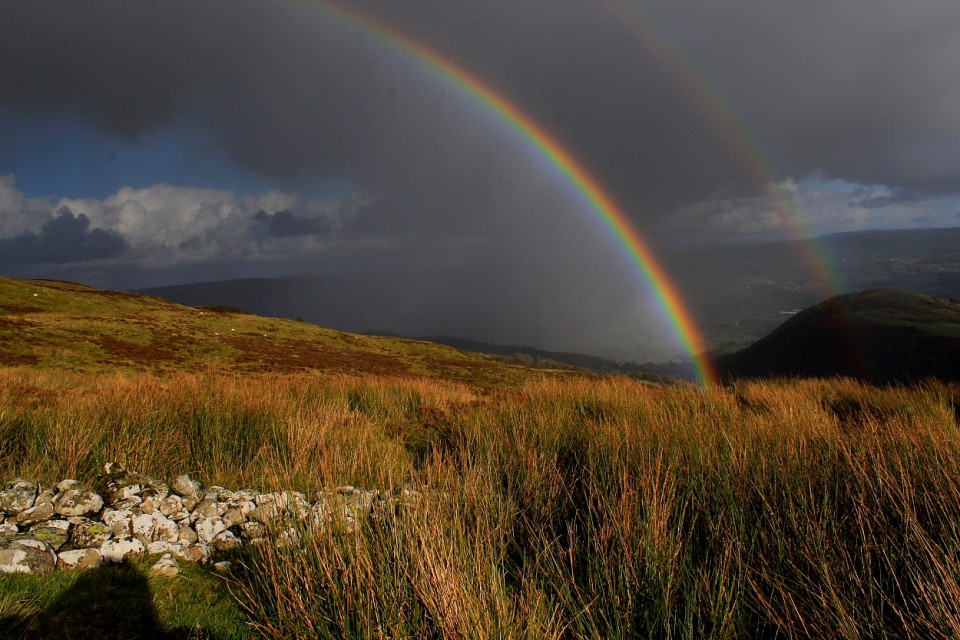
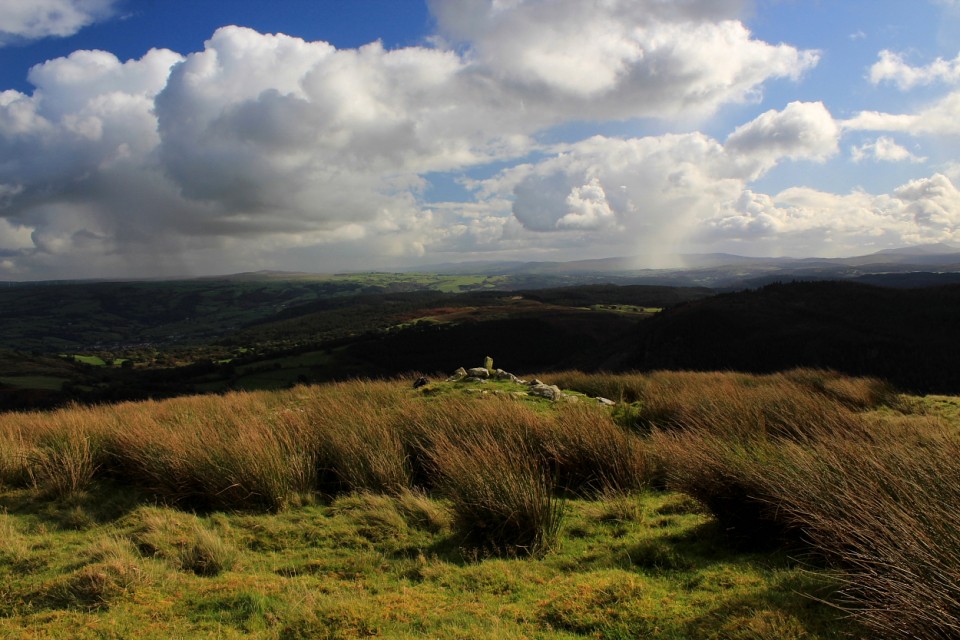
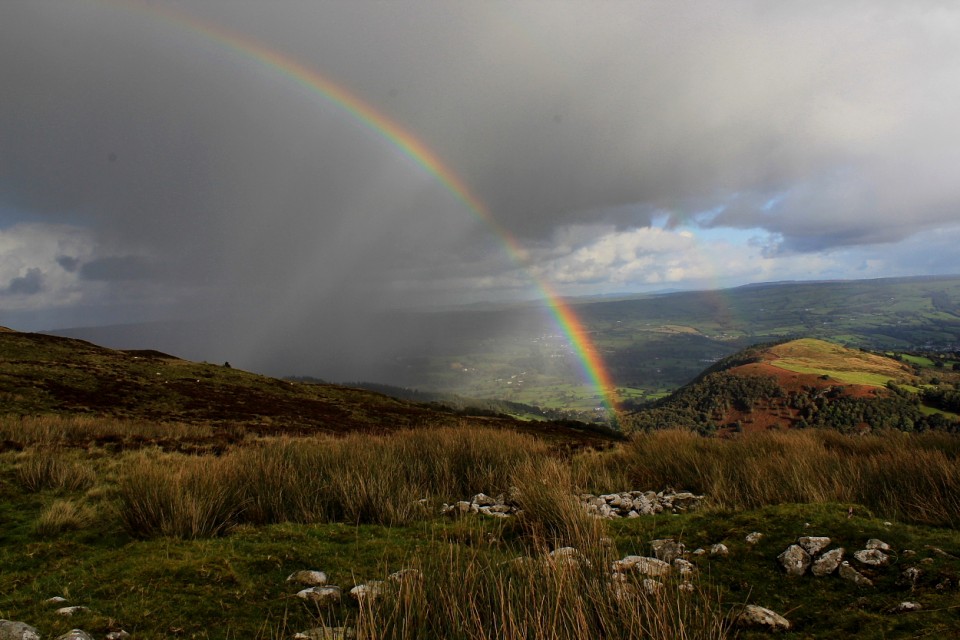
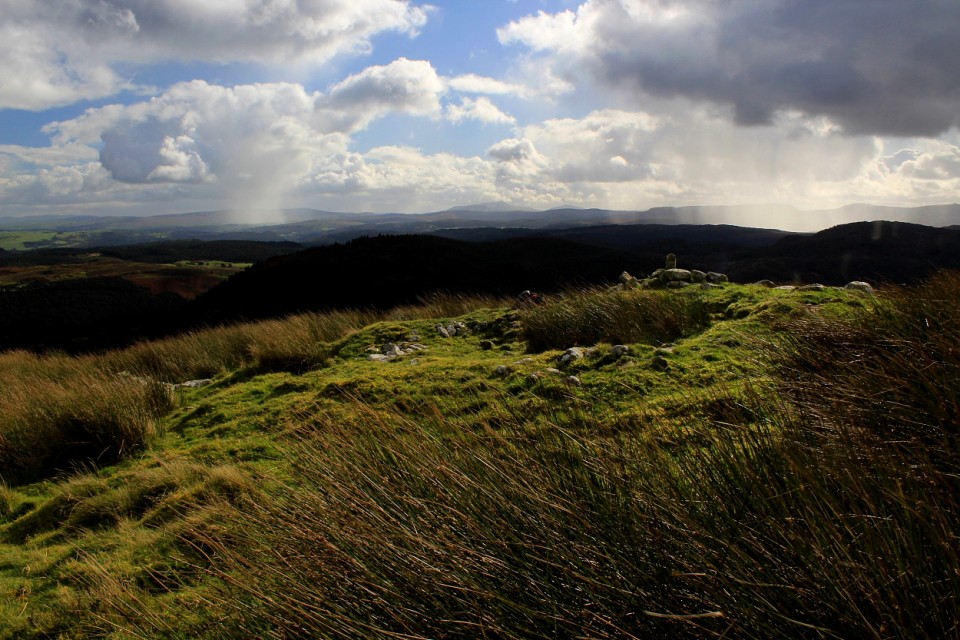
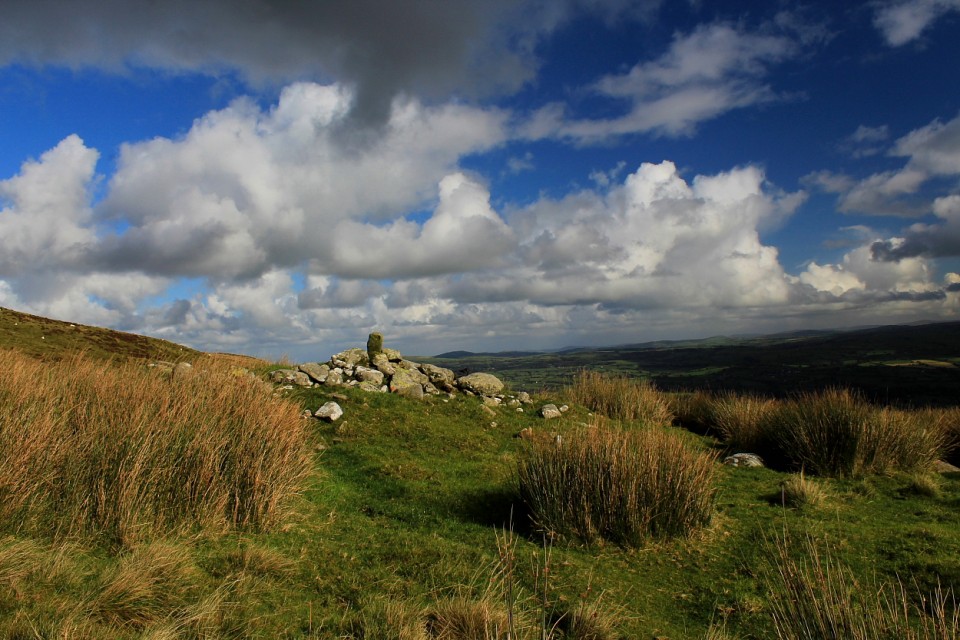
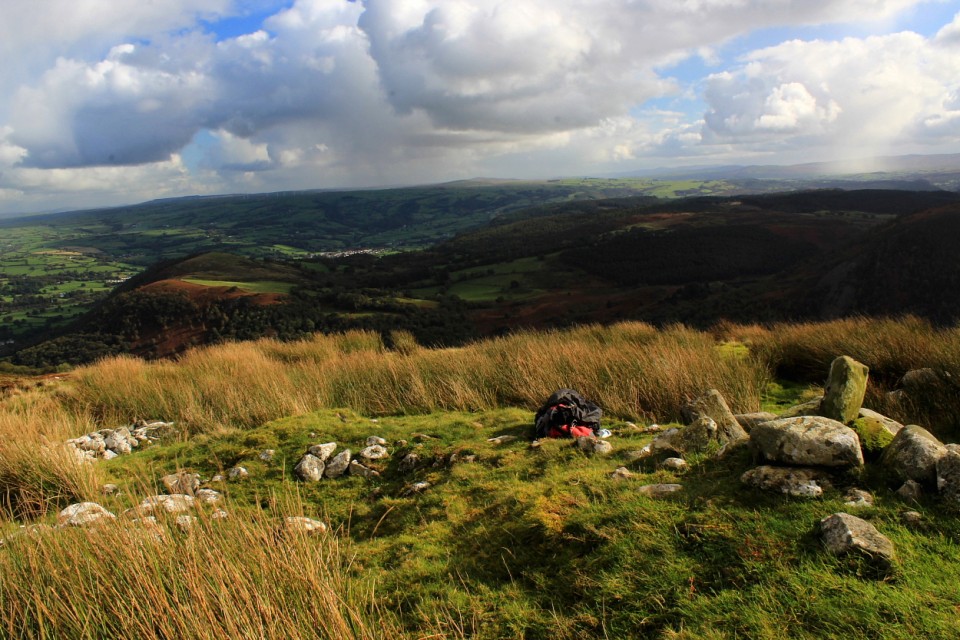
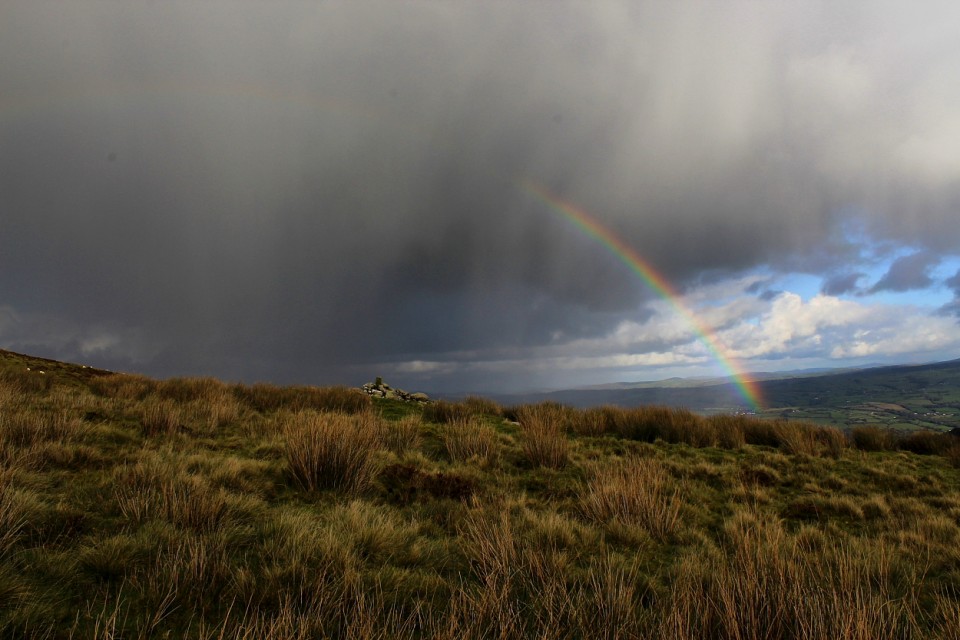
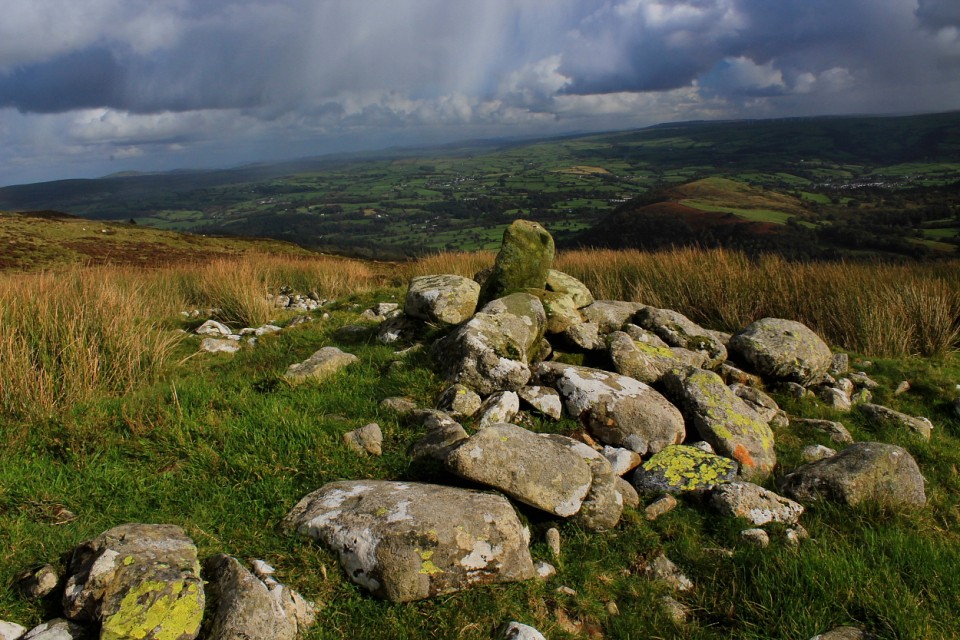
Now, you know how it is? How some things can linger upon the 'to do at some point' list for, well... ages, right? Anyway, for some reason this site, hidden away upon the north-eastern flanks of Y Carneddau's Creigiau Gleision, finally bubbled away to the top of The Citizen Cairn's version. Good thing, too, since the monument, some 40ft in diameter, is pretty substantial.... the views sublime. I approached via the unfeasibly steep Llyn Cowlyd access road from Trefriw crossing Cefn Cyfarwydd (we're talking Hardknott/Wrynose Pass-grade inclines here) traversed numerous times before in passing. A lesson that one must always look to indulge the supporting cast of any story. The glorious rainbows were the icing on the proverbial cake and - speaking of ice - well worth the fast moving hail showers disgorging their frozen cargo 'at pace', as muppet project managers like to say nowadays. CADW's scheduling notes: "Remains of a burial cairn, probably dating to the Bronze Age on the SE-facing slopes of Cefn Cyfarwydd. Circular in plan, measuring c. 12m diameter and up to 1.2m in height. The cairn has a large hollow at its centre, presumably the result of antiquarian investigation. A small marker cairn has been built on the S. side of the cairn. FF 13/01/2004" |
 Posted by GLADMAN
30th October 2023ce |
Lledwigan Cairn, Cefn Cyfarwydd, Y Carneddau (Round Cairn) — Images (click to view fullsize) |
|
Posted by GLADMAN 30th October 2023ce |
Showing 1-10 of 2,559 posts. Most recent first | Next 10
 Top of page