|
 Log in |
Register Log in |
Register
|

|
|

Arran
|


 Show |
 |
|
|
Sites in this group:
|
5 posts
Allt Carn Bhain Chambered Cairn |
7 posts
Allt Cul Corriehiam Stone Circle |
3 posts
Allt Cul Corriehiam 2 Stone Circle |
|
3 posts
Allt Cul Corrriehiam Cist |
3 posts
Allt Mor Chambered Cairn |
28 posts
Auchagallon Stone Circle |
|
14 posts
Aucheleffan Stone Circle |
2 posts
Baile Meadhonach Chambered Cairn |
4 posts
Carn Ban Chambered Cairn |
|
1 post
Clauchlands Stone Fort / Dun |
3 posts
Cleiteadh Chambered Tomb |
1 post
Cnoc Ballygown Hillfort |
|
4 posts
Creag Dhubh Hillfort |
6 posts
Creag Ghlas Cup Marked Stone |
21 posts
Deer Park Standing Stones |
|
4 posts
Dippin Promontory Fort |
4 posts
The Doon Standing Stone / Menhir |
5 posts
The Doon Hillfort |
|
20 posts
Druid Auchencar Standing Stone / Menhir |
12 posts
Dunan Beag Chambered Cairn |
13 posts
Dunan Mor Chambered Cairn |
|
8 posts
East Bennan Chambered Cairn |
1 post
Fforde's Buttress Natural Rock Feature |
40 posts
Giants' Graves Chambered Cairn |
|
3 posts
Glenrickard Chambered Cairn Chambered Cairn |
9 posts
Kildonan Standing Stone / Menhir |
1 post
Kilpatrick Dun (or Cashel) Stone Fort / Dun |
|
27 posts
Lamlash Stone Circle |
15 posts
Largybeg Standing Stones |
9 posts
Machriewater Foot Standing Stone / Menhir |
|
8 posts
Machrie Burn Stone Circle |
107 posts
Machrie Moor Stone Circle |
2 posts
Machrie Moor chambered cairn Chambered Cairn |
|
11 posts
Merkland Cist |
7 posts
Mid Sannox Standing Stones |
16 posts
Monamore Chambered Tomb |
|
1 post
Monamore Glen Cairn(s) |
7 posts
Monyquil Standing Stone / Menhir |
15 posts
Moss Farm Chambered Tomb |
|
5 posts
Moss Farm II Cist |
14 posts
Moss Farm North Standing Stone / Menhir |
22 posts
Moss Farm Road Cairn(s) |
|
7 posts
Moyish Standing Stone / Menhir |
2 posts
North Blairmore Standing Stone / Menhir |
5 posts
North Sannox Cairn(s) |
|
3 posts
North Sannox 2 Chambered Cairn |
3 posts
Oscar's Grave Chambered Cairn |
1 post
Ossian's Mound Round Barrow(s) |
|
11 posts
Sannox Standing Stone / Menhir |
5 posts
Sannox Chambered Cairn |
3 posts
Shiskine Stone Circle |
|
4 posts
Sliddery Cist |
16 posts
Stronach Standing Stone / Menhir |
66 posts
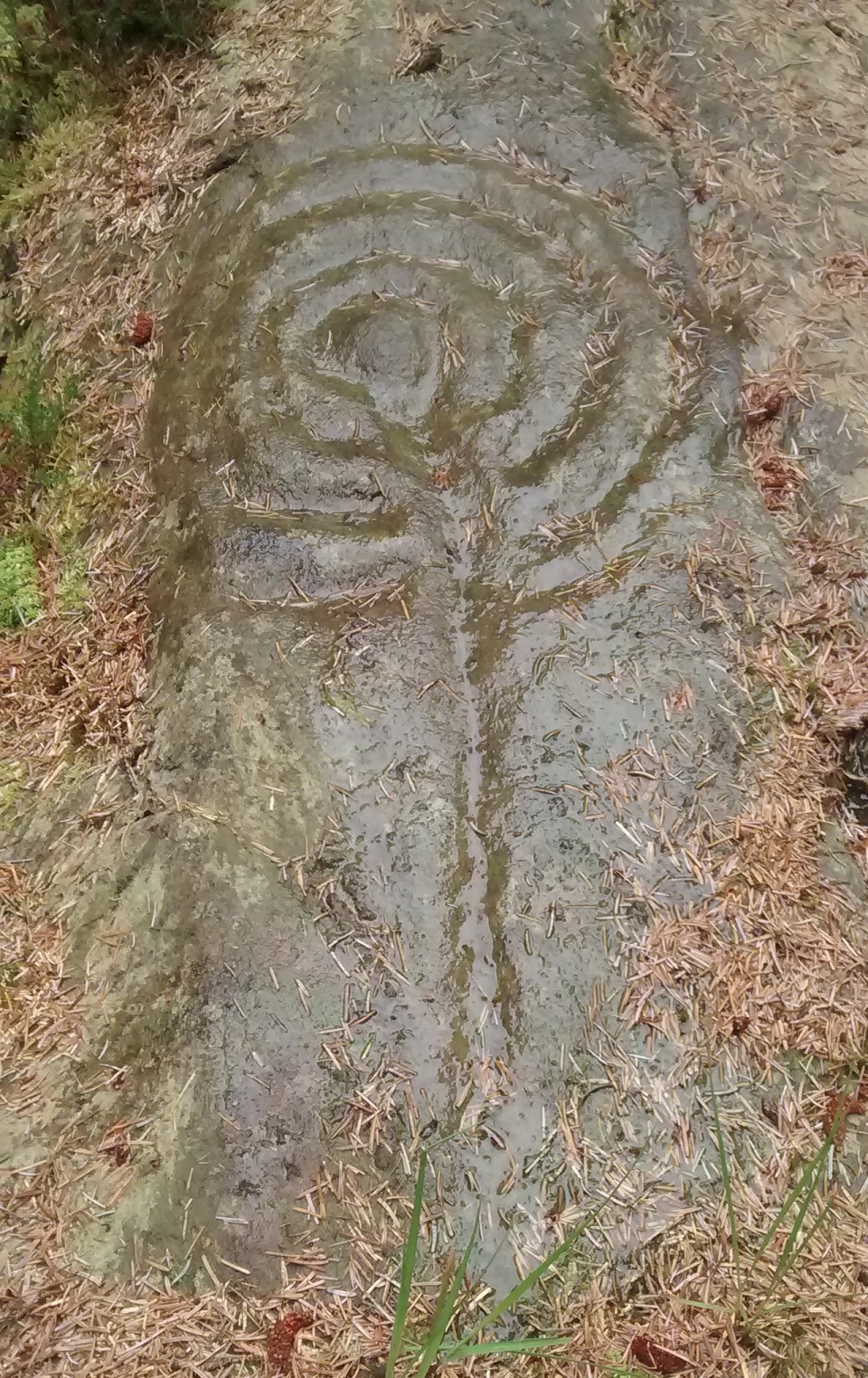
Stronach Wood Cup and Ring Marks / Rock Art |
|
5 posts
Tormore I Chambered Cairn |
4 posts
Tormore II Chambered Cairn |
24 posts
Torrylin Cairn(s) |
|
13 posts
Torr an Loisgte Chambered Cairn |
2 posts
Torr a Chaistell Stone Fort / Dun |
Sites of disputed antiquity:
|
7 posts
Black Cave Cave / Rock Shelter |
4 posts
Kingscross Point Standing Stone / Menhir |
19 posts
King's Cave Carving |
News |
 Add news Add news |
|
Excavations of Cursus at Tormore Archaeologists have been excavating the recently-discovered 1.1km long cursus on the island of Arran. The article in The Scotsman shows the Lidar scans that alerted them to the parallel mounds (now merely 30cm high). Few examples are known from the west coast of Scotland. |
 Posted by Rhiannon
4th September 2023ce Edited 4th September 2023ce |

|
New Stone Age: Discovery of massive island ritual site The spectacular feature in the landscape is likely to have drawn people from all over a Scottish island around 5,000 years ago for ritual and ceremony. More info : https://www.scotsman.com/heritage-and-retro/heritage/new-stone-age-discovery-massive-island-ritual-site-3105420?amp |
 Posted by drewbhoy
21st January 2021ce |
Cremated bones of Bronze Age tumour sufferer found hanging from Scottish cliffA cist burial spotted hanging from a cliff on the edge of Scotland came from the ceremony of a Bronze Age adult cremated swiftly after their death, say archaeologists investigating the bones of a body whose skull carried a tumour... continues... |
 Posted by moss
4th April 2014ce |
Images (click to view fullsize) |
Add an image |
Photographs:
 Artistic / Interpretive:
|
Folklore |
Add folklore |
In Arran, the belief in fairies still lingers in the minds of the older inhabitants, and many curious stories are told of the pilfering habits and cunning tricks of the wee-folks, who held their midnight meetings within the stone circles and old forts of the Island.McArthur also talks of the highly polished stone balls found in cists and the "Baul Muluy" (the stone globe of Saint Monlingus): a goose-egg sized stone of jasper, which could cure diseases. People swore solemn oaths on it, and "even during the present generation it has been consulted by the credulous Islanders". Curiously it could remove 'stitches from the sides of sick persons' and if it didn't cure you and you died, "it moved out of bed of its own accord." St Molingus was said to have been chaplain to the McDonalds, and they carried the ball with them into battle for good luck. It was next held by the MacIntosh family as a hereditary privelege, but "this curious relic was lost a few years ago by a gentleman to whom it was entrusted, who partook too much of the scepticism of the present age to appreciate its value." A final bit of related folklore: "The perforated pebbles of the British barrows [..] are still known in the Scottish Highlands by the name of Clach Bhuai , or the powerful stones, on account of the inherent virtues they are believed to possess." From p68-71 of 'The antiquities of Arran' by John McArthur (1861). |
Posted by Rhiannon 20th August 2007ce |

The traditions.. which float around this class of the Arran grave mounds [chambered cairns] are associated with the fierce raids and clanish feuds of early times; and it is said that the ghosts of the buried dead were wont to rise from their graves and renew the combat in the shadowy folds of the evening mists.From p22 of 'The Antiquities of Arran' by John McArthur (1861). |
Posted by Rhiannon 18th August 2007ce Edited 18th August 2007ce |
Links |
Add a link |
Internet ArchiveThe Book of Arran by J A Balfour (1910). Contains lots of diagrams and photos of sites and finds from the island - chambers, stones, cup and rings, urns, allsorts. The back page is a rather interesting map with all the locations marked. |
Posted by Rhiannon 16th November 2010ce Edited 16th November 2010ce |
Latest posts for Arran |
Showing 1-10 of 686 posts. Most recent first | Next 10 
Giants' Graves (Chambered Cairn) — Folklore |
|
Two neighbouring chambered cairns on Whiting Bay on Arran are known as the Giants' Graves (although some sources record only one Giant's Grave). It is possible that the giant or giants concerned have something to do with the following tradition. The Name of this Isle is by some derived from Arran, which in the Irish language signifies Bread: Others think it comes more probably from Arjn or Arfyn, which in their language is as much, as the Place of the Giant fin-Ma-Cowls Slaughter or Execution...the received Tradition of the great Giant Fin-Ma-Cowls Military Valour, which he exercised upon the Ancient Natives here, seems to favour this Conjecture; this they say is evident from the many Stones set up in diverse Places of the Isle, as Monuments upon the Graces of Persons of Note that were killed in Battle. Martin Martin 1695 |
Posted by drewbhoy 25th March 2024ce |
Machrie Moor (Stone Circle) — Folklore |
|
In the Moor on the East-side Druin-cruey there is a circle f stones, the Area is about thirty Paces; there is a Stone of same shape and kind about forty Paces to the West of the Circle, the Natives say that this Circle was made by the giant Fin-Mac-Cowl, and that to the single Stone Bran-Fin-Mac-Cowls Hunting dog was usually tied......There is a circle of Big-stones to the South of Druin Cruey, the Area of which about is twelve Paces; there is a broad thin Stone in the middle of this Circle, supported by three lesser Stones, the Ancient inhabitants are reported to have burnt their Sacrifices on the broad Stone, in the time of Heathenism. Martin Martin 1695 |
Posted by drewbhoy 19th March 2024ce |
Sannox (Standing Stone / Menhir) — Folklore |
A single Druidical stone is visible in front of the farm house of Sannox, in the middle of the green field. Many remains of a similar kind are still extant in the mosses and glens of the island. Of late much has been done to solve the enigma of those monoliths.In the Ardrossan and Saltcoats Herald, 9th August 1862. |
Posted by Rhiannon 29th May 2023ce |
Machrie Moor (Stone Circle) — Fieldnotes |
|
30/08/22 "Raving On The Moors" - Julian Cope. Taking in the natural surroundings of these Stones, birds chirping, sheep bleating and long grass rustling in the wind as I began to walk pass the fenced off cairn and various other stone circulars of various shapes and sizes before approaching the main attraction of the three tall sandstones standing stones with a fourth stone to similar description located on a side path where two archeologists where using some equipment. |
Posted by Hornby Porky 13th September 2022ce |
Machrie Moor (Stone Circle) — Images (click to view fullsize) |

|
Posted by Hornby Porky 13th September 2022ce |
Machrie Moor (Stone Circle) — News |
Graffiti carved on ancient Machrie Moor standing stonesGraffiti carved on ancient standing stones on the island of Arran is a heritage crime, Historic Environment Scotland has said. Sadly more info : https://www.bbc.co.uk/news/uk-scotland-glasgow-west-61397820 |
Posted by drewbhoy 11th May 2022ce |
Archaeologists search for 'enormous' ancient ritual site on Scottish islandAn excavation is now underway at Drumadoon on the Isle of Arran after the site of a possible Neolithic cursus monument was earlier detected by an aerial laser scan. Cursus monuments were typically formed of a long avenue, formed by two parallel mounds of earth – or wooden posts in the earliest cases – which stretch for some 800 metres at Drumadoon. https://www.scotsman.com/heritage-and-retro/heritage/archaeologists-search-for-enormous-ancient-ritual-site-on-scottish-island-3351332 The stone circle is about a mile away...... |
Posted by moss 21st August 2021ce |
Stronach Wood (Cup and Ring Marks / Rock Art) — Links |
Stronach Wood on BRAC UpdatedStronach Wood on BRAC |
Posted by markj99 4th January 2021ce Edited 9th January 2021ce |
King's Cave (Carving) — Links |
King's Cave on BRAC UpdatedKing's Cave on BRAC Updated |
Posted by markj99 4th January 2021ce |
Stronach Wood (Cup and Ring Marks / Rock Art) — Images |
|
 Posted by Howburn Digger
30th July 2019ce |
Showing 1-10 of 686 posts. Most recent first | Next 10
 Top of page