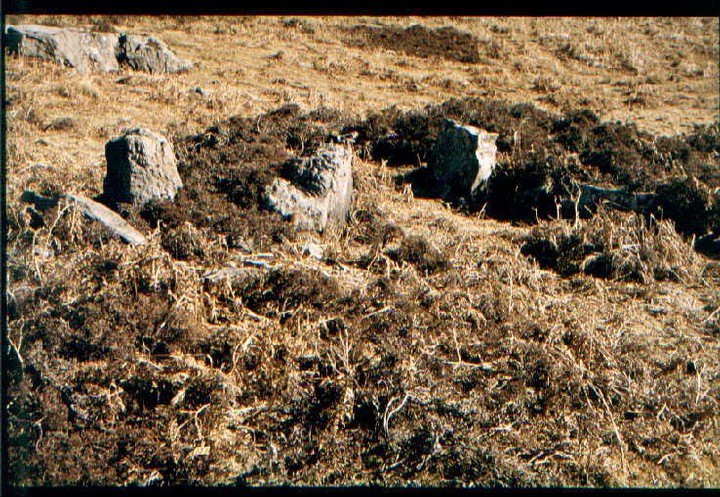
This mysterious and imposing monument of a prehistoric era is commonly known by the name of "The Three Auld Wives' Lift" [..]
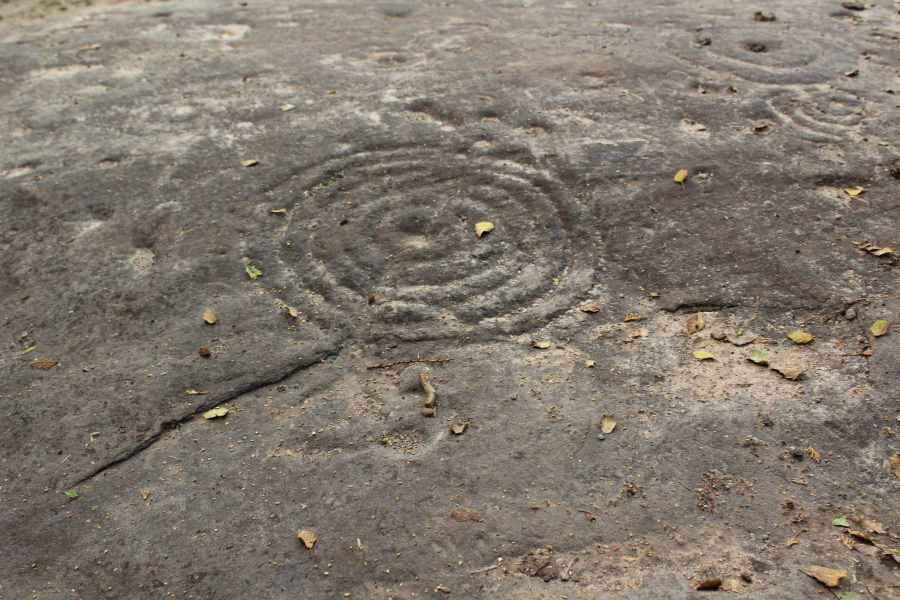
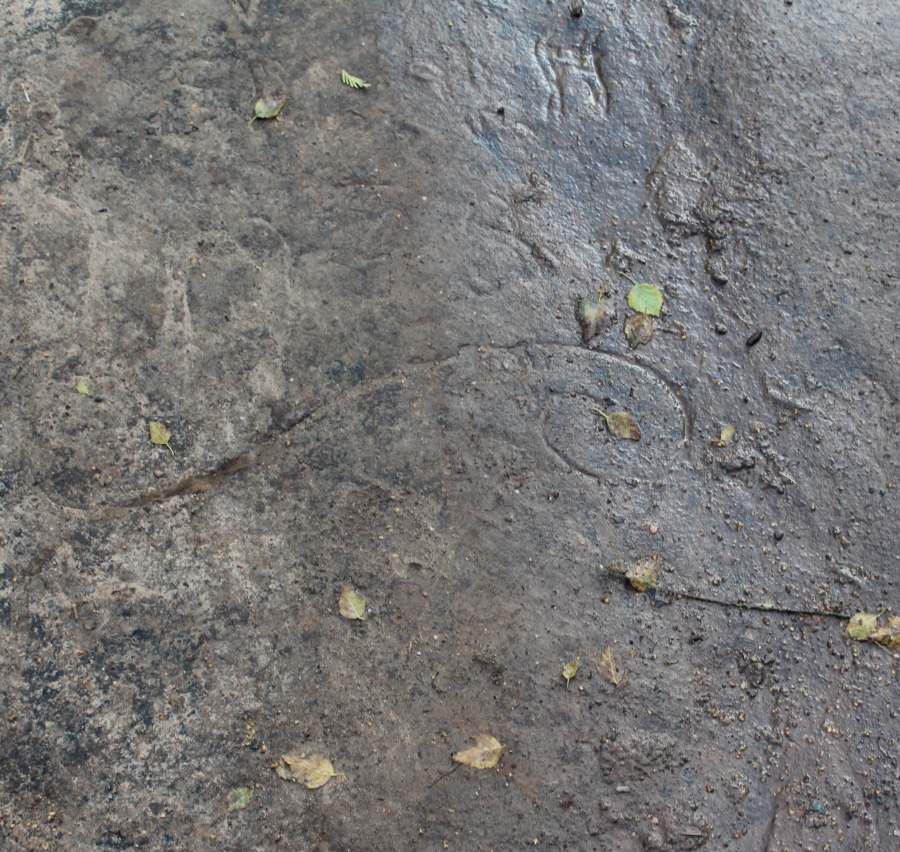
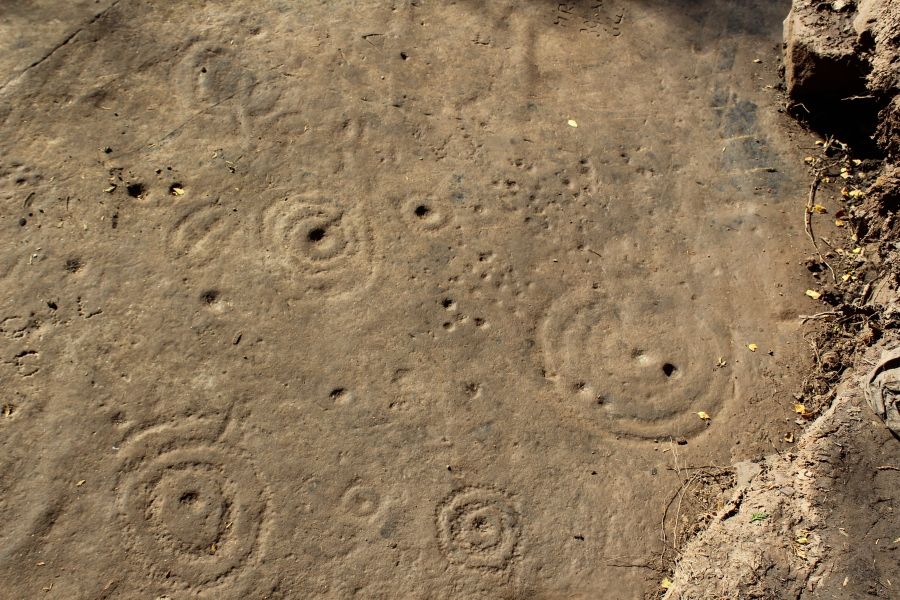
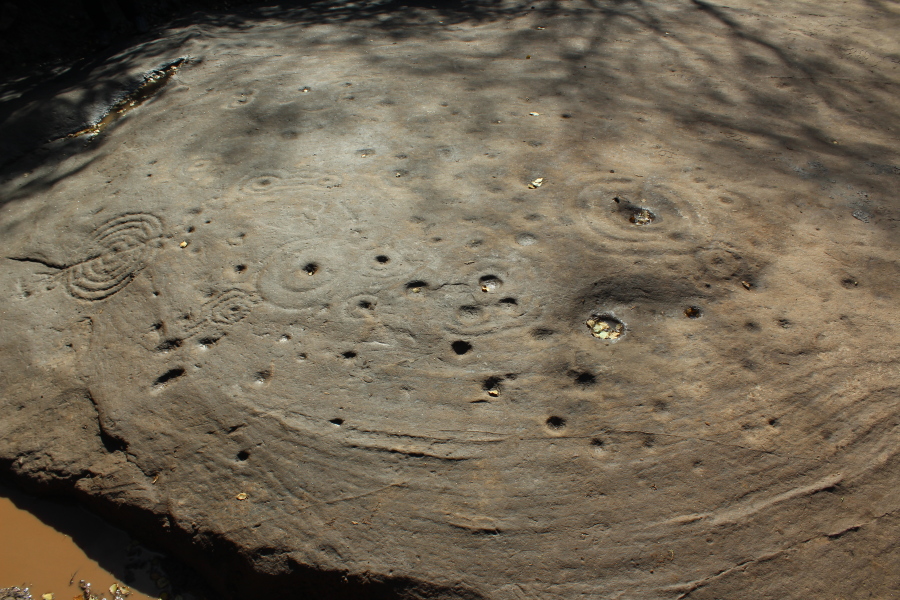
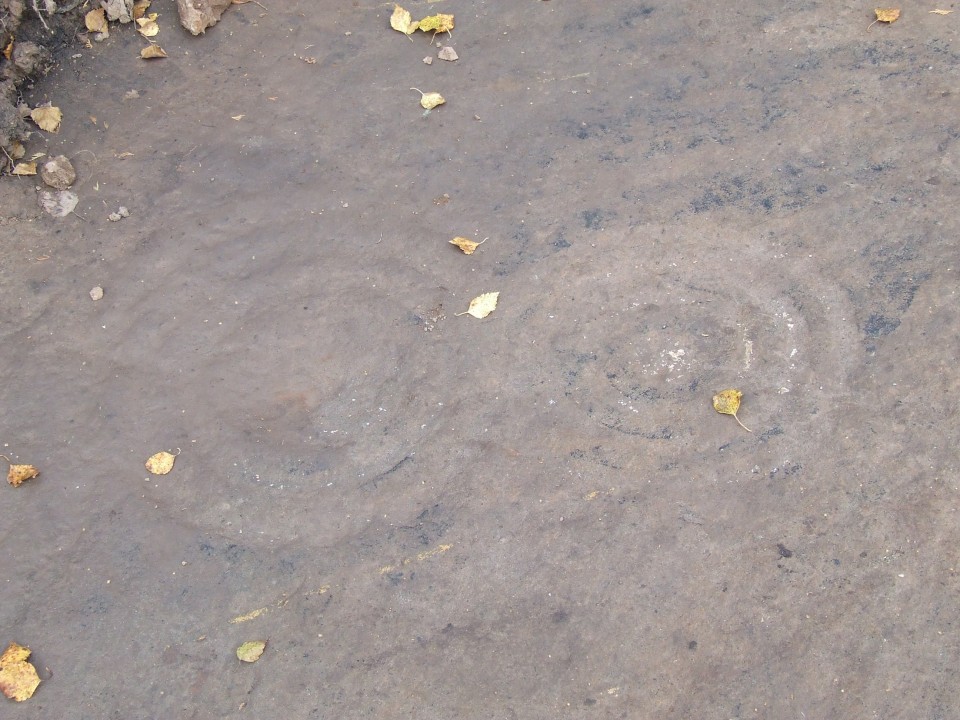
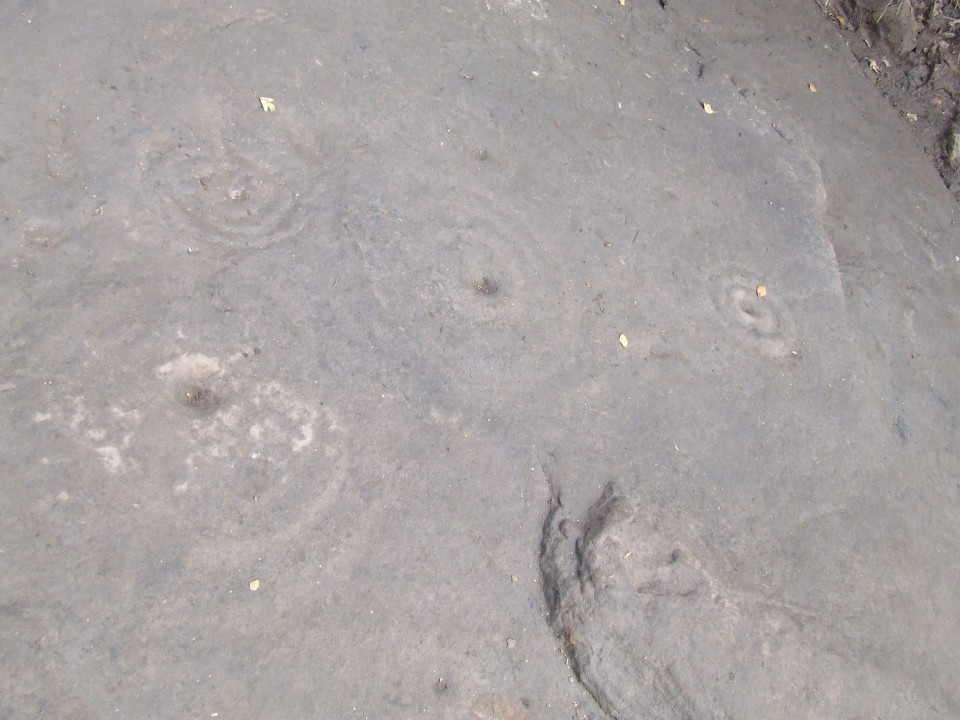
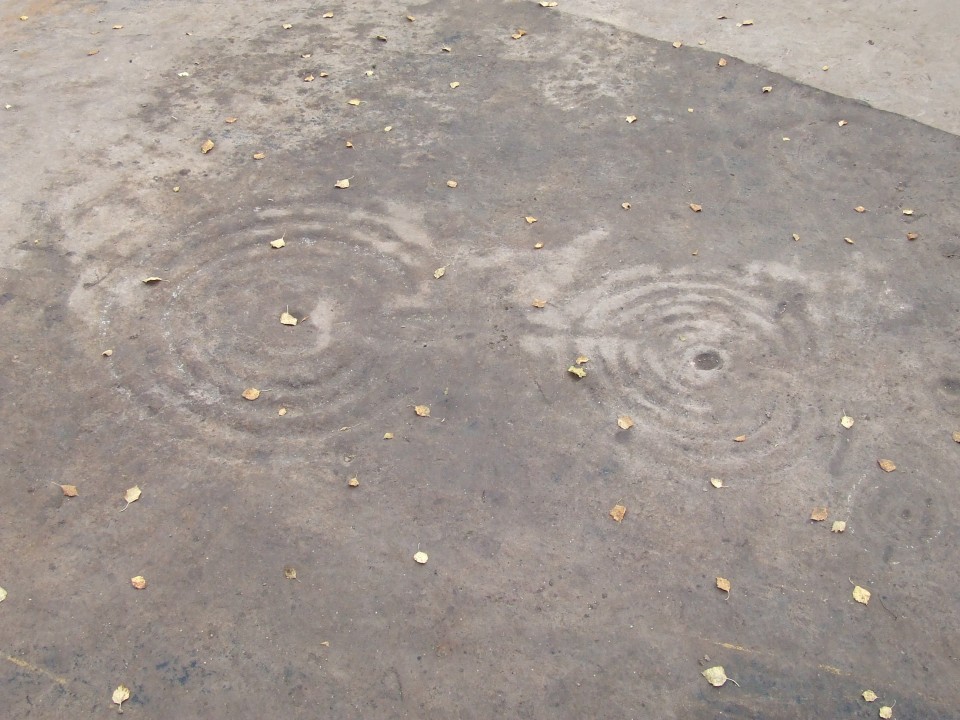
On the upper surface of the top stone of this structure, which is a plane declining a little to the south, there is sculptured a circle of thirty-six inches in diameter, [..] and strange as it may seem, notwithstanding the hundreds that visit this curious relic every year, and for as often as it has been described by archaeologists, this is the first time, so far as I know, that this typical figure has ever been brought under notice [..] The greater part of the upper surface where this symbol occurs is much disfigured by roughtly cut initial letters, and names of thoughtless visitors, rendering it less observable than it would otherwise be [..] To the experienced eye, its purpose-like execution, and weather-worn aspect, will be sufficient evidence of its great age and significance.
Between the upper and the two lower stones of this monument there is a triangular opening from east to west which, if passed through according to the course of the sun in a truly penitential spirit, was formerly believed to have procured complete absolution for previous sins, and superstition still holds it necessary for all strangers visiting this enchanted place for the first time to creep through it if they wish to avert the calamity of dying childless.*
[..] The traditional account of this monument is, that three old women having laid a wager which of them would carry the greatest burthen, brought in their aprons the three stones of which it is constructed, and laid them in their present position. Verily, there must have been giantesses in those days.
*Or you could just stay sinful and childless, yay!
(while you're about it, you may not want to miss the ghastly account of Oliver Cromwell's preserved head, also in the same volume. or maybe you would.)
In Tom Weir's Scotland the famous mountaineer and walker gives the legend in the chapter, on page 49, entitled:
Craigmaddie: The Secrets of the Muir
"The folk tale is that three witches wagered each other as to who could carry the heaviest stone in their aprons. Two managed to put their stones down side by side, but the third one capped their efforts by placing her larger stone on top of the other two in the form of a roof. A variation of the same tale is that it was a trial of strength to see who could throw a stone the farthest, and the biggest landed on top of the other two."
He also mentions Hugh MacDonalds book "Rambles Around Glasgow" giving his 19th century beliefs.
"By some this gigantic cromlech is supposed to be a Druidical altar, whereon, in a dim prehistoric era, the dark rites of pagan worship may have been celebrated". On an old map it was shown as a "Druidical Cromlech," and the cavity between the stones was thought to be for the reception of human remains after blood sacrifices.
Weir goes on to say that he noticed initials and dates at first. The next day he was startled to find 8 carved heads that he didn't notice the previous day. His good friend Prof. Alcock, of Glasgow University said that even his students had missed the faces. He then continued:
"I think it's not beyond the bounds of possibility that the capstone was placed on top of the two smaller stones by the Celtic people who carved those heads. The vertical lift is not a big one , and it could have been done with wooden rollers"
Weir asked if the people who erected the stones worshipped at it. The professor answered:
"I think we could call them people under Roman influence. The carvings recall the severed heads of Gaul-one of the leading images of the Celtic religion. Notice too, that the heads are confined to the east and north, while the two most arresting of them look out from the north-eastern and south-eastern edges. That would be a remarkable coincidence if the heads were the work of casual visitors."
To be fair to Weir he gets independent views from Dr. Rolf and Dr. Ingham of Glasgow University. "They were in no doubt that the stones were of a glacial origin, but beyond that they were not prepared to speculate."