The Modern Antiquarian. Ancient Sites, Stone Circles, Neolithic Monuments, Ancient Monuments, Prehistoric Sites, Megalithic Mysteries

Scotland   Orkney  

Hoy

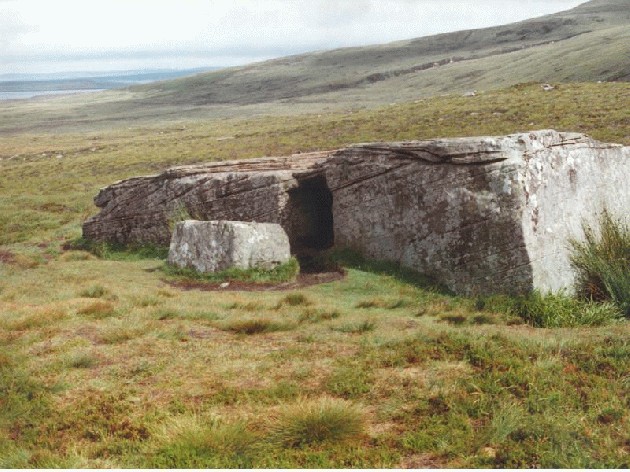
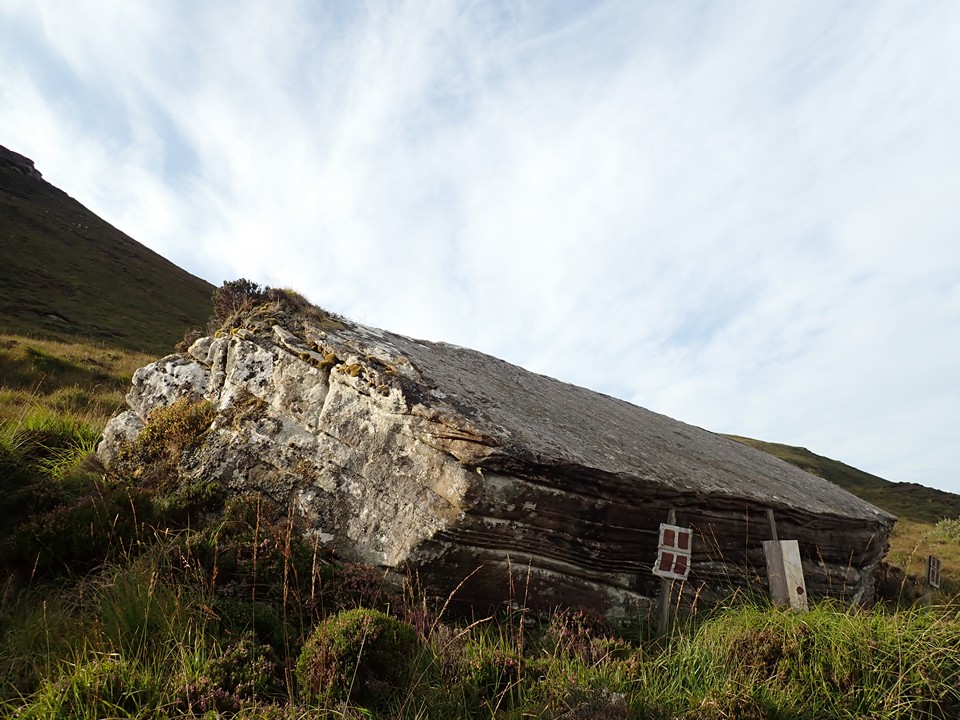
<b>Hoy</b>Posted by MartinThe Dwarfie Stane © Martin
See individual sites for details

Added by TMA Ed


Discussion Topics0 discussions
Start a topic


Show  |  Hide
Web searches for Hoy

Sites in this group:

34 posts
The Dwarfie Stane Chambered Tomb
1 post
Gallow Tuag Standing Stone / Menhir
1 post
Greenhill Broch
1 post
Outer Green Hill Broch

News

Add news Add news
'new' chambered tomb

This fortnight's excavation of the Outer Green Hill 'broch' has revealed a Neolithic chambered cairn ( http://www.orkneyjar.com/archaeology/greenhill.htm with photos)
wideford Posted by wideford
10th July 2008ce

Links

Add a link Add a link

Scapa Flow Landscape Partnership


last dig season (with pictures) at Roeberry Barrow, Cantick. Site had everything from square IA barrow back to a small stalled Neolithic tomb
wideford Posted by wideford
6th August 2012ce

Latest posts for Hoy

Showing 1-10 of 37 posts. Most recent first | Next 10

The Dwarfie Stane (Chambered Tomb) — Fieldnotes

Visited 11th August 2012

We set off early from Kirkwall to catch the first ferry of the morning to Hoy, taking advantage of one of the extra sailings taking place that day due to the Kirwall County show being on. It’s severely foggy as we drive to Houton to get the boat, although I’m putting my trust in the weather forecast which is predicting a fine day later. I’m hoping this is the case, having experienced the bleakness of Hoy in grim weather before. My previous visits to the Dwarfie Stane have been via the foot passenger ferry from Stromness, and it’s nice not to have the long walk on foot to reach the tomb, with the ever present threat of missing the boat back and having to emulate Mr Mounsey by spending a night inside the Stane itself.

Arriving at Lyness is like entering an eerie otherworld, as the shapes of the large WW1 era oil tank, and the battleship guns outside the Scapa Flow museum loom out of the mist. The three other vehicles present on our crossing zoom off, and within ten minutes of disembarking we are alone, not a soul visible anywhere, and the feeling of being marooned on a deserted island all pervading.

By the time we have driven to Betty Corrigal’s grave the mist is thinning, and the lonely white gravestone is just visible away from the bleak road, which as it climbs higher breaks out above the fog to a gorgeously clear sunny blue sky. The Dwarfie Stane is well signposted from the road, and pulling into the nice roomy layby opposite the path, you can just make out the stone block of the tomb hunkering beneath the cliffs of the Dwarfie Hamars. Once again I’m struck by how remote this place feels, although now with sunny blue skies and the sparkling azure sea in the background things don’t feel as brooding as when I was last here.

The path to the stone is well defined, although rocky and occasionally rough going, and seems a further walk from the road than I remember, but once you reach the tomb it is so worth it! Such a unique monument, and I love the rich and redolent folklore surrounding it. It’s a truly magical location. Inside things are just as spectacular, surprisingly roomy and comfortable, I waste no time in reclining on the stone ‘bed’ and if I were camping in this desolate landscape I can think of worse places to shelter. I could certainly see Snorro the dwarf making a comfortable home here!

It’s also worth mentioning the incredible resonance of the acoustics inside the stone, in one particular area near the centre of the chamber the bass reverberations, even just from normal speech can be felt as a physical thing. It also looked as if there might be at least one large cupmark on the interior face of the blocking stone, which interestingly enough would have meant the carving was for the benefit of the interred occupant, rather than any sort of external decoration, and reminded me of the positioning of cupmarks on the interior cist slabs of tombs in the Kilmartin valley.

To echo Carls fieldnotes, this place is a definite must visit, and if you’re ever on Orkney it would be remiss not to visit the Dwarfie Stane, although taking the car over to Hoy is not cheap if budgets are tight the Stromness foot passenger ferry is more reasonable, although it would involve a long fairly strenuous walk to the stone, it makes it feel even more of a pilgrimage when you get there! (I think there may have been a place that hired out bicycles near to the ferry pier at Moaness on Hoy, last time I came via that route, but that was quite a while ago!)

It’s hard to leave on a day as glorious as today, but we pressed on to Rackwick, a few miles further along the road, and as beautiful a setting as ever you’re likely to see, surrounded by the sea and mountains, in splendid isolation with the islands of Orkney stretching before us, it reminds me again just how wonderful these islands are.
Ravenfeather Posted by Ravenfeather
8th October 2012ce

The Dwarfie Stane (Chambered Tomb) — Images (click to view fullsize)

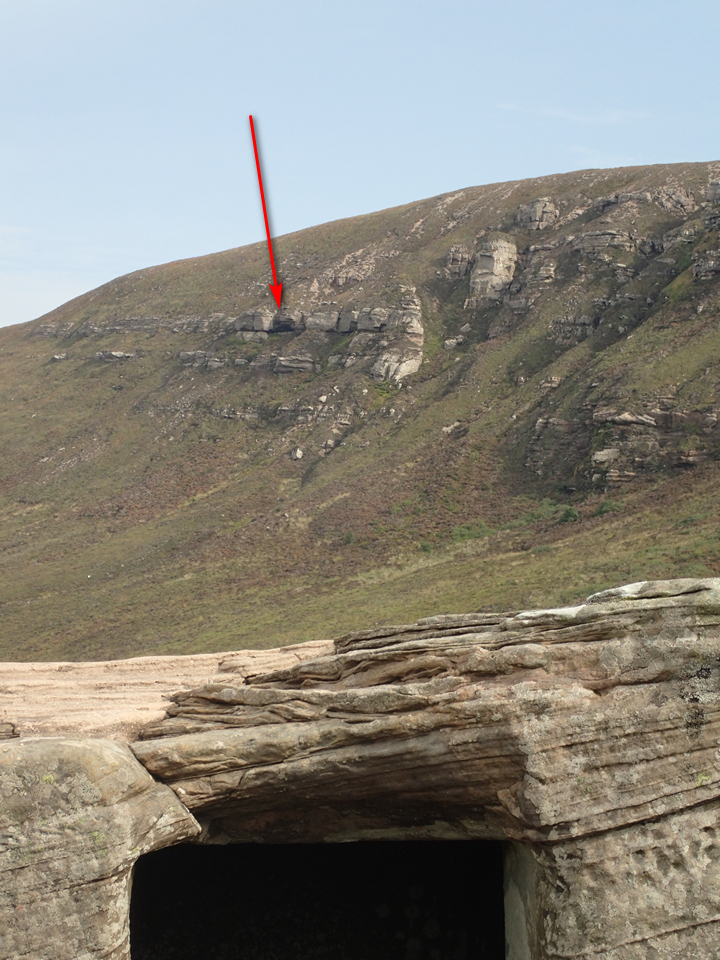
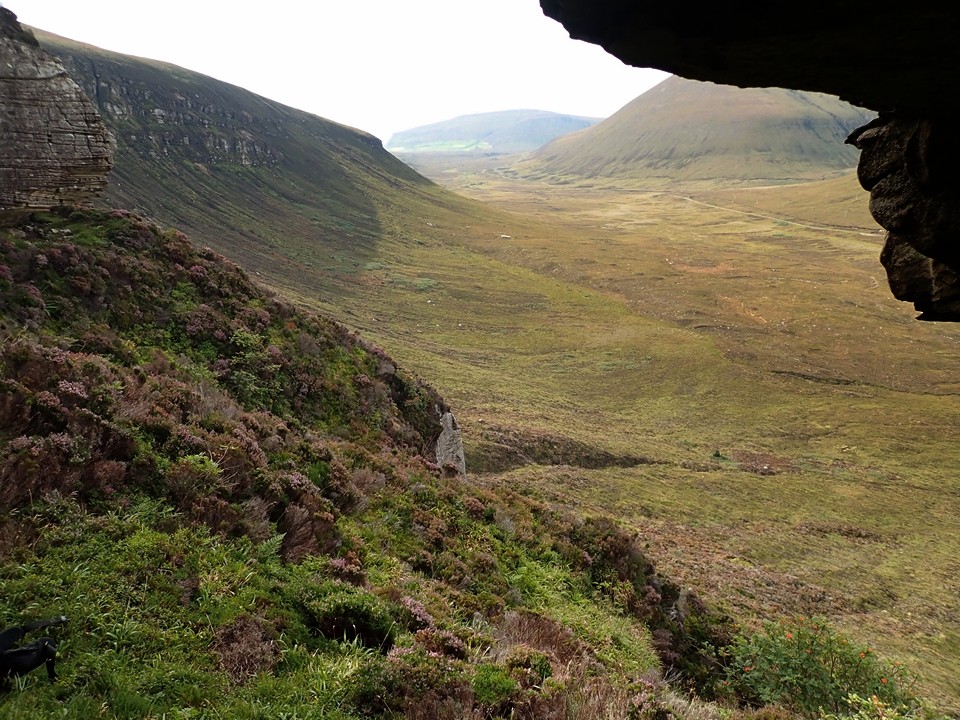
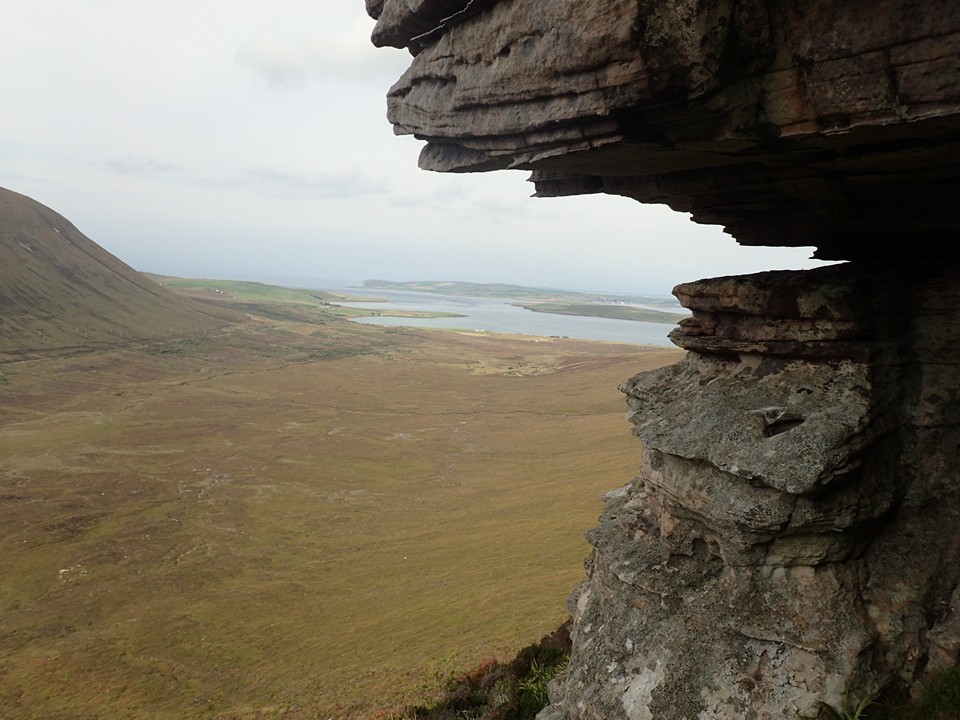
<b>The Dwarfie Stane</b>Posted by Ravenfeather<b>The Dwarfie Stane</b>Posted by Ravenfeather Ravenfeather Posted by Ravenfeather
8th October 2012ce

Greenhill (Broch) — Fieldnotes

Visited 7.6.12

Directions:
Right next to the B9047 on the way to the Hackness Martello Tower (H.S. site)

The remains of the Broch as easily visible from the main road – the other side of a barbed wire fence.
The remains consist of a large grass covered mound – on the shoreline.

Canmore states:
‘A turf covered mound 7ft 9ins in height land side / 30ft in height shore side. The remains cover an area almost half an acre and seem to have been disturbed by random unrecorded excavations’.
Posted by CARL
16th July 2012ce

Outer Green Hill (Broch) — Fieldnotes

Visited 7.6.12

Directions:
Next to the minor road which leads to the lighthouse at Cantick Head.

You can’t miss this as it is a large grass covered mound right next to the road.
The mound has several large stones sticking out of the turf.

Canmore states:
‘This turf covered stony mound is 20m in diameter and 2.5m high. It is substantial enough to contain a modest broch. Some protruding slabs on the outermost fringes of the mound suggest outbuildings’.
Posted by CARL
16th July 2012ce

Gallow Tuag (Standing Stone / Menhir) — Fieldnotes

Visited 7.6.12

I think I saw this standing stone on the brow of the hill from the minor road to the north.
If it is the stone it is near the fence line.
I didn’t have time to get a closer look as I had a ferry to catch!

Canmore states:
‘The standing stone on the SW shoulder of Gallow Tuag leans heavily towards the north. If vertical it would stand 1.6m high. It rises from a pronounced and circular mound 15m in diameter badly mutilated by quarrying’.
Posted by CARL
16th July 2012ce

The Dwarfie Stane (Chambered Tomb) — Fieldnotes

Visited 7.6.12

We drove off the ferry and headed straight for the Dwarfie Stane.
The wind was blowing a gale and the crossing was somewhat bumpy!

The drizzle was coming down and the mountains were shrouded in mist.
As we drove north through Hoy the road climbed and the mist worsened.
I had planned to stop at Betty Corrigall’s grave but drove past it as we couldn’t see it!

We then came off the B9047 and scanned the hillside to try to spot the tomb.
We headed south until we reached the small parking area and peered across the moor to see the path leading to the tomb vanish in the mist.
North Hoy is a very desolate and remote place – a land of peat moorland.
In this area there are no houses, no farms – no signs of habitation at all.

Karen thought we were mad as Dafydd and myself put our waterproofs on and headed out into the gloom.
To say the walk was atmospheric would be an understatement.
The mist swirled around us; one minute we could see perhaps 20 metres ahead – the next 2 metres.
The wooden slats on the walkway were wet and slippery. The ‘path’ then becomes a small stream as we headed higher up the hillside.

Then we saw it.
Peeping out of the mist – then it was gone.
I have to confess I started to get very excited, my pulse quickened – so did my steps.
I encouraged Dafydd on and eventually we reached the tomb.
Needless to say we had the place to ourselves!

Wow – this is fantastic.
The huge lump of rock was bigger than I expected and we both quickly dived inside to get out of the wind and drizzle.
Once inside all was perfectly quiet. Dafydd seemed to be completely at home.

The quality of the workmanship to create this tomb is simply stunning.
It is incredible to think that this was created without metal tools.
The carving of the tomb, the quality of the finish easily compares with the great burial chambers of Orkney. In fact I would say this tomb rates as highly as any other final resting place you would care to think of.

The side chamber with the ‘bed’ and ‘pillow’ is a work of art and a fitting resting place for someone obviously very important.

The weather outside seemed to be getting worse but inside all was well.
I could have stayed here for hours but Dafydd was by now starting to get a bit restless and I was conscious of Karen and Sophie waiting in the car.

We ventured outside and walked around this mighty lump of rock and its equally mighty blocking stone.

I am sure on a clear day the views would be excellent but not today.
Not that I mind at all as I think the swirling mist only added to the experience.
In all the sites I have ever visited I would say this one has been the most atmospheric.
It is certainly one that will always stay fondly in my memory.

This is a truly magical place and I can’t recommend a visit highly enough.
Yes I know it is a long way to travel and yes I know it is in a remote spot.
But even if I had not visited another site on Orkney it would have been worth the cost and effort just to visit the Dwarfie Stane.
If you are at all able please make the effort to visit – you will not be disappointed.

On the back south through Hoy the mist started to lift and this time we could see Betty’s grave from the road.
There is a small parking area and a sign post – the white picket fence had seen better days but was still standing.
I walked over and paid my respects. A very poignant place given Betty’s story.
A small donation box was next to her grave for the upkeep of the grave. I of course made a contribution.

It is strange how two graves in a remote area on a Scottish island; separated in time by thousands of years; could have such a profound affect on me.
I wonder what it all means?
Posted by CARL
16th July 2012ce

The Dwarfie Stane (Chambered Tomb) — Folklore

The earliest known account of the Dwarfie Stone is in a Latin description of Orkney in 1529 by Jo. Ben, an unknown author, variously identified as John the Benedictine, or John Bellenden. Ben relates that the chambers had been originally made by a giant (i.e., in point of strength) and his wife, and that the latter was enceinte at the time, as was shown by her bed, which had the shape of her body. He was unable to account for the use of the door stone farther than that it was related that another giant, who was at enmity with the occupant of the stone and grieved at his prosperity, made the door stone to fit the size of the entrance so that the occupant might be shut in and perish from hunger, and that thereafter when he himself ruled the island he might have the stone for his own use. With this end in view the other giant took the stone, thus made, to the top of the mountain, and with his arms threw it down into the entrance. The giant inside awakened, and found himself in a quandary, being unable to get out, whereupon he made a hole in the roof with his mallets, and so escaped.
From A W Johnston's article on the Dwarfie Stone in 'The Reliquary' April 1896. He also writes:
"Dr. Clouston, in his Guide to Orkney [1862], states that offerings used to be left in the stone by visitors."

also that
In Bleau's Atlas (1662) the stone is called the Dwarves' Stone, pumilionum lapis, or commonly "Dwarfie Steene." It is also related that it was a common belief that the cells conduced to the begetting of children by those couples who might live in them.
and
It may be noted that Ben, in 1529, described the doorstone as stopping the entrance, ostium habet obtrusum lapide; later writers, including Ployen, in 1839, describe it as standing before the entrance.
Perhaps that shouldn't be given any more credence than the folklore though? as early accounts often get the measurements of the stone completely wrong, and we can be pretty sure those haven't changed at least.
Rhiannon Posted by Rhiannon
24th March 2009ce

There seems no end to the folklore this weird place has inspired:
This extraordinary work has probably been the pastime of some frolicsome shepherd, or secluded devotee; and the history of the stone having been lost, it was natural for the people of a superstitious age and country to apply a fabulous origin both to the stone and its inhabitants, in so retired and lonely place as the vale of Rockwich. The story, therefore, goes, that the Dwarfie-Stone fell from the moon, and that it was once the habitation of a fairy and his wife, a water-kelpie.
'Memoranda from the Note-book of a Traveller' in the Edinburgh Magazine and Literary Miscellany, Jan-June 1822.

Still, it's clear that the stone was a popular tourist spot for travellers, so maybe the guides just told them whatever popped into their heads at the time. I think I would have done the same.

Another strange tale concerns the mountain to the north west, Ward Hill. It's an isolated hill and the highest point on the island.
At the west of this stone stands an exceeding high mountain of a steep ascent, called the Ward-hill of Hoy, near the top of which, in the months of May, June, and July, about midnight, is seen something that shines and sparkles admirably, and which is often seen a great way off. It hath shined more brightly than it does now, and though many have climbed up the hill, and attempted to search for it, yet they could find nothing. The vulgar talk of it as some enchanted carbuncle, but I take it rather to be some water sliding down the face of a smooth rock, which, when the sun, at such a time, shines upon, the reflection causeth that admirable splendour."-- Dr Wallace's Description of the Islands of Orkney, 1700, p52.
I wonder what this can mean, whether it was an ongoing local tale or just an observation. Whichever, I don't like his tone, talking of The Vulgar, and although a carbuncle is a gemstone, you can't shake the feeling he's well aware of its alternative meaning. And he blames it on the sun, and I know it can be quite light at midnight in the north of Scotland, but surely there's not the angle for reflecting to be going on? dunno. It sounds nice though.
Rhiannon Posted by Rhiannon
20th February 2009ce

The Dwarfie Stane (Chambered Tomb) — Links

The Cruise of the Betsey


Hugh Millers lovely account of the Dwarfie Stone.
fitzcoraldo Posted by fitzcoraldo
15th July 2007ce
Showing 1-10 of 37 posts. Most recent first | Next 10