Showing 1-20 of 622 fieldnotes. Most recent first | Next 20 
Initially, Bryn-y-Crofftau appeared to be one of those sites promising a great deal of hassle to reach.... for potentially limited reward. Coflein notes:
"Traces of a slight stoney bank, 12m diameter, 3.0m wide, 0.4m high externally & 0.1m high internally; set within a stony area, 28m by 16m overall, with several recent clearance heaps, on slight S-facing slopes; a second, adjoining ring has been suggested but not confirmed". [J.Wiles 22.07.04]
'Traces' of a 'slight' stony bank? Not worth the effort, right? The issue here, perhaps, is the insistence upon the bloody metric: such a large unit as the metre means nothing to me (6ft, or 1.8288m?) ... and, let's face it, the centimetre is nonsense in most outdoor contexts. CADW scheduling, however, swings it with a positive 'well-preserved' observation. That'll do. Hence, curiosity overrides my misgivings and I duly find myself parking beside the same still-derelict chapel near Gilfach-y-dwn-fach farm last frequented a decade previously (incidentally, it would appear the 'greater' farm further north is overlooked by an unmarked hill fort). However, instead of crossing the Afon Fflur to the wondrously extensive hilltop cemeteries of the hinterland, I head approx southeast along a firm track towards Bryneithinog and the forestry beyond.
Where the track dog-legs violently to the north, I take a bearing upon the coordinates scrawled upon my scrap of paper (the monument does not feature upon OS mapping)... only to realise that isn't going to work at all since an impenetrable phalanx of trees bars my path. So, Plan B. Carrying on to the north, I enter a substantial felled section where, following a short time blundering around over sundry ligneous residual shambles, I notice a path heading east into the trees. Sure enough, a glimpse of a clearing to my right hints at my goal... and there it is: a pretty fine, if overgrown, ring cairn.
The extent of preservation isn't immediately apparent owing to a copious covering of very late bluebells - but, hey, I can live with that. It begins to rain, the midges begin to swarm; however, waterproofs deal with the former, my ageing Scottish headnet with the latter. As I settle down to drink my coffee, the sheer intensity of the vibe here begins to manifest itself.... appears to seep deep into my consciousness; my very 'bones'; to penetrate, like cerebral 'deep heat', whatever 'essence' serves to make me human, whatever separates me from the mindsets of the other creatures that inhabit this forest. The notion arises that one wouldn't be overly surprised if Kevin Rowland was to suddenly sit down beside and exclaim that this is what he was trying to articulate all those years ago. The inherent meaning inferred by a prolonged interval of silence which has no literal translation to mere words. Even words constituting the language of The Bard Himself. Yet, somehow, the moment sums up what I seek from all those countless hours hauling my aching frame to places such as these. Hey, perhaps I do believe in my soul after all?
I have all day, so I will take all day. There's no rush. As the senses begin to adjust, observations taken during the course of numerous intermittent walkabouts begin to bring the form of the monument into focus - my very own geo-phys, courtesy of the Mk1 Eyeball. I recall that a standing stone is supposed to stand a little to the north, beyond a wall. However, it somehow eludes me and this does not seem an issue at all. The moment is everything.
All moments, naturally, are finite and recede to the memory having run their course. Eventually, I begin the return to the car with the realisation that the hillfort will have to wait for another day. Instead - with an hour or so to make use of - I settle down beside the Afon Fflur in the sunshine and drink tea. It seems the appropriate thing to do in the circumstances, prior to seeking out a camp upon the hills overlooking Tregaron.
|
There is a prescient line within Gustave Flaubert's 'Madame Bovary' which - anticipating the disillusionment seemingly inherent within today's celebrity-obsessed culture - (roughly) translates as 'You shouldn't touch your idols; a little gold always comes off on your fingers', this a full 120 years prior to the Pistols' equally realist stance of 'I don't believe illusions 'cause too much is real'. Fair play to the cynical French gentleman, I say... and Johnny is, well, Johnny. However, consider: while it's surely good practice to view our heroes as the flawed constructs they most probably are beneath the promoter's glossy sheen, what about the natural world beyond the confines of 'Logan 5's geodesic dome'? Should we refrain from venturing to apparently iconic landscapes in case they should disappoint? And what about those craving another brief taste of youthful triumphs many years later? Does not adventure depend - nay, thrive - upon a significant element of the unknown, the risk that things won't necessarily go to plan?
Such are the thoughts swirling around my head - along with 'don't hit that landrover that's just suddenly materialised around that corner' - as I gingerly negotiate the seriously serpentine, single-track road penetrating deep into the heart of Y Rhinogydd, arguably Gwynedd's roughest range of mountains, from Harlech, the latter's magnificent fortress still possessing the capacity to make this currently rather unkempt jaw drop at its sheer, overwhelming solidity. The thing is, the rather clement weather conditions have placed me in a state of flux, in a quandary: should I stick to plan and seek out an apparently rather fine kerbed cairn overlooking Cwm Bychan at SH63153238... or yield to the insidiously burrowing mental worm and attempt to revisit the summit cairns of Rhinog Fawr some 27 years after my last sojourn? Hmm, what could possibly go right? Nevertheless, upon arriving at the eastern shore of the impossibly idyllic Llyn Cwm Bychan, the matter is self-evidently already settled, the rugged environs, while evoking no less brutal a visual aesthetic than Edward I's uncompromising, concentric masterpiece, proving much more beguiling in their natural lack of any uniformity whatsoever. Yeah, clearly I've been engulfed by the moment, the urge to don boots and get up close and personal too overpowering to resist. And damn those torpedoes.
The initial route is pretty straightforward, a signposted, stony track ascending southwards through light woodland towards Bwlch-y-Tyddiad, the famous 'Roman Steps', the air filled with a cacophony of rushing water courses attempting, not altogether successfully, to channel excess rainfall discharged upon the inhospitable hinterland into the lake. Now pedantic muppets will inform you that the series of worn stone slabs easing progress across the boggier terrain probably date from medieval times, although the remains of a Romano-British settlement do lie nearby. Nonetheless, it seems pretty obvious that any prehistoric traveller wishing to cross these forbidding mountains would have chosen this route, the path of least resistance? Whatever, here in the 21st Century the angle eases as I emerge from the foliage, negotiating as perfect a little stone bridge as one could wish to encounter, prior to venturing across open moorland towards the distant pass. The landscape becomes less welcoming as height is gained, the early morning sunshine progressively excluded as shattered crags begin to loom upon either flank, restricting the light. Suddenly a helicopter appears and proceeds to buzz me - not once, not twice... but thrice, prior to making off in the direction of Dyffryn Dwyryd. Seems there is still no escape from The Village, No.6? Thankfully, however, the central Rhinogs are not conducive to the deployment of large, white, inflatable balls so I make the summit of the bwlch without further incident.
A vague path breaks right through heather and rockfall, briefly escaping the half-light only to re-enter the shadow realm once more some distance above at Llyn Du (Black Lake), to my mind one of Wales' finest upland sheets of water, cradled beneath the towering northern cliff line of Rhinog Fawr itself. Here I pause to physically and mentally regroup, elated to witness such a natural wonder once more, yet dismayed at the realisation of how much further effort will be demanded of me to reach the summit seemingly so far above. I exchange pleasantries with a rather 'Spock-like' teacher-type shepherding a gaggle of kids with abundant energy to burn, the encounter shaming me into engaging that extra 'gear' now so clearly required. So, onwards and upwards it is, then, initially clambering across shattered rock forming the northern shore of the lake, followed by a steep scramble southward beside a trademark Rhinogydd drystone wall. As I do so, I unwittingly pass right by "a cup and ring mark on a smooth, slightly sloping rock facing to the south..." at SH65342942. Now, granted, I've unleashed a fair bit of jibber jabber concerning a perceived 'relationship' between prehistoric monuments and water in my time; however, it's difficult to fathom why else something as enigmatic as this should have been thought appropriate hidden away up here? Intriguing in the extreme. Suffice to say, pity my focus upon reaching the top wasn't a little less myopic. But there you are.
The final inordinately inclined struggle eastward to attain the summit plateau extracts everything I have, energy-wise. As I scuttle seemingly forever upward, the thought occurs that the kids will probably run up, the little blighters, while 'Spock' no doubt teleports. Consequently, the vision of a very substantial cairn crowned by an OS trig pillar that finally greets me as I attain the summit is truly one to behold and much larger than I recall from '95, although, to be fair, that was way back BC... Before Cope. OK, but why here, why crowning a mountain which, nomenclature notwithstanding, isn't even the second highest peak of The Rhinogs, but the third? Why indeed? The answer, I'd suggest is that, unlike Y Llethr and Diffwys rising across Bwlch Drws-Ardudwy, Rhinog Fawr makes the very most of its 2,362ft... and simply looks the part, particularly when viewed from the A470 to the east. As the late, great Terry Hall laconically noted: "It ain't what you do, it's the way that you do it".
One wonders if any of The Specials/FB3 frontman's distant ancestors had a part in the construction of the great stone pile since the cairn makes artful use of the summit crags in a similarly resourceful - one might even say 'labour-saving' - manner as employed upon the magnificent Foel Grach some 20-odd miles to the north upon Y Carneddau. OK, let's immediately set things straight and state that the monument, despite a lack of official OS and Coflein recognition, is obviously of prehistoric origin - at least to GAT and this Citizen Cairn's eyes - with tell-tale embedded radial kerbing clearly seen upon the eastern and western arcs, this despite the all-too-predictable structural damage inflicted by so-called walkers. Yeah, unfortunately, the propensity for idiot vandals to do idiotic things - such as the gouging out of 'shelters' to cower in upon mountaintops - is not exactly unsurprising, but nevertheless deserves nothing but contempt. Having said that, I did ponder that the situation could have been a lot worse, if only to gauge by the incoherent, dishevelled state of another, still relatively substantial cairn standing a short distance to the east of the summit cairn. This, however, unlike the much smaller eastern-most of the trio upon this plateau, still retains a degree of structure and embedded footprint and thus, on balance, is not suggestive of a modern 'marker cairn'.
But enough about mere archaeological detail. Yeah, for me it is where these monuments were placed - where those holding the beliefs intrinsically connected to these 'piles of stone' felt they should, indeed MUST be located - that truly captures my imagination. I retreat to the northern crags, a move presaged by an approaching infestation of very noisy muppet walkers, selecting a vantage point (almost) overlooking Llyn Du to chill out and soak up the upland vibe. Ironically enough, despite the effort required, this is possibly the most popular mountain top I've visited since Moel Siabod several years back. It is, however, worthy of attention, the views to every point of the compass of the highest calibre... the glorious vista looking approx northwest, across the shimmering waters of Gloyw Lyn to the sweeping arc of Tremadog Bay, sublime in composition. To be fair, that to the north is not exactly bad either, the all-important 'water feature' - in this case Llyn Morwynion (incidentally, not to be confused with that upon The Migneint) - leading the gaze, beyond the cairn crowning the summit of Moel Ysgyfarnogod, to the serried ranks of the Central Snowdonian heights, Yr Wyddfa, naturally, in primacy. But wait, there's more: to the south, the sinuous main ridge stretches away towards Barmouth Bay, the prodigious mass of Cadair Idris floating majestically above all; indeed, it seems beyond churlish to relegate the expansive eastern panorama, taking in Y Berwyn and The Arans, to last place. Guess everything's relative, right?
There is an argument for viewing the rock-strewn slopes of Rhinog Fach as a topographical threshold between the progressively smoother, grassy ridges of the southern Rhinogydd and the chaotically rocky northern section... Dr Jekyll and Mr Hyde writ large upon this gloriously upland landscape. In my opinion, neither is 'better', an accolade I doubt even Harry Hill could determine through idiosyncratic conflict, although, perhaps, the sense of accomplishment upon the latter is more intense? The constant applicable throughout the entire 19 miles, however, is the sheer joie de vivre to be experienced in reasonable weather. Is it any wonder Bronze Age locals, despite the 'access issues' viewed these mountains as an appropriate setting to begin that journey to eternity? I lap up the upland vibe, switching viewpoints before finally returning to reprise my time at the great summit cairn, now long vacated by inconsiderate, noisy muppets. With silence now in the ascendancy, this is truly a location to savour. I begin to appreciate the detail, the landscape context seemingly absorbed through every pore as if by osmosis. I note the distinctive trident profile of Yr Eifl resplendent upon the northern coastline of the Lleyn Peninsular, the landward summit of the triumvirate hosting the magnificent Tre'r Ceiri... 'the Town of Giants'.. to the right of which looms Garn Ddu and its great Bonze Age cairns visited earlier in the week... while, nearer to hand, the shapely crags of Moel y Gest rear up above Porthmadog, these but a few of the more upstanding of a plethora of sites gracing this iconic landscape of prehistoric heritage hidden in plain sight, treasures waiting to be discovered by those who wish to see.
The old adage 'what goes up must come down' is particularly apt for those venturing upon the high places... the dead about to be interred within great tombs, naturally, excepted. Now back in 1995, as I recall, the young pre-Citizen Cairn opted to return to Cwm Bychan by way of the direct 'as-the-crow-flies' route via the aforementioned Gloyw Lyn. In retrospect, this was probably not the optimum option for 2022, given my depleted energy stocks. But hey, hindsight is a wondrous thing. It has to be said that so is the Gloyw Lyn, another of The Rhinogs' first-rate upland lakes and as such well worth a visit in its own right. The intervening landscape looks far more benign from above than it really is, the terrain in fact steep and trackless, the subsequent very heavy going characterised by rocky outcrops and hollows camouflaged by deep heather to twist/break the ankles of the careless, unwary... or simply unlucky. Thankfully I make the near shore in one piece, a somewhat paradoxical sense of desolate beauty all-pervading, the almost total silence here broken only by the occasional sound of water lapping upon shoreline. A lack of time and, more conclusively, a fast declining ability to function coherently precludes any follow-up exploration of the Carreg-y-Saeth ('Arrow Rock') rising beyond (well worth a diversion if you are so able). The final descent to Cwm Bychan and the car is upon legs not strictly functioning as such.
Safely back within the consummate confines of Cwm Bychan as daylight begins to fade, I reflect upon the time elapsed upon the fastness of this hostile, yet nonetheless somehow welcoming landscape. Granted, a 53 year old electing to retrace the footsteps of his much younger self was never going to be easy, demanding the expenditure of every joule of energy available to me. Furthermore, to reveal the limitations of one's advancing years is something not devoid of poignancy, right? However, if we accept that overcoming challenges and pushing the boundaries of what one believes one is capable of is a fundamental, inherent aspect of the human experience... then, even from a very limited viewpoint excluding all aesthetic considerations, what a day this has been! Yeah, don't get me wrong, cynical realists such as Monsieur Flaubert may well be right to point out the dangers of dreaming, of highlighting the risks of leaving potentially inflated expectations liable to a veritable dashing against the jagged rocks of error and misfortune. However, what is this life if we don't weigh the odds, consider such risks... and look to find a way of doing it regardless? Those of a certain age will recall The Stranglers once pondered the whereabouts of the heroes of this world, those who somehow managed to match hyperbole with actual deeds. Indeed. However, perhaps this is not the pertinent question to ask after all, given the apparent impossibility of such people existing/having ever existed? Perhaps there is a case for not being so hard upon ourselves as human beings and accepting failure as the inevitable by-product of striving for heightened experiences... Truman Capote's 'condiment' ensuring success tastes all the more sweeter when attained. Perhaps we should all be looking a little closer to home when debating the answer to Hugh Cornwell's dilemma and accept that we all have the capacity to further the cause of the human race in our own little ways. Hey, we can all be heroes, if just for one day? Trust Bowie to presage these musings by 45 years...
|
The uplands of Britain - the quintessential 'Great Outdoors'- is a topic of conversation that does seem to polarise opinion somewhat. Yeah, like that (in)famous yeast extract, or iconic Irish porter, folks do tend to either love it... or hate it. Now, what with so much division prevalent within society nowadays, I'm not about to engage in denigrating the opinions of, say, people whose idea of 'getting back to Nature' is a week inside a geodesic dome at Center Parcs; nor to question the intelligence of tourists who, by wandering up mountains devoid of waterproofs, risk not only themselves but the lives of those brave souls on call to rescue them; nor even to ponder why some individuals believe crawling at 2mph across a rutted track in a shiny 4x4 has any merit whatsoever. No, opinion is, by definition, subjective. Instead, why not turn the lens upon oneself for a moment to consider this: is it illogical, if not paradoxical, to enjoy escaping from reality for a brief period by immersing oneself in... reality? By hanging out upon piles of stone crowning a mountain top, for example?
OK, so this is not a new deliberation as far as I'm concerned. The thought has occurred - more than once, to be fair - that there are easier hobbies than putting oneself physically and mentally on the line in a self-evidently forlorn attempt to understand that which will never fully reveal itself: the inner thoughts of those Bronze Age pioneers who populated these Isles when the basic fundamentals of our present-day way of life was still a radical new deal. Did they reason in a similar manner to us? If so, what WAS it about mountains and hills that consumed these people to the point of demanding they expend so much time and effort interning their VIPs 'up there'? Was there something inherent in their society that ensured ordinary prehistoric punters viewed the uplands with an awe/deference not too dissimilar to that which some of us feel to this very day? Or was it merely the manipulation of the group mindset by the priest/chieftain class in a cynical attempt to maintain the power status quo, as per the succeeding monotheistic religions? Well, to my mind, if there are clues to the resolution of this dilemma, they are only to be found on location - upon the stage set where all elements of the theatrical production are brought together: the mountain top itself.
Now, assuming, for example, that the reconstructed Globe Theatre is the optimum setting to enjoy The Bard's tongue-twisting offerings, where in the UK best meets the search criteria for a Citizen Cairn intent upon grasping the nature of that Bronze Age upland vibe? As with most things first-hand knowledge is beneficial when making such subjective judgements... to know what one is talking about. To my detriment I've not yet had the pleasure of visiting London's Bankside... however, over 30 years walking the UK's hills and mountains, with an ever-expanding focus upon prehistory, leaves me in no doubt that Pumlumon is, quite simply, the doyen of all locations. In my experience nowhere else in these Isles' uplands possesses such a concentration of ancient funerary cairns located in such wild, unfrequented terrain. That Pumlumon also happens to be the outstanding fountain head of UK rivers is, surely, no coincidence?
To my mind a subtle interaction of numerous essential factors is required for that perfect upland ambience, assuming such a phenomenon transcends personal preference. Neither sheer height above OD, nor size of monument/preservation alone will suffice: Pen Pumlumon-Fawr is almost 1,000ft lower than the significant grouping of great cairns surmounting Y Carneddau up there on the North Walian coast; neither does Pumlumon possess as monumentally titanic an upland cairn as, say, Tinto upon The Scottish Borders; nor even anything to compare with the jaw-droppingly well-preserved chambered cairn cemeteries to be found - admittedly at lower altitudes - across The Irish Sea. Clearly, the chosen site can not be so easily accessed as to be subject to the incessant noise of tourist chatter, yet so isolated as to remove that sense of human connectivity to the environment. All things considered, I maintain it is Pumlumon's unique distillation of attributes which assures its supremacy when assessing that upland prehistoric vibe: the relationship we Homo sapiens possess with the raw, brutal upland landscape. To unbridled reality.
Pumlumon it is, then. But which of Pumlumon's multitude of cairn-endowed summits should the determined traveller choose in order to sample that 'essence'? Well, Pen Pumlumon-Fawr, at 2,467ft the loftiest point, naturally receives the majority of traffic, this predominately consisting of tourists ascending the old mine track from Eisteddfa Gurig to the south intent upon 'ticking off' the view from the apparent highest point of The Cambrian Mountains (although, from a traditional viewpoint, that accolade is attributed to Aran Fawddwy). Good for them.. and good for the farmer collecting the parking fees. Worth every penny, so everyone's a winner, right? Err, not quite. One only has to view the damage wrought upon the great central Bronze Age cairn - vandalised to buggery by the gouging of numerous shelters by the ignorant criminal element - to appreciate there is an inescapable detrimental impact upon the seeker of that elusive vibe even here. No, for the optimum 'connection' our hypothetical seeker must turn the gaze to the approx northeast where, a little under 2 miles distant, rises the seemingly inappreciable Pen Pumlumon-Arwystli. Topographically speaking, an inferior mountain... yet in my opinion possessing that additional 'Je ne sais quoi' when it comes to atmospherics.
It has to be said that when viewed from the south Pumlumon isn't likely to excite, let alone inspire the uninitiated. While this is understandable, it nevertheless highlights a fundamental ignorance of South/Mid Walian mountain topography on behalf of the observer, whereby the dramatic landscape features are usually to be found upon the northern escarpment. Such is the case with Pumlumon and this is the reason why I begin my return ascent to Pen Pumlumon-Arwystli beside the former 'outdoor activity centre' of Maes Nant, overlooking the sparkling waters of Nant y Moch Reservoir. At 2,431ft, Pumlumon's second peak is marginally lower than its western neighbour... but, crucially for Citizens Cairn, spared all but the boots of die-hard, heads-down trekkers 'doing' The Cambrian Way, plus a few more well-informed punters checking out the sources of the Severn and Wye. OK, so... reasonable height, wild - yet not prohibitively obscure - location and hence, minimal disturbance by tourists: check. But what of the monuments themselves? Well, here is where Pen Pumlumon-Arwystli excels, the summit boasting a trio of great stone piles arranged in linear array, these complemented by a series of much smaller satellite cairns clustering around the primary monuments like chicks to hens. Check. There is one more initial aspect to consider: the approach. Err, check. Reckon I can still do it.
So, the day having dawned more-or-less cloudless, I set off eastwards along the stony bridleway accessing the Pumlumon heartlands of Cwm Hyddgen. It was apparently hereabouts where Glyndwr ambushed an Anglo-Flemish force in June 1401, the nearby Bryn y Beddau ('Hill of Graves') said to reference the last resting places of the fallen back then. I, however, seek those of a much older epoch located far above. Pausing to refill an already depleted water bottle at the fast-flowing Afon Hengwm, the doubts momentarily surface... as if mimicking the turbulent waters giving the bedrock such a hard time: am I sure I can still do this... hey, it's not too late to back out, to be sensible, you know? Objections duly noted, I override my concerns and decide to see how far I get, striking off to the south-west above the Nant y Llyn with a vague notion of taking a little of the 'sting' from a direct approach, this prior to veering up towards Pen Cerrig Tewion. The latter is a long time coming, however, the terrain underfoot not remotely conducive to the swift forward motion of a heavily-laden man - a fact Glyndwr's soldiers were no doubt only too aware of - save of the kind Jürgen Klinsmann might recognise. Better to have made the crest fence-line rather earlier, methinks, but there you are. Nevertheless, the glorious view of Llyn Llygad-Rheidol clasped below the frowning cliffs of Pen Pumlumon-Fawr is a stirring sight, the sudden excessive wind mitigating the otherwise significant heat factor. Job's a good 'un. Only problem is it's also a somewhat underestimated one, the profile of cairns surmounting Pen Pumlumon-Arwystli's summit still quite a way distant.
Bypassing Blaen Afon Gwy (source of the River Wye) to its immediate north, I negotiate a surreal landscape of eroded peat hags to finally arrive at the summit some two and a half hours after setting out... quite a hefty approach, to be fair. Two factors compete for sensual supremacy, neither achieving dominance: the brutal, yet thankfully none-too-cold wind... and the overwhelming visual spectacle of two massive circular cairns (there is a much more subtle third to the north, of equally enormous diameter, yet much lower profile). Those who have been accorded the privilege of visiting some of Wales' mountains will be aware that quite a selection are crowned by large funerary cairns in varying degrees of preservation; however, to find three of such stature - of such significant diameter - grouped closely together above 2,000ft is possibly unprecedented (I'll need to review).
The first of Pen Pumlumon-Arwystli's great stone piles encountered measures between 59th and 65ft in diameter (depending on whether you believe CADW or Coflein) and is seriously impressive, despite the presence of the customary summit idiot shelter - yep, even here... there is no respite from the hill-walking vandals. Immediately to the northeast rises the central cairn, an even larger monument of c72-75ft diameter, albeit defaced by a shelter fashioned into its eastern flank, in addition to the summit. Hell, I want names! I want addresses of the fools responsible! Nonetheless, the sheer volume of fabric still incorporated within the cairn is mind-blowing. Finally - last, but certainly not least - sits a ring cairn of c65ft diameter. A ring cairn? Yeah, I know... unexpected, or what? The initial impression is that of a seriously denuded remnant of a round cairn, but closer inspection on this occasion reveals no visible trace of surface stone within the gap between 'ring' and 'central core'. Henceforth, I have to say I'm now convinced by the designation, by the evidence of my eyes, this rendering all possible associations with the trio of cairns surmounting Pen Pumlumon-Fawr null and void. Furthermore, I manage to identify at least one of a series of much smaller subsidiary cairns cited by Coflein as clustered around the primary monuments. In short, far from being a subsidiary top mirroring the sentinel peak, it seems Pen Pumlumon-Arwystli stands as at least an equal.
Nerdy 'archaeological stuff' duly taken care of, I settle down to devote the remainder of my time to the primary reason for dragging my poor aching frame to this wondrous spot: the sweeping vistas, the very real sense of becoming 'one' with the elements, a sensation amplified manyfold by the hammering wind. As I lay back and immerse myself in reality, the thought occurs: assuming one accepts that Émilie du Châtelet, Einstein (etc) were onto something with this conservation of energy lark (as you may have gathered I didn't go to university) why shouldn't one postulate that some of that human 'essence' - recycled electrical pulses - now resides within the very atmosphere that is being repeatedly hurled with excessive violence against my Gortex? Luckily I ain't afraid of no ghosts (so no need for that Ghostbusters' speed dial). Yeah, logically these Bronze Age people might well have been onto something when choosing to interact with Nature free from the many complex social distractions of everyday life 'down below'. Seems to me that up here one's faculties are free to focus upon whatever comes to mind... to soar along with the Red Kites, fabulous creatures which instinctively know better than to battle the elements.
As if on cue - a cosmic stage hand operating an unseen lever - an encroaching mass of unforecasted grey vapour suddenly approaches from the west to obscure the scene, clammy tendrils of swirling moisture seemingly grasping for purchase upon the landscape, only to succumb to the ferocity of the wind and move on while reminding this traveller in no uncertain terms of the gravity of the situation. I feel the conscious need to reassure myself that, truly, 'I AIN'T afraid of no ghosts'... but then again, perhaps this gentleman doth protest too much, methinks? A compass bearing upon Cwm Gwerin is of more practical comfort, if ultimately redundant as the landscape is revealed in all its clarity once again. OK, fair weather hill fog isn't exactly unknown, but there's no denying it adds to the drama of the theatre. This Bronze Age theatre. Throw an occasional 'Brocken Spectre' into the repertoire and is it any wonder those shamans may well have been able to hold their audiences totally in thrall?
What a fabulous place this is! To the northwest, the deep defile of Cwm Gwerin guides the transfixed gaze to distant Cadair Idris and the high peaks of Snowdonia, Aran Fawddwy, birthplace of the Dyfi - and topped by a single massive funerary cairn - visible a little to the right. Some 1.5 miles distant to the northeast, beyond the rising of the Afon Hafren (aka mighty River Severn), Pumlumon Cwmbiga's twin huge cairns bring Pumlumon's main ridge to a fitting conclusion, while yet another behemoth stone pile resides upon the southwestern terminus at Y Garn - a total procession of some 4.5 miles. Coming full circle, 'The Green Desert' of Elenydd, the intimate heart of Mid Wales, leads the eye to the Great Old Red Sandstone Escarpment of South Wales: Black Mountains, Brecon Beacons, Fforest Fawr, Y Mynydd Du.. a cornucopia of prehistoric heritage hidden in plain sight. A lifetime of discovery for those able and willing to lift their eyes above the horizontal plane.
The more I ponder imponderables, the more the fact that this summit is set between the sources of two major rivers seems key to the location of these three huge cairns; furthermore, is there a wider association between the trios of cairns upon Pumlumon's two main tops and the fact that three rivers rise here upon the main ridge? Speculation, but nonetheless. Indeed, it truly beggars belief why on earth anyone should climb all the way up here.... only to cower away within a shelter hastily consuming sandwiches while staring at the inside of a mutant drystone wall? Just what is the point? It's a rhetorical question, of course, one I consider asking a muppet who duly arrives to do just that... but refrain upon getting the distinct impression I would be quite literally talking to the wind. To my mind, these idiot shelters should be progressively dismantled, their prospective occupants actively encouraged to dress appropriately for extreme conditions and not passively condone the systematic vandalism of our heritage.... or keep the hell away! These are scheduled ancient monuments and 'protected' by law - ignorance of this is no defence. He is one of a handful of passers-by who briefly pause here en route to somewhere else. In contrast - given the choice - I wouldn't want to be anywhere else at this moment. As would any Citizen Cairn.
The hours fly by and I find I must begin my return journey or risk benightment; but then, if the summit of Pen Pumlumon-Arwystli can be considered a natural stage set, a visit here is surely the equivalent of experiencing Mr Shakespeare's 'Hamlet' - you really couldn't do it justice in less time. Forewarned of what is to come - not by the metaphysical, of course, but by plain old prior experience - I briefly consider the 'easier option' of retracing my steps, before commencing my steep, trackless descent northwestwards into the aforementioned Cwm Gwerin. Surely it can't be as taxing as I recall from a dozen years prior? Err, yeah, right. And I'm not twelve years older? Nonetheless, if ever an experience can concurrently be considered a full-on physical ordeal... and incredibly rewarding, it is a traverse of this wondrously untrammelled valley, set deep within the remote interior of Ceredigion. I have heard Cwm Gwerin cited across years as arguably the wildest cwm in all Wales; a pretty fair description, to be fair. Sure enough, the going is hard, with not even a hint of a recognisable footpath until well into the latter stages, this despite the presence of several derelict farm buildings standing mute testimony to times gone by. Progress is slow due to the unforgiving terrain underfoot, yet steady. At times the cacophony of cascading water - that of the Afon Gwerin (naturally) rushing to engage with the more voluminous Afon Hengwm arriving from the north - is overwhelming.
Crossing to the northern bank of the Afon Hengwm I head west now following a semblance of a path, this frequently losing itself within bog until I eventually once again stand at the ford just east of the confluence with the Afon Hyddgen. A final push/stagger sees me reach the sanctuary of the car, utterly spent physically... yet mentally recharged beyond all reckoning. Hey, if I was ginger that battery with the distinctively coloured top might as well give up the ghost. Ah yeah.... speaking of which? OK, I'm not about to say I believe in the supernatural, that there indeed exists a metaphysical medium whereby the inherent energy of those who lived before has been transposed into a form with which we can interact beyond the most basic level.... such as being blown around a mountain top. I'm not saying we can 'cross over' into another 'mystical' realm transcending the known laws of physics simply by communing with extreme Nature.
Oh no, no, no! Give me reason over blind faith any day. Darwin before the self-serving priest. However, if we accept that how we perceive reality and how we relate to this crazy, spinning planet defines who we are... our sense of morality and how we act; if we also concede that our predecessors may once have possessed instincts and cognizance of stimuli honed to a much higher degree than ours by the life and death necessity of the hunt, faculties that still reside within us, dormant from lack of use; and, finally, if we make the assumption that our own modern perception can be influenced/amplified by external factors including location, mind-set, the weather etc.... then I reckon Pumlumon - Pen Pumlumon-Arwystli in particular - offers quite possibly the optimum stage set to re-discover an appreciation of ancient theatrics in these Isles.
OK, I'm not saying that to watch the winter solstice sunset at Stonehenge is not an awe-inspiring spectacle; nor mid-winter sunrise at the magnificent tombs gracing Brú na Bóinne. These are mind-blowing locations, indeed. However, these are monuments specifically designed, methodically created to achieve a defined result, a predetermined impact upon the viewer.... Nature, in effect, harnessed by the elite to make some pretty cosmic points. No such control was possible with the great mountain top cairns, an environment where Nature is at its most extreme, most brutal... and sometimes, if you're lucky, most spellbinding. Simply put, nowhere else can compare with 'up there'.
So, if you do get the chance... grab those boots, open your mind and... Let the show commence! Let the show commence!
|
Nostalgia: a yearning for times past when things were apparently more enjoyable, simpler, agreeable - in a word, 'better' - than they are nowadays. Yeah, as far as we know - since no one has yet managed to catch, say, a dolphin eulogising that golden summer of 2018 - we Homo sapiens are the only creatures to engage in such rose-tinted reminiscing. By its very nature the preserve of those of us getting on a bit, I guess it's harmless enough when one considers life is but a collection of memories... beneficial even, a bulwark against those gullible religious/political loons waiting far-from-patiently for that promised golden age always just around the corner... instead of actually getting on with making the best of the here and now.
Now with a little luck, most of us will, perhaps, treasure a few moments in our lives that (as far as we choose to recall) could not really have been bettered. You know, those perfect days Van Morrison's mama told the gruff old Belfastonian about back in the day. Yeah, funny how mums always seem to know, don't they? Well, one of mine was arguably an ascent of Gorllwyn - at 2,011ft among the highest points of the Cwmdeuddwr Hills and crowned by two massive Bronze Age cairns - upon a peerless day in October 2008. The kind of day one is sure can never be repeated, never matched, let alone surpassed... the memories best archived 'for nostalgic reference only'. Hahaha. So what is a traveller to do when, improbable as it seemed, the opportunity to potentially reprise such wonders arises again? Accept the challenge and The Citizen Cairn's on a hiding to nothing, right? Decline and a man may as well file everything away in the box labelled 'Previous Life'. Accept one is 'past it'. Sure enough - the notion having popped into my head while slumbering in the sun upon the great Carn Pantmaenllwyd the previous day - a perfect dawn at the head of Cwm Ystwyth duly calls my bluff: Time to put up... or shut up, mup. So what's it gonna be? Hell, you only live once. I decide to go for it.
The early morning drive along the Elan Reservoir tourist route is refreshingly lacking in, well, tourists, for one thing. Clearly still tucking into bacon and eggs at the B&B. Another is, curiously enough, water... the reservoirs having been drained for maintenance of some description, the sight of their riven, bare flanks shining in the sun as unfamiliar as a Victorian debutante caught unawares skinny-dipping by an admirer. The car park at Pant y Gwartheg, in contrast, is far from empty and therefore not a place to linger following the application of handfuls of SPF50. Once across the rushing Afon Claerwen - a stirring sight - I follow the track to the left past Llanerch Cawr, an individual upon a tractor showing himself to be none too fond of walkers. Whatever... for the record, I'm not enamoured by people who do not display common courtesies either. Anyway, at the Nant Ddu fords, not being able to identify the route of the public footpath shown upon my 1:50k (the 1:25k is much clearer in retrospect) I head steeply upwards towards Esgair Gwar-y-cae and the uncompromisingly wild hill country above and beyond.
The heat is punishing, the topography testing in such conditions, to say the least. The extreme effort demanded of me necessitates frequent pauses to catch my breath, intervals I elect to fill with impressive retrospective views of the great Claerwen dam in its landscape, along with more rudimentary actions, such as wringing the sweat from kitchen roll inserted within my (it has to be said) disintegrating sunhat. You know, the type with the 'Foreign Legion' bit at the back worn by all fashion-conscious adventurers this year? In a forlorn attempt at mitigation, I decide to 'circle around to the left' to ease the angle of ascent somewhat and thus take the opportunity to refill an already depleted water bottle within the great chasm carved by the Nant Rhyd-goch. In so doing I neglect to take a bearing and, distracted by the majesterial, sweeping views and the sight of Y Gamriw's great cairns upon the skyline, continue across Waun Sarn instead of swinging right to ascend to Cnapiau'r Ferlen...
The penny drops when Y Gamriw's massive cairns appear dead ahead where, according to my cunning plan, they shouldn't be. Taking stock, I note Gorllwyn... er, somewhat further to the south-west than anticipated. Ah, the luxury accorded the upland walker by line of sight, something that, when denied through the occurrence of hill fog, makes these hills lethal in poor weather. As it is, glorious views down into Cwm Pistyll and Cwm Chwefri (location of yesterday's musings) compensate for the additional legwork demanded of me. I pass Llyn y Ferlen - surely one of Wales' most lonely, unfrequented upland lakes(?) - crossing desolate peat hags thankfully able to more-or-less bear my weight at this time of year (how dodgy this terrain would be in more inclement conditions is all too easy to surmise), before embarking upon the final push to Gorllwyn's summit, this, the mountain's northeastern ridge, featuring a line of boundary stones not uncommon in these parts.
As it happens the summit is several hours coming, but none the worse for that, the hiatus a happy one and not the result of further muppetry: chancing across a rather fine, neat little cairn en-route at SN92165948. Unaware of this 'bonus' beauty from my previous visit, this unexpected beneficial outcome of my earlier route-finding mishap is duly appreciated. I plonk myself down and revel in the absolutely spot-on placement of this monument, the viewer able to enjoy an 'amphitheatre' formed by the skyline profile of distant hills set almost to perfection... surely too precise to be mere accident, coincidence? Yeah, a seemingly random location is found to be anything but by something as simple as fieldwork. OK, granted, it's by no means 'simple' to get to such spots, but no academic qualifications are required, just reasonable fitness, some determination... plus an open mind. Thus the quite considerable delay.
I finally arrive at the summit, some 5 hours after leaving the car, this crowned by a very large round cairn indeed. The ancient stone pile is much, much larger than that below to the northeast, albeit a monument now sadly mutilated by the customary idiot shelter - why, oh why does the supposedly civilised hill walking fraternity view the erection and furthermore, use of these criminally moronic constructions as 'acceptable' behaviour? - together with an OS triangulation pillar set upon a concrete base. OK, the latter doesn't exactly display the most enlightened of positioning either, but at least it serves a practical, beneficial purpose. Yeah, it is high time all Citizens Cairn take a stand and call out those who we find abusing our prehistoric heritage as the ignoramuses they are. For these incredible, vibey places need and deserve all the protection they can get. As I sit and scan the horizon once again, it dawns upon me that Gorllwyn possesses, in my estimation, the finest view of South Wales' Old Red Sandstone mountain escarpment extant. No, really. Yeah, stretching all the way from The Black Mountains in the east to the western foothills of Y Mynydd Du, it is a mesmerising spectacle to behold invoking a reverence in this viewer I'm at a loss to adequately explain. Hey, but why explain? Suffice to just let it happen. Nearer to hand, Gorllwyn's southwestern cairn beckons.
The last of my stony trio was clearly also a very significant monument once upon a time. To be fair it still is, a substantial volume of material remaining within the great stone pile. As with its near neighbour, however, much damage has occured over the years to the original profile, what with a 'shelter' being carved out of the fabric and a large, conical 'marker' erected on top. Once again, quite why is anyone's guess. Stupid is as stupid does. Despite this further mindless vandalism the vibe here is intense, the views fit for eternity, perhaps? Funny, that... The twin 'beehive cairns' of Drygarn Fawr are prominent to the west while, to the immediate south, lies - literally - arguably Gorllwyn's most enigmatic secret: a prostrate monolith some 11.5ft in length, a number of apparent 'packing stones' still in situ at the eastern end strongly suggesting it once stood upright, an abstruse marker visible for miles around? What is beyond conjecture is the fact that, in my experience, few prehistoric stones in these Isles possess a better location... if any. It sure is a handsome slab of rock.
I return to the summit monument to hang out for the remainder of the time available to me before I am obliged to undertake the return journey to Llanerch Cawr, soaking up the atmosphere as if through osmosis. I remain undisturbed by other walkers, as I have been all day... this despite perfect summer conditions overlooking the prime tourist destination that is The Elan Valley. Luckily I've my voguish hat to offset such obscurity. Suffice to say this is why I continue to frequent Mid Wales' 'Green Desert' whenever I can. Compared with Gorllwyn, even Pumlumon's main ridge is overcrowded. Time to leave so, compass bearing duly taken this time (just in case), I 'cut the corner' taking a direct(ish) route heading straight for Waun Lwyd to eventually arrive once again at the bridge (in actual fact bridges, the modern road standing beside the remains of an earlier construction) over the vociferous Afon Claerwen.
Time for a brief pause to reflect upon the manner in which human error can have positive - as well as the customary negative - outcomes: the unwitting expansion of my expedition enabling me to discover another unforeseen aspect of this wondrous locale upon Gorllwyn's northeastern approach. Another piece in the jigsaw, so to speak. Thus the scale of the puzzle is revealed to be expanding, not contracting... with every additional element secured in position. Ultimately, I guess, there are no definitive answers of the kind some muppet archaeologists use to proffer their personal theories... and sell books... only personal experience. We are all just 'a passing through. Just making memories. Yeah, nostalgia is all well and good but - mirroring this universe as we must - I reckon it's best to keep expanding one's mind, to keep grasping those opportunities, whenever they occur. For, surely, little is worse than regret.... that sense of melancholia that raises its ugly head when looking back upon chances not taken?
OK, choosing hill walking as a hobby does of course infer an unavoidable 'law of diminishing returns' - time waits for no one, let alone a Citizen Cairn. Yeah, fitness levels will inexorably peak and begin to decline to a point where first-hand experience will no longer be possible. Nostalgia will be all we have. Best give it good material to work with, then? So, here's to experiencing all one can while one can - and save nostalgia for a time yet to come. As that late, great poet Shelley once said (Pete, not Percy Bysshe):
"I always used to dream of the past; But like they say yesterday never comes; Sometimes there's a song in my brain; And I feel that my heart knows the refrain; I guess it's just the music that brings on nostalgia for an age yet to come"
|
Upon the margins; aloof from proceedings; on the outside, looking in... of limited interest to general society. Yeah, it might be argued there's not a lot to recommend being 'upon the periphery', is there? Then again, peripheral vision is perhaps the most perceptive, the fleeting glimpse 'out of the corner of one's eye' more liable to detect what is hidden in plain sight, the lingering residual capability of human senses once attuned, finely calibrated, to the live or die of the hunt. The moment. Let's face it, what of true artistic merit has ever arisen from the mainstream? The glorious exception of ABBA proving the rule.
Now depending upon your point of view, Foel Goch, an unassuming, 2,004ft peak overlooking the Afon Dyfrdwy (River Dee) to the south and Cerrigydruidion to the north, was either given a raw deal... or blessed with a narrow escape... when administrators saw fit to define the eastern extent of the Snowdonia National Park back in 1951. Thus excluded from popular consideration, only dedicated 'peak baggers' and locals would appear to wander its slopes nowadays. Out of sight is out of mind, right? There is one further category: the Citizen Cairn who, having noted a distant characteristic 'hump' upon the mountain's elongated western ridge while hanging out upon the summit, was curious enough to check the map and realise he must someday return for an audience - the two-mile plus detour clearly prohibitive at the time. Just to see what's there, you know? Said 'hump', it transpires, is known locally as Garnedd Fawr: Big Cairn. So why don't the archaeological intelligentsia eulogise such a large, well-placed prehistoric monument? Guess one has to learn to use that peripheral vision, to consider the wider picture. Utilise the inner Bowie over the background static nonsense generated by today's monoculture of moronic rappers and Ed Sheeran.
I approach from the aforementioned Cerrigydruidion - yeah, that one familiar to owners of Cope's 'You Gotta Problem With Me' opus - the B4501 subsequently guiding the traveller south to access a single-track road signposted 'Llangwm'. Shortly beyond the buildings of Henblas, a track services the farm of Aeddren-isaf where it is possible to verge park a little way prior to the entrance. Now I tend to lose my bearings within farmyards - not to mention many other places, as it happens - so a sign to my left confirming my exit point to the hills is reassuring, if ultimately misleading. In retrospect, this is not the official footpath heading for Bwlch yr Greigwen, via Rhyd yr Ewig, but a concessionary track heading more-or-less south. Whatever, that'll do. Upon crossing the Nant yr Hengwm and cresting a rise, the bulk of the mountain rises above and beyond. Just a question now of not succumbing to the temptation, the overpowering urge, to make that impetuous direct full-on ascent, the sensible line clearly being an approach via the bwlch. Haha. Yeah, right.
Now - as with Mr Wilde before me - I can resist most things except temptation... resulting in the climb being much tougher than it could/should have been (there actually being a track a little way beyond, regardless of the route from the bwlch). Furthermore, just as I begin the final approach, I note two figures arriving from the south to attain the summit before me. Here, of all places. Damn them to blazes! As it happens, two nicer people I challenge you to meet... but then out here on the periphery of things you no doubt already assumed that would be the case? I learn they are either locals or know the area very well (one doesn't wish to pry too much), this being their favourite walk. Or something like that. They, in turn, discover that the grassy mound they regularly make a brew upon - the chap packs a portable stove in his rucksack for suchlike - is in fact a large Bronze Age funerary cairn, the insipid little modern marker cairn notwithstanding. They appear pretty chuffed at the knowledge; but again, you already guessed that. Soon they continue on their way toward the summit of Foel Goch, rising above to the east, leaving me to hang out as I see fit in the sunshine. Not to mention the pretty violent wind.
The monument is deceptively large and, all things considered, relatively intact with a protective grass mantle, albeit acting as a boundary of fencelines which divide it into distinct 'segments'. Indeed, the cairn's significance in the landscape is affirmed by the presence of a boundary stone inscribed Llanfor/Llangwm. One is tempted once more, this time to muse that such singular prehistoric cairns may have served this function back in the day? To demarcate territory, act as focal points for meeting with neighbours, trading, effecting inter-tribal marriages etc. Hey, the distant origin of the Country Fair, perhaps? Thankfully in this instance the great cairn is clearly not 'mainstream' enough for moronic vandals to have considered carving a muppet shelter out of the fabric. Out of sight, out of limited minds, as they say.
Garnedd Fawr is certainly an imposing vantage point with sweeping vistas to be had in all directions, save up the ridge toward the mother mountain: The Arenigs rising to the west above the glint of the waters of Llyn Celyn; the mighty Arans to the south; Y Berwyn to the southeast; more-or-less the whole of Northern Snowdonia to the north-west. So many upland cairns with so many no doubt similar stories to tell concerning who we are and what we've been in times past... if only stone could speak. In a manner, of course, these ancient rock piles CAN 'speak'. But only if the visitor is prepared to look, listen and not jump to conclusions.
I'm aware a storm front is due - one can literally sense it upon the wind, regardless of meteorological forecast - yet such is the vibe up here I make no attempt to cut short my visit. Some things, some moments, simply have to be savoured while one has the chance. Hence, when I do finally begin my descent, it is with a wary eye upon an imminent downpour liable to catch me just before reaching the sanctuary of my steel carbuncle. Well, it's 'Sod's Law', isn't it? So, in anticipation of a drenching, I follow the logical route down to Bwlch yr Greigwen, with superb views of The Arenigs, prior to striding out along the actual public footpath shown on my map all the way to the farm. I reach the car and am in the process of removing boots etc when the rain arrives. Sweet.
Reflecting upon the day, the quality of both the destination monument and the surrounding environment is only too apparent. Right up there, in my admittedly extensive experience, with some of the best the National Park itself has to offer. In fact, it seems to me that, once again, being upon the periphery is not such a bad thing. Quite the contrary. The Herd Mentality might well be fine for your Ovis aries - but not Homo sapiens looking for that little more insight.
|
"Radioactivity is in the air for you and me". So noted an apparently nonchalant Ralf Hutter back in 1975, the detached delivery, glacial tempo and verging-upon-nursery-rhyme simplicity combining to suggest the notion that we are but children subject to nutters with their 'fingers upon the button'. Perhaps such a simplistic, fatalistic interpretation was inevitable, given the fact that the threat of nuclear annihilation is naturally too harrowing for most ordinary folk to contemplate, let alone undertake rational analyses. And let's face it, there was zero chance of the latter occurring within Western popular culture... not following catastrophic Soviet incompetence at Chernobyl; not with the trendy, so-called 'intelligentsia' of the far-left (aided by various 'useful idiots') vilifying democracy, their appeasement of oppressive doctrine thus ensuring the cancerous rise of Putin - mirroring that of Hitler and Stalin - would cancel out the momentous achievements of Gorbachev, so once again enslaving the Russian people. Indeed, one could be forgiven for assuming the civilised world had been infiltrated by a Marxist death cult intent upon pursuing an end of days 'utopia' every bit as nonsensical and dangerous as monotheistic constructs? Communist/Fascist? Same difference.
Yeah, so while it was one thing to enjoy watching Arnie's dystopian terminator deliver those catchy one-liners in the cinema, or appreciate how well John Foxx's ARP evokes a bleak post-apocalyptic soundscape during 'Underpass'.... the thought of beginning any walk within sight of the twin, beyond ugly reactors of Trawsfynydd nuclear power station has, over the course of some 35 years, never appealed one bit. Better to avoid the issue, sweep it under the proverbial carpet, right? And yet... in a UK where narcissistic, hypocritical Climate Change 'rebels' violently rage at the government's inability to not immediately ban all fossil fuels... while, er, inexplicably somehow 'forgetting' the aforementioned active campaigning against nuclear power back in the day, the vehement protests in favour of the continued extraction of coal... surely ALL options must be back upon the table of rational debate if we are to survive at all? Do we really have a choice but to adopt a new atomic outlook as a matter of urgency? Taking my symbolic cue from this I - at long last - find myself heading towards Trawsfynydd this morning to finally check out a couple of 'Cairns' shown on the map upon the foothills of the northern Rhinogydd.
Although ongoing decommissioning of the site was initiated way back in 1991, I admit the initial approach beneath the dam feels a little 'creepy' - sinister even - rhythmic heartbeat seemingly substituted by the erratic output of Kraftwerk's 'Geiger counter'. Upon forking right, however, the scene soon becomes idyllic, the single track road terminating at Moelfryn-isaf. A little prior to this it is just possible to leave a car and take an overgrown walled path/track - signposted 'Cambrian Way' - heading approx west towards Cwm Moch, wherein the map depicts a cairn in that wondrous antiquarian typeface. That'll do. As they apparently like to say in Yorkshire... among many other things. The route initially resembles a rocky stream bed subsequently accessing very soggy hillside (despite the relative lack of recent rain). Nonetheless, it all looks within the 'comfort zone', leaving time to check out another cairn to the approx southeast (SH68383416) later on in the day. Needless to say, however, life doesn't always go to plan when walking the mountains. Tell me about it?
As I labour to gain height and enter the cwm, what appear upon the map as 'minor' subsidiary tops of the northern Rhinogydd rear up to my left with an overwhelming, disorientating presence that makes a mockery of even the masterful OS cartography. I cross a drystone wall and, instead of taking a bearing to the cairn, am instinctively drawn towards the col between Moel y Gyrafolen and Craig Fawr, electing to ascend the former in order to obtain that all-important landscape context. It is a short, yet brutal climb upon trademark Rhinogydd terrain: rock and heather, never an accomodating combination underfoot, I find. Upon reaching the summit (1,755ft) and experiencing the full force of the freezing wind, I pause in an attempt to regain my composure... only to completely lose it once again in very short order as I realise where I am. It's a wondrous vantage point, the rugged Rhinog ridge stretching away to the west in a linear array of incrementally amplified, progressively disintegrating gritstone; the ambiguous beauty of Llyn Trawsfynydd resplendent below to the east; northern Snowdonia to the, well, north. I decide to seize the moment and continue along the ridge. To see how far I get. Guess the cairn can wait for the return, then?
Now a cursory perusal of the map may well suggest an easy stroll upon what are relatively minor 'hills': The Harlech Dome? I mean, according to said map this is the route of The Cambrian Way, after all? Haha, yeah, right. The devil is in the detail, however, the struggle to the top of Moel y Gyrafolen but a foretaste of the pretty extreme topography lying ahead of me, each top requiring a descent/ascent to attain the next. Diffwys (not to be confused with its much higher namesake to the south) may initially appear relatively benign, gently rising towards a seemingly indeterminate 1,893ft high point to the west... but serial slab outcropping of rock alternating with bog soon lets the traveller know where it's at. Another, more substantial defile isolates Diffwys from Foel Penolau. I hesitate at the cusp of what will clearly be much additional physical endeavour, should I choose to accept the challenge? Hey, the views and vibe are great here, so why bother? That'll do. Surely? However, while logic must always play a crucial role when upon the uplands - one cannot arse about if one wants to return in one piece - the very fact of being here accepts that the 'heart', pure emotive response, will have a significant say. Sure enough, as with Darwin before me (the Great Man of course walking the Rhinogydd during August 1831) the 'siren call' is too overwhelming to resist.
So, following a steep descent this traveller, having unwisely rejected an apparent low-level option to his left, is immediately required to ascend almost perpendicular, grassy crags to attain the summit plateau of Foel Penolau. The form of the latter is, quite frankly, bizarre for a 2,014ft mountain: a more-or-less horizontal mass of rock preceding a Dartmoor-esque apogee... as if some mountain god/goddess had, in a fit of pique, sliced the top off with an - admittedly rather large - cleaver. Only to miss a bit? Or maybe it was Idris trying out perches before literally settling upon another, larger version across the way? Think mythological forerunner of 'The Sofa Company'. Whatever, a small tarn offsets an otherwise spartan landscape, rippling surface water adding a degree of extemporization to the otherwise brutal scene. As I sit and contemplate, mind duly blown (and not just by the wind), I notice the cairn upon adjacent Moel Ysgyfarnogod appears to possess a not insignificant profile from the northeast. A lone walker adds relative scale by plonking himself a little below for a short time and the worm begins to burrow: hey, why not revisit and check it out? The descent to the col negotiating a chaos of shattered rock and boulders is much rougher than earlier in the day, the subsequent grassy ascent to the summit of Moel Ysgyfarnogod a welcome relief.
At 2,044ft, the "Bare hill of the hares" is considered Foel Penolau's 'parent' peak. Indeed, pursuing the analogy further, one might say the latter represents the recklessly unkempt, youthful antithesis of the more refined, mature former? As per my only previous visit here - a somewhat 'easier' ascent from Eiddew-bach to the west years back - the summit cairn does not exactly seize one's attention. To be fair the expansive views have a significant bearing upon this state of affairs: the sublime, muted colours of the Dyffryn Dwyryd leading the eye to Tremadog Bay and, beyond, The Llyn Peninsula... the hillforts Tre'r Ceiri and Moel y Gest... Y Eifionydd, Clough Williams-Ellis's Italianate fantasy Portmeirion; Y Moelwynion and the heart of Eryri to the north; while to the south the personal terra-incognita of Craig Ddrwg and Clip form a seemingly structureless, craggy wilderness prior to the recognisable profiles of Rhinog Fawr and Fach beyond Bwlch Tyddiad, 'The Roman Steps'. I advance to the north-western prow of Moel Ysgyfarnogod and gaze down across the curious horseshoe of Llyn Dywarchen to the uncompromising site of the wondrous Bryn Cader Faner. Try as I might, I cannot pinpoint the exact position of the magical coronet of stone... but no matter. It is enough to know it is there.
I return to the cairn and, as is The Citizen Cairn's modus operandi, proceed to go walkabout to view the structure from differing angles, to gain more than one perspective. OK, so forget the modern surmounting 'marker cairn' and idiosyncratic OS trig station and attempt to determine what lies beneath? Sure enough, a substantial, embedded, 'roughly circular' footprint extending from the summit crags gradually moves into focus, a structure which, in my opinion, is totally inconsistent with any relatively recent 'walkers'' construction. The monument is not marked upon OS mapping, nor mentioned by archaeologists... however I maintain that it is there nonetheless. To be honest - what with experienced observers such as former Snowdonian Warden Terry Marsh asserting "The whole northern section of the Rhinog range is some of the most testing walking to be found anywhere in Britain, compelling lowly Moel Ysgyfarnogod to become one of the most challenging hills in the country" - perhaps this is not so surprising? Suffice to say, if I had known what I was letting myself in for before setting off, I would never have made the attempt at all. But there you are.
I revel in the unique vibe to be sampled here until, mindful that the return leg will be just as taxing as the outward, I reluctantly set off back to the car. Now the intention was to simply reverse my steps... however, upon attaining the summit of Foel Penolau once more I find no way down to the north. Doubling back, a very rough route beside a drystone wall eventually sees me arrive back upon Diffwys, negotiating the copious rock outcropping sapping my remaining strength at an alarming rate. So much so, in fact, that I opt to cut across Moel y Gyrafolen's eastern flank in lieu of further ascent. It is a schoolboy error, in retrospect, the roughness of the terrain quickly overriding any benefit I might have gained. D'oh! Cwm Moch seems a long time coming, but in due course, I manage to locate the cairn depicted upon the map (although looking at TMA back in Essex it is clear there are others not shown). Ironically, with time now at a premium, the realisation that the monument is rather small and of very simple construction is not a big deal. Horses for courses. Speaking of which, the final descent to the car is made upon legs not unlike those of a newborn foal.
Gazing out across the expanse of Llyn Trawsfynydd sipping tea... I reflect upon the day: my first, long overdue, high-level venture into the Northern Rhinogydd from the east. A day subject almost entirely to improvised actions with glorious, yet utterly unintended outcomes. Granted, the twin reactor blocks of the former power station remain beyond ugly. Granted, suspicion and prejudices - from whatever source and with whatever degree of justification - may have kept me away until now. However, as I drive beneath the reservoir dam in the soft early evening light it is Blondie's 'Atomic', not Kraftwerk's classic dirge, which enters my head. Haha, replacing a song with such negative atomic undertones with one with an overwhelmingly positive, futuristic vibe? Yeah, if we can somehow isolate the extremists of both left and right and instead focus on rational debate... who knows what our future soundtrack might be? Perhaps my tiny epiphany may presage a brighter future for everyone? But only if enough of us stop and think.
|
I can't remember the last time I visited North Wales outside of October, that wondrous Autumnal month when, with the barbecues finally extinguished and the tourists drifting away on the wind like the acrid smoke to warmer climes, the landscape exhales, unleashing a seemingly infinitesimally complex riot of reds, yellows and oranges to overwhelm the senses. Yeah, Nature's last hurrah - if one didn't know better, an outpouring of pent-up rage at her treatment by the ignorant masses? - before the battening-down of the hatches for winter. It's therefore positively odd to see such otherwise familiar hillsides resplendent in a more-or-less uniform raiment of green. Not to mention the Easter hordes clogging up Snowdonia's roads like fatty deposits within ageing arteries. However, following a couple of years of the COVID plague, recently exasperated by that sickening, equally sub-human Communist variant, I figure opportunities to breathe deeply the benefits of freedom must be grasped with both hands. Albeit with a touch of arthritis in the fingers, perhaps?
Simply put, the traveller in search of more than 'cheap thrills' has to adapt. Rise with the dawn chorus and choose itineraries with care. Hence, upon scanning the map - admittedly rather wearily - I settle upon Pen y Castell as an ideal objective to soak up some more of that precious upland vibe in peace. Let's face it, despite being one of Snowdonia's most easily ascended 2,000ft summits, no thrill-seeking tourist is going to venture to the empty north-eastern sector of The Carneddau in a hurry. Wot, no zip wires? I set about negotiating the somewhat 'minor' roads above Tal-y-Bont to eventually arrive at Bwlch-y-Gaer, the magnificent hill fort Pen-y-Gaer looming to the east. Tempting as the easy option of reacquainting myself with the latter is, I maintain focus and set off along the green track heading west below the little pyramidical top of Pen-y-Gadair.
It's a pleasant stomp, to be fair, the route initially delimited by tall, drystone walls prior to advancing across an open hillside, views of the looming high peaks of The Carneddau becoming progressively more intimate with every stride. In due course, beyond a plunging, traverse wall, a short yet steep pull finally sees me reach the craggy, 'castellated' summit, over 20 years since my last visit. In anticipation of the likely conditions at altitude, I've taken the precaution of wearing thermals; nevertheless, the severity of the wind is such that, rain or no rain, overtrousers are clearly an additional requirement today. As I struggle to put them on I lose my balance, feeling a sharp pain in my left hand as I steady myself against the summit rocks. Checking the damage, a stream of scarlet flowing from a gash in the webbing between my fingers is all too painfully obvious. Happy days. Jeez, clearly this 'castle' takes no prisoners.
A touch of improvised first aid later, I take stock and survey the scene from my none-too-welcoming perch. As expected, Pen y Castell is a truly wondrous viewpoint from which to take in the course of the sinuous Afon Conwy during the short journey from its rising upon the Migneint above Penmachno... to the sea beneath the drum towers of Edward's superlative fortress-town, a tumultuous beginning morphing into confident, if serpentine procession. Closer to hand, the magnificently strategic siting of Pen y Gaer is all too apparent - hey, how often does an antiquarian-minded traveller get to enjoy an aerial view of a hill fort? - as is the sublime 'place' in the landscape occupied by Tal y Fan itself.
Looking the other way, however, the brutal uplands evoke quite different emotions, a juxtaposition of awe and perhaps a little nervousness when faced with such an uncompromising landscape, familiar summits viewed from unfamiliar angles: the witch's slide; Pen Yr Helgi Du; a distant Moel Siabod; Craig Eigiau... and Carnedd Llewelyn, the sentinel peak itself. These are mountains I may perhaps never set foot upon again, yet such resignation is ultimately of little consequence if one accepts life is but a collection of memories; an individual the sum of what he/she has done. Ewan MacColl may have asserted that 'No man has a right to own mountains', but that does not invalidate the feeling I somehow possess a 'connection' to Y Carneddau. 'Blood bonds', courtesy of wind-rated incidents, notwithstanding. Yeah, it would appear the 'high places' have been messing with our minds since the beginning of time, enticing us to venture into the mist to learn more about ourselves.
Bracing against the wind, the far from steady gaze once again settles upon the most uniform skyline to the approx west: the high ridge of the Northern Carneddau rising from Carnedd y Delw to Carnedd Pen y Borth-Goch, Drum. The intervening landscape rising across Foel Lwyd to Drum appears 'do-able' but is of course greatly foreshortened. Very much aware of the effect of such 'optical rose-tinted glasses', the knowledge that the extension will demand everything I have precipitates a forlorn attempt to justify staying put. Needless to say, the siren call is too intense, the inner 'Sergeant Wilson' cautionary challenge noted for the record yet overridden.
In short order 'Wilson' appears right: substantial height loss followed by a steep ascent is perhaps my primary bummer when walking in the hills. However, an encounter with a pair of ubiquitous Carneddau ponies raises the spirits and renews my vigour. OK, lacking 4x hoof drive as I do, they soon leave me standing, but for a brief moment, I savour stumbling along with the wild horses. Hey, living the dream! The ascent of Foel Lwyd alongside the fence line is very steep indeed; consequently, it's a marked relief when the angle eases for the final approach to the great cairn surmounting the near skyline. Naturally, there's a price to pay, the landscape a veritable bog in places. But there you are. One last push and I'm finally there: Carnedd Pen y Borth-Goch.
Now in most other upland contexts Drum, rising to a very respectable 2,529ft, would represent a primary focus of any day spent in the Great Outdoors. Here, upon The Carneddau however, it is readily apparent that only Citizen Cairns can appreciate the true significance of the summit, for as I vacate the lee of the ridge and once again feel the sledgehammer force of the wind, facial muscles contorted as if auditioning for Peter Gabriel's iconic 80's MTV stalwart, the presence of 3,092ft Foel Fras rearing above to my left makes it abundantly clear that Drum, topographically speaking, is but a relatively minor player. That much is obvious. However, observe the massive circular footprint extending beneath the farcical 'muppet shelter' (preferably not headfirst and wind-assisted!) and it SHOULD also be obvious that relative height is but a part of the story, a simplistic view ignoring other important factors lost in the mists of time integral to who we once were. Yeah, so why doesn't Foel Fras possess the remains of a once-massive cairn if it is so much higher? Do people just not think anymore?
It's not just the route-marching SAS wannabees and 'jolly hockey sticks' trekkers who appear unable to interpret a map, or at the very least wonder why the word 'cairn' is annotated here in antiquarian typeface? To consider why the summit is covered by such an extensive circular feature serving no apparent modern purpose? Oh no. Check out most guide books and Drum is summarily dismissed as either a 'staging post', a 'meeting of fencelines', or featureless top lacking 'inspiration', whose one redeeming feature is apparently a 'large shelter' to take refuge within from those nasty mountain elements. I have two observations: 1) that this 'shelter' exists due to the wanton vandalism of a once fine Bronze Age funerary cairn by an ignorant - not to mention criminal - element of so-called hillwalkers seems to have escaped such authors; 2) shouldn't those experienced enough to publish 'guides' to our high places exhort the need for visitors to dress appropriately and not rely upon huddling within 'shelters', like frightened sheep avoiding the views they presumably came to enjoy, in order to mitigate their dangerous lack of foresight? Just saying...
Surveying the scene I, unlike our expert writers, am immediately consumed within the melodrama of simply being right here, right now. Senses battered, optic nerves overwhelmed by the sheer volume, the intensity of light. As one might have expected, the vista to the east is an expanded version of that from Pen y Castell earlier in the day.. think of those 'definitive versions' of classic albums record companies flog to ageing punters (ahem) nowadays: extra tracks, copious sleeve notes.. stretching all the way beyond Tal y Fan and the former Axe Factory upon Penmaenmawr (not electric guitars, apparently) to the Great Orme, sweeping right to gaze out across the Conwy Valley to the distant Denbigh Moors etc. Continuing right, the heart of The Carneddau takes centre stage, insight brought to an abrupt hiatus by the bulk of the aforementioned Foel Fras. Unseen from here upon Drum, the ridge continues beyond Garnedd Uchaf to Foel Grach (both featuring Bronze Age summit cairns) to the highest of them all: Carnedd Llewelyn itself. Well, at least if you discount the burial cairn which presumably once graced Yr Wyddfa (aka Snowdon), that is.
Hahaha. So, in a manner of speaking, our myopic authors are correct in that evidence/context suggests the former great cairn upon Drum was - hey still remains - part of a much bigger picture. One might surmise an integral part of a major Bronze Age ritual procession approaching the sentinel peak from the sea? Suffice to say I pity the fool that views such a notion as 'insignificant'. Incidentally, I also note with a degree of tragi-comic hilarity, mingling with disbelief, the substitution of Garnedd Uchaf upon the latest iterations of OS mapping with 'Carnedd Gwenllian'. That (apparent) welsh nationalists should choose to attempt to score cheap political points in lieu of actively promoting - and more important still, PROTECTING - the remaining tangible remains of the prehistory of these uplands is, frankly, to court nothing but contempt from The Citizen Cairn. Shame on you! Surely the past needs to be acknowledged and, as far as possible, understood, warts and all - not warped for political ends like the mechanical deceptions of a myriad doomed Winston Smiths complicit in their own subjection? What about the ancient VIPs who were PHYSICALLY commemorated upon these high summits millennia before the Princes of Gwynedd drove a wedge between North and South Walians that exists to this very day? A division that not even Glyndwr could, even temporarily, fully overcome? I ask again: What about them? What about those who lived and died here before the concept of 'Wales' apparently even existed. Do they simply not matter?
To the west, Cwm Anafon carves a deep fissure between Drum and Llwytmor (2,785ft), the latter not only one of the most strenuous ascents of The Carneddau (the brutal south face of Pen Yr Ole Wen notwithstanding), but also cairn-less, this, to my mind, re-enforcing the idea of 'procession' inherent here? The mountain was the scene of a Heinkel III crash during WW2, the ghost of the decapitated ventral gunner said to still walk the environs. Suffice to say I haven't seen him myself and would no doubt say "Serves you right", if I did. That, or run away as fast as I could. Although, come to think of it, do ghosts retain a gender? Can 'headless' ghosts even hear? It is all very puzzling. Anyway, coming full circle, Anglesey and the coast take centre stage once more. Time to retreat from the summit to drink it all in away from the steady stream of Easter Bank Holiday arrivals. Along with some very welcome coffee.
Sure enough they all - without exception - huddle within the 'shelter', hurriedly consuming unseen lunches. We observe each other with shared bemusement: just who IS that crazy man sitting out in the wind taking in the glorious views while we enlightened ones huddle here clad in entirely inappropriate attire missing it all? One such occupier asks me if I'm waiting to enter and takes great offence when I inform him that I wouldn't in a million years since this 'shelter'- and all others like it - should not exist. Needless to say, he has no idea he is cowering within the rearranged material of the last resting place of a Bronze Age VIP. "But doesn't every mountain have a cairn?" A-ha!!! By jingo, I do believe he's beginning to think! I leave him to ponder the thought that, since this cairn was recorded as apparently intact as recently as 1956, where is the former occupant now? Cast aside to the four winds? To his credit, the realisation appears to hit home.
The more I regard the footprint of the former great cairn, the more substantial and well-defined it appears to these eyes. Consequently, it is a major drag to come to the realisation that I must leave to begin the downward journey. To be fair, if this had been October such a point would have been reached hours ago. 'Horses for courses', as they say. One must trade such a benefit for the downside of mixing with the Easter hordes. Speaking of things equine, my gloriously unkempt friends wisely keep well clear of the stumbling biped this time around as I retrace my soggy steps to Pen y Castell, the ponies albeit visible - not to mention audible - from a distance.
Here I pause for a while to survey the wondrous scene amongst the crags, somehow managing to keep my balance and not fall over in a bloody heap. I have to say that this summit deserves a full day's hang on its own merits. Duly noted. Looking down into Cwm Dulyn I think I pinpoint the ring cairn/four-poster/kerbed cairn/take-your-pick at Hafod-y-gors-wen (SH73366742)? Or maybe not. I certainly identify Moel Eilio across the way, but not the iconic tree adorning the Cae Du cairn at SH75206616.
Whatever, I reflect upon a day very well spent as I finally make the car and properly attend to my physical wounds. Hey, I conclude I'll live as long as I keep the wound clean, I guess. As for my current state of mind, having experienced what remains of the great stone pile Carnedd Pen y Borth Goch upon 'insignificant' Drum? Well, suffice to say even our trekking friends may understand this one: to say it's good is a 'no-brainer'.
|
The weather goddesses decide - for once - to give me a break. C'mon, whoever heard of a capricious weather god? Yeah, the day dawns above Cwm Berwyn in a manner that is truly a joy to behold for this traveller camping rough in the hills. With this privilege, however, comes opportunity... the realisation that now is the time to once again either put up or shut up. Another potentially exhausting excursion into obscurity beckons, with every possibility of the failure that may bring. Speaking of which, I've still yet to figure out how the hell to approach Banc-y-Gwyngoed in the first place?
Yeah, Mid Wales is like that. What might look straightforward enough upon the map... invariably is anything but: a paucity of recognised tracks to the tops (if any) exasperated further by the frustrating lottery of locating anywhere to park a car that doesn't add prohibitive extra road-bashing into the equation. Or seriously piss off the locals. Now I'm aware that some view the latter as a laugh... reckon all farmers struggle with copious anger management issues when, perhaps, they should be looking a little closer to 'home'? For what it's worth, The Citizen Cairn likes to treat as he may find; to engage locals in conversation wherever possible. Granted, some landowners are clearly beyond reasoning with. Others, however, can teach you a lot if you are prepared to listen.
After extensive deliberations (yeah, right) I decide to climb Banc-y-Gwyngoed from the north-west(ish), initially heading for Tregaron prior to travelling south upon the B4343 to arrive at Llanddewi Brefi. As is customary, my route finding is not, ahem, precise; I, therefore, overshoot a little prior to locating the minor road (a little due north of town) accessing the local cemetery. This thoroughfare services the farms of Gwyngoed-fach and Gwyngoed-fawr, beyond which the traveller must don boots to enter Cwm-du. Sure enough, my size 9's might've been made for walking, but Gwyngoed was, as I feared, certainly not made for parking. Thankfully I eventually manage to squeeze in beside titanic black bales of animal feed between said farmhouses and head for Cwm-du, eyes peeled for a route to ascend the towering bulk of Banc-y-Gwyngoed looming to my right.
Upon passing through a ford, I see my opportunity: an open field gate servicing green pasture, rising above which hillside beckons beyond a low fence juncture. Keeping to the left (east) of said fence-line I struggle (rather badly, to be fair) against the gradient to quickly gain height during the heat of the morning, the combination of angle of attack/conditions ensuring frequent pauses are a necessity. These 'breathers' also afford the opportunity to gauge the ever-expanding retrospective panorama taking in yesterday's ascent route. A tumbling watercourse has carved its own path of least resistance to my right; I decide to conserve my energy reserves by sticking with it and only finally striking off west(ish) for the final ascent to Banc-y-Gwyngoed's summit near its (apparent) source.
Thanks to the rough, trackless topography, I make hard work of what is after all (once again) a 'minor hill', the vision of the large cairn surmounting the near crest arriving not before time. Like its neighbour standing proud upon Bryn Rhudd almost exactly due east, the monument crowning Banc-y-Gwyngoed has been disrupted over the millennia, a 'sheep shelter' having been fashioned within the stone pile at some (indeterminate) point during times past. Although clearly not a welcome situation by any means, in my opinion, this is nevertheless preferable to the usual farcical muppet shelter one tends to encounter upon the uplands nowadays. As it happens, sheep are conspicuous by their absence today - however the same can not be said of the local honey bees. Hey, tell me about it!
Sure enough, as I advance to check out the cairn in detail (as you do) I'm met by an advance picket guard of several aggressive insects literally smacking into my body in an attempt to drive me off. I can sympathise, but hey, live and let live, right? As in the past, I try to blag it out... but these Banc-y-Gwyngoed bees are made of tougher stuff and are having none of it, quickly summoning reinforcements to counter-attack the intruder. Realising I've met my match this time - in no uncertain terms - I withdraw to hang out upon the cairn's grassy extremities instead. Luckily the stripey little Apis mellifera are cool with that arrangement and settle back down to doing whatever it is bees do when no one's looking - presumably content that I'm no wannabee (sorry) Honey Monster. Like yesterday, the upland vibe - the occasional 'buzz' notwithstanding - is truly exceptional, this hilltop the perfect place to laze in the sunshine and not do a great deal, if the truth be told.
Eventually, curiosity - and inactivity - get the better of me and I go walkabout to the south-west to overlook the aforementioned Llanddewi Brefi; to gaze towards Tregaron; and, upon the northern horizon, Pumlumon herself... prior to returning to the summit once more. Exquisite vistas, these. Suddenly I'm aware of peripheral movement and completely unexpected noise. Noise? Here? Yeah, quad bikes carrying the landowner and a visiting guest who, inevitably, make a 'beeline' for me. The farmer appears bemused that ANYBODY is up here at all, let alone an English chap professing to be here to inspect the cairn. Whatever for? I decide to control the situation and proceed to ask far more questions than I receive.
The farmer appears convinced and is happy to chat: yes, he does see a future in Welsh hill farming, no matter what other ill-informed 'doomsters' may say; no, he didn't fashion the 'sheep shelter' within the cairn... it's been in situ as long as anyone can recall; no he's never considered the cairn as particularly ancient or special... although, come to think of it, it is a local tradition to scatter funeral ashes here (if that's not lingering folk memory I don't know what is!); oh, and that circular 'silo' across the valley is part of a 'bio farm'... which recently leaked into the river duly poisoning wildlife for miles around.. although you wouldn't have heard that since, well, it was 'hushed up'. Can't have people thinking environmentalists can do damage as well, can we? All in all, it's an education. I'd like to think for the three of us.
I'm left alone once more to ponder stuff upon my rocky seat for a while - hey, even the bees have apparently accepted me as part of their world and allowed me back on - before advancing time inevitably prompts the final descent. You know, it's all very well ostensibly diffident comedians attributing success to the simple ability to arrive somewhere... to merely 'turn up'. However, I reckon life's rather more complicated than that.
|
Woody Allen - if I'm not mistaken - once noted "Success is 80% turning up". Come to think of it, perhaps it was 90%? Whatever, I guess the moral of the story is you need to be 'in it to win it'. Can't really argue with that. Now I've never been much of a gambler... calculated risks taken with reasonably favourable odds of success being much more my style (suffice to say the spectacle of The Citizen Cairn - attired in a gaudy 70's Elvis get-up, naturally - placing 'everything on black' in Vegas is not likely to astound the mug punters any time soon). Nevertheless, I reckon there's a pretty good chance Mr Allen wasn't referring to visiting upland cairns in Mid Wales, irrespective of arithmetic......
To perhaps explain - or not - consider the twin, grassy heights of Bryn Rhudd and its neighbour Banc-y-Gwyngoed, rising due east of the charming village of Llanddewi Brefi: both are annotated with the siren call of the antiquarian type-faced 'Cairn' upon my map and, at just c1,575ft and c1,456ft respectively, both seemingly offer a lot of potential prehistoric 'bang' for one's buck, so to speak? And that they certainly do. Problem is the curious traveller can not simply just 'turn up', as at a lowland site - sardonically or otherwise - meaning the chances of a successful visit are subject to diminishing returns even prior to pulling on one's boots. Then again this may well be an inherent part of the appeal of the upland cairn: the distinct element of pilgrimage?
Anyway, rising from my wild camp within the wondrous Abergwesyn/Irfon Valley some distance due east, an unseasonably clear dawn sky ensures I envoke 'Plan A': a day upon the high hills. To be fair, these 'plans' do tend to progressively rival the hapless Baldrick's shenanigans these days. So, after launching the poor car up 'The Devil's Staircase', as one is obliged to do, a road closure necessitates an unforeseen detour south (without even the contents of one of Max Boyce's fabled 'billy cans a'brewing' as recompense), prior to crossing the Afon Tywi and swinging back northwards, via Soar-y-Mynydd. The onward drive to Tregaron possesses intrinsic value so no need to rush, the beyond-velvet voice of Karen Matheson upon the CD player further emphasising the point. Inevitably, I miss my turning to Tyncae, being thus obliged to double back from town before parking up as near as I can to said farm.
A green track heads uphill to the approx southeast toward Tan-garn-felen, prior to ascending Bryn Du subsumed within forestry above and beyond. The supposedly great cairn of Garn Felen - not positively identified last year - is located (somewhere or other) within the trees above and to my left; however, I (wisely as it happens) decide to focus upon the task at hand. Forestry tracks are a bit of a slog at the best of times so the sight of open hillside when it finally presents itself is welcome. Yeah, the north-eastern ridge of Bryn Rhudd drawing the gaze toward a large cairn perched upon the summit.
The going is rough. Trackless, in fact, the physical effort demanded of me upon this very un-Mid Walian morning making a mockery of any notions of Bryn Rhudd being a 'minor hill'. Haha, yeah, methinks even Billy Ocean might well have had cause to pause for thought faced with an ascent of Bryn Rhudd. There are, however, compensations: the initial (apparently nameless) top is found to bear a couple of small Bronze Age cairns at SN7006156248. Not bad for starters. The obvious line of ascent continues to the south-west, the views opening up across Cwm Brefi to the Mid Walian heartlands as height is gained, before approaching the summit from the approx south alongside a fence-line. Coflein lists an array of additional monuments here upon the southern flank of the hill, some of which I reckon I identify, hidden/partly hidden within the industrial-strength upland grasses. No doubt I walk right by others, either hidden in plain sight or perhaps too weathered to say one way or another? Topping the list of the latter is an apparently substantial ring cairn unfortunately nowhere to be seen. I conclude it must lie prohibitively too far down the slope for an audience today. Another time, perhaps?
Initially, I somehow contrive to find the great summit cairn a tad disappointing after expending so much effort to get here, the ancient stone pile defaced by a surmounting dry-stone wall in a manner (vaguely) reminiscent of a dodgy postcard punk's mohawk, the effect rendered all the more bizarre by the otherwise all wire fence-line. What's that all about? The deflation is short-lived, however - not to mention farcical in retrospect - a gate allowing access to the western arc of what is actually a very substantial monument, indeed. Of far greater importance, of course, I'm pleased to relate that the summit of Bryn Rhudd is a superb viewpoint. As always, ultimately it's where they decided to place these funerary cairns that counts, regardless of how large or small they are.
The vibe - that beyond-special 'upland ambience' I have sought out all my adult life - seemingly hangs in the air like a super-oxygenated Cretaceous atmospheric throwback. Yeah, stay here overnight and perhaps Martyn Ware (the bloke from the original Human League with the dodgy 'politics') might feel compelled to pen a song about your accentuated dimensions? Whatever - and leaving concerns of potential gigantism to one side - the stone pile is truly the optimum spot to plonk oneself down and enjoy. Just enjoy 'being' for a while. Hey, that's what it's all about, right? Why (if one is able) should a personage limit his/her experience to viewing the environs of a noisy, crowded beach, dodging footballs hoofed about by annoying little blighters... when, with a little more effort and imagination, one may literally gaze into the ever-expanding infinity of the heavens? Nuff said.
The (what appears to be equally) large cairn crowning Banc-y-Gwyngoed is clearly visible a little over half a mile to the west, beckoning the traveller on like, well... a beacon. OK, I admit I'm tempted. However, I reluctantly make the decision that I simply do not have enough energy 'in the tank' to carry on any further today. Mañana, mañana, my friends. Besides, these visits are not about 'ticking sites off of lists'... but relishing the moment while one can. I use the time to hang out upon Bryn Rhudd's summit plateau, stalked from above by Red Kites... and from below by all manner of creepy-crawlies. And there's more, a subsequent foray to the northern rim revealing not only superlative downward views but a further couple of small (potential) monuments. Yeah, it would appear the great cairn is the focal point - the crowning glory, if you will? - of an extensive Bronze Age cairn cemetery? As the late, great, Michael Caine probably never said: 'Not a lot of people know that'. Not bad for a supposedly obscure Mid-Walian hill.
Needless to say, time flies... here upon my sun-drenched perch; consequently, all too soon I must reluctantly consider the descent. Duly considered, I reckon a reverse of the outward route is the safest option in the circumstances, given the dodgy terrain underfoot. So that is what I do, finally arriving back at the car upon very, very tired, achy legs. 'Running on fumes', as they say. I decide to spend the night above (and somewhat to the east of) Cwm Berwyn, fingers crossed for the weather to hold, so permitting a visit to Banc-y-Gwyngoed the following day.
https://www.themodernantiquarian.com/site/20127#post-178193
|
Now I have been aware of this 'Black Cairn' for about a decade now, initially following TSC's visit, then having baulked at an extra 2 mile diversion while scanning the map upon the summit cairns of Coedcae'r Gwarthog - to the southwest - back in 2013. Jeez, time flies for us humans, does it not? Although for Carn-ddu... hell, that was only yesterday!
I start from the A470 service area beside Llwyn-onn Reservoir, the haunt of comically posturing local boyos emerging from moron-mobiles to consume fast food from a vendor clearly onto a good thing. One might even credit that the occasional rustle in the trees represents the perennial landscape 'sighing' at such puerile nonsense... if it wasn't for the near-constant interruptions of the morning traffic rendering any thought at all pointless. So, time to don boots and ascend steeply past Fedw farm, continuing through forestry prior to a traverse of the soggy crest of Garn Ddu rising beyond. Upon the conclusion of a c1 hour slog the cairn, standing aloof above the source of a stream (hence some industrial-strength bog must be negotiated), is not immediately obvious, despite my compass bearing being more or less 'on the money'. For once. This state of affairs is somewhat ironic, given the fact that the great stone pile is almost 60ft across! Yeah, this is a top-rate upland cairn, make no mistake about that.
The central peaks of The Brecon Beacons grace the northern skyline in a linear array, no doubt overflowing with punters on a clear day such as this. Here, however, all is quiet, save the wind... and the farmer pootling about on his quad bike in the distance, engaged in moving sheep here and there. To the east, the great ridge Cefn Yr Ystrad is crowned by numerous great cairns of its own, rising beyond the Pontsticill Reservoir, the latter cradled unseen within the folds of the mountainside.
The topography of Garn Ddu is not in itself dramatic. No, the palpable sense of drama - for it is indeed to be found here, regardless of the dearth of exposed rock face or soaring arete - is derived instead from the acute sense of isolation; from the massive skies putting everything 'earth-bound' into perspective. Yeah, Carn-ddu is a place for those who appreciate the chance to chill out away from the constant information bombardment of the 'modern world'. If only for a few hours.... for there can be no subterfuge here, no hiding from what one really feels. Only a naked truth arising from unfettered input of the primary senses.
Speaking of 'truth'.... having just listened, with utter incredulity, to the moronic monotone rantings of pathetic Putin puppet Sergey Lavrov - apologist for an indefensibly evil gang of Communist criminals - methinks the existence of such physical oases as Carn-ddu suddenly becomes all the more precious, allegorical to human beings possessing the fortitude, the courage to think for themselves, to reject the demonstrably false dogmas and cowardly unsubstantiated belief systems of violent extremists. Whether such lunatics be Communist, Fascist or religious, wherever they may infect this planet.
Hey, having now (hopefully) come to terms with one Global pandemic, what say you we concentrate upon consigning another mindless, murderous virus to the dustbin of history? Once and for all. So get yourself to your personal Carn-ddus whenever possible... and never stop thinking for yourselves.
|
"One day in a nuclear age; they may understand our rage...". So sang a clearly much-troubled Sting back in 1985, the erstwhile Police frontman lamenting the terminal decline of the coal mining industry in favour of 'non-fossil fuel' alternatives. Yeah, there are many things one may note about wor Gordon; however, he most certainly is NOT a moron, the catastrophically incompetent reactor meltdown at Chernobyl fulfilling his doom-laden prophesy in very short order, the Communists thus paralyzing progress in yet another critical field of human endeavour. Nevertheless, looking back - with the invaluable benefit of hindsight, granted - from a 2021 blighted by (amongst, er, other things) 'climate change' catalysed by the exploitation of those very fossil fuels Sting (not to mention many a myopic card-carrying comrade) wished to safeguard... the dilemma was nowhere near as straightforward as 'right/wrong', folk way too eager to man those ideological barricades of political dogma instead of talk. On both sides, it has to be said. Ultimately, it was not just those mining communities that suffered from the co-opting of madmen such as Scargill to face off to intransigent politicians seemingly blind to the fact that 'collateral damage' meant actual people's lives (incidentally, did the miners' nemesis ever reimburse the NUM for that Barbican flat?)... but every one of us. No one is dispensable.
For me, such scars are still very much evident in the industrial valleys of South Wales. Both the weeping ulceration of the landscape, the physical rape of once green hills - despite valiant attempts to mitigate the destruction with 'landscaping' - and those of a much more personal, yet no less devastating form: resentments manifesting as psychological 'ball and chains' perpetuating 'closed loops' of divisive behaviour, given form through hostility to the outsider, inevitably reciprocated. Yeah, 'a welcome on the hillside' there most definitely is not. Not here in the official 'highest village in Wales'. Given the above, I 'get' why several young men, in quick succession, attempt to force me off the road as I negotiate those 'Priority' junctions driving through Trefil this morning. As Mr Sumner noted, the cancerous impact of the loss of 'community spirit' was never addressed by those 'economic theories'. But nonetheless, does that justify such lunatic locomotion, particularly when the offending drivers' vehicles are more expensive than mine? Yeah, if history teaches us anything, it is (surely?) the realisation that errors are all too easily repeated ad infinitum by seeking refuge in the entrenched position... people too inclined to put their faith in ideological charlatans in lieu of thinking for themselves.
I head for the private road serving the limestone quarry - a former Carboniferous coral reef - elements of which are still being 'worked' and park before the barrier. Despite the early morning cloud questioning the veracity of the forecast, I nevertheless kit myself out in an ultimately forlorn attempt to preserve as much of my pale complexion as possible: T. E. Lawrence styled by Rab C. Nesbitt, perhaps? Lack of any sartorial elegance notwithstanding, I cross the Nant Trefil and ascend Trefil Ddu, an expanse of billowing moor crowned by the massive summit cairns of Cefn Yr Ystrad, guided by a none too convincing compass bearing... when factoring in frequent diversions around enormous 'shake holes' and rocky outcrops, the former utterly surreal, the latter having seemingly been ejected by a landscape at the limit of storage capacity. The terrain is brutal, to say the least, the lack of even a sheep track ensuring the 'going' is anything but easy, this despite a recent paucity of rainfall mitigating any expected boggy conditions underfoot. Truly, this is the untrodden corner of The Brecon Beacons. Well, almost.
I head for what I suppose to be Twyn Ceiliog, below and to the left (southeast) of Garn Felen and Carn-y-Bugail, the huge stone piles prominent upon the skyline. In retrospect, the rather smaller, but still substantial monument I seek is visible all the time, camouflaged in plain sight by the dearth of aforementioned shattered rock. To be fair, even when standing in close proximity I'm none too sure at first. I decide to fix my position by locating a diminutive lake a little way to the northwest. Sure enough, it is there, an oasis of cotton grass and behemoth dragonflies that might have had Peter O'Toole reminiscing about childhood Connemara, if not the Middle East? Returning to the limestone ridge of Twyn Ceiliog, the first thing to strike the blissed-out traveller is the colossal shake hole immediately to the southwest. Yeah, as with the close proximity of the Saith Maen (SN833154) and Cefn Sychbant ring cairn (SN98321087) to such wondrous natural phenomena, the Citizen Cairn surely has the right to postulate an intended association? Whether this related to notions of 'gateways to the underworld' is, I guess, a moot point.
So... what of the cairn itself? OK, once the eye has 'settled in' it is actually pretty obvious to behold, set upon the apex of a sloping outcrop riven with deep fissures. Coflein (RCAHMW, 14 July 2010) cites the dimensions as "10m diameter and 2m high" which I have to say I found hard to judge... perhaps the '2m' is a little excessive? Whatever, there is no doubt this is indeed a fine monument, splendidly sited overlooking its shake hole. Again, the 'panoramic views' might be said to be a tad overstated, with the bulk of Cefn yr Ystrad naturally curtailing any appreciation of distant horizons to the west. Pride of place here must immediately go to the excellent view of The Black Mountains rising above Mynydd Llangynidr (featuring the prominent profile of Garn Fawr) to the northeast, Waun Rydd and the higher tops of The Brecon Beacons peeping into view as the gaze veers to the left. To the east, however, things get a little complicated, a juxtaposition of the ugly and sublime; beauty and the beast, if you will, the shapely cone of Mynydd Pen-y-Fal (aka 'The Sugar Loaf') rising above the dust thrown into the air by the Trefil Quarry workings.
Here, however - unlike at ravaged Mynydd Llangyndeyrn a good distance to the west - industry does not (as far as I'm aware) appear to progressively threaten ancient heritage, the two co-existing in an uneasy alliance between the economic reality of local jobs and respect for an earlier epoch of the human story of the locale. I have to admit a pang of regret at not having made the effort to come here sooner and, more to the point, the reason for such an omission: not wishing to acknowledge the damage we as a species are still doing to the landscape. Suffice to say, I'm well aware the luxury of such a choice is a privilege not forthcoming to everyone and that, sooner or later, one must confront unpalatable facts.
I lie back upon the summit of this wondrous cairn and take in the sunny vibe, watching the stately majesty of the Cumulus drifting by merely hint at the unfathomable enormity of existence, content in the surety that my dodgy hat will protect me from that great nuclear fusion reactor in the sky. I'm sure the ultimate irony that occurs to me would not be lost on Sting either: that nuclear power is crucial to life upon this crazy, spinning globe; might possibly go a long way to solving - or at least arresting - 'climate change' in responsible hands, yet could ultimately destroy us all. Curious what comes to mind when said mind is given free rein to ponder 'stuff' upon hilltops, isn't it just?
Back at the car, the local hostility encountered 'early doors' is unexpectedly countered when I'm approached by a group of young quad bikers, girls riding pinion. Bracing myself for the 'witty' sarcastic jibes at my - admittedly non-conformist - appearance, I'm taken aback when, upon screeching to a halt in a cloud of dust, a tough-looking youth almost reverentially enquires "Are you going up or coming down?" Hmm, the Great Outdoors, the allure of Nature? Perhaps - as with music - the great leveller, a universal constant... language, even? Could the flowers now growing upon Sirhowy Hill, in lieu of the former collieries, finally be adopted as tentative metaphors for social healing? After all, we all work the occasionally black seam of life together, right?
|
We live in confusing times. Hey, tell me about it. Now while the mainspring of such a fragmented current state of affairs is undoubtedly nearly a year and a half (and counting) of world pandemic, the situation is, in my opinion, not mitigated by a lunatic-fringe which inevitably senses opportunity in periods of extreme social and political flux: the wretched anti-government conspiracy theorist; the far-right nationalist bigot; the apologist for murderous Marxist doctrine and regimes... extremists incapable of rational thought or cohesive debate. I look on with a sinking heart as apparently sincere, well-meaning 'activists' proffer the most naively simplistic, self-righteous 'solutions' to the salient issues now facing humankind. Making the assumption that society can be thought of as a complex 'machine' of mutually-supporting 'components', surely only those seeking a common consensus are capable of effecting positive change? If this is indeed so, those advocating 'My way or the highway' resolutions will only cause further division and failure.
Far from providing relief from such tribalistic nonsense - a temporary balm applied to the ragged psyche - a visit to the wondrous, rocky ridge of Llangyndeyrn Hill, not that distant from Cross Hands in the old Welsh kingdom of Dyfed, raises more questions than it provides answers to those still outstanding. Nevertheless visit one must, whether dedicated Citizen Cairn or a traveller imbued with a more casual curiosity, an affinity with the 'underdog'. Firstly, allow me to tackle the obvious 'elephant in the room': if it's so great here, why haven't I, with 30 plus years experience in these parts, visited much sooner... particularly since Kammer noted the existence of the Neolithic chambers of Bwrdd Arthur/Gwal-y-Filiast some 17 years ago?
Well, a brief perusal of the map will suffice to explain - although not excuse - my long-standing oversight by highlighting the Torcoed Quarries devastating the northern aspect of the hill. OK, UNESCO may have seen fit to allocate two of its bizarre quartet of Welsh 'World Heritage Sites' in apparent celebration of the irreversible rape and destruction of the landscape (that is their choice) but I am made of a less robust fibre, such destruction tearing at the very soul. My thanks, therefore, to author Sian Rees, whose CADW guide to Dyfed ultimately left me no choice but to come and discover what I had been missing all these years. For here upon this obscure, industrially ravaged minor hill can be found quite possibly South Wales' finest, most diverse collection of prehistoric monuments. Now one might have expected the aforementioned 'activists' to have taken Llangyndeyrn Hill to their collective hearts, given the outrage exhibited upon Salisbury Plain? My apologies if I am in error.
The morning, although free from the customary precipitation inherent in these parts, belies what would evolve into a blisteringly hot afternoon with a pretty much unbroken canopy of grey as I leave the Mam C's and head down the M4 towards its morphing - at Pont Abraham - into the A48. A touch further north, west of Cross Hands, I weave my way through the quintessential South Walian town of Cwmmawr (if you've ever seen a cartoon by Gren, you'll know what I mean) to Pontyberem and, finally, the open moorland beyond. Parking here, a little before the small village of Crwbin, a track heads north into the hinterland to the left of the farmhouse. I don't feel inspired, to put it bluntly, wondering whether I'm about to squander a precious day's freedom - and a dry one at that - on not very much? Nonetheless, I negotiate my way through thick bracken (an initial hint of the extreme travails to come) and ascend to the low summit rising to my left.
Upon attaining the OS trig station, however, any expectations of disappointment are instantly chucked in the proverbial trash can where they belong. For starters, said optical feature stands upon a 'platform cairn' of substantial diameter, albeit of low elevation; furthermore, a short distance to the approx south-west can be found a rather fine 'kerbed cairn' [SN4820013250] which, if located anywhere else (Dartmoor, for example?), would've been lauded years ago. As indicated, the latter monument possesses the extensive remains of a kerb, several elements of which would appear to have formerly stood upright, mirroring an existing orthostat still in situ. An obvious anomaly is a large stone standing at the approx centre beside the apparent remnants of a cist. Put simply, it looks out of place, doesn't 'fit'. Coflein subsequently resolves the conundrum, the upright identified as being a component of the cist (the capstone?) erected in the recent past by some unknown loon.
I feel rather sheepish as I sit and drink my coffee while the sun inexorably triumphs - for now - in its unending battle with our atmosphere. Yeah, to think I've avoided this place for years when all the while the quarry cannot even be seen from the summit, such is the topography. Not seen, but most certainly heard! A more-or-less constant series of metallic 'clangs', 'thuds' and assorted 'industrial noises' sufficient to have had 1983-era Depeche Mode reaching for their Stellavox SP7 in a frenzy. Hey, should you choose to come here out of work hours, result! As it is, I'm roused from my semi-stupor by a much more organic source: suddenly I'm aware of the presence of a wonky phalanx of bovine muscle intent upon ousting me from their 'manor'. Time you were moooving on up, mup.
Taking the hint - wisely as it turns out since I not only avoid getting squashed but also pass the first of an extended procession of teenage 'trekkers' as I vacate the summit - I search out Bwrdd Arthur, slumbering beneath a rocky outcrop some way to the east. En-route I encounter several cairns marked upon the map of which only the ring cairn [SN4830013250] is positively identifiable, such is the excess vegetation. There is no such impediment when identifying 'Arthur's Table', an excellent (earthfast?) megalithic chamber still bearing impressive capstone in situ. Sadly the Gwal-y-Filiast (Lair of the grey hound bitch'... or shall we say 'She-Wolf's Lair'?), sited to the immediate left (east), has collapsed in upon itself over the course of millennia. Happily, though, the massive capstone and supports remain on-site to hint at what once was. Clearly, this would've been a monster chamber, fully justifying the attributed folklore and legend. The thought arises as to whether both chambers were originally subsumed within a giant long cairn, now long robbed?
I lie back in the sun and watch the world go by... more labouring youths, some not exactly enjoying the delights of the Great Outdoors to a degree perhaps forecasted by the adults... and find myself silently humming (if there can be such a thing?) the melody underpinning "Get out the crane; construction time again..". Psycho cows, giant wolves, notions of Berlin.. or perhaps that should be the 'Kling Klang' of Dusseldorf? Whatever next? How about extreme physical exertion upon the lower eastern flanks of a mere 863ft hill? That'll do. Ha, as that muppet says on the TV ad, it'll more than do. Upon circling around Bwrdd Arthur's rocky outcrop to the east, I find my way barred by chest-high bracken as I attempt to reach a rather fine - nay, excellent - cist at SN48961354. Furthermore, I soon painfully ascertain that this bracken is reinforced by lethal bramble hidden within, impeding onward progress to a farcical degree. I mean, who would have considered the possibility in high summer? OK, obviously not I. A naive, schoolboy error which I determine to overcome with sheer brute force and bloody-mindedness.
To be fair, the cist truly is a magnificent example of the genre, a personal audience worth a couple of minor lacerations. Again, it is almost intact, featuring capstone still in situ, albeit moved aside by the inevitable treasure hunters of yore? Unfortunately, however, a fine ring cairn - said to lie just to its south - is almost undetectable within the mass of verdant green. Time, not to mention energy resources, are now quite unexpectedly at a premium meaning I cannot dally as long as I wish. Particularly since I must somehow retrace my steps through that murderous bracken....
Upon eventually returning to the summit, the dried 'hoof holes' of my bovine friends further impeding progress as I go, I chill out for the final time at the kerbed cairn before making for the car. Needless to say, Mynydd Llangyndeyrn has one more surprise in store: an excellent monolith [SN48021304] which, although not featured upon the map, is of clear prehistoric origin having been excavated and re-erected in the original hole. I can not locate yet another cairn shown upon the map in my current state, so out of necessity, I must call it a day.
With such a magnificent tour de force of prehistory on display here upon this otherwise unremarkable, modest Welsh height, the Citizen Cairn can only hope the quarrying activity so gravely impacting the northern aspect has been set incontrovertible limits. A line drawn in the sand which can not be violated, so to speak. I truly hope so. Perhaps those so heroically protesting against peripheral events upon Salisbury Plain may choose to divert the myopic gaze for a brief time to appreciate what is happening where Guardian journalists can't be bothered to tread... for lack of political capital. I would love to be proved wrong... to stand corrected that Mynydd Llangyndeyrn is already under close local scrutiny to ensure things do not get any worse. "Thanks, but no thanks for stating the bloody obvious... It's all in hand". One can but hope.
Having said that, what with Liverpool having its 'precious' UNESCO WHS status recently rescinded by a panel hosted by that shining world beacon of Marxist human rights and moral integrity, China - which would appear to have reckoned the city's docks should remain a derelict industrial wilderness.. and sod the local people - I wouldn't be too surprised if Wales' fifth UNESCO WHS entry is soon forthcoming: for the Torcoed Quarries, naturally. Let us celebrate another devastated wasteland. Hey, far be it for me to postulate a political motive in UNESCO's actions against the UK Government? Yeah, these are confusing times all right. The safeguarding of our prehistoric heritage as the bedrock of a vibrant, progressive society is too important to let those with ulterior motives go unchallenged.
|
https://www.themodernantiquarian.com/site/9679#post-174565
Arriving from the sublime 'Heap of Sinners', that monumental stone pile gracing Huntington Warren across the valley to the west, the traveller is required to experience rapid height loss, followed by immediate - and just as accelerated - gain... as if those immeasurable natural forces of yore had simply taken an axe to the interim landscape upon the shrill exclamation of the cosmic factory whistle at clocking-out time, perhaps? Whatever, I find the going 'difficult' for such modest hills, particularly since, owing to the steep topography, the summit of Pupers Hill recedes from view until one is almost upon it. The rocky tor outcrop of 'Outer Pupers' appears to my left but, since obviously not at the highest point, I do not deviate until finally... there it is.
Ah...right.. ermm. I cannot suppress a sense of anti-climax, a pang of (relative) disappointment. Since, far from encountering the gargantuan twin of 'Heap of Sinners' supposedly viewed from the latter earlier in the day, the monument surmounting Pupers Hill is a far different affair. Thankfully, however, the disillusionment is but temporary, the result of my ignorance rather than any lack of intrinsic worth pervading what can be found upon this windswept hilltop. I set about educating myself, soon discovering that, far from consisting of a possibly modern marker cairn upon the summit rock formations, what we have here is the remains of a large 'tor cairn', arguably that most enigmatic of Dartmoor's ancient monuments: the veneration of the very living rock itself by the act of its incorporation within the ritualistic plan?
As I go 'walkabout', the tell-tale signs manifest themselves in due course: traces of what would appear to be formerly loose stone long since subsumed within an earthy mantle filling in the gaps between crags; cairn material visible elsewhere upon the periphery, likewise just under the surface. Yeah, clearly a traveller must 'tune in' to the vibe here - tweaking the antiquarian 'antennae' to obtain a robust signal, in contrast to being fully immersed in that generated by the overpoweringly intense spectacle experienced early doors today. And what a fine vibe it is, naturally not dis-similar to that to be enjoyed in the company of the 'sinners' to the west, albeit subject to subtle differences in timbre, in topographical outlook. There is, of course, a unique aspect of this summit, one alluded to by the name accorded it by our former perplexed puritans. As I understand it 'Pupers' is a linguistic mutation/variation of 'Pipers', the eponymous musicians... you can see where this is going... said in local lore (of indeterminate age and providence) to have been turned to stone for dancing upon the sabbath. Sure enough, two admittedly rather 'truncated' orthostats still stand in situ upon the south-western arc. Ladies and gentlemen, please give a proper TMA welcome to.. 'The Height Challenged Pipers of Pupers Hill'! Or rather 'Piper's Hill'?
Two points (more come to mind, but these will do for now) strike me as pertinent here: assuming our 'men of the cloth' wished to cow the illiterate peasant into submission, best not pick upon musicians, eh?... yeah, as any artist from Elvis, through Jim Morrison to the Frankie scallies could have made clear, the bad boy has a certain 'allure' that endures; secondly, the very inference that our heroes had to climb this hilltop in order to have some fun - so, by definition knew the consequences of what they were doing - has inherent within it the seeds of the eventual downfall of such an intolerant ruling class. A precedent for resistance. Consider: it is the 'sinners' who are immortalised upon this hilltop... not the long-forgotten priests. The human spirit has always and shall always prevail until we shuffle off this mortal coil, so take heed ye suicide bombing lunatics. You cannot win. Once music - leading to the joyous rebellious expression of rock 'n' roll - was thus let out of Pandora's Box, there is always hope.
Of course, it's not just the religious fundamentalist that is, in my opinion, the scourge of humankind... but any dogmatic, myopic bigot: the redneck storming Capitol Hill upon the (apparent) urging of a ludicrously coiffured madman in the name of 'democracy'; the far-left 'comrade', somehow unaware of the Ribbentrop/Molotov Pact and oblivious to the brutal Soviet suppression of Dubcek's '68, let alone that people were prepared to die to cross that accursed former Berlin Wall; the far-right inadequate railing against immigrants 'taking' jobs he/she could no more imagine than fulfil; the racist community leader/rapper making a very 'good' living espousing division, not integration. Yeah, it would appear there is no limit to self-delusion in the face of contrary evidence. Indeed, perhaps the greatest self-delusion is to believe oneself to be untainted by self-delusion? A-ha! Alan Partridge writ-large. Needless to say, I do not absolve myself from this, finding the opportunity to clear one's head, to put things in perspective by seeking out enigmatic open-air locations - such as sojourns upon Pupers Hill and Huntington Warren - to be cathartic to essential self-criticism.
You know, over the years I've sometimes wondered if, upon screaming that punk maxim "Question everything you're told!" into the microphone in '79, SLF's Jake Burns considered what - if any - future impact his actions might have? OK, The Clash and Pistols may have made a joyous noise, but their cartoon 'politics' were straight out of a Ladybird book. SLF, for me, were different, the stance arguably the Belfast youth's equivalent of that heroic lone figure facing down the infamous line of Communist tanks in Tiananmen Square? It was subsequently gratifying, when knocking upon a farmhouse door in County Tyrone during 2006, to be directed to a (fabulous) stone circle by a young man who held the entrenched religious sectarian positions of both Irish Nationalist and Unionist in utter contempt, citing the need for new thinking. Perhaps it was the 'ancient vibes', perhaps not? Nevertheless, more green shoots...
As I sit and gaze out across the wild, windswept expanse of western Dartmoor I contemplate a visit to nearby Snowdon. Mmm, more cairns. Another tick in the box, perhaps? However, the 'magnetic attraction' of Pupers Hill is overriding, too intense to break until the fading light makes leaving an imperative. Suddenly a lone woman appears to break the spell, clad in what would appear 'jogging gear'. It transpires she is armed with one of those little OS guide books - but no map, no compass, no jacket... and is completely lost, contemplating walking further into the hinterland early evening. You what?!? Directing her on her way from a distance - damn you COVID-19! - I'm simultaneously aghast at her apparent self disregard, yet slightly in awe of her - admittedly reckless - spirit of adventure. As it happens, I reckon the 'pipers' would've approved. Ha, maybe they do, looking on from some as yet unidentified 'further dimension(s)'. But that still wouldn't make the priests right, would it? Far from it.
In conclusion, as I make my way back to the car, this 'connection' with the past, of whatever form and however obtained, seems to me an essential prerequisite enabling us to move forward as a species. To evolve. 'Facts' after all, are only any use with context applied to give them meaning. To me 'blind faith' signposts the dead-end road to nowhere. I'd therefore like to thank the 'sinners' and 'pipers' of legend for representing the irrepressibility of the human spirit. And, in a strange way, thank the religious bigots for making them anonymous beacons of hope, residing upon their hill and mountain tops, hidden in plain sight to engage the curious traveller. Hey, go and see them if you can, I urge you. As Christopher Hitchens noted: "If someone says I’m doing this out of faith, I say, Why don’t you do it out of conviction?"
Why not, indeed?
|
The weather forecast appearing reasonable enough for a foray upon the high moors... I scan the map - while munching the ubiquitous granola - seeking a reference to 'Heap of Sinners', this eventually to be found a few miles west of Buckfastleigh. The initial comic intonations are soon tempered by the realisation that those who named this massive Bronze Age funerary cairn, set high upon Huntington Warren were, far from having a laugh, in all probability po-faced dogmatists with deadly serious intent. OK, perhaps the choice of nomenclature was not overtly driven by malice - rather to save the souls of any 'black sheep' of the local flock tempted to revert to the heathen 'old ways' - but nonetheless, such a blatant allusion to the mass murder of 'heretics' by a vengeful god fair sends a shiver down my spine, so it does. Yeah, as Mark Twain (apparently) noted: "The so-called Christian nations are the most enlightened and progressive... but in spite of their religion, not because of it". Whether the result of a perceived kinship with these metaphorical victims of past intolerance, or morbid curiosity, I realise I must indeed don the boots and go see for myself.
In my opinion, there's something deeply unsettling about those willing to take dogma at face value. You know the sort: the 'faithful' who will brook no challenge to their chosen doctrine; those who refuse to even contemplate that there might be (at least) two sides to every story; those who simply 'know' they are right without the need for any corroboration. Arguably, the most noxious of this class is the religious fundamentalist: not content with their own 'infallibility' and forthcoming 'salvation', they are furthermore consumed with a burning desire to purge every dissenting viewpoint, too... OK, as the perceptive Mr T suggested, the malign aspects of Christianity are, thankfully, progressively losing their grip upon the Western European world view. Nevertheless, when monotheists of another ilk see no mutual-exclusivity between being a human being and the beyond-vile act of flying a packed passenger jet into a tower block, we've clearly still a very long way to go before a corporeal Captain Kirk, Picard, Janeway or - hey - Archer could one-day state something like: "We humans used to be intolerant of others, but we learned to overcome that". Indeed, it might be argued that divisive, tribalistic tendencies are so inherent within human behaviour that this will remain forever out of reach? Perhaps, but then again, maybe the allusion to 'education' here really is the key to attaining what may now appear an impossible dream? If so, it seems to me it will be a slow process of incremental gains effected by stepping back and actually stopping to think. Question everything you're told. Ah, that old punk chestnut again.
So - in solidarity with our petrified 'sinners' of yore - Huntington Warren it is, then. Now I would appropriate Mr Armstrong's timeless epithet for this personal act of irreligious defiance but, well... it's actually quite a trek (for me). And besides, very few give a monkey's what a modern antiquarian gets up to nowadays, right? Hey, just look at the paltry number of Citizen Cairn's YouTube 'likes' and you'll get the picture. Suffice to say, one mustn't kid one's self. I might as well be... say... walking on the moon? Let's just 'hope my leg don't break' in the process.
Anyway, I decide to approach from the east, an initial obstacle - the temporary closure of the road accessing the Venford Reservoir (from the B3357) - rendering my prior directional calculations null and void, subsequently casting me adrift within a maze of 'local' roads dependent upon signage - never something to be savoured. Eventually, however, I locate the junction at Cross Furzes and manage to park upon the verge a little before the lodge to the northwest. Heading due west now, the road morphs into a stony track near Hayford Hall to finally access open moor at Luds Gate.
Pupers Hill - another apparent focus of local puritans back in the day - rises immediately ahead. I, however, decide to follow the path traversing its southern shoulder, briefly tagging along with the 'Two Moors Way', before swinging westward again at a boundary to head straight for Huntington Warren, its prominent cairn now visible upon the horizon. Hickaton Hill is to my left, the site of a prehistoric settlement, beyond which lies the Avon Reservoir, the environs of which are home to a rich abundance of further significant reminders of former human habitation. Ah, 'home'. Curious isn't it - hard to fathom, one might say - how a landscape nowadays perhaps the epitome of 'getting-away-from-it-all' wilderness, was clearly once verging upon a prehistoric metropolis? OK, nothing Fritz Lang would have recognised, but nonetheless there must've been a fair few punters out and about back then. Only stone foundations, enclosed within retaining circular drystone walls, now remain to stand mute testimony to what once was 'everyday life'.
The forebears left more for us to ponder, of course: their great - and more modest - cairns. The path descends to Western Wella Brook prior to scrambling steeply uphill, to the right of prominent husbandry pens, to attain an audience with a fine example of the former. An involuntary [self-censored] exclamation escapes the lips upon dawning realisation of the huge dimensions of this 'Heap of Sinners'... the Citizen truly Cairn'd. The sheer audacity of those assigning such nomenclature - assuming they really weren't just taking the piss - beggars belief, leaves me gobsmacked at the implied horror worthy of the deranged mind of a Hitler, Stalin, Franco or Mao. Surely such (presumably relatively) educated people did not REALLY believe this huge stone pile represented the petrified mass grave of human beings, each of whom having subsequently been smashed to smithereens for the 'crime' of flouting the 'will' of their god? Any more than the current priestly castes believe in the literal content of their respective 'holy' texts? One is left with an overriding sense of empathy toward - of standing 'in the corner of' - the uneducated 'flock', some of whom were perhaps not so credulous, held private misgivings that their preacher was feeding them a load of bollocks to maintain the status quo, the mutual power monopoly of church and state? It is a privilege to stand here and contemplate that, despite the earlier pessimism, my basic comprehensive education has engendered personal actions indicative of progress. We, in the UK at least, really have come a long way, haven't we? The priests may reckon the Israelites brought down the walls of Jericho with their trumpets, but I place much more importance upon Dexys' brass section 'Breaking Down the Walls of Heartache'. Green shoots, eh?....
Time to sit and take it all in. And what a spot this is, the vast monument occupying a classic upland landscape position with, thanks to the relative uniformity of elevation, far-ranging views in all directions. A glint, a shimmer of sunlight upon water, highlights the Avon Reservoir below to the south-east, a number of settlements gracing the lower slopes, beyond which is the cairn-crowned Grippers Hill; to the south, the massive profiles of the White Barrows are clear, the eastern to the fore... albeit well out of range today; sweeping to the west, the very sharp-eyed (or optically-enhanced) viewer may discern a veritable cornucopia of archaeology: Stalldown and the sublime 'Kiss in the Ring', Ditsworthy, Down Tor. Classic country for wandering, indeed. Looking north, a path leads to cairned Ryder's Hill with a similarly-endowed Snowdon (no, not that one) to its right. Finally, the gaze is held by what appears to be a very substantial monument crowning Pupers Hill across the void to the east. Clearly, I must pay it a visit upon the return leg.
For now, however, one must enjoy the moment. The silence is not total - unlike at the majority of Mid Walian sites earlier in the year - the serene calm subject to brief interruptions, notably by a couple intent upon 'collecting' the trig ID of Ryder's Hill who are, by all accounts, enamoured to learn of the providence of the cairns hereabouts. Nice people, even kept at arm's length due to COVID-19. After a couple of hours hanging out with fellow - much quieter - sinners, however, it's time to go see a couple more: the pipers upon Pupers Hill. Now, what is THAT all about?
https://www.themodernantiquarian.com/site/8052/pupers_hill.html
|
Spike Milligan once noted that "a sure cure for seasickness is to sit under a tree". Now I guess one could either take this 'nugget' of wisdom at face value - can't exactly argue contrary to such logic as long as said tree is not itself located upon a maritime vessel of some description - or assume the surreal comic loon was making a wider point here: that rubbish things happen, deal with it. To be fair, any Citizen Cairn'd worth his/her salt (50% sodium-reduced, naturally) is already well aware that things don't always go to plan, particularly when seeking out stony stuff in the uplands of these Isles. Yeah, tell me about it. Near the top of any such copendium... my apologies, compendium... of 'variable factors' is, surely, the weather? Not that we British like to talk about it, of course.
Now when I was a kid I would frequently wear my 'medieval head' (no, in case you're wondering, we're not talking 'Frank Sidebottom in a bascinet'... although the notion is tempting) in order to visit yet another castle - still do, on occasion - whereby my mum would ostentatiously place a 'weather spell' upon proceedings to mitigate against any unwarranted soakings disrupting the event. OK, not exactly the opening scene of that 'Scottish play', granted. But, now I come to think of it, the ritual did seem to work more often than not. Unfortunately, now that I've got to look after myself, it's pretty clear I do not possess any similar deftness of touch... if only to judge by the pretty grim scene which greets me as I arrive at the copious parking area behind the Dartmoor Inn this morning, said establishment located midway between Mary Tavy and Sourton upon the A386.
To be honest, October is.. err.. probably not the optimum time to go wild camping upon Dartmoor, inclement conditions not exactly an unexpected occurrence; however, what with the Mid Walian wilderness out of bounds due to Wales' tragi-comic administration's ineptly 'political' COVID-19 response, one has to make the best of it. I check the forecast again and, with another front moving in later in the afternoon, decide Marilyn Monroe's maxim "Ever notice 'what the hell' is always the right decision?" is probably apt in the circumstances. Probably. So, with the cloud base suggesting possible scope for some early views before the deluge - Great Links Tor it is, then. Taking an age applying the garb appropriate for the hostile conditions - the delay not so much Arnie-like precise preparation, but perhaps childish forlorn hope for an eleventh-hour stay of execution? - I eventually venture forth from my aluminium carbuncle, purposely heading approx north-east across a level 'heath' occasionally populated by that hardiest of all persons: the dog walker.
The path descends to the River Lyd, flowing from its rising south of Branscombe's Loaf, the pedestrian presented with a choice of method to negotiate the watercourse dryshod: footbridge or stepping stones? Despite the abundant rain of late, the elements of the second option (mostly) stand proud from the torrent so, well, you simply have to, right? I now begin the ascent of the col between the well-matched Arms Tor to north and Brats Tor to south, the latter crowned not by a prehistoric funerary cairn, but by the gaunt profile of the Widgery Cross (a 'commemoration' of Queen Victoria's Golden Jubilee erected by one sycophantic William Widgery in 1887). The angle of attack eases, prior to eventually levelling-out out as I traverse wild, inhospitable moor towards 'Dick's Well' (SX551860) some distance to the east, my initial goal being a 'Cairn' shown upon my 'well-thumbed' 1:25k map in that wondrous 'Antiquarian typeface' a little beyond.
As with all high moorland - indeed, the 'uplands' in general - the traveller's state of mind is heavily influenced by the prevailing weather conditions: what would no doubt be a 'Julie Andrews-hands-a-cartwheeling' frolic under a blue sky requiring a no less intense, but more focussed mindset beneath monochrome. This being Dartmoor, however, there is an additional 'layer' inherent in the vibe with the sporadic report of automatic weapons fire from the army's Willsworthy Range to the south only too audible. Now I like to think I'm pretty resourceful, but, hell, I'm no soldier. Furthermore, I'm reasonably fond of my (admittedly rather windswept 'n' craggy) features and would rather wish to retain them... so one observes the tattered red flags flying from the summit crags of Rattlebrook Hill warning the visitor to keep within bounds... and takes heed. Let's face it, it's a hard enough job without some civilian muppet complicating matters further through sheer stupidity (please check the official MoD detail online at https://www.gov.uk/government/publications/dartmoor-firing-programme - or call 0800 458 4868 to be sure).
This was tin-mining country, a fact evidenced by various spoil visible as the walk proceeds; peat working, too, the nearby ruins of 'Bleak House' apparently that of the former site manager... one assumes Inspector Bucket never paid a visit, however? To the north, two isolated rock formations (Higher and Lower Dunna Goat) are my cue to leave the track for the rough hinterland. Here at SX556862, I locate the 'Cairn'. Set in a wild, windswept location, with the aforementioned outcrops complementing the broody, serrated skyline of Great Links Tor itself to the north-west, it certainly looks the part. However something seems wrong, not quite right... since a tinner's gully approaches the 'monument', stopping just short. Hmm, industrial spoil? A distinct possibility, methinks. Damn and blast. Consider:
"Gerrard, S., 1993-2002, Monument Protection Programme Alternative Action Report, 27/04/1993 (Report - non-specific). SDV145710. (27/4/1993) Lower Dunna Goat. Not a cairn. Overlies a gully associated with tinwork. Considerred [sic] under the Monument Protection Programme but not recommended for scheduling."
Unlike our malleable, ductile tin, however, the looming summit tors of the sentinel peak exert a seriously magnetic 'pull' that is impossible to resist, despite my trackless 'off piste' route ensuring the 'going' underfoot is a lot more strenuous than it might otherwise have been - such are the vagaries of exploration, I guess. And on this occasion nothing to do with poor map reading, to be fair. Upon arrival, the effect of all that towering, naked rock is quite overwhelming in its brutal intensity. OK, we aren't talking The Cuillin here... but there is simply 'something' about Dartmoor that 'connects' with some deeply primaeval part of the human psyche, as Conan Doyle knew only too well.
I decide to check out the summit views before the steadily darkening skies see fit to descend upon me like a 'Vitalstatistix the Gaul-ian' nightmare. It is not easy to attain that special 'aerial' view today, the topography of the central tor - c40ft high, ensuring Great Links Tor reaches a very credible 1,939ft - clearly well out of my league. That to the east(ish) is more promising and, despite the ludicrously high wind, I find myself a very precarious perch in due course, away from the other punters who, intermittently, arrive to consume hasty lunches, huddled below to the lee, before executing equally rapid departures whence they came. I note the great summit cairn visible downhill to the southwest (SX549864) and take a precautionary bearing.
For now, however, it is the inclement elements which utterly dominate proceedings, the wind not quite attaining sufficient velocity to dislodge me, but nevertheless making it crystal clear just what 'pitiful, microscopic nobodies' (to use Cope's phrase) we are relative to the 'strategic view', that great algorithm driving the ever-expanding scope of existence. It is exhilarating, my gear thankfully just about up to the task. Just about, mind. Although one can be pretty certain those miners and peat cutters of yore would've found my actions absurd, to say the least. Yeah, times change, albeit in some places - such as this wind-lashed summit - the pace would appear much more glacial.
Taking a fearful battering, I direct my gaze to the north toward the site of the iconic 'tor cairn' surrounding Branscombe's Loaf upon Corn Ridge and, beyond to the right, High Willhays and Yes Tor, highest 'swellings' of the great, billowing, soggy mass that is Dartmoor. Incidentally, whether or not the central tor of Great Links Tor is itself surrounded by the remains of a 'tor cairn' is perhaps a moot point. On balance, I would say not, although there does appear some material in situ. Eastward, swinging subsequently to the south, the scene is devoid of habitation nowadays - seemingly desolate, empty... but with so many tales to tell should one wish to take the trouble. I can see with, I admit, a little nervousness, the advancing weather front promised earlier in the day, wispy 'fingers' of hill fog momentarily engulfing the summit and flanks of Brats Tor, to then relinquish their clammy embrace. Nearer to hand, the eyes pick out the great cairn below. Time to move on.
As I approach it is clear this round cairn is much more substantial than I'd foreseen. Suffice to say, while the 'monument' at Lower Dunna Goat was ultimately a disappointment, the main event certainly is not and is worthy of such an iconic location: a large, round cairn c60ft(ish) in diameter and around 5ft high in places, historic robbing, unfortunately, negating any discussion regarding previous internal detail. Nevertheless, I did discern an apparent - albeit incomplete - ring of small stones just breaking the turf beyond the existing circumference. Now, whether this represents the remnants of a kerb demarcating the original extent of a now reduced footprint... a freestanding feature... or is it a figment of my imagination, well? As I ponder imponderables the weather takes a significant turn for the worse, the tor-side suddenly engulfed with hill fog and subjected to industrial-force, horizontal rain driven upon the unabating wind. Forewarned is forearmed, as they say, but nonetheless, the conditions are pretty grim.
Eventually, the cold bites and a tactical withdrawal in the face of overwhelming Natural odds is called for. Besides, it's getting somewhat late. Thankfully my bearing is sound, Mr Widgery's dodgy erection materialising in line of sight to guide me towards the safety of the outward track. Yeah, I may be beneath the cloud mantle now, yet the rain sees fit to - if anything - increase its intensity, a veritable 'power shower' tracking me all the way back to the car. Indeed, such is the volume of water falling down on me I'd wager dear old Spike might even have reconsidered his seemingly otherwise indisputable advice.
Upon reaching the car I sit within - immobile and a little shellshocked at the abrupt change in environment - and wonder what to do with all the excess water from my waterproofs. Ah, 'what the hell', eh? Saves on washing...
|
It's always struck me as significant - if not telling - that (the then West) Germany led the way in redefining popular music during the final decades of the 20th Century - Kraftwerk's techno-pop influencing Bowie and thus driving the post-punk electronic explosion - since when a society's immediate past history is so horrific, one can only look to the future, right? Appropriately enough, I reckon Hamburger Peter Heppner nailed this sense of Teutonic emancipation/alienation from the past in Wolfsheim's wondrous 'Kein Zurück' in 2003: "Und was jetzt ist wird nie mehr so geschehen; Es geht kein Weg zurück (And what is now will never happen again; There is no way back)". But is this truly a healthy, progressive worldview and not one simply borne from an inability to face the past, at least for now? Is the past really irrelevant? And if so, what does that say about us 'Modern Antiquarians' so intent upon trying to understand how our pre-history moulded us into what we are today? For better or worse. Sure, we cannot physically 'go back', but is it possible to understand - or at least gain a tenuous insight into - the minds of our forebears? And then what use would that be?
On balance I reckon that, while we can take elements of such a German mindset to heart - don't dwell upon negative emotions etc - the truth should always win out if we are to have any future at all. Orlando Battista once said 'An error doesn't become a mistake until you refuse to correct it', which I guess is another way of highlighting we homo sapiens' propensity to learn far more by 'ballsing things up' than by acting with the technical precision of, well... Die Mensch-Maschine. It follows, therefore, that one has to try to understand the past to enable any attempt to avoid the mistakes of our history/pre-history?
Of all the negative human emotions it is perhaps 'regret' which is, in the long run, the most damaging if left untreated, gnawing away at one's inner self like a rodent through an electrical cable... or corroding the mind like the blood of H R Giger's myopically savage beastie through a spaceship's hull. Sooner or later something's gotta give, right? Now don't get me wrong, there are many, many worse things in this life than neglecting to visit a prime archaeological site, when in any given locale, due to ignorance of its existence. Nevertheless, I'd wager you won't deny it can be galling not to have taken chances to accomplish something worthwhile, particularly regarding this 'outdoor exploration' lark, where opportunities can be fleeting, fitness not what it once was... the 'tweak' in the knee progressively more pronounced as the years pass. Yeah, none of us is getting any younger. As the gorgeously bonkers Roisin Murphy emphatically stated some years back, the time is always 'NOW'.
The thought occurs early morning as I scan the map at my wild camp above Cwm Ystwyth: do I really want to reprise a visit to Cwm Paradwys in order to see a cairn I happened to miss out on a few years back? Just the one, requiring a half-day at most... when I could experience something brand new instead. I mean let's face it, things are never as exciting the second time around, are they? Luckily, in retrospect, I conclude I should take the opportunity to correct the 'error' since ignorance, as in law, is ultimately no defence. Besides, I seem to recall that image on Coflein did appear rather tasty. The drive southwards through Cwmdeuddwr shadows the sinuous course of the Afon Elan, the artificially corralled waters of which wait patiently behind successive masterpieces of Victorian engineering prowess pending onward progress. Eventually, I reach the southern-most reservoir (Dolymynach) and park up by the 'phonebox' - remember them? - at SN901616. Crossing the Afon Claerwen (flowing from the massive reservoir collecting the copious run-off of western Elenydd at road's end), I veer right at the medieval longhouse of Llannerch-y-cawr to join the track accessing Cwm Rhiwnant, experiencing a flash of deja-vu as I do so. Nevertheless, it is pleasant to experience the walk once again, what with sunlight streaming through the cloud mantle and that special ambience of cascading water below me releasing the endorphins.
To the west(ish), the crags of Craig y Llysiau are surmounted by a standing stone which, if you are that way inclined, may be of interest (I must confess that solitary monoliths have to be in the 'Maen Llia league' for me to consider a primary visit). Continuing onwards, a fine view into Cwm Rhiwnant soon manifests itself as I begin to gain height, the topography of Dalrhiw suggestive of it being a good viewpoint. Duly noted, the track veers to the south, a headwall waterfall hinting at what lies above and beyond: Cwm Paradwys. A little before Carreg y Fedw, that is just beyond a right-hand fork, the track swings abruptly uphill to the left. I, however, maintain my approach line scrambling up the rough slope to attain the green track traversing the cwm... all the way to Bwlch y Ddau Faen and Carnau if one wishes... or even the legendary Drygarn Fawr itself! Err, not today thanks. Yeah, I've smaller 'fish to fry', albeit - as it will transpire - only in terms of overall effort, not quality.
More-or-less opposite the final cascade of the Nant Paradwys, I exit the magnificent stage left and climb steeply to the top of the crags of Esgair Ceiliog, expecting to see my goal, the ring cairn, visible below to the north-east. To be fair.... it is. But not so as I can recognise it with my hopeless peepers first time of asking. More obvious, even to the likes of me, is the great Waun cairn crowning the hillside to my right (SN897599); an essential visit for any Citizen Cairn'd who may not have had the pleasure. As for myself, it takes an uncomfortable period of (quite literally) stumbling around within the trademark tall 'tufty grass' of Cwmdeuddwr (perhaps only rivalled by Pumlumon when it comes to pitiless disregard for the traveller) before I glimpse stone upon the sloping hillside beyond.
To say it is worth the effort is akin to reluctantly conceding Mozart may have written a few 'half-decent tunes' back in the day. In short, this is, in my estimation, a truly exquisite ring cairn set in perhaps as vibey a location as one could possibly wish for, given the physical outlay required to get here. Let's face it, if any other punter was to disturb you at Esgair Ceiliog, verily, I'd eat my hat. And if you could see my hat, well.... OK, as with numerous other monuments gracing the Cwmdeuddwr Hills, the outlook is more 'aquatic' in nature than originally intended by the architects; that being said, it's certainly none too shabby with Rhos y Gelynnen (incidentally the site of a fine stone row) rising beyond Craig Llannerch-y-cawr to the immediate north, the gaze panning rightward across the Dolymynach and Caban-coch Reservoirs to rest upon the be-cairned skyline of Gro Hill, memorably blundered about upon last year.
As regards the archaeology on display... Bill and Ted's 'Excellent!' comes to mind (with a Copeian 'bass air guitar' for added emphasis), the ring cairn possessing a well-preserved - in fact more-or-less complete - circular footprint, the whole low lying construction forming a curiously grey interlude within a veritable rolling sea of various shades of green. At once distinct from, yet remaining an integral part of, this hillside. In fact, there's nothing for it but to lie back and follow suit for a few hours. For those who may want to do the Maths, Coflein notes:
"...a stony ring bank 2.5m-3.5m wide and up to 0.5m high with overall measurements of 12.5m from east to west by 11.5m from north to south. There is no entrance gap in the bank." [D.K.Leighton, RCAHMW, 8/8/2005]
With a couple of hours still in the 'bank' before I must return to the car, I reject a return to the Waun cairn in favour of a quick shufty into Cwm Rhiwarth from the top of Dalrhiw. Simple enough, right? Haha. Yeah, right. Crossing the Nant Paradwys at the waterfall I'm immediately reminded once again why it's no mean feat to venture 'off-piste' upon the Cwmdeuddwr Hills, the terrain ludicrously rough underfoot to the point of allusions to purgatory. Furthermore, the sky, relatively benign earlier in the day, is now growing progressively darker and darker. The profile of Carnau appears upon the southern skyline as I reach the 'summit', such as it is, of the hill. A few spots of rain... and suddenly I know what's coming. Nevertheless, the electrical storm hits before the waterproofs are in place, but I'm OK. For now. That is until the thunder booms out, echoing off nearby crags with a ferocity that fair short-circuits logical thought. Odin! Yeah, is it any wonder why people came to such supernatural conclusions back then when faced with such Super Natural, mind-blowing occurrences?
Lightning follows, flashes of electricity arcing across the sky uncomfortably near at hand. Hey, did that one just hit the ground? Yes, No? Whooah! This is now serious. I'm engulfed by that peculiar juxtaposition of exhilaration and genuine fear, impossible to categorise, truly alive. Let's keep it that way, eh? High on adrenalin, I throw my trekking poles as far away from me as I can and sit upon the rucksack to ride out Nature's furious onslaught. My mind resurrects vivid memories of a similar time upon The Black Mountains with the intrepid Mam C... and visions of the monument to Mike Aspain (RIP) upon Drws Bach, high up in The Arans.
The storm recedes... as Odin sees fit to lay his hammer to one side again... or whatever. The air washed - nay, scrubbed, thrashed - clean by the preceding atmospheric shenanigans, is a joy to breathe, sunshine streaming across the landscape as vivid gold as old Tut's death mask. Not that I've seen the latter first hand, you understand? Perhaps it's the sheer relief, or senses at the top of their game maybe? Take your pick. However, as Govan's finest Rab C would say, I will tell you this: even being aware of how/why such natural phenomena occur I can fully appreciate why mountain folk of times past thought what they did. Perhaps one needs the practical lesson to obtain the insight?
Distant ominous rumbles remind me that I shouldn't press my luck, so I begin the descent to the banks of the Afon Rhiwarth. Despite evidence of historic mining, Cwm Rhiwarth is an attractive environment defined by Craig y Dalrhiw to the south and Craig Rhiwarth north, the latter topped by the standing stone mentioned earlier. I follow the river eastwards until a ford allows access across the Nant y Dyrys at its confluence. It is a beautiful spot by any criterion, a nearby footbridge across the primary watercourse suggestive of other possibilities to be investigated some other time perhaps? For now I must reverse my outward steps to the car, reaching its rubber-insulated sanctuary without any further cacophonous incident.
You know, there's something to relish about voluntarily experiencing life in what might be termed its 'base' or 'raw' form... as long as nothing permanently detrimental occurs, naturally. Yeah, tell me about it! Brief interludes to offset against - to apply a critical lens to - everyday existence. If we're lucky normality, on balance, is revealed to be tolerable enough, subject to the inevitable variability of the grass hues subject to location, as they say. The key to such an insight is, in my opinion, experiencing some aspects of the way we used to live in order to obtain a different viewpoint, one based upon verifiable evidence and not some loon saying stuff 'just because. Since Mr Well's time machine is yet to be perfected, I reckon our best bet is to use the past as a yardstick for where we are... and where we might want to go. I guess that probably includes revisiting errors before they become mistakes.
Although needless to say, if I had have been fried by bolts from the heavens on Dalrhiw I might well possess a different viewpoint on that. Been inspired to write that follow up to 'Reynard The Fox', perhaps? Or it might have ended right there and then upon that hilltop... Yeah, makes a chap think, doesn't it? Always a good thing.
|
Back in the car following the conclusion of my morning/early afternoon sojourn upon Esgair y Llyn....
https://www.themodernantiquarian.com/site/19837/esgair_y_llwyn_cwmdeuddwr.html
.... the rather 'noticeable' precipitation upon the roof renders thoughts of the removal of waterproofs for the short drive to Esgair Pen-y-Garreg superfluous to requirements.. as our Irish friends might well have observed, the weather 'throwing cobblers knives'. That being said, I do find it advisable to remove those clunky boots to minimise the chances of careering off the road to one's doom, however. Better 'safe' than potentially not even being accorded the opportunity to be 'sorry'. Anyway, the road, upon being joined by that ascending from the Pont ar Elan, proceeds to climb steeply up the southern shoulder of Moel Geufron to then traverse the wild hinterland, the high moor swelling up to an apogee at Pen Rhiw-wen, prior to descending sharply to the pleasant market town of Rhayader. This is one of the busiest routes upon The Cwmdeuddwr Hills catering for a wide diversity of traffic: muppet 'off-road' aficionados in shiny new 4x4s sharing tarmacadam with farmers in battered Subaru pickups towing 'Ifor Williams' livestock trailers overflowing with bleating, wide-eyed sheep; camper vans that even Scooby Doo and the gang would perhaps baulk at travelling in; local tradesman in ostensibly 'white' vans (the kind hilarious workmates are liable to inscribe 'Clean Me Please' upon with dirty fingers... if it was not for the heavy Mid Walian rain) engaged upon unknown errands; and that class of visitor everyone else cannot even begin to fathom: The Modern Antiquarian. I mean, walking around in the pouring rain gawping at old stones.... like, what's all that about?
This is the well-known face of the Elan Valley locale, the first sight of 'wilderness' encountered by the more curious tourist electing to check out the mountain road alluringly signposted from Rhayader. Yeah 'mountain road' does have an enticing 'ring' to those living in urbanity, doesn't it? I must confess, even after some thirty-odd years doing this sort of thing - careful now - it still does the trick for me, heightens the pulse somewhat above the norm... gives expression - a voice - to that 'something' deep inside the human psyche which the town and city, by definition, must suppress to maintain the veneer of civilisation. A whiff of excitement, of danger percolating down the centuries like the incessant water runoff inexorably responding to the laws of physics: the call of the wild, no less. Tales of bandits, highwaymen or, looking further back, rebellious local tribesmen liable to give the unprepared a good kicking... or worse. It would appear, judging by the presence of the remains of a 'marching camp' here upon Esgair Perfedd, that Roman patrols back in the day were well aware of this. One can perhaps speculate that a posting here was not high upon your average legionary's 'wish list'? I mean, didn't a certain Thracian gladiator and a bunch of slaves destroy a couple of legions back in the day? Hmm, best get those banks raised, lads. And keep those eyes peeled.
So, familiar country, perhaps, but nonetheless a landscape not to be taken lightly. Yeah, tell me about it? Despite being forewarned, courtesy of 'Jeeves' formidable knowledge base, it soon becomes apparent just how little I really do know. No shit, Sherlock. I park up beside the cascading Nant Gwynllyn, the impressive crags of Craig Ddu complementing the sheer, shattered flanks of Esgair Dderw to its north, the latter surmounted, incidentally, by the imposing monolith the Maen-serth. The rain continues unabated, the traveller obliged to overcome that curious - or perhaps not so curious, come to think of it? - reluctance to leave the sanctuary of shelter to brave the elements once again. Rising to that challenge, the next, occurring in swift progression, is to traverse the swollen stream cascading toward its llyn located in the valley below. Now Heraclitus may have reckoned that no man (or woman - ahem) steps in the same river - or presumably lesser water course - twice, a subtle doctrine concerning the ever-changing aspects of life, of stuff in general. I, however, would think it more of an imperative to refrain, if at all possible, from falling in even the once....
Safely across, albeit not exactly dryshod owing to a surfeit of surface water, I follow the obvious track ascending to Esgair Pen-y-Garreg beyond. Now I came this way a few months previously - en route to spending a few hours upon Crugyn Gwyddel pending the arrival of a car battery at the garage in town - and was utterly oblivious to the existence of a rather large standing stone looming at SN93226964, camouflaged in plain sight (always, it goes without saying, the most effective method, I find). Similarly, I walked straight by what may - or may not - be the remains of a megalithic tomb right beside said track at SN93256957. Fair enough, I guess, if one's peripheral vision happens to be 'switched off' when focussing upon the over-arching goal of attaining a summit... but surely inconceivable to walk right past both once again this time around? Nevertheless, that is exactly what I do.
Thankfully it would appear my megalithic radar is better attuned to spotting standing stones in multiples thereof, although, having said that, the three-stone row gracing Banc Trehesglog is not exactly staring one in the face, with even the wondrous people at Coflein having apparently required a couple of attempts at locating it correctly:
"3 upright stones in row. Orientation E-W. Both outer stones are irregular and approx. 1m x 1m. Both are leaning over to the N. The middle stone leaning to S. Previously mis-sited (RSJ 2000)."
The key, may I suggest here - assuming one isn't going to go down the route of having bloody GPS lead you unerringly to the very spot, but do it the 'organic' way - is a little homework, allied with the ability to read the topography of the landscape, so to speak. Yeah, as the track makes its way below and to the east of the summit crags of Crugyn Ci (the prominent OS trig pillar of which 'may' stand upon the remains of an ancient cairn) the traveller should note a low rock formation to his/her left prior to passing above a reasonably large 'pond', albeit one minus ducks and someone's long-missing old boot. Scrambling upon this 'outcrop' and glancing towards said 'pond' the reasonably sighted should make out the trio of orthostats below and to the right.
And indeed, there it is, the alignment's existence, given the relatively substantial dimensions of the flanking stones, pretty obvious.... once you know where it is... and begging the question: 'so why IS it so obscure?' I mean, just off a main track traversing these hills with, even today, several walkers/mountain bikers passing by. Not that I'm complaining, of course, the silence elevating the atmosphere to almost the heights experienced upon Esgair y Llyn earlier in the day. And there is just 'something' so enigmatic, so ethereal - so 'right' - about the profile of a stone row viewed upon a windswept hillside. Tears at the soul, does it not?
This, of course, would be more than enough. But wait, there's a little extra. Or rather a lot, to be honest: a short distance to the approx north-east of the row, lying submerged within tall upland grass, can be found a most fine example of a cist, lacking capstone but otherwise perfect. Needless to say that this, too, is not to be found upon the map. I tell you what, that 'Jeeves' fella certainly knows a thing or two, does he not? Unlike the alignment, the passing antiquarian-minded traveller wouldn't have a hope in hell of stumbling across this gem. Coflein notes:
"Remains of stone cist. Approx 1M x 0.80M x 0.20m depth. Orientated N-S. Mudstone. Sunken into ground, only visible by tall reed grass. Poss. stone base. No stone scatter. Poss. robbed for sheepfold to SW(RSJ 2000)."
OK, the views, in my opinion, are not as far-reaching as those to be had upon Esgair y Llyn but, nonetheless, Rhayader is visible away to the east to add some context to what is a fine upland vibe accentuated by a temporary hiatus in the downpour. Once again, the spellbound visitor sees fit to sit back, drink his coffee and savour the moment. Well, it would be rude not to, right? Inevitably perhaps, the rain duly returns.... and how! As if synchronous with the inclement weather, time begins to run away with me, heedless of trivial, mortal concerns, my thoughts turning to getting back down to the car again. Reckoning I've left it too late to locate the 'tomb' and standing stone before dark, I'm left somewhat bemused by just how obvious both actually are - in stark contrast to those higher up the hill. I practically stumble over the 'Brindell Felen Tomb' on the way down - not quite head over heels, but with a little less boot traction in the torrential downpour that would have been a distinct possibility. Sad to report that Coflein are undecided about the prehistoric pedigree of said structure:
"Poss. chambered tomb side of trackway. 1 stone upright approx. 0.5m high x 1m w. Cap stone resting on upright, triangular in shape, approx. 0.75m in length. 2 Poss. uprights collapsed. Set in oval hollow approx. 3m x 2m. May be animal shelter(RSJ 2000)."
Hmm... may be an animal shelter? Furthermore, CPAT are adamant this is a 'natural feature', which, to these eyes, didn't seem credible. Yeah, I have to say it certainly looked the real deal to me, for what it's worth. However, if so, why wasn't it noted by any earlier antiquarian passing this way? On balance I guess this latter point is arguably telling. Luckily we are, metaphorically speaking at least, upon much firmer ground when it comes to the standing stone, located just beyond the 'tomb' and (incredibly in retrospect) within clear sight of the road. Coflein notes:
"Large standing stone, approx 2m high x 1.75m wide x 0.40m thick. Mudstone. Orientated E-W. Located near trackway and at edge of peat-cutting area (RSJ 2000)"
I decide, in view of the fading light and rain liable to have Russel Crowe reaching for his copy of 'Carpentry for Beginners', to return for a follow up hang at some future date. Yeah, happy with that. I'm also more than happy with the experiences of the day. Not bad for an area I was convinced had been exhausted by this so-called 'expert'. Yeah, right. A lesson for us all, perhaps?
|
It could be argued that curiosity, the search for knowledge - perhaps archetypal of what it is to be human? - is, regardless of subjective merit, by no means conducive to personal happiness. Upon considering the issue in 1711, Alexander Pope famously noted: "A little learning is a dang'rous thing; Drink deep, or taste not the Pierian spring", thus seemingly committing the reader to a lifetime of academic labour in order to gain fulfilment from said fabled font of learning. Yeah, thanks for that. Another perceptive dude, Thomas Gray, took a seemingly alternate view in 1742 by suggesting avoiding the dilemma altogether: "...where ignorance is bliss, tis folly to be wise". So, if I'm understanding the learned 18th Century gentlemen correctly, one can either be content in your stupidity, or a miserable 'Professor Fink-style' boffin? Hmm... given the ability to influence matters, neither sorry state of affairs appeals, to be honest. So perhaps a more centrist 'third way' is the answer: take what you do seriously, educate yourself... but don't beat yourself when one happens, inevitably, to fall 'a little short' at times? Sounds like a plan to me.
In retrospect, perhaps the most lamentable aspect of my wanderings across the length and breadth of these Isles during the past three decades has been my propensity to assume I have joined the ranks of the archaeological cognoscenti more-or-less as a matter of course. Aye, like a perpetually bemused antiquarian Stan Laurel - albeit comedic by default, not exquisite design - I find myself constantly surprised (if not indignant) when, having 'seen everything' in a given locale I'm proved, yet again, to be in error. Yeah, I guess the problem inherent in being a 'Modern Antiquarian' is one is induced into using this blasted Internet thingamajig, so ensuring a chap's learning curve is not only steep but oft verging upon the perpendicular, as Wodehouse might have put it. Consider, as cases in point, the grassy promontory Esgair y Llwyn [SN8961873373] and, a little under four miles to the east-south-east, Banc Trehesglog (SN93136893), these sites located within the inhospitable Cwmdeuddwr Hills rising to the west of Rhayader: a glance at either scale of OS mapping will divulge plenty of interest hereabouts, granted.... but nothing at said co-ordinates. Zero, zilch, nowt. So why bother? Indeed... except the browser of Coflein's web-site finds himself better informed - if not educated - with access to a cyberspace 'Jeeves' to correct those blasted faux-pas. Dash it all, what rot! There's nothing there! Ah, but I believe sir will find there is...
So... sporadic rain - albeit what the Irish might term ‘only spitting’ - greets another dawn at the head of Cwm Ystwyth; not one, to be honest, to inspire thoughts of grand deeds for the forthcoming day, the low cloud mantle obscuring the 'jaws' of the cwm issuing a stark challenge to the bleary-eyed engaged with mopping copious condensation from the interior of the windscreen. Reaching - or perhaps more accurately, fumbling blindly - for my tattered map, the memory is duly jogged.... Esgair y Llwyn, just a short drive in the opposite direction to the forbidding wall of opaque vapour. Which is handy. A navigational error, resulting in overshooting the access track to Cwm Nant-y-ffald, ensures the journey is a little longer than anticipated, but not overly so. I park at the entrance, opposite a sinuous loop effected by the Afon Elan, the watercourse seemingly unwilling to surrender its lithe youthfulness to the middle-aged 'conformity' of the Craig Goch Reservoir. Hmmm, luckily the surface is not able to render a simulacrum of the viewer. Anyway, a newly erected, crudely-painted bespoke sign - similar to others noted en-route - bars vehicular progress to the fastness of the cwm, this - along with the unusually high volume of litter - reminding the visitor that these COVID-19 times have drawn to the great outdoors an additional, most unwelcome class of vertebrate (think Fintan Stack in Father Ted) which clearly does not give a damn about the environment... or anyone else, for that matter. Needless to say my empathy - and, I would suggest, that of any reasonably objective thinker - is with the locals. Yeah, surely even those dogmatic activists welcoming such increased 'diversity' must concede everyone has a responsibility to act as a human being? So what's the plan then?
I follow the gravelly track to the north beside the gurgling Nant y Ffald, negotiating a ford to continue in a roughly north-easterly direction while embracing - save the sounds of my exertions and the ever-prevalent running water - the progressively increasing silence as the road fades from view. Quite why any tourist would consider driving up here is beyond me, but there you are. 'Stupid is as stupid does', eh Forrest? Anyway, the steep, grassy flanks of Esgair y Llwyn tower above to my left, the concern now to choose a line of ascent avoiding as much of the ubiquitous soaking bracken as possible while not overdoing the angle. I eventually decide upon the southern flank of the deep defile carved by the Trawsnant, overlooked by the great cairns of Carn-Wen and Carn Nant-y-ffald to the north, veering steeply upward to the west to gain the crest of the plateau above (Citizens Cairn'd wishing to visit these excellent sites should naturally improvise their own route... or approach from the north, as I did back in 2013).
Now, it's all very well to be informed of the existence of a cairn where none was thought to be.... but another thing entirely to actually locate it upon a billowing expanse of soggy, industrial-strength, tussocky grass at altitude. Or perhaps 'within'? Indeed, writers such as Peter Hermon have made the analogical connection between walking the Cwmdeuddwr Hills and being at sea, noting the relatively homogeneous height of the tops, separated by deep troughs. I get that, although I would suggest being 'all at sea' is often more appropriate in my case, such is the paucity of useful navigational features in mist to be found in these parts. Yeah, in a number of aspects I reckon these hills could be said to be homologous to the more obscure parts of Dartmoor: the traveller focussing to a great extent upon the 'vibe' inherent in negotiating a pathless wilderness where even a sheep track can be manna from heaven, so to speak. Suffice to say that you are almost guaranteed to have your hill, your chosen monument, to yourself for the duration. Assuming one's map reading is up to scratch, of course. And the sight of a red kite, seemingly suspended in space as it contemplates whether you are upon the menu, invigorates the soul rather than hastens an approximation of algor mortis.
I make my way towards where I reckon the monument should be, a rather serpentine - if not circuitous - route borne out of reliance upon a moth-eared 1:50k map rather than any symbolic affinity with the aforementioned Afon Elan. And there, eventually, it is... the traveller momentarily pausing, in vain despite the deteriorating weather conditions, for a thunderclap to engender a heightened sense of drama perhaps appropriate to the moment? Yeah, the surviving archaeology may well appear a little underwhelming to some, particularly to those not already immersed in the idiosyncrasies of Cwmdeuddwr. Nevertheless, the little cairn is pretty well defined to these eyes and, furthermore, features a couple of earth-fast uprights which might - or might not - represent the remnants of a former cist. Whatever the corporeal detail, the grassy stone pile does an effective job of marking a point in the landscape suitable for ponderings above and beyond the here and now. The more you see, the less you need to see, perhaps? Coflein reckons it represents:
"A low, grass-covered stone cairn positioned on a gently sloping terrace with clear views down the Elan valley to the south. The cairn is less than 0.25m high and approximately 5m in diameter, with only a few stones now protruding through the grass cover...." [J.J. Hall, Trysor, 8/9/2009]
As I sit and attempt a mental reconstruction, an approximation of what the scene may have appeared like to an engaged onlooker millennia past, the most obvious difference is the broad expanse of water to the south, a reservoir where once the river continued upon its way unimpeded by the castellated dams which are now such an imposing feature of the locale. And what of tree cover? The hills and elongated spurs of Cwmdeuddwr are green and bare nowadays - overwhelmingly, perhaps brutally so - but I understand this was not always the case? For me, the most important aspect to consider, however, is the ambience, the 'vibe' to be experienced here. OK, one assumes there were more people around back then, working the land below the sentinel ancestors' vantage points, the occasional shrill shout of a child briefly duelling with the cry of the bird of prey; however, it is not difficult to concede that, then as now, it is Nature which calls the shots - and it is her often inclement vagaries which determined the placement of this cairn in the first place. The focus of human thought when we wish to transcend those logical boundaries.
To emphasise the point a weather front duly arrives to lash the plateau with driving rain, a swirling cloak of opaque vapour contracting and expanding in turn as if representing some unstable portal to another, ethereal world fleetingly glimpsed beyond. To be fair, I'm more than happy with this one so settle down for lunch and... well... just to watch for a couple of hours. My curiosity eventually sated, the urge to move on finally manifests itself, my intention, having rejected notions of revisiting Banc Cynnydd above to the west, being to locate a small stone row a little below, and to the east, of Esgair Pen-y-Garreg, again not shown upon the map. And whatever other potential gems 'Jeeves' has up his immaculately attired sleeve.
Baulking at that steep descent - and not wishing to encounter any motorised idiots - I opt to follow the grassy flanks of Esgair y Llwyn downhill to the south-east, a good decision which, in retrospect, would serve as a less taxing ascent route. I reach the track at the ford, my own Ford - thankfully - waiting a short distance beyond. Hey, the day is yet young. Banc Trehesglog it is, then.
https://www.themodernantiquarian.com/site/19835/banc_trehesglog_cwmdeuddwr.html
|
Cwm Ystwyth is pretty quiet these days... even during the height of a Ceredigion summer, with punters enjoying a brief respite from the all too necessary COVID-19 restrictions. Traffic making use of the single track road traversing the valley is 'sporadic', at worst, the scene primed for the shrill cry of a bird of prey - the magnificent red kite, perhaps? - to emphasise the silence by glorious exception. However, by all accounts, it was not always thus. Yeah, if a landscape can be said to be evoked by the universal language of music - and, to my mind, the gruff old 'punk' maestro made a pretty good case for this with the premiere of his 'Pastorale in F major' in 1808 - Cwm Ystwyth would surely require nothing less than a symphony to interpret its complex diversity. For me, the best place for a prospective composer to seek initial inspiration is upon the summit of Craig y Lluest at SN84997587, at the cwm's eastern extremity, a small Bronze Age cairn cemetery assisting no end with the all-important vibe. Here, the cwm stretches away to the west, arguably as sublime a representation of scenic splendour as Mid Wales has to offer.
https://www.themodernantiquarian.com/site/19436/craig_y_lluest_cwmdeuddwr.html
The Afon Ystwyth - sourced from a series of contributory watercourses, including the Afon Diliw - begins its journey westward with alacrity... our composer considering an allegro con brio, perhaps?... the pace abating to, say, moderato as the cwm widens and dissipates some of the initial constrictive foreboding of the chasm formed by Esgair Elan and the aforementioned Craig y Lluest. Beyond this, however, the sight of the shattered flanks of Bryn Copa invokes apocalyptic notions of a bonkers Wagnerian prelude... or, at the very least, portentous Yamaha CS-80 synth chords (I'd go with the former unless Vangelis happens to be a mate). Not that it helps the ecology, granted - what's gone is gone and it ain't never coming back - but this industrial devastation has form. A lot of form, in fact, with silver, lead and zinc having been mined here stretching way back to Roman times, the apparent average life expectancy of miners (32) indicative of the savage disregard for human life by your progressive entrepreneur back in the day. True, time is a great healer, but nevertheless, the heart is sometimes torn asunder at the injustice of it all, isn't it? There is more, however: evidence of copper mining by Bronze Age locals upon Bryn Copa itself and, perhaps best of all, the discovery of the fantastic golden Banc Ty'nddôl sun-disc in 2002 (cue those Vox Humana Polymoog strings, methinks).
https://www.themodernantiquarian.com/site/5072/copa_hill.html
It, therefore, comes as blessed relief to travel through the eponymous hamlet to enter the lushly wooded - including beech, so I understand - Hafod Uchtryd, ragged senses soothed by... an allegretto? Here, the B4574 to Devil's Bridge nowadays bypasses a curious, somewhat ragged arch erected in 1810 to celebrate George III's Golden Jubilee. Since the Hanoverian is now generally considered not to have been 'mad' - but rather a victim of bi-polar syndrome - it could be said, bearing in mind the extremes of the landscape itself, that the siting, a couple of years after the chaotic birth of Beethoven's masterpiece, is actually rather apt. 'What, what?' Anyway, the arch stands in a 'picnic spot which is, coincidentally, the starting point of several forestry walks... one of which happens to lead to the sentinel peak of the locale: Pen-y-Garn. Needless to say, contrary as ever, I decide, having made my way here from a wild camp upon the wondrous Pumlumon, to forgo the obvious in order to reprise a visit to the same made way back in 1999.
About a mile(ish) south-east of 'The Arch', just before the B4574 loops back towards Pont-rhyd-y-groes, a mountain road heads steeply to the left, arcing to the east, above Cwmystwyth village, to a prominent 'plantation' of trees on the right (south). Here there is plenty of space to park the car before, plastered with 'Factor 60' to combat the unfeasibly 'seasonal' Mid Walian weather, I continue on foot to where, at approx SN793754, a heavily overgrown 'sunken track' heads north beside a copse. Passing a ruined dwelling, ducking and diving under the impeding branches of trees as I do so, the green track continues through lush pasture to, eventually, meet converging tracks sweeping in from the right and left. The route, 'stony' underfoot, now begins the ascent proper, fording the cascades of the nascent Nant Perfedd, prior to cutting through a further copse and zig-zagging up Banc Myheryn. Increasingly expansive retrospective views alleviate some of the - it has to be said - relative monotony of the climb, the track making its serpentine way (one assumes those bloody Romans never ventured up here, then?) in a generally north-easterly direction to, in due course and not before time, arrive at the 2,005ft summit of the mountain.
That Pen-y-Garn (incidentally, you might also find it referred to as 'Bryn Garw' upon some older maps - assuming there are any pre-dating mine still extant in this digital age) is, despite being one of only three peaks exceeding 2,000ft within Cwmdeuddwr, in my estimation not exactly one of Wales' premier mountains... one can assume to be a 'given'. Nevertheless, there is a very good reason why I would recommend a visit to the dedicated Citizen Cairn'd, not to mention the incurably curious: it possess another small piece of the Bronze Age jigsaw of this land in the form of the shattered, but considerable remains of a funerary cairn. Not to mention a fine upland vibe... with sweeping views to the south across Cwm Ystwyth to the wilderness of 'The Green Desert', the watery heart of Mid Wales; west to Aberystwyth and the coast; east across brutal upland moor studded with small lakes, water sparkling in the sunshine... and, last but certainly not least, northward, the great crags of Craig Dolwen, towering above the deep, afforested defile Cwm Rhuddnant, leading the eye to Pumlumon. Herself. Hang on, that's more than one good reason, isn't it? Suggest you do the maths to save further confusion. As for the technical detail, Coflein notes the following:
"A ruinous Bronze Age round cairn, 15m in diameter & 0.4m high, is set on the summit of Pen y Garn. Only the base of the cairn has survived, the rest of it used to create a shelter which now occupies most of its interior. Towards its north edge, between shelter and cairn edge, is set a triangulation pilar." [D. Leighton & T. Driver, RCAHMW, 17 June 2013]
Hmm. If I may be permitted to raise a point of order, I would dispute the assertion that the shelter occupies 'most' of the cairn's interior, such is the extensive circumference of the circular footprint (making the arguable assumption that subsequent slippage across millennia has not inflated dimensions somewhat). That being said, the vertical profile of the monument is certainly minimal, at best, the considerable size of the parasitical shelter clearly indicative of heinous redistribution of material. The alternative name quoted for the monument - Carn Nant-y-Llys - suggests an association with a former 'law court' somewhere in the locale (unless my Welsh is even worse than my maths), although where the remains may be sited I couldn't say at this point. One assumes - indeed, would hope - that, what with such evidence of wanton destruction to a scheduled ancient monument extant, it is not current? Perish the thought.
Silence - for the most part, anyway - reigns supreme upon Pen-y-Garn. A decent composer might be thinking 'andante'... or not. However, obviously, this was not always the case with, as noted earlier, mining taking place on and around Bryn Copa for more-or-less the monument's full tenure as stony sentinel of Cwm Ystwyth. To tell you the truth, it is a difficult concept to take in, such is the unfettered tranquillity. Yeah, only the eolian tones of the wind acting upon the radio antenna 'stuck' within the OS trig pillar (a notice states the benefit to the local community in these COVID-19 impacted times of said 'aerial' aerial) - combined with the rather more inhomogeneous 'notes' caused by my good self simply being in Nature's way - are audible prior to the sudden arrival of two very poorly attired 'student-types from the direction of 'The Arch'. What they make of me, sun-bathing in full kit upon the footprint, is not evident since they immediately disappear within the 'muppet shelter' like, well... muppets, to hastily consume whatever it is such people eat before buggering off to once again leave me in utter peace. I mean, who would've foreseen it being cold upon a mountain top when it's hot down below? I ask you?
As it happens the great cairn - or at least what's left of it - is not the only iconic construction for the visitor to contemplate up here since, some way to the north, stands an extensive wind farm stretching across Rhestr Cerrig and Cefn Groes, like something out of that dystopian sci-fi novel Windy Miller so wanted to write after being evicted from Camberwick Green in '66. The sheer scale of these structures is emphasised when I spy a figure arrive at the base of one unfortunately skewed out of alignment with the others. Hey, is that a retro-styled hat and cider flagon in hand.. no, surely not? Funny thing is I've actually grown rather used to these wind turbines now... as long as I'm not directly beneath them... or they are located upon 'classic peaks', why not? Perhaps it should be up to the locals to have the final say in such circumstances, methinks?
With the continuance of such excellent weather into the early evening, I'm even more loathe to depart than usual, but there you are... in the final reckoning there really is no choice. Back at the car, following a leisurely descent, I elect to camp up for the night below Craig y Lluest. It is a wondrous spot, the Afon Ystwyth fading from sight through the entrance 'jaws' of the cwm, Highland 'coos' adding the occasional distinctive 'vocal embellishment' to the proceedings, harsh bovine utterances rising above the persistent 'gurgle' of the fast-flowing water. Once again, it is hard to reconcile what used to occur a little to the west: all the trials, tribulations, triumphs, failures.... danger, exploitation and death. Nevertheless, it is a story well worth recounting for its intrinsic human interest. All the time overseen by that pile of stones upon Pen-y-Garn...
|
There is an extended section within Dexy's 'difficult' third album - perhaps one of the '80's lost classics? - during which frontman Kevin Rowland attempts to convey the 'essence' of his girlfriend to guitarist Billy Adams. Now, to be fair, it may appear a straightforward enough question by the latter: "What's she like?" Nevertheless, one is subsequently awestruck by the sheer stoicism exhibited by the erstwhile associate as Rowland resorts to a series of 'whoahs', trademark 'strangled yelps' and assorted guttural utterances to (finally) make himself understood by his wingman. Yeah, even with the almost infinite nuances of the English language at his disposal, clearly, where the emotional content is too intense, sometimes words are not enough. Despite being the catalyst - along with the dextrous opposable thumb - for the arrogant supposed primacy of us homo sapiens over the other non-microbial species inhabiting this crazy, spinning globe, there would appear to exist a threshold, an unseen, yet all too real barrier, beyond which the vernacular is of little, if no further use? Where we must delve into the deepest recesses of the human brain searching for reference points... for precedents from our primordial past.... in an attempt to articulate how we feel. The 'howl' of anguish, the 'whoop' of joy. To discover, beneath the thin veneer of civilisation applied by successive agricultural, industrial and information revolutions, that we differ so little from our so-called 'primitive' forebears at base level - indeed, from other coexistent life forms; the absurd Victorian notion of humankind 'created in god's image' starkly laid bare as the sham it is... when our crowning achievement - compositional language - cannot cope with the range of our experience.
Sure, it could be alleged that we know a lot about the world these days. Why, anyone with internet access can now espouse fact after fact at the click of a mouse, or swipe of a smart screen. But what IS knowledge without context? Indeed, what use are facts without the means to utilise them for the common good? Perhaps T S Eliot summed up our dilemma as well as any in 1934:
"Where is the wisdom we have lost in knowledge?
Where is the knowledge we have lost in information?.."
Eliot, of course, was writing convinced of the surety of his Anglo-catholic tenets, the implication being religion is the ultimate source of wisdom, offering pre-formed 'templates' for living. For what it's worth, I agree with the entreaty but disagree with the conjecture, rather suggesting personal knowledge lies in experience... collective knowledge - or 'wisdom' - in corroborated experience. Not in uncritical acceptance of the spew of 'information' Kraftwerk warned us was a'coming in 1981 - let alone ancient so-called 'holy' texts - but in the personal journey. That, in other words, Darwin was right: there is no higher authority to defer to for clarity, life simply making it up as we go along. We are all 'winging it', so to speak. To learn, we must therefore boldly go. Yeah, any 'meaning' inherent in existence is down to us alone. And if the words do not come, improvise.
To perhaps illustrate my (no doubt rather vague) point, consider the pair of small standing stones located a little to the south-west of the highest point of Cwmdeuddwr's Hafen, an archetypally truncated hill rising to the south of the bustling Mid Walian market town of Rhayader. Not referenced upon either the current 1:50k nor 1:25k OS maps, Coflein notes the following:
"Remains of a stone alignment on the SW-facing flanks of Drum Ddu.... aligned from NE to SW along the ridge of the summit. Both stones measure c. 0.9m in height, 0.7m in width and 0.3m in thickness; they are situated 17.5m apart.." [FF/RCAHMW 09.05.2007].
So, we have the technical detail, granted. But, crucially, there is no image. Nothing to 'speak to', to communicate with the human psyche on an emotional, or what we might refer to as 'artistic' level. The prospective visitor, therefore, finds himself reprising Kev's conundrum: 'What are they like?' I mean REALLY like? Why expend serious effort to visit a couple of stones stuck on, or rather in, a hilltop? More to the point, why did people put them up there, in that inhospitable location, in the first place? Yeah, I guess it is the subsequent response to such questions which drives the Modern Antiquarian (or not, as the case may be) to attempt to define that which, perhaps, can not be defined.
I confess that I do not start quite from scratch, a dimly recalled memory of an image posted by TMA user Cerrig (noted for a predilection for fieldwork over and above the 'armchair' PC-based theorising advocated by others) surfacing from the depths of my subconscious, like a compromised submarine, as I attempt to match the prevailing weather conditions to the 'bad-but-not-that-bad' potential itinerary over the breakfast granola. Yeah, that'll do. The starting point is not exactly terra incognita, the terminus of the minor road heading approx south-west from the village of Llanwrthwl the springboard for a number of expeditions over the years. Nevertheless, I turn too early approaching from the A470 and follow the course of the River Wye for a while before realisation dawns: should've continued past the church (to its right) before swinging to the left. D'oh! The tarmac ends at the access track to Erwllyn, the route continuing as green trackway toward Cwm Chwefri, beneath the seriously be-cairned escarpment of Y Gamriw (the latter an essential visit for the dedicated Citizen Cairn'd in its own right). I manage to park - with consummate care since space is very limited for the considerate - before setting off along the aforementioned track.
In my opinion the walk is worth undertaking for no other reason than to experience the 'ambience' of the looming hills, regardless of any deviation to the extensive archaeology that surmounts them. For me, it is this unspoken, yet nevertheless subtly communicated aura of unforced existence, of things being the way they are simply by default, that represents the quintessence of the Cwmdeuddwr Hills. That's not to say it's a cosy, sugar-coated impression. Far from it. Copious evidence of recent rainfall combines with the heavy, leaden sky to portend a soaking for the unprepared; the uniform topography of the surrounding heights, devoid of what one might term traditional 'mountain' features, is somewhat bleakly disconcerting - threatening even, in a 'Dartmoor-esque' manner - alluding to navigational issues within hill fog which frequently blankets the locale. Yet, despite this - or perhaps because of this? - this visitor feels at home.
A half-mile (or so) along the track a path branches right to ascend the as-near-as-dammit 2,000ft Y Gamriw and so access its formidable array of cairns... and to the left for the somewhat lower Drum Ddu, crowned by the Bronze Age 'Carn-y-Geifr' ('Cairn of the Goats') at its north-eastern apex. I follow the latter, initially passing through the great cairn cemetery 'Carnau Cefn-y-Fordd', a primary visit if ever there was one owing to the very considerable footprint of several of the monuments, not to mention ethereal vibe. However, I've been here before.... and Cerrig's image is driving me onward. And, hopefully, upward. Yeah, just what lies upon that ridge? I mean, what is it really like? Having decided to stop off on the way back, I put my head down and make for the 'summit' of Hafen, this distinguished by a very marshy lake (or lakes, subject to the water table?). My navigational prowess, for once, proves adequate for the task in hand and I eventually spy two small orthostats beyond the crest.... ostensibly just as Coflein describes, complete with a small, associated cairn a little way to approx north-east. Needless to say, however, Coflein actually can not begin to convey what it is like to be here. What with the sun having seen fit to slip through a crack in the sullen cloud mantle and illuminate the hillside, the best I can manage is an involuntary series of exclamations more reminiscent of the anarchic pages of Viz than anything else... and certainly not appropriate for a community web-site. We'll leave Dexys Midnight Runners out of this, methinks. Such is the sublime perfection of the stone pair's placement within the landscape - sweeping vistas drawing the eye towards Gorwllyn, Drygarn Fawr and the Cwmdeuddwr heartland to the west, Builth Wells to south-west and Y Gamriw to north-west (etc) - that the visitor can be forgiven, I think, for failing in the poetry stakes.
And there's more: according to Cerrig, there is method in this aesthetically pleasing madness, the stones apparently being erected upon a summer solstice sunrise/winter solstice sunset alignment. So there you are, quite literally the implications are cosmic. 'Whoah!' Yeah, one can be told such things... but it means little, if anything, without personal context. To stand and gawp at Nature's doodling and subsequent attempt by local humankind to effect some emotional 'connection' with the planet... with existence... with notions extending beyond the mundane to consider what it means to be human. To gain some insight beyond the capacity of mere words regarding just 'who we are'. As Dave Gahan once observed, ultimately 'words are very, unnecessary'. OK, a clumsy Martin Gore-ism, granted. But true nonetheless. Once the inability to verbally articulate is noted - even to oneself, as humans are apt to do on occasion - other media must be employed, whatever they may be. Yeah, at such times one can only sit back and enjoy the silence. So I do, the waterproofs serving their purpose when the weather, inevitably, periodically changes the available palette of light. And time flies. Well, doesn't it just?
The map depicts a cairn - Pantmaenllwyd - some way to the south-west. However, I concede that the combined distance/height loss will be too much for me today. However, I'm aware there are (apparently, since again not shown upon the map) a couple of cairns gracing this wonderful landscape somewhat nearer to hand at SN95675937. Certainly worth a look.....
https://www.themodernantiquarian.com/site/19763/hafen_drum_ddu.html
Returning a couple of hours later - I think, could be wrong... since time appears to blur up here, the visitor consumed by a paradoxical perception of stark reality (wind, rain, cold) co-existing with, well, I don't know what... a sense of transcending the here and now, as if peeking beyond a door ajar to somewhere where time has no meaning - it is clear that I am truly in thrall to this place. Yeah, a couple of small, intentionally(?) 'wonky' stones stand upon an obscure Mid Walian height. Why bother? Well, until we can learn to truly articulate what our ancestors, perhaps, were attuned to from our hunter-gatherer days... the subliminal forces which other species with more 'calibrated' senses relate to in everyday life - e.g the Earth's magnetic field - I cannot answer that. As with sexual attraction, it's a personal thing. To travel to spots such as this and experience is, perhaps, everything. To be able to say, in the words of the great South Walian comedian Max Boyce, 'I know. Cos I was there!'
Jolted out of 'the mist' - as I recall Cope once referred to this mind-set - by a glance at the watch, I realise I still have to make my way back to the car in order to camp up before dark. The ubiquitous upland ponies regard the lone figure forcing his way - occasionally stumbling, at other times sinking - through the tall summer fern and bog with an apparent fusion of fear/curiosity as I give up all pretence of remaining dry-shod. Great rock piles materialise around me as I pause to survey the scene: Carnau Cefn-y-Fordd. All is silent, save the wind acting upon my jacket and the familiar calls of (now similarly unseen) Equus caballus.. neigh, neigh and... well, not quite, Francis. As it happens I do not like to reprise previous visits to 'lowland' sites - not when there remains so much that is new to see - but the urge is inexorable. Standing in the 'bwlch' between Y Gamriw and Drum Ddu/Hafen, the landscape context of this great Bronze Age cemetery is now all too obvious, the vibe hanging in the air like overwhelming humidity before the storm. The thought occurs: why aren't places such as this and its surrounding hills venerated and cherished to even a fraction of the degree of, say, Stonehenge or Avebury? I would attempt an answer, but, as usual... I don't have the words.
|
Showing 1-20 of 622 fieldnotes. Most recent first | Next 20 |
Hi, I'm Robert ... with a passion for attempting to understand the lives of the pioneering prehistoric inhabitants of these British Isles, seeking out the remains they left behind in order to ask myself "why here ... why did it matter so... why such commitment?".. Needless to say, I'm still pondering such intangibles. Just as an empty house appears to retain echoes of past humanity... so does the stone circle, the chambered cairn, the long barrow and the mountain-top funerary cairn. Visiting them, I think, helps engender a certain 'connection' with this land of ours, with ourselves - our past, our present and our future; a reference point for those of us perhaps struggling to make sense of this so-called 'computer world' Kraftwerk warned us was a'coming in 1981.... danke, mein herren. And thanks also to those who picked up their gauntlet and ran with it.
Should my posts provide inspiration for others to venture into the Great Outdoors, please bear in mind the hills and mountains of these Isles are unpredictable, potentially dangerous places. Ensure you have map/compass/waterproofs... and learn how to use them. It could save your life. Weather conditions can change bewilderingly quickly - even in high summer - so don't get caught out. Please engage with landowners wherever possible... being a cartoon 'class warrior' might be jolly good fun for the narcissistic 'rebel'... but not for those who may choose to follow.
Joni Mitchell - 'Don't it always seem to go; That you don't know what you've got 'til it's gone?'
George Orwell - 'The essence of being human is that one does not seek perfection.'
Martin Gore - 'Like a pawn
On the eternal board
Who’s never quite sure
What he’s moved towards
I walk blindly on'...
Truman Capote - 'Failure is the condiment that gives success its flavour.'
Oscar Wilde - 'The true mystery of the world is the visible, not the invisible.'
John Lydon - 'It is a reward to be chastised by the ignorant.'
Winston Churchill - '“The farther backward you can look, the farther forward you are likely to see.” [Perhaps one day people may finally grasp the reality that, for all his many faults, Churchill is the reason we are currently able to proffer personal views today that are not dictated by a totalitarian state.]
Charles Bukowski - “The problem with the world is that the intelligent people are full of doubts, while the stupid ones are full of confidence.”
Ultravox - 'Taking shelter by the standing stones
Miles from all that moves....'
Catch site videos from the Citizen Cairn at: https://www.youtube.com/channel/UCFk6mRD0QCGTnUXRBlSJ44w
|
 Log in |
Register
Log in |
Register

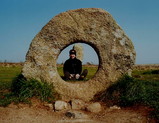
 Top of page