The Modern Antiquarian. Ancient Sites, Stone Circles, Neolithic Monuments, Ancient Monuments, Prehistoric Sites, Megalithic Mysteries

Previous 5 | Showing 6-10 of 700 posts. Most recent first | Next 5

The Cotswold Way II – Broadway – Winchcombe 23 March 2013

“The winter that keeps on giving”. That’s how the weatherman describes this weekend’s prospects. Last Saturday’s rain has been replaced by imminent heavy snowfall, a week before Easter. Not the weather to go too far afield, so instead I make a sooner than expected return to my new side project, the Cotswold Way. Snow is falling as I leave the house, but it’s not until the bus makes its slow way around the flanks of Cleeve Hill that I see the full scale of the winter terrain ahead.

The village of Broadway is dusted lightly, with the snow falling steadily at a sufficiently shallow angle to plaster the eastern face of the war memorial’s column. I’m in some luck, as the snowfall will be hitting my back as the route mainly heads southwest along the Cotwolds escarpment. The sky is grey in all directions, with little prospect of brighter skies ahead today.

Burhill Farm — Fieldnotes

24.03.13ce
Leaving the village, the route crosses muddy and wet fields, in what is becoming the noticeable feature of the Way so far. I’m soon climbing up more steeply, into deeper snow above the 100m mark. Broadway is disappearing into the gloom below. Once through the winter wonderland of Broadway Coppice, it’s time for my first – minor – diversion of the day. Leaving the Cotswold Way, a footpath skirts the southwestern edge of the field. The rampart of the fort comes into view once the crown of the hill has been rounded.

Carl notes that there isn’t much to see here, apart from a single rampart. All true, but this is a fairly typical promontory site, with three sides defended by the natural scarp of the hill and only one rampart needed across the dip slope of the “neck”. The single rampart isn’t the most impressive you might see, topped with very mature trees and no doubt eroded from its original height. It no longer extends across the full length of the field, presumably a victim of ploughing. There is a ditch on the outer, northeastern, side. The footpath crosses the rampart at its northwestern end, and then runs directly across the featureless interior – especially featureless in the snow today! Once at the south of the fort, the ground drops away steeply and there is a good view of Buckland village below.

I walk back around the southwestern and northern perimeter. There’s little evidence of any counterscarping and the site is not the most obviously defensible. However, various recorded finds of pottery, flints and a saddle quern suggest occupation over a long period, perhaps at times where defensive capability was not the primary focus. Certainly worth the minimal effort of the diversion today.

Burhill Farm — Images

24.03.13ce
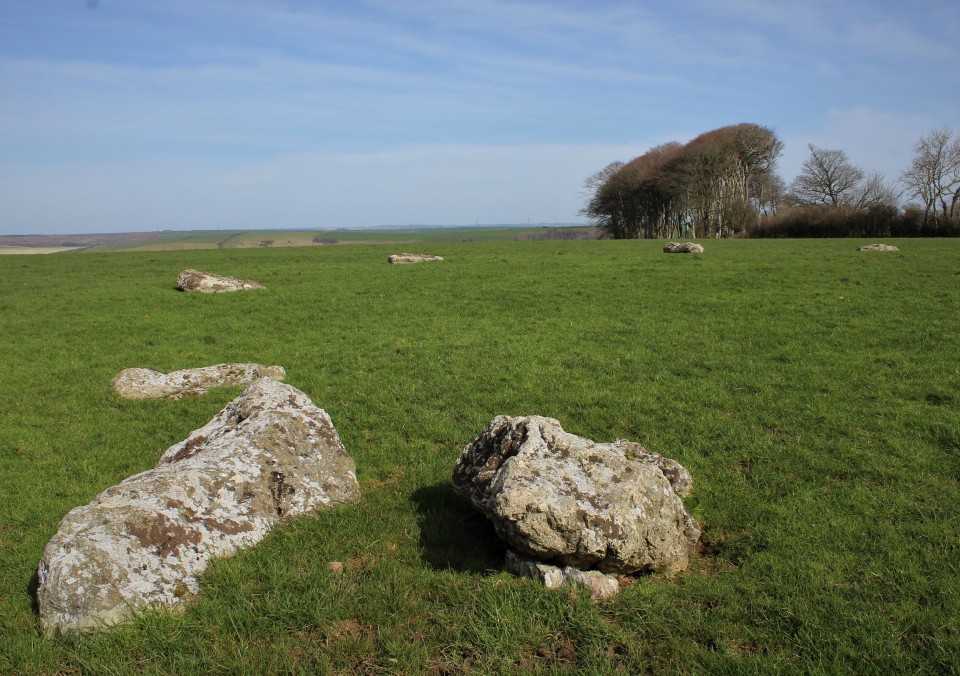
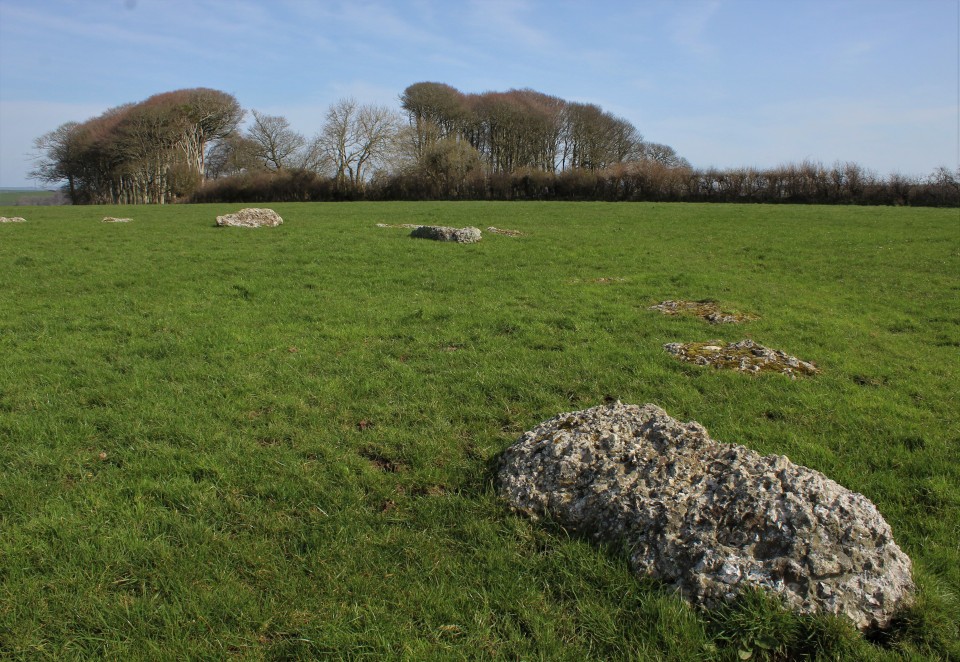
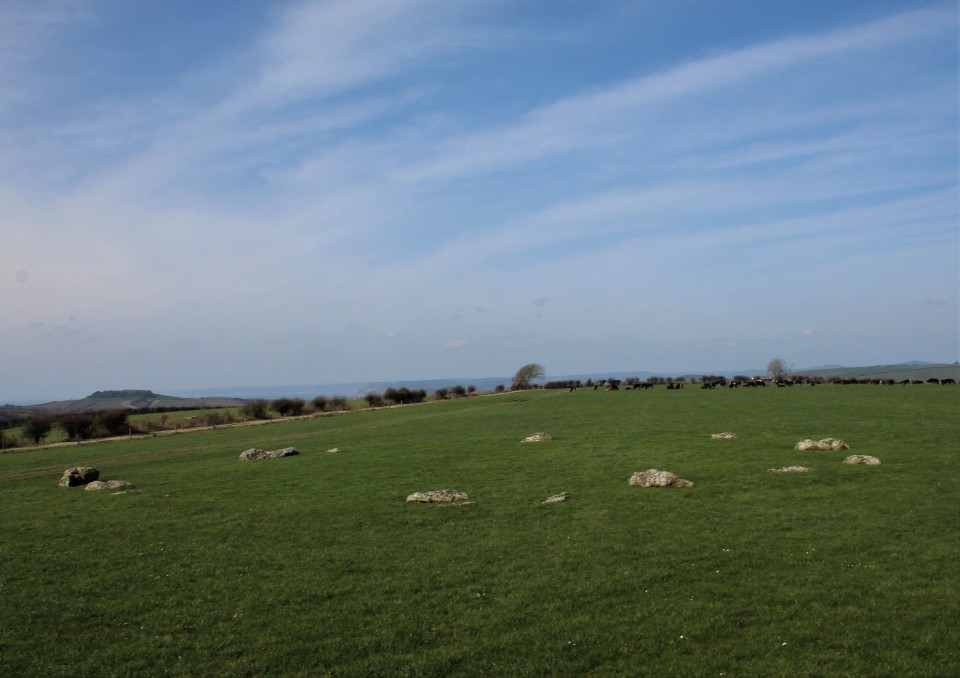
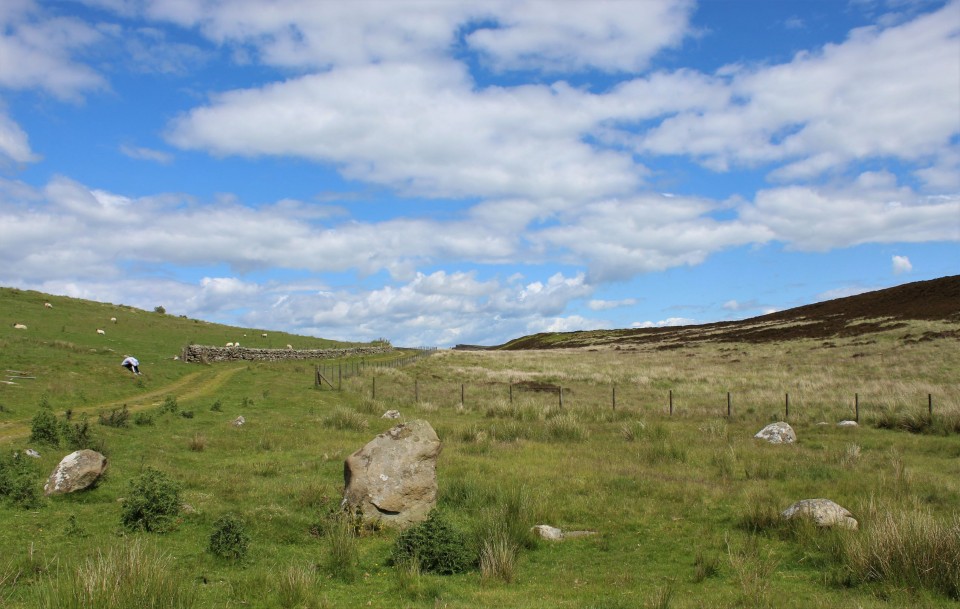
<b>Burhill Farm</b>Posted by thesweetcheat<b>Burhill Farm</b>Posted by thesweetcheat<b>Burhill Farm</b>Posted by thesweetcheat<b>Burhill Farm</b>Posted by thesweetcheat<b>Burhill Farm</b>Posted by thesweetcheat<b>Burhill Farm</b>Posted by thesweetcheat

Back on the Cotswold Way, the route follows a farm track to the muddy yard of Manor Farm. The ascent to day’s highest point ( a modest 295m) now lies ahead, a steady climb of 100 vertical metres or so, not steep but increasingly difficult in the deepening snow. My dodgy leg is starting to protest now and as I make my way past Laverton Hill Barn I’m beginning to wonder if I should consider curtailing the planned distance. I had considered a further detour to Snowshill barrows, but reluctantly decide that today isn’t the best day to see them. Instead I carry on south, along a track filled with shin deep drifts of snow, pristine and untrodden. And blooming hard work.

Shenberrow Hill Camp — Fieldnotes

24.03.13ce
Nearing the top of the hill, the northeast wind takes on an additional biting edge, driving snow in almost horizontally, over the edge of the escarpment. Shenberrow Hill Camp is another promontory fort, like its neighbour at Burhill Farm. Unlike that site though, the ramparts of Shenberrow are rather more powerful, with two banks protecting the approach from gentler slope to the north. On the west and south sides the steep scarp provides natural defences. I walk some way along a bridleway that follows the curve of the northern rampart, but the wind is doing its best to knock me over and I’m quite relieved to retrace my steps and enter the fort. The interior is crossed by the Cotswold Way itself, and an area below the west and south sides are access land, making it possible to get a good look at the earthworks without needing any permission. The southeastern section of rampart has unfortunately been destroyed by the construction of the farmhouse. As the strong wind and drifted snow attests, this is an exposed place and life here in the Iron Age must have been very tough, even snug under thatch behind the ramparts.

The Way exits the fort through what appears to be an original entrance at the south, from which the ground drops steeply to a wooded valley. Rather than following the path, I head onto the access land to the west of the fort, for a look at the sloping flanks below. The deep snow has the advantage of making a fairly sharp descent over thorny shrubs back to the path easier than it would be at other times.

Shenberrow Hill Camp — Images

25.03.13ce
<b>Shenberrow Hill Camp</b>Posted by thesweetcheat<b>Shenberrow Hill Camp</b>Posted by thesweetcheat<b>Shenberrow Hill Camp</b>Posted by thesweetcheat<b>Shenberrow Hill Camp</b>Posted by thesweetcheat<b>Shenberrow Hill Camp</b>Posted by thesweetcheat<b>Shenberrow Hill Camp</b>Posted by thesweetcheat<b>Shenberrow Hill Camp</b>Posted by thesweetcheat<b>Shenberrow Hill Camp</b>Posted by thesweetcheat<b>Shenberrow Hill Camp</b>Posted by thesweetcheat

From here the route drops quickly to the village of Stanton, another of the chocolate box places that make the Cotswolds such a tourist honey trap. Here my route nearly intersects that of the almost-due bus, and for a few minutes my aching leg tells me I should call it quits here. But there’s a stupid stubbornness at work that keeps me walking, heading out of the village and onto a path crossing two of the muddiest fields it’s ever been my displeasure to have to cross. I’m below the snowline here, and the mud is deep enough to cover my boots. Squelch.

As I make my way south across more muddy fields, the whistle of a steam train on the nearby Cotswolds railway echoes, ghostly, across the flatlands to my west. Not for the first time, I wish that the designers of the Way had routed it up on the edge of the escarpment, rather than down here in the mud. I can only assume a mud-loving lunatic had a hand in the choice. Reaching Stanway, the snow is falling more heavily, sending the neighbourhood rooks cawing and flapping. I take shelter in the church to rest my leg and eat some lunch. The stop does me good and I re-emerge into slackening snow feeling more up for the second part of the walk.

Stumps Cross — Fieldnotes

24.03.13ce
After the hamlet of Wood Stanway, where a passing farmer greets me with laughter and a disbelieving “you must be mad”, the route reaches its steepest climb, up to Stumps Cross. I take the ascent rather gingerly, but it’s not a huge climb and I reach the bench at the top without any major problems, despite the mud at the bottom and drifted snow on the slopes. From here, there are expansive views across the vale to the west on a good day, but sadly little to be seen under the low cloud today.

I visited the two round barrows a little over a year ago, but neglected to write any fieldnotes. Aside from the view from the escarpment edge, which is now obscured by trees from here, there is little recommend these barrows. They have been ploughed within an inch of their lives and unless you knew they were there, you probably wouldn’t notice them at all. However, if positioning is everything, they would have been impressive in their day and can be compared with the Saintbury Barrow a few miles away along the escarpment edge. Incidentally, Stumps Cross takes its name from the base of a now otherwise gone medieval cross alongside the road junction below the barrows.

Stumps Cross — Images

28.03.13ce
<b>Stumps Cross</b>Posted by thesweetcheat

Beckbury — Fieldnotes

24.03.13ce
Leaving the junction, the Cotswold Way follows a straight track up to the top of the hill. The wind is keen, blowing the sculpted snow into flurries of spindrift. The walking is hard work, the shin-deep snow a plague for tired legs. Beckbury is another site visited last year, with overdue field notes. On that occasion, I approached from the southwest, up the steep escarpment. Today I have it easier, crossing the gentle slopes from the east. Like the other forts visited today, Beckbury is a promontory fort, with the west and northern sides relying on the escarpment for protection. Here the length of single rampart is rather longer, the curving bank on the east and south sides enclosing an area approx. 160 x 130 m.

The eastern bank is rather damaged, with a gap halfway along its length that is not original but has been broken through in recent times. This has exposed some big chunks of the limestone that make up the rampart’s construction. The southern curve of the bank is topped by a drystone wall, but remains fairly well-preserved. Apart from a short section at the northern end, there is little sign of a ditch, although on today’s visit it would be filled with snow anyway!

Last time I came here there were quite a few people out for a stroll. Today it’s deserted, the howling wind the only company apart from the sheep sheltering in the lee of the escarpment. The western slopes have developed cornices of snow that wouldn’t be out of place in the Cairngorms, although obviously without the life-threatening drop below. At the northwestern corner is an enigmatic limestone monument, graffiti scratched but naming no names as to whom it commemorates. Ozymandias, perhaps?

Beckbury — Images

28.03.13ce
<b>Beckbury</b>Posted by thesweetcheat<b>Beckbury</b>Posted by thesweetcheat<b>Beckbury</b>Posted by thesweetcheat<b>Beckbury</b>Posted by thesweetcheat<b>Beckbury</b>Posted by thesweetcheat<b>Beckbury</b>Posted by thesweetcheat

It’s a steep descent over slippery roots off the ramparts, then something of a pell-mell downward hurry through startled sheep across the fields to the southwest. The path meets a track running into Hailes Wood, where the spun snow clings to the branches but all at once is gone from underfoot, as once more I’m below the snow line. I don’t pause to revisit Hailes Wood Camp this time (more AWOL fieldnotes) but carry on down to the ruins of the Abbey, a relic of Henry VII and Thomas Cromwell’s dismantling.

I’d love to say it was an easy stroll from here to the finish at Winchcombe, but that would be a lie. Instead, it’s yet more saturated mud and by the time I reach the intriguingly named Puck Pit Lane, I’m caked in the stuff. Luckily a fast-flowing culvert allows me to get the worst off my boots, and I can peel the splattered waterproofs off once I reach the safety of the town.

It’s been another good section, though my leg may not easily forgive me for it. The three forts seen today are all worthy of a visit and the solitude of the snowy hills never fails to lift the spirits. To the woman at Wood Stanway, mad I may be, but reminded that I’m alive as well. That’s what it’s all about, isn’t it?

Now, let’s have some sunshine please.
thesweetcheat Posted by thesweetcheat
24th March 2013ce
Edited 28th March 2013ce

The Cotswold Way I – Chipping Campden – Broadway 16 March 2013

After ending my recent trip to Meon Hill in the pretty town of Chipping Campden, I thought it about time that I made a bit more effort with the Cotswolds again. Despite living below the edge of yellow escarpment for almost 7 years now, my gaze has tended to be drawn away to the west. Part of the reason has been the constant fascination of Wales, but it’s also partly due to the effects of farming on much of the Cotswolds’ prehistory, from access difficulties to endlessly ploughed barrows and earthworks. But there is also much to enjoy and so I thought I’d have a go at the Cotswold Way, 102 miles along the Cotswold edge from Chipping Campden to Bath. The Way passes close to a large number of prehistoric sites, some familiar to me, some not. While the Wales Coast Path is the main objective for G/F and I over the next few years, this can be my experimental side project, to dabble in occasionally. Hopefully more enjoyable than a drum opera or earnest acoustic set at least. The promise of an unsettled weekend with heavy showers sounds like a good time to get on with it.

Getting to the start is a bit of a faff involving two buses, and heavy rain all the way to Moreton in Marsh. By the time the second bus drops me in the centre of Chipping Campden, it’s clearing and the sun is threatening to break cover. Chipping Campden has plenty of amenities and makes for a good start (or end) point for a walk, but I don’t linger today, hoping to make the most of the good weather while it lasts. Out of the town it’s a steady climb along a rather muddy lane to Dover’s Hill. Dover’s Hill enjoyed fame in the early 17th century when the enterprising Robert Dover instituted an annual games here, called the Olimpicks, a couple of hundred years before the better-known Much Wenlock version. There’s no games going on up here today, but there is a superb view. To the northeast, the flat-topped Meon Hill, to the west the bulk of Bredon Hill, with the unmistakeable ridge of the Malverns beyond, all topped with hillforts. To the north, the Vale of Evesham stretches away as far as the eye can see on this rather gloomy morning. There’s a handy toposcope on the highest point of the hill and a cute little limestone seat that reminds me of a miniature chambered tomb. It’s nice to back in the hills, as ever.

Kiftsgate Stone — Fieldnotes

17.03.13ce
After drinking in the views for a while, I carry on off the hilltop. Here the Cotswold Way follows a busier road and has been moved off the verge and slightly down the slope, out of sight of the road. But I choose to stick to the verge instead, because my first stop-off of the day beckons. I remember Carl having trouble finding this stone, and as I pass a locked and chicken-wired gate I wonder if it’s going to be particularly accessible. I’m therefore very pleased to see it from the road, through a little gap into the trees. Access is as easy as can be, the stone is only yards from the road (it’s quite a way northeast of the layby that Carl refers to).

I didn’t really know what to expect from this “disputed antiquity”. It turns out to be a dinky little irregular limestone slab, heavily moss-covered and orientated with the long side SW-NE, parallel with the road. As reported, it has a (blocked) hole through it. On the NW face of the stone, the hole has the appearance of being counter-sunk, although whether this was intentional or caused by something inserted into the hole being turned and causing wear I can’t say. Apart from the hole, it’s not obviously worked, but the thick moss and the years of wear could easily mask any signs that might be there. I really like it, hidden away and passed by lots of unsuspecting drivers every day. I wouldn’t want to commit to its antiquity, but it’s worth paying your respects if you come this way. A promising start to the day, anyway.

Kiftsgate Stone — Images

17.03.13ce
<b>Kiftsgate Stone</b>Posted by thesweetcheat<b>Kiftsgate Stone</b>Posted by thesweetcheat<b>Kiftsgate Stone</b>Posted by thesweetcheat<b>Kiftsgate Stone</b>Posted by thesweetcheat<b>Kiftsgate Stone</b>Posted by thesweetcheat

Willersey Camp — Fieldnotes

17.03.13ce
Leaving Kiftsgate Stone, the Way follows the Mile Drive, a broad, grassy path that would make for easy walking if less wet underfoot. At the end there are two fields of mud to cross (lovely), after which I take my main detour of the day, heading north alongside the Roman Buckle Street. My next site is one that I am not by any means hopeful about. Despite being a very decent-sized fort, Willersey Camp has had the misfortune of having a golf course dumped onto it, the construction of which, according to Pastscape, caused “considerable damage” to the fort. Approaching from the south, any views are obstructed by a thick screen of leylandii, that well-known native Cotswold species. A bit further along the road is the Dormy Hotel, built right on the SE corner of the fort. I walk up the drive towards the reception, hoping to get a bit of rampart action. The drive cuts through the bank and I manage to get a picture in. However, the CCTV signs don’t lie and it’s barely a minute before a uniformed functionary emerges to ask me if I need any “help”. I get the impression that the response “I’d like to have a look at the hillfort” would be as well-received as “I’ve come to steal your silver teaspoons”, so decline the offer and return to the road.

The road follows the old line of the eastern rampart, but apart from a bit of “rough” (in the golfing sense) there’s nothing to see here. A low mound can be seen silhouetted on the skyline in the middle of the course and I think this is probably the poor remains of the long barrow. Having been accosted once, I’m not keen to have another go, so I don’t follow Carl’s admirable example. In any case, I’m not acceptably attired for the course, wearing neither a turtleneck shirt, tailored shorts, or golf shoes. I imagine there would be a scene at such a blatant breach of the dress code. I carry on past the clubhouse.

As Carl said, the wooded area alongside the road is the place to come. There is indeed quite a bit of litter (tut) but the ramparts here are very impressive. The outer rampart is several metres high, with a slighter, inner rampart that hasn’t been encroached upon by the golf course. It’s a shame the rest of the fort has been so badly treated in comparison, because it must have been a fine site.

Willersey Camp — Images

17.03.13ce
<b>Willersey Camp</b>Posted by thesweetcheat<b>Willersey Camp</b>Posted by thesweetcheat<b>Willersey Camp</b>Posted by thesweetcheat<b>Willersey Camp</b>Posted by thesweetcheat<b>Willersey Camp</b>Posted by thesweetcheat<b>Willersey Camp</b>Posted by thesweetcheat<b>Willersey Camp</b>Posted by thesweetcheat<b>Willersey Camp</b>Posted by thesweetcheat

Willersey Long Barrow — Images

17.03.13ce
<b>Willersey Long Barrow</b>Posted by thesweetcheat

Meon Hill — Images

17.03.13ce
<b>Meon Hill</b>Posted by thesweetcheat

Saintbury Barrow — Fieldnotes

17.03.13ce
Continuing north, I take a left (west) at the crossroads. A few yards on, a metal right of way sign points south for a bridleway and north for a footpath. I take the latter, for this leads very conveniently to the Saintbury round barrow. This could easily be overlooked as just another ploughed down barrow in the Cotswolds, but Carl’s previous notes indicate that it’s worthy of attention. He climbed up from Saintbury to the north, whereas my route takes me northwards downhill to the barrow. It’s very muddy and the hill seems to teem with springs, so I’m glad to be wearing my waterproofs, even as the sun has now come out.

The barrow is quite a way down the sloping field, and is not visible until I’m practically on top of it. Before it comes into view, there is the rather surreal sight of the top of the lofty (ha) spire of Saintbury church appearing below me. The barrow itself is small, but quite well preserved for these parts, with the possible remains of an infilled ditch around it. As Carl notes, the positioning is terrific. Perched just above the steeper part of the scarp, the views are wonderful indeed. To the northeast, trees block Meon Hill fort, but otherwise there is an expansive panorama, from Bredon Hill, the distant Malverns, across into Mid-Wales and at the furthest limit of my sight, Titterstone Clee and Brown Clee, maybe 60 miles away and near where I grew up. The darker, wooded hills in front of them possibly even include Croft Ambrey, the fort I used to visit on Boxing Day walks. Breathtaking.

Saintbury Barrow — Images

17.03.13ce
<b>Saintbury Barrow</b>Posted by thesweetcheat<b>Saintbury Barrow</b>Posted by thesweetcheat<b>Saintbury Barrow</b>Posted by thesweetcheat<b>Saintbury Barrow</b>Posted by thesweetcheat<b>Saintbury Barrow</b>Posted by thesweetcheat

Heading back up the slippery slope, I manage to fall over as the mud takes my feet from under me. Luckily it’s all very soft and squidgy, so only my dignity is bruised.

Back at the road, I cross over and take the bridleway, which runs parallel with the northern rampart of the fort. Unfortunately, a screen of vegetation and yet more golf fairways block access to this part of the fort. The bridleway is also incredibly muddy and after a while I turn back, caked in mud and feeling a bit deflated. Retracing my steps past the clubhouse, I head south again to rejoin the Cotswold Way. The trip to Saintbury barrow has provided reward enough to justify the detour, so the relative disappointment of the fort doesn’t detract too much.

It’s now clouded over again, and back on the footpath across yet more mud, the rain starts again in earnest. I stop off at the Fish Hill picnic area (tables, toilets, car park, weird arrangements of upright limestone) where there is a particularly fine toposcope, carved with a relief map of the Cotswolds and I learn that aligned with Tewkesbury (15 miles away) is New York (3370 miles away). Some ley-line that. From here the path crosses the busy A44 before climbing gently up through woods towards the highest point of today’s walk, at Broadway Tower.

The weather doesn’t lend my visit to the tower quite the views it deserves, but I do learn that there is a decommissioned nuclear bunker up here. Hopefully not something that will be needed again! From the tower it’s a very steep descent off the escarpment down to Broadway, with good views of the western flank of Willersey Camp to be had from the path. I’m quite wet and very muddy by the time I emerge onto the streets of Broadway, but nothing coffee and caramel shortbread can’t cure. It’s been a fine start to the Cotswold Way, with a good variety of sites for the TMA-er on the way. I’m looking forward to my next side project dabble.
thesweetcheat Posted by thesweetcheat
17th March 2013ce

Wonders of Whimble (and Bache again) 2 March 2013

The promise of some much-needed sunshine centred on Mid-Wales, together with tentative confidence that my leg would stand up to something of a challenge, has led me to focus my sights on a return to the Radnor Forest.

Bache Hill and the Whimble — Fieldnotes

03.03.13ce
Like Gladman before me, my previous trip to the summits of Radnor mountains had neglected the shapely, but sub-2,000ft Whimble. In truth, my previous trip in thick, dank mist had been something of a nightmare of zero-visibility and soaking wet feet. I’m hoping for a contrast today, so I’m relieved that as the bus drops me in New Radnor, the skies are blue if rather hazy.

The lack of car precludes me from following Gladman’s advice and so I have to start off with the steep “road-bashing” of his warning, taking a minor road north out of the town. In truth, the firm surface provides a nice easy way to gain some rapid height. I pass a couple of walkers on the road, as they stop to remove outer layers – despite the single-figure temperature, it’s soon warm once you get going on the uphill. At the gate where the road stops, I pause to do the same and shed my coat.

The long months since I discovered that I had torn my hamstring badly on Moel Eilio last year have been seriously frustrating, even climbing a couple of flights of stairs had been a strain. As such, I feel immensely relieved to have made the first couple of hundred metres of ascent without problem. From the gate, a bridleway continues the climb, more gently now, around the western edge of the forestry that clothes the southern slopes of the Whimble.

Sheep and Spring lambs are the only company and pretty soon a fine view has opened up along the steep-sided valley of Summergill Brook to the southwest. Rank after rank of hills line up to the horizon, fading gently into blue on this hazy day. I realise that the views won’t be extensive in a haze more reminiscent of a summer’s outing, but to be out in the sunshine on these hills provides more than ample pleasure.

The bridleway is easy walking and after a while a flat-topped expanse appears to the northwest – this is Great Rhos, the highest part of the mountains and a top that I had to navigate across by relying on compass and contour alone. No such trouble today, it’s nice to finally see what I missed before. Directly ahead of me is Great Creigiau, the southern part of Black Mixen, underpinned by steep cliffs falling away into the valley below. It’s quiet enough to hear the tumbling water down in that narrow channel. This is what I’ve been missing these last months, away from the solitude of the lonely hillside.

Then, through the thinning trees to my right, as if conjured from nowhere by powerful magic, the conical shape of the Whimble appears. The path continues northwest, but a smaller, much-used trail heads off to the foot of the hill. I’m suddenly overawed by the steepness of the climb ahead, although it’s less than 100m of vertical ascent from where I am now. I briefly weigh up how my leg feels against the steep hillside, but this is what I’ve come for and the urge to go on far outweighs any concern now. I take the climb steadily, one foot in front (above) the other. When the summit approach comes, a deep sense of joy comes too. I’ve made it! It’s not the biggest hill in the world, but after a winter wondering if I’d get up in the mountains again, the feeling of relief is overwhelming.

Also overwhelming is the view from the top, even with the haze. The hill drops away steeply on all sides. Away to the southeast is Hergest Ridge and on a clearer day the Black Mountains would be visible to the south. To the west and north the higher, flat-topped summits of the range cut off the longer view, but the intervening valleys are far below and steep-sided, providing plenty of visual interest. To the northeast, Bache Hill is the focal point, topped irresistibly with a line of prominent round barrows that I will hopefully visit later.

And then there’s the summit barrow, a fine, turfed-over specimen with a flat top. About half a metre below the top, the sides of the barrow are stepped-in. Coflein states this to be a later cairn placed on top of the round barrow, although it doesn’t say how much later. But for all the world, this wonderful, conical proto-Silbury seems topped with its own mini-Silbury barrow.

To all those people who cause endless debate by climbing Silbury, why bother? Come here, to quiet of the Radnor Mountains and climb a proper sacred hill instead. Sky gods, earth goddess, if such beings exist, then this is the place to commune with them. No man-made vanity project striving and failing to reach up to the heavens, this beautiful, shapely hill is the real thing, the focal point of Radnor’s sleeping goddess. It has the power to remind me how small I am, a tiny speck of dust in the infinity of nature, yet so alive and ecstatic too. I live for places like this, days like this, when mundane cares are so far below and there’s only the sky, the wind, the hills.

***

I stay as long as my body temperature allows, for it’s cold up here in March, even in the sunshine. My route onwards is to the east, where the hill is at its most gentle, sloping down a wide grass strip to the bwlch below. Here I meet two riders, the last people I will see in the hills today, apart from distant stick figures on Black Mixen. A bridleway heads northwards. Neatly bisecting the twin summits of Bache Hill, the path crosses the saddle between the two. To the northeast is the main summit, where I went in the mist last time I was up here, together with the low remains of an intervening barrow. But I have unfinished business with the south-western summit, above Whinyard Rocks, to get better acquainted with the two prominent barrows here.

A narrow sheep track winds in the general direction, so I take that to avoid the worst of the heather that clothes this hillside. The Whimble comes into view straight ahead, a reminder of the shapeliness of its curves. But the track doesn’t head to the barrows and I’m forced to take to the heather after all. A summer visit would be tough and my dodgy leg doesn’t enjoy the motion of stepping over the vegetation very much. But the barrows are worth it, especially the fine south-western example (Winyard Rocks I), placed perfectly for views of the Whimble and of the other Bache Hill barrows to the northeast. The other barrow (Whinyard Rocks II) is smaller, or more reduced, but placed so that nearly all of the barrows in the group are visible from it.

Back across the tiresome heather to the saddle. The next barrow (Bache Hill III) is visible in the grassy field beyond, it appears to have been much-reduced by erosion (ploughing?) and has no cover of heather to keep it warm. Of all the barrows in the group it is the least impressive, but still boasts a wonderful location. The Bache Hill summit barrows are not visible from it, but the Whimble and the Whinyard Rocks barrows all are. [Incidentally, this is the only barrow of the five on Bache Hill that is not on access land, although a stile gives easy entrance into the field from the bridleway to the southwest.]

The final walk to the summit of Bache Hill is easy from here, and I’m elated to be back on top of a mountain after such a long absence. Previous fieldnotes extol the virtues of the summit barrow, so I’ll just add that this is one of the finest round barrows I’ve visited in Mid-Wales – if not the finest. Good spot for lunch too, with back against the trig point and Radnorshire spread out in patchwork below.

After a quick revisit of the final barrow, at the eastern end of the arcing group, I bid farewell and start the long descent off the hills via Stanlo Tump. The last time I was here, I was pleased and surprised to see Titterstone Clee away to the northeast. Today the haze prevents any such revelations, but in the interim G/F and I have walked close by along Offa’s Dyke, so now I have the pleasure of recognising Castle Ring, Beggar’s Bush, the approximate position of the Cwmade Barrow and the wonderful Burfa Bank hillfort. Another bit of jigsaw slots into place.

Bache Hill and the Whimble — Images

03.03.13ce
<b>Bache Hill and the Whimble</b>Posted by thesweetcheat<b>Bache Hill and the Whimble</b>Posted by thesweetcheat<b>Bache Hill and the Whimble</b>Posted by thesweetcheat<b>Bache Hill and the Whimble</b>Posted by thesweetcheat<b>Bache Hill and the Whimble</b>Posted by thesweetcheat<b>Bache Hill and the Whimble</b>Posted by thesweetcheat<b>Bache Hill and the Whimble</b>Posted by thesweetcheat<b>Bache Hill and the Whimble</b>Posted by thesweetcheat<b>Bache Hill and the Whimble</b>Posted by thesweetcheat<b>Bache Hill and the Whimble</b>Posted by thesweetcheat<b>Bache Hill and the Whimble</b>Posted by thesweetcheat<b>Bache Hill and the Whimble</b>Posted by thesweetcheat<b>Bache Hill and the Whimble</b>Posted by thesweetcheat<b>Bache Hill and the Whimble</b>Posted by thesweetcheat

At Kinnerton I pop into the lovely little church, its yard carpeted with snowdrops. I’m very taken with a fine stained glass window depicting a hare. Moving on, a quick stop reveals Kinnerton Court Stone II to be much clearer of vegetation than on my last visit, and I say hello to the lovely Kinnerton Court Stone I, with its fantastic view back to the Radnor mountains.

Kinnerton Court Stone II — Images

05.03.13ce
<b>Kinnerton Court Stone II</b>Posted by thesweetcheat<b>Kinnerton Court Stone II</b>Posted by thesweetcheat

Kinnerton Court Stone I — Images

05.03.13ce
<b>Kinnerton Court Stone I</b>Posted by thesweetcheat<b>Kinnerton Court Stone I</b>Posted by thesweetcheat
Crossfield Lane barrow is as flattened as it was before (hardly going to grow back, was it) although I manage to find an angle from the south where it appears a bit more prominent.

Crossfield Lane barrow — Images

05.03.13ce
<b>Crossfield Lane barrow</b>Posted by thesweetcheat

The Four Stones — Fieldnotes

03.03.13ce
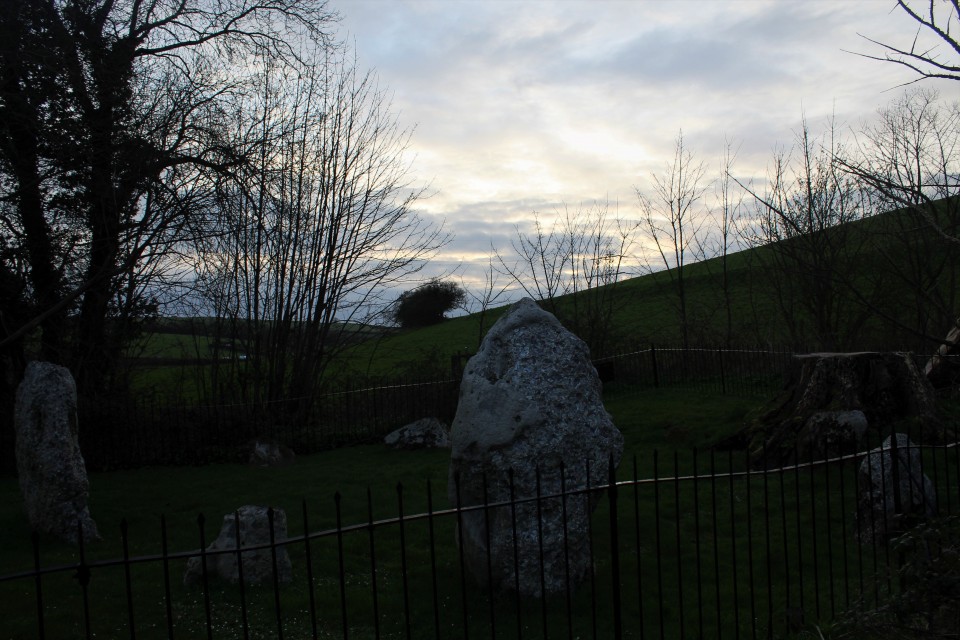
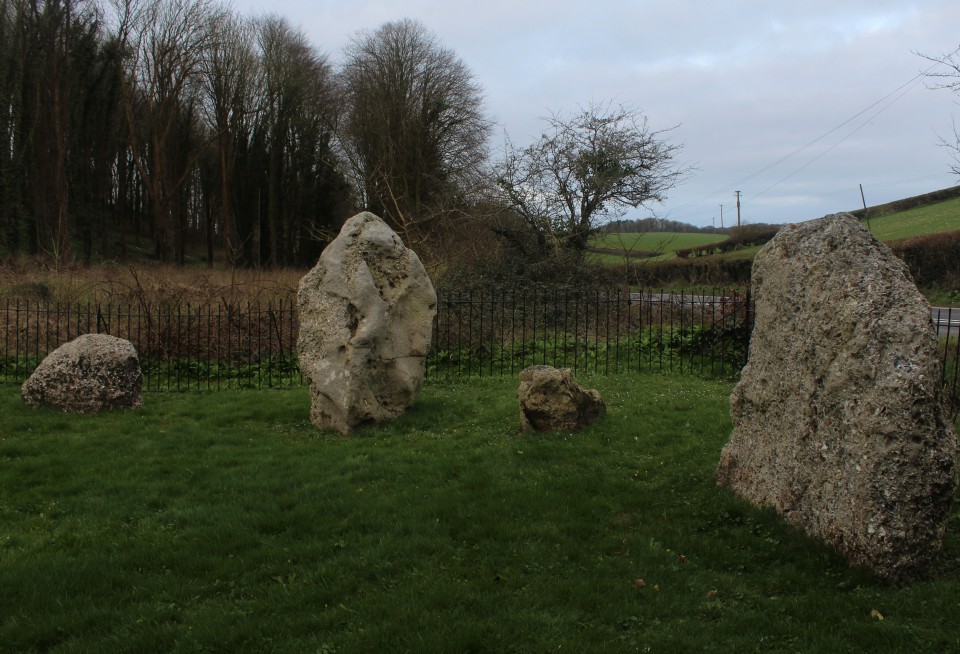
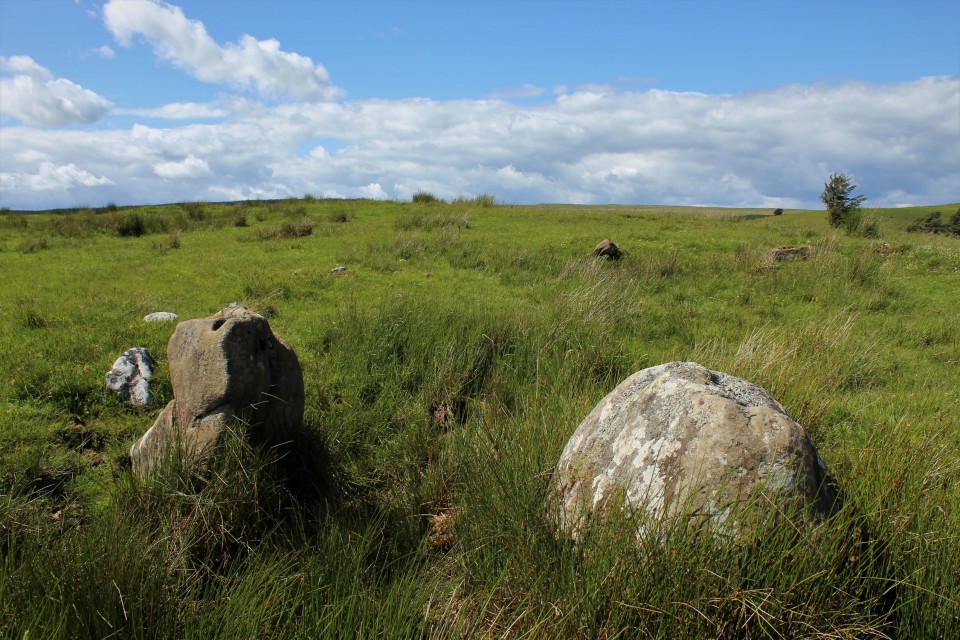
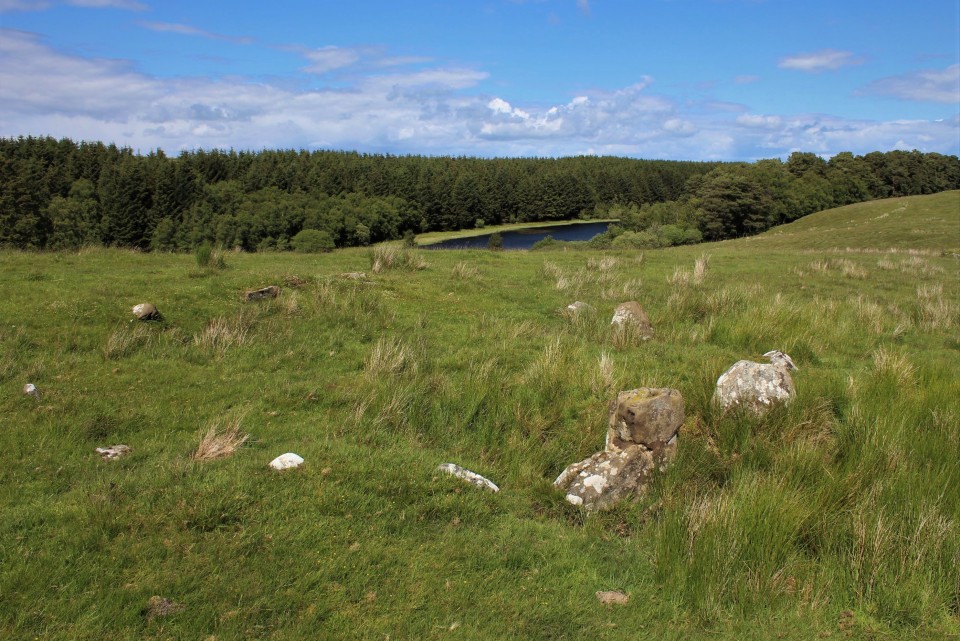
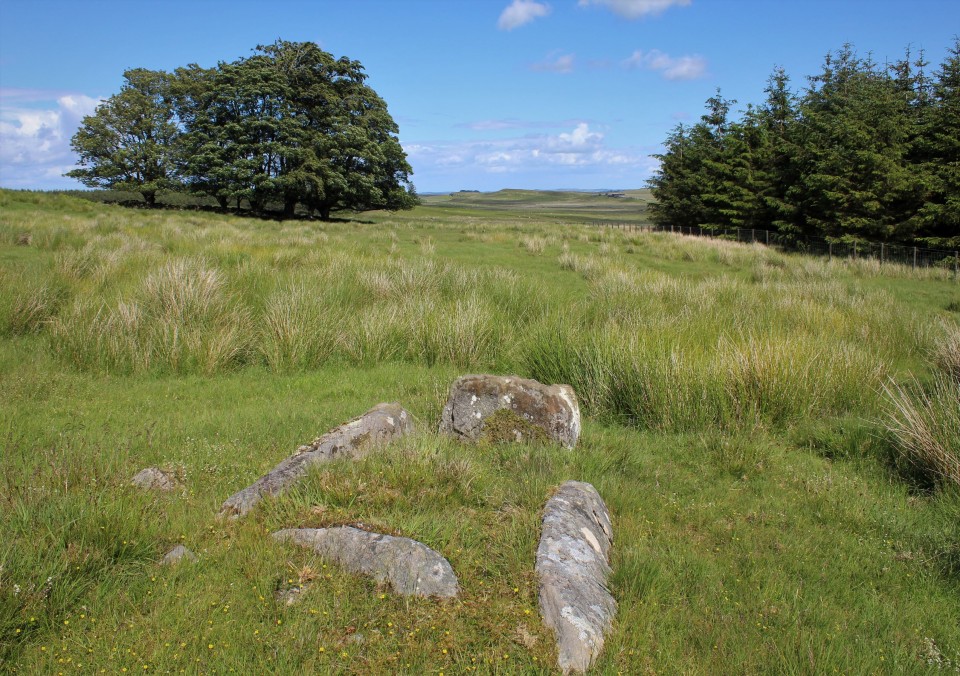
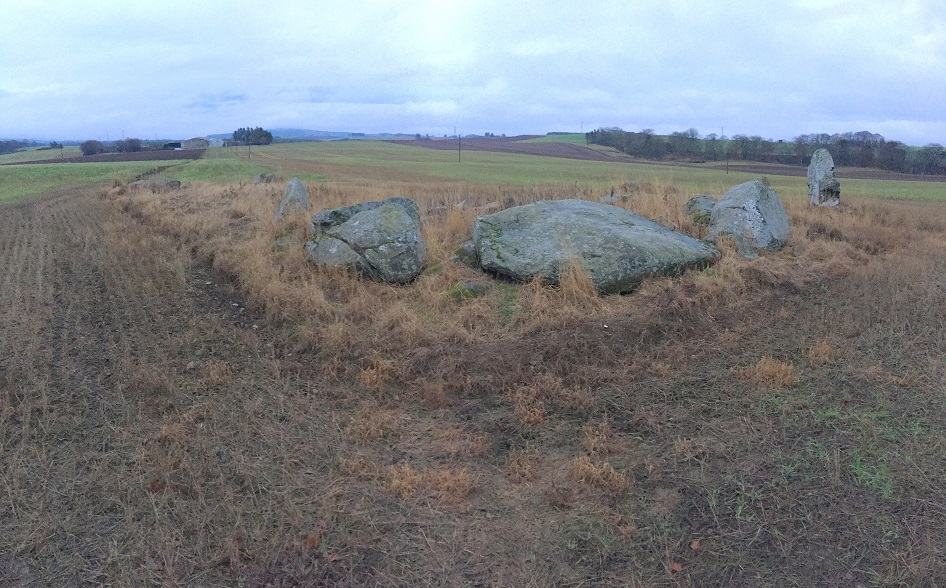
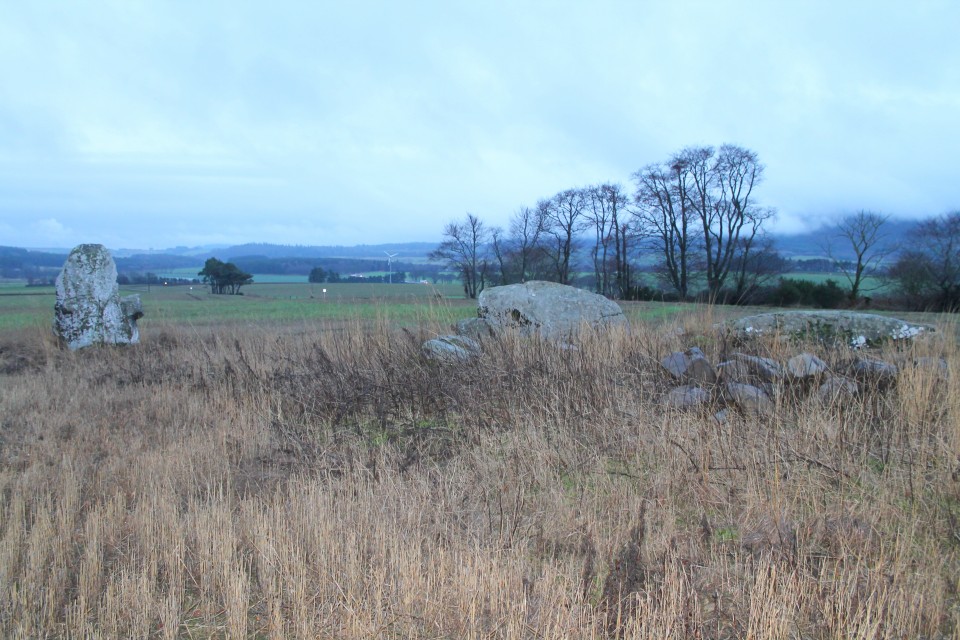
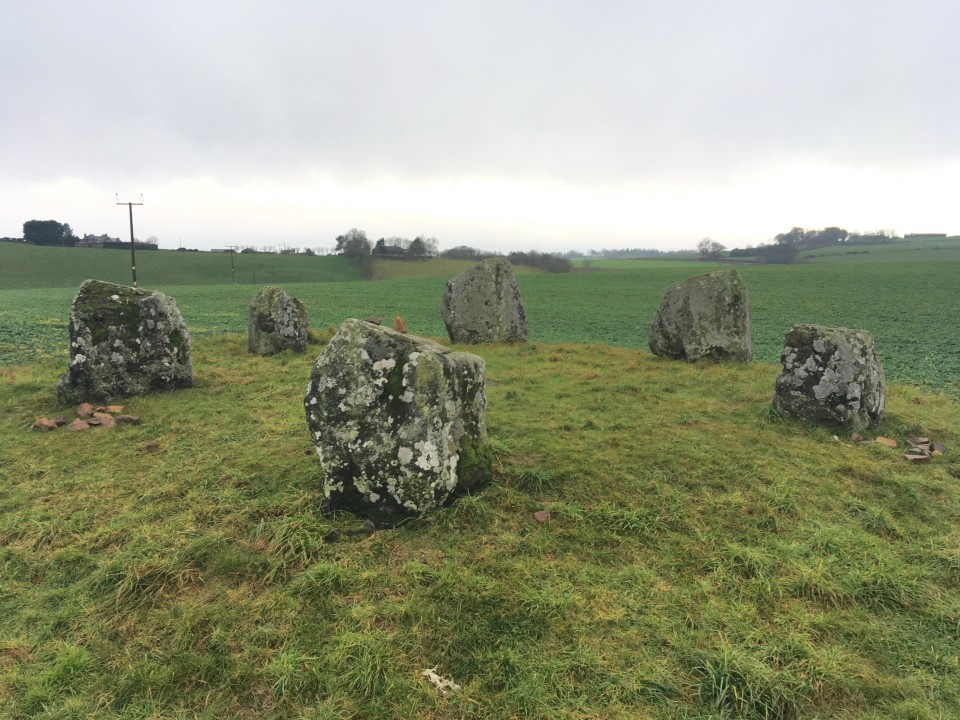
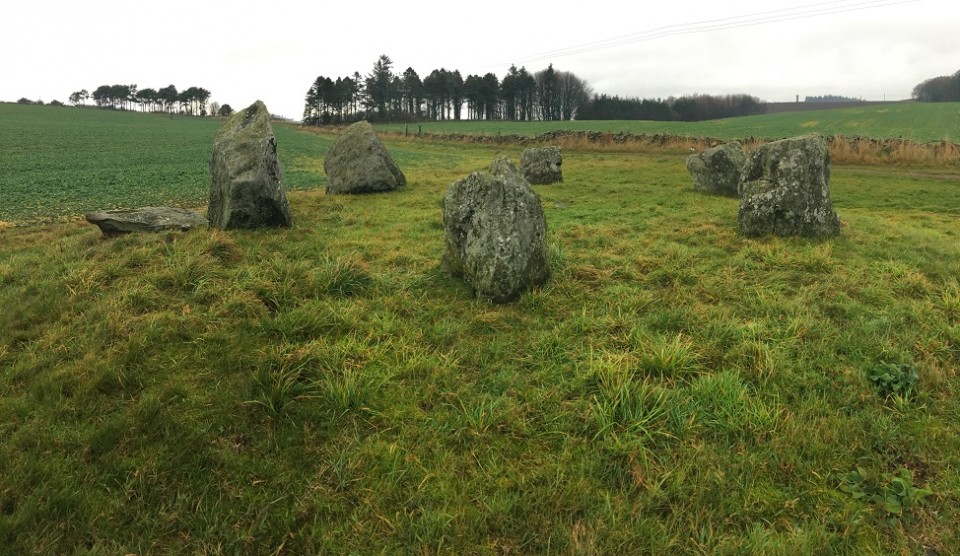
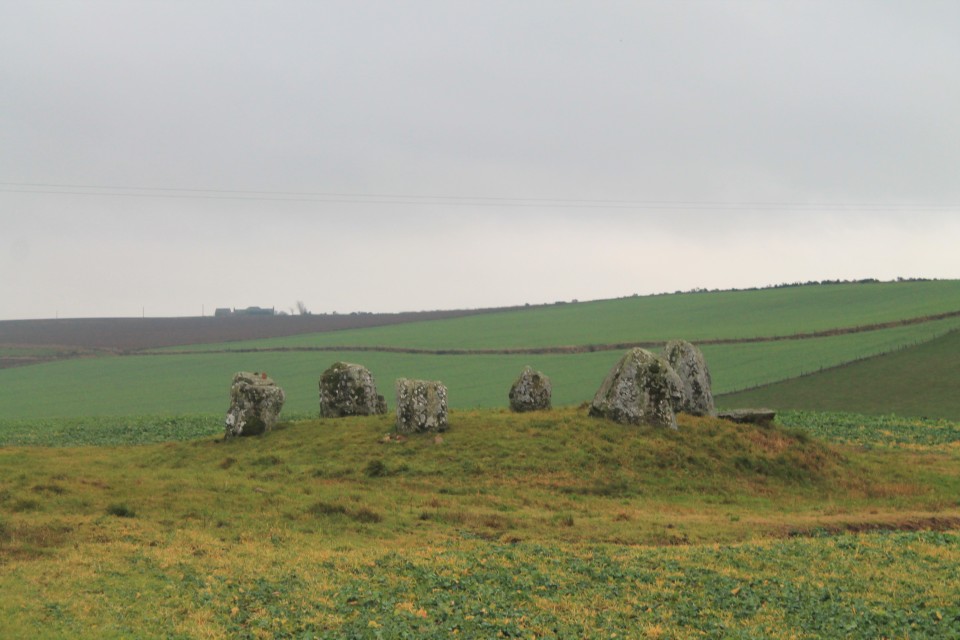
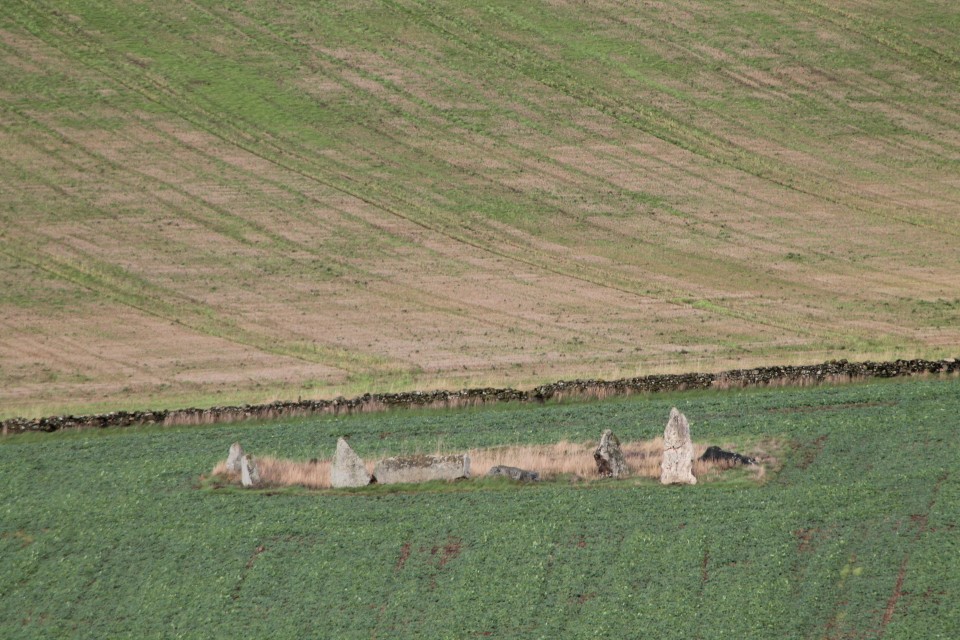
Then I’m back at Four Stones, in my Dad’s countryside. Last time, I was hit with a wave of emotion I hadn’t foreseen, but this time I’m prepared and enjoy the site for itself more. It would have been his birthday in two days’ time though, so it seems more than fitting to be here and raise a metaphorical toast.

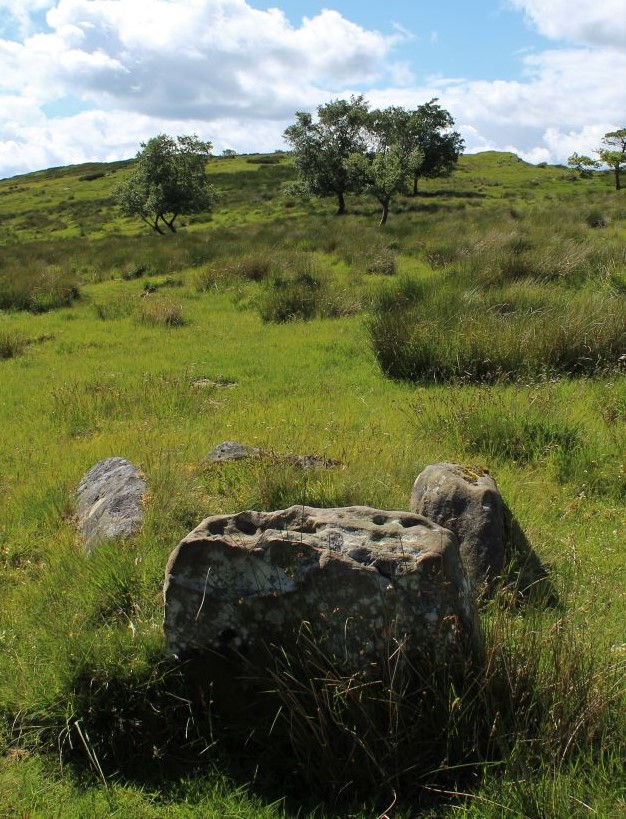
It is a wonderful site. The proximity of the house, road and telegraph wires perhaps just enough to keep it from the front rank of circles for the modern visitor, but otherwise the setting, and the stones themselves, are exquisite, the cupmarks on the south-western stone a little bit of icing on the cake. A site to be savoured. Time passes as it often does.

The Four Stones — Images

05.03.13ce
<b>The Four Stones</b>Posted by thesweetcheat<b>The Four Stones</b>Posted by thesweetcheat<b>The Four Stones</b>Posted by thesweetcheat<b>The Four Stones</b>Posted by thesweetcheat<b>The Four Stones</b>Posted by thesweetcheat

***
At length I’m off, to see about some of the other sites crammed into this little corner of Wales. Heading east from the circle, the quiet lane points directly at Burfa Bank and I toy fleetingly with a visit. But I think my legs have had enough excitement today and the approaches to the fort are very unforgiving. Instead, I make my first visit to the Hindwell Stone.

Hindwell Stone — Fieldnotes

03.03.13ce
Unmarked on the OS map, even Coflein have a “?” after its standing stone attribution. I like it very much, in its field of lambs and with the ubiquitous great views of the mountains. It certainly seems all of a piece with the other stones of the area, both in composition and shape. Deserving of attention anyway.

Hindwell Stone — Images

07.03.13ce
<b>Hindwell Stone</b>Posted by thesweetcheat<b>Hindwell Stone</b>Posted by thesweetcheat<b>Hindwell Stone</b>Posted by thesweetcheat

Hindwell round barrow group — Fieldnotes

03.03.13ce
Not much further down the road a footpath gives access to a field boasting two round barrows, Hindwell Farm I and II. Sadly, neither is exactly well-preserved, having been ploughed to within an inch of their (considerable) lives. But when viewed in the context of the other sites nearby, they should not be overlooked. The views to Bache Hill and The Whimble are inevitably fabulous.

Passing Hindwell Farm, a further barrow (Hindwell Ash) is visible in a field to the north, on the left (west) side of the round. An OS trig pillar has been inserted and the barrow proves to be in a poor state, crumbling away under the pillar on its northern flank. The fourth barrow in the group, Upper Ninepence (great name) is not visible from here.

Hindwell round barrow group — Images

08.03.13ce
<b>Hindwell round barrow group</b>Posted by thesweetcheat<b>Hindwell round barrow group</b>Posted by thesweetcheat<b>Hindwell round barrow group</b>Posted by thesweetcheat<b>Hindwell round barrow group</b>Posted by thesweetcheat<b>Hindwell round barrow group</b>Posted by thesweetcheat

Hindwell Pool — Images

08.03.13ce
<b>Hindwell Pool</b>Posted by thesweetcheat

I make an aborted effort to see Knobley standing stone, but an apparently imprenetrable hedge, a quad-biking farmer and far-too-close-for-comfort shotgun soundings, together with increasing lack of energy after the efforts of the day, finally conspire to persuade me to leave it for another day. I get to see it from a distance, a similar stone to the others in the area with an apparent split in it.

Knobley — Images

08.03.13ce
<b>Knobley</b>Posted by thesweetcheat<b>Knobley</b>Posted by thesweetcheat


Despite this final failure, it’s been a terrific day in this quiet part of Wales and I come away with renewed confidence after months of doubt. The little death of Winter seems over, the burgeoning life of Spring is here.
thesweetcheat Posted by thesweetcheat
3rd March 2013ce

Offa’s Dyke V – Llangollen – Chirk Castle Mill 19 February 2011

We booked a weekend in Llangollen almost as soon as we got back from the previous Offa’s Dyke trip, with the consequence that the weather is out of our hands. The afternoon of our arrival is wet and cold, but we manage a stroll from the town to the ruined abbey at Valle Crucis. An intended stop-off at Eliseg’s Pillar mound is abandoned as freezing winds and rain drive us to seek shelter and teacakes at the nearby Abbey Farm tearoom instead.

Castell Dinas Bran — Fieldnotes

26.02.13ce
Saturday dawns dry but very foggy. We finished our last walk in thick mist that enveloped the cliffs of Creigiau Eglwyseg and completely hid Castell Dinas Bran from view. Sadly, it looks like we will be picking up where we left off in almost identical conditions.

The top of the hill is invisible ahead, which may be something of a blessing; as others have mentioned, it’s a steep walk up here from the town, especially the last climb up to the fort itself. As a place to assault, I think I’d be favouring the “starve ‘em out” option, rather than the direct approach.

Due to the restricted visibility, we come upon the medieval ruins before really seeing anything much in the way of prehistoric ramparts. It’s an atmospheric spot, enshrouded in thick mist, where chunks of masonry loom out of the murk and just as quickly fade away again. We are missing out on the spectacular views though.

There are earthworks to be “seen”, especially at the northeast of the hilltop, outside the medieval ruins. There is also a daunting rock-cut ditch, but this probably belongs to the castle, rather than the fort. Even for Iron Age builders of great fortifications, I think that would have been a challenge too far, perhaps.

For all the atmosphere conjured by the mist, the lack of views makes the visit rather less than it could be. One to come back to on a clear day, with blue skies and a warm summer breeze. We make our way off the hilltop utilising the path heading northeast, and once off the top of the hill, fort, castle and all are immediately swallowed back into the pervasive gloom.

Castell Dinas Bran — Images

21.02.11ce
<b>Castell Dinas Bran</b>Posted by thesweetcheat<b>Castell Dinas Bran</b>Posted by thesweetcheat<b>Castell Dinas Bran</b>Posted by thesweetcheat<b>Castell Dinas Bran</b>Posted by thesweetcheat<b>Castell Dinas Bran</b>Posted by thesweetcheat

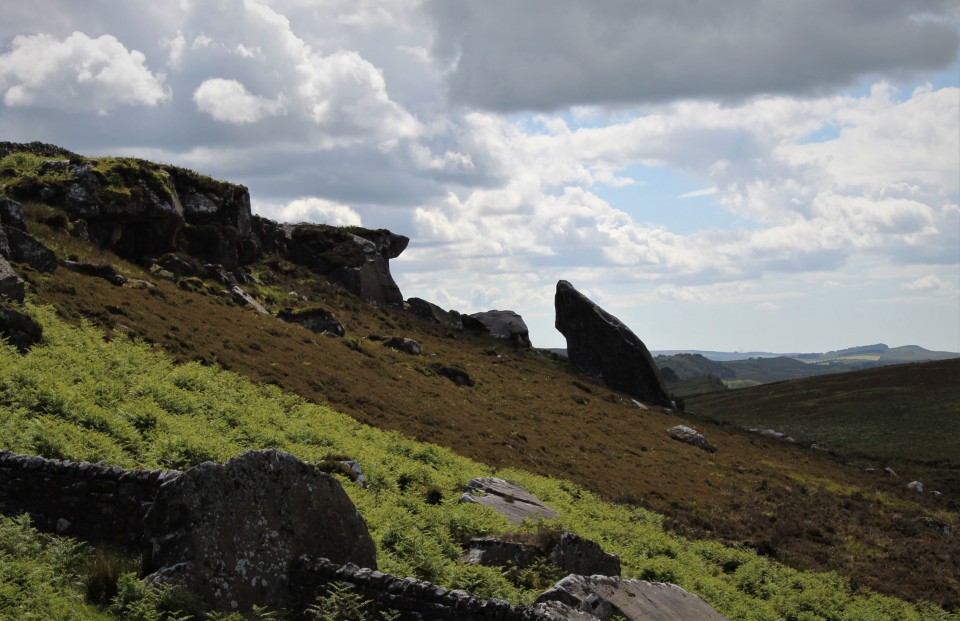
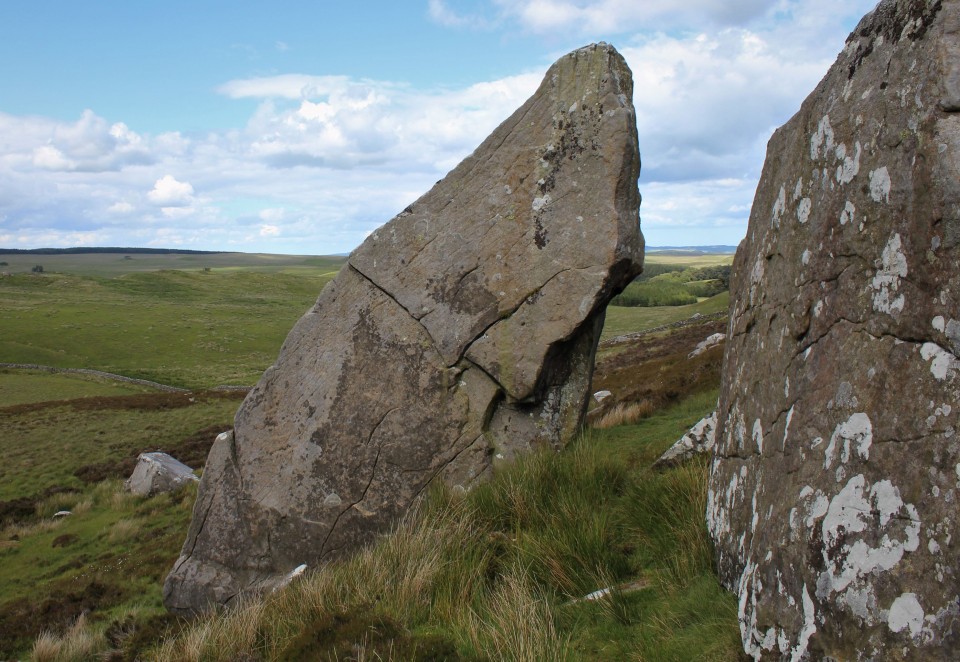
Joining the lane to the north, once again we’re back on Offa’s Dyke Path. In a roadside field a couple of hundred yards away from the fort we encounter what looks on approaching to be a decent standing stone, but on closer inspection appears to be a naturally placed wedge-shaped monolith. It wouldn’t have escaped the notice of the fort builders though, no doubt.

Castell Dinas Bran — Images

26.02.13ce
<b>Castell Dinas Bran</b>Posted by thesweetcheat


The road takes us below the scree slopes of Trevor Rocks and into the misty murk of Trevor Hall Woods. There is a small defended enclosure above us here (Pen-y-Gaer (Llangollen), but it is not visible from where we are and the thick mist doesn’t encourage an uphill detour. Once through the woods, it becomes a semi-urban walk through Trevor, under a disused railway line and across the Llangollen Canal via Cysyllte Bridge.

From here we can see the magnificent Pont Cysyllte Aqueduct, although way out of TMA territory, an amazing piece of engineering by Thomas Telford, 206 years old and still fully functioning to carry canal boats across the Dee. This is the way we go now, not a comfortable place for those with vertigo, but worth the effort for the views of the mighty Dee, one of the major rivers we will cross on our walk along the Welsh borders.

The Dee/Dyfrdwy rises in Snowdonia and by the time it reaches this point in its course it has fed into and back out of Llyn Tegid/Bala Lake, flowing onward close to the Tyfos circle and Tan-y-Coed chambered tomb. At our crossing point, it separates the northern limestone scarps of Eglwyseg Mountain to the north from the rounder shoulders of the Berwyn range to the southwest, before making its winding way through Cheshire to the sea. It seems inconceivable that such a wide waterway could have been anything other than of major significance to the prehistoric people of this area. We should probably be crossing in a coracle!

Safely across, it’s a canal walk for a while, easy, boring and unfortunately it seems to be the local dog toilet. But all is not lost, as once we leave the canal at Pentre, we finally, after a little over 40 miles of walking the Path, encounter Offa’s Dyke itself. Although possible traces of the Dyke stretch as far north as The Gop, it’s pretty sporadic and the people who organised the route of the Path chose to follow the dramatic Clwydian Hills instead (good choice). It’s not the most impressive earthwork in the world at this point, not much more than a low bank under the hedge line that you wouldn’t pay much attention to generally unless you were looking for it. But for us it’s a real “Wow” moment, to at last be in contact with the thing that’s got us out on these walks. .

The Dyke is now with us for the next mile or so, either right beside us or at least visible nearby, as we climb steadily out of the Dee Valley onto the hills above Chirk. The earlier mist has gone, leaving an overcast day with better views into Cheshire/north Shropshire. The walking is easy; we’ve left behind the dog walkers and have Spring lambs for company instead. Eventually the impressive bulk of Chirk Castle comes into view, before we drop down again to the Ceiriog Valley and an impeccably timed bus back to Llangollen. A nice easy section today, barely 8 miles and with scant prehistory, but we’ve crossed the mighty Dee and finally met the Dyke, so it feels like we’re firmly underway now.
thesweetcheat Posted by thesweetcheat
26th February 2013ce

Lost in a Fforest – Storey Arms to Glyntawe 12 February 2011

Situated between the iconic twin peaks of Corn Du and Pen-y-Fan and the rocky scarps of Y Mynydd Du, the grassy ridges of the Fforest Fawr mountains are probably the quietest and least-frequented of the ranges that together make up the Brecon Beacons. Although the name means “Great Forest”, most of the upland area is treeless and the name derives from its medieval past as a royal hunting ground. Now you’re more likely to find grazing sheep, occasional ponies and tired soldiers on exercise than any crowned heads wielding crossbows (thankfully). The Romans also made their mark here, leaving behind marching camps and the mountain-traversing Sarn Helen road.

Far older than any monarchical playground or imperial frontier, the range is also home to plentiful prehistoric remains, from the desecrated cairns of its high peaks to one of Wales’ finest standing stones in a plunging valley in between. Nature herself is prominent here, not least as two of South Wales’ most scenic rivers, the Afon Nedd and Afon Mellte, rise in this range before dropping through a series of spectacular waterfalls on their way to a confluence at Pontneddfechan and then to the sea beyond Neath.

My last trip out was to the moors below Y Mynydd Du, a frozen visit to Nant Tarw and Cerrig Duon & the Maen Mawr. My start point on that occasion was the reservoir at Crai and the running of buses to that relatively remote spot, public-transport wise, planted the seed of the idea for the walk today. The intention is to get the bus to Storey Arms, best known as the start of the busy path up Pen-y-Fan, and take a linear route across several of the Fforest Fawr tops to finish at Glyntawe, not far from the Dan-yr-Ogof caves. As ever, the constraint is time – the last bus back from my destination is not late and a cold February isn’t the time to be stranded.

I’m filled with the usual mix of feelings as the bus drops me at Storey Arms. Some trepidation, not helped by the fact that Corn Du is enveloped in low cloud as I arrive, but pleasurable anticipation at the sights to be seen, helped by the contrasting blue skies to the north and west. And then that wonderful feeling of freedom that a walk in empty hills always brings. Begone dull care indeed.

The initial part of my route follows the Beacons Way long distance path, gaining height steadily below the watchful gaze of Fan Fawr, the highest of the range’s mountains. Once above the cliffs at Craig y Fro, a terrific view of Glyn Tarell opens up. Somewhere down there, alongside the river, is the bronze cairn of Blaen Glyn, definitely one for another day.

Blaen Glyn — Images

31.01.13ce
<b>Blaen Glyn</b>Posted by thesweetcheat
Behind me, cloud continues to boil over Corn Du, while the lower subsidiary top of Y Gyrn remains clear and sun-lit. From here I leave the cliff-top route and cut across the shoulder of Craig Cerrig-gleisiad, intent on saving some time now while the going is easy and my legs are fresh.

Reaching the crest of the ridge, another vista unfolds to the west, swathed In ragged cloud. To my left, the long ridge of Fan Dringarth, the start of the Fan Llia ridge heads out of sight. Beyond that, the unmistakeable scarp of Y Mynydd Du’s eastern flank can be seen, a link to my last walk and a reminder, were any needed, of the wonderful natural setting that the builders of the circles and cairns had as their backdrop. Truly awesome.

Behind me, Corn Du finally emerges from the cloud cover. The blue sky is now mostly behind me, and the next few miles stretching ahead have acquired the threat of less favourable weather. It’s a long pull across the tussocky grass of Rhos Dringarth, enlivened by the continually unfolding view. A darkly shadowed Fan Nedd appears behind Fan Llia and the waters of the Ystradfellte Reservoir provide a patch of silver in the valley ahead.

What from a distance appears to be a cairn turns out on closer inspection to be a modern marker built on an oblong rock outcrop. Ponies provide the only signs of mammalian life, even the sheep are absent from this lonely spot. Onto Cefn Perfedd, where a better view of Fan Nedd presages the first sight of one of the day’s objectives, Maen Llia, a speck in the valley below.

Fan Llia — Fieldnotes

12.02.13ce
As I make the Fan Dringarth ridge, the thick grey cloud is now right over my head and the temperature drops as I walk into an increasingly strong wind. Here I meet a group of three walkers, the only other people I will see on the whole of the walk today. At length the summit of Fan Llia comes into view ahead, a straightforward plod to the top. The summit itself, at 632m OD, turns out to be marked only with the concrete base of an otherwise vanished trig pillar, but enjoys very decent views of the surrounding peaks. The cairn is further south, off the very highest point but still on the summit ridge. Unfortunately, as I get to within 100 yards of the cairn, it starts to hail, the wind blasting the icy bullets straight into my face. Not the nicest way to make your first site of the day!

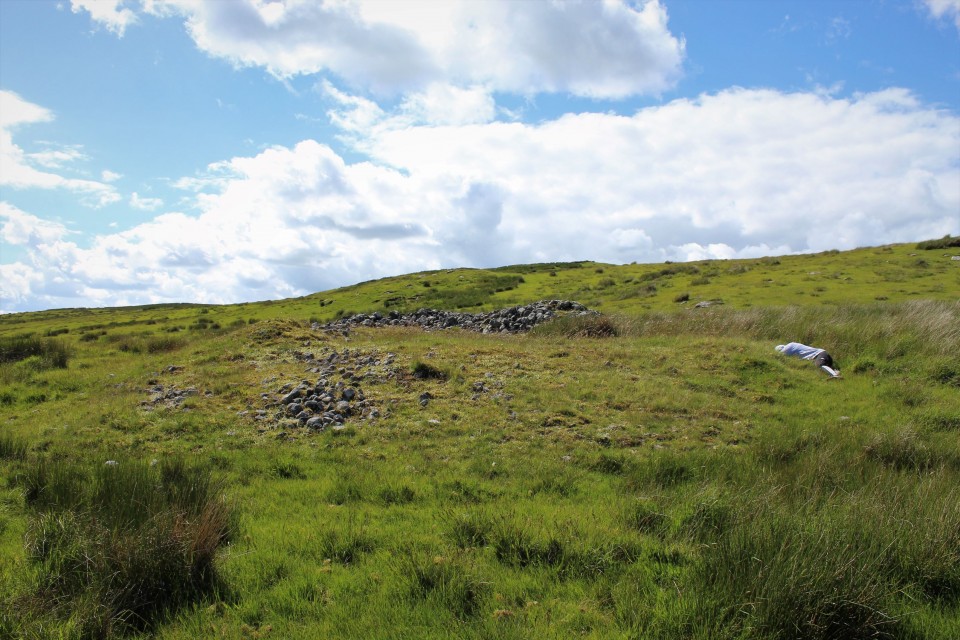
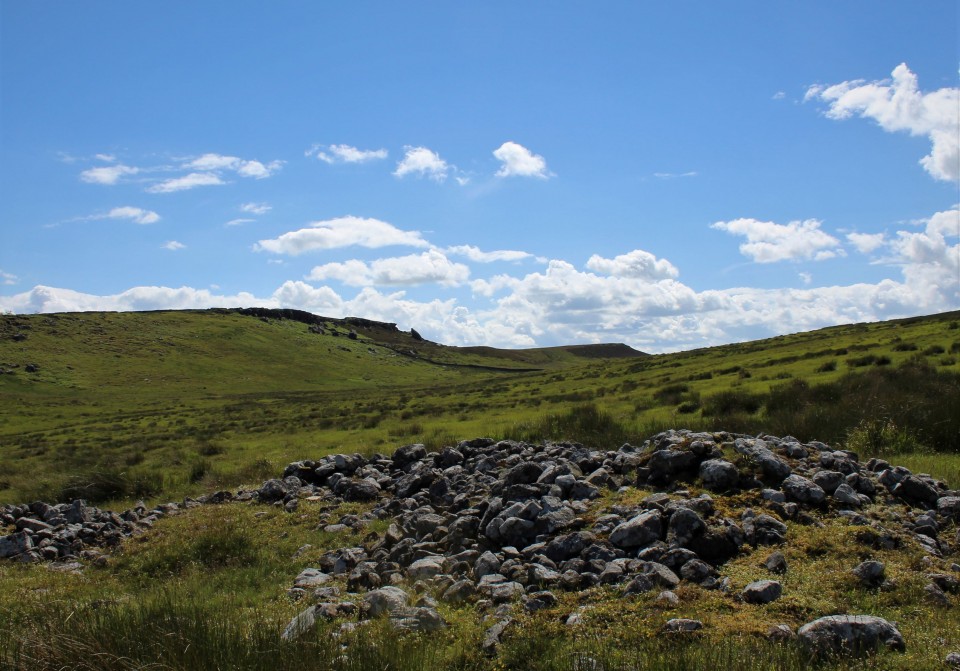
Even less nice is the poor treatment that has been inflicted on the cairn itself. There is the usual turfed footprint of a large cairn, boasting excellent views to the south that are lacking from the summit and emphasise the obvious reasons for its positioning at the end of the ridge. Sadly, the mound itself has been badly “altered” by walkers. The stones are flat slabs of sandstone, heaped up into a somewhat shapeless pile. Other, larger slabs have been leant and propped up around the perimeter, giving the whole thing the air of half-built neglect. It’s difficult to respond to such a wilful lack of respect with anything but anger.

All that said, the setting is terrific, even the ongoing hail doesn’t detract on that score, although it doesn’t help photography much! It’s too cold and windswept to linger here for long, body temperature quickly dropping when not I’m moving. Besides which, it looks like a cruel up-and-down to get from here to Fan Nedd, the next summit on my route and so I head westwards off the top, not following any particular path but making generally towards the visible block of Maen Llia far below me. Needless to say, the hail stops within a minute of leaving the cairn.

Fan Llia — Images

31.01.13ce
<b>Fan Llia</b>Posted by thesweetcheat<b>Fan Llia</b>Posted by thesweetcheat<b>Fan Llia</b>Posted by thesweetcheat<b>Fan Llia</b>Posted by thesweetcheat<b>Fan Llia</b>Posted by thesweetcheat<b>Fan Llia</b>Posted by thesweetcheat

Rhyd Uchaf — Fieldnotes

12.02.13ce
In a line between the standing stone and my route is a green mound, which will prove to be the Rhyd Uchaf cairn. To get to it, there are a couple of deceptively steep-sided streams to cross. Although ruined, the placing of the cairn is nicely judged, on a little knoll surrounded by various tributary streams of the nascent Afon Llia, the water source that may well have provided the inspiration for the siting of the little complex of monuments here and of this cairn in particular.

Rhyd Uchaf — Images

13.02.11ce
<b>Rhyd Uchaf</b>Posted by thesweetcheat<b>Rhyd Uchaf</b>Posted by thesweetcheat<b>Rhyd Uchaf</b>Posted by thesweetcheat<b>Rhyd Uchaf</b>Posted by thesweetcheat<b>Rhyd Uchaf</b>Posted by thesweetcheat<b>Rhyd Uchaf</b>Posted by thesweetcheat

Maen Llia — Fieldnotes

12.02.13ce
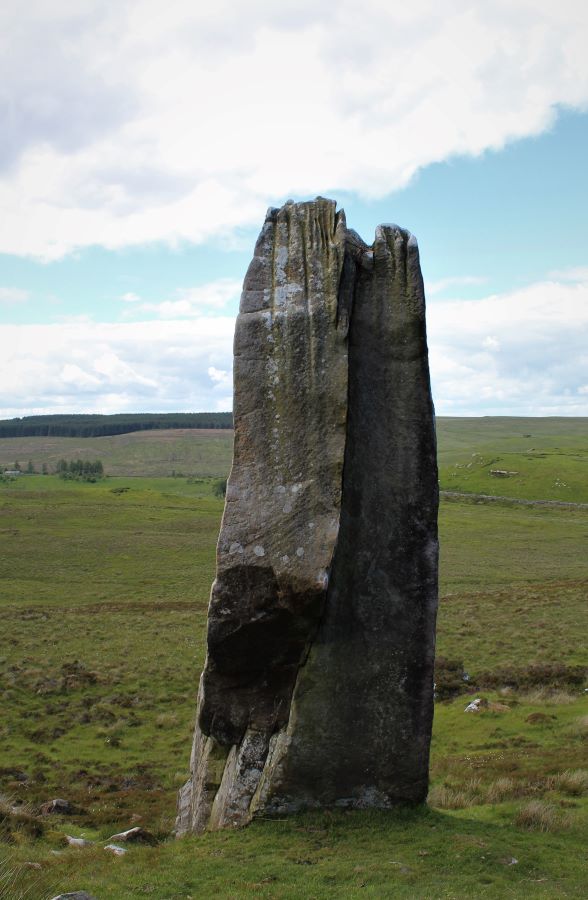
The cairn is separated from the Maen Llia monolith by the Afon Llia itself, fast-flowing and not as easy to cross as it looks, with peaty banks quick to crumble underfoot. But cross I must, as the pull of the stone, one of South Wales’ undoubted megalithic stars, is too much to avoid for long. This will be my second visit here. The last time I came with a friend by car and to be honest I had little hope of ever making it back here under my own steam. It’s a wonderful, wonderful stone, enjoying a lovely view down the valley between the two steeply rising mountains that flank its either side. The shaggy coat of moss gives it a primordial look, and even years’ old graffiti can do little to undermine its towering charm.

I spend a good while here, undisturbed by any other visitors, although an empty car is parked nearby. Time stops briefly, and I recharge for the next and steepest of today’s climbs. When the time comes to bid farewell – adieu hopefully – I do so with some sadness. This is a site that rewards the effort of getting here tenfold.

Maen Llia — Images

13.02.11ce
<b>Maen Llia</b>Posted by thesweetcheat<b>Maen Llia</b>Posted by thesweetcheat<b>Maen Llia</b>Posted by thesweetcheat<b>Maen Llia</b>Posted by thesweetcheat

Fan Nedd (Northern cairn) — Fieldnotes

12.02.13ce
A ladder stile leads onto the tussocky lower slopes of Fan Nedd. There is no obvious path and so I’m left to pick a route that is reasonably direct to the summit. Due to time constraints after the lengthy stop at Maen Llia, I’ve decided to abandon a visit to the two cairns on the eastern slopes of the mountain and to concentrate on getting to the top of the mountain. I confess to a certain feeling of unfinished business here. A couple of years ago I came here a matter of hours after Gladman had been (small world). On that occasion the slopes were snow-covered and going was slow. My friend and I made it to the pointy cairn on the ridge in a hailstorm (what is it with these tops and hail?) and very stupidly mistook it for the summit trig point marked on the map. As such, we didn’t reach the summit and I’ve been keen to come back and rectify the error. So today I head straight up the mountain’s eastern flank. This proves to be very hard going, the slope is very steep and the vegetation is ankle-knee deep. Only the occasional stops to look back at Maen Llia, dwindling into a black dot below, and the unfolding view of Fan Llia across the valley, make the ascent anything other than a trial.

But reaching the ridge, close to the trig, the views to the west make up for the aching knees. Once at the summit (663m OD), the views to Fan Gyhirych and Y Mynydd Du are magnificent and far-reaching, clear of the clouds of earlier.

From the summit it’s a fairly easy stroll north along the ridge towards the “pointy” cairn. About halfway along the ridge I come across a recumbent slab, unworked but with a hole drilled in it. No-one is likely to have ever put a fence up here, so perhaps a fallen boundary stone? The pointy cairn is every bit as ludicrous looking as the last time I came here. But what’s this? It rests on a turfed over mound of much greater diameter, with stones protruding through the thin covering. Suspicions start to grow and I get the feeling that the walker-made pyramid conceals something much, much older. The positioning is typically clever, allowing the maximum panoramic view, particularly northwards, absent at the mid-ridge summit. It is certainly similar in construction to the cairn on neighbouring Fan Gyhirych.

[A post-visit Coflein check suggests that the instinct was correct and that these are the remains of a bronze age cairn, positioned with the usual fine attention to detail.]

Fan Nedd (Northern cairn) — Images

13.02.11ce
<b>Fan Nedd (Northern cairn)</b>Posted by thesweetcheat<b>Fan Nedd (Northern cairn)</b>Posted by thesweetcheat<b>Fan Nedd (Northern cairn)</b>Posted by thesweetcheat

Fan Gyhirych — Images

13.02.11ce
<b>Fan Gyhirych</b>Posted by thesweetcheat

Fan Nedd — Images

13.02.11ce
<b>Fan Nedd</b>Posted by thesweetcheat

From here, it looks like I have a long way to go. Fan Fraith, my last summit of the day, appears far off and I know that the route onwards from there down to Glyntawe is a long one, albeit downhill nearly all the way. I quickly drop down to boggy Bwlch y Duwynt (“Pass of the Black Wind”) for a lovely view of Blaen Senni, before joining a better track that heads uphill again between Fan Fraith and Fan Gyhirych. The OS 1/25000 makes the approach to the summit of Fan Fraith look very easy, but maps can lie can’t they? In fact, it turns out to involve crossing a horrible area of bog, with little to recommend the summit once attained. At 668m OD, Fan Fraith is the highest point I will reach today and the last of the 2,000ft Fforest Fawr summits that I had yet to visit. However, it is flat-topped, with views rendered unimpressive by an expanse of bog in all directions and no swooping drop to valleys below. There is nothing much to mark the highest point, other than small pile of stones – certainly no ancient monument here. In some ways, this is an instructive stop-off, as it highlights the fact that a bronze age cairn is unlikely to be located in such a spot as much as the visits earlier in the day highlighted precisely why they are where they are. There’s no substitute for getting out and looking at these places on the ground.

Dismissing any lingering thoughts of a return to Fan Gyhirych, I’m now up against the bus timetable. The highlight of the final section of the walk is the view of sun-dappled Cribarth across the Tawe valley.

Cribarth — Images

13.02.11ce
<b>Cribarth</b>Posted by thesweetcheat


The last couple of miles, thankfully downhill, pass in a stumbling jog-trot as I realise just how close to missing the bus I’m getting. The aim is to cross the Tawe near Craig-y-Nos, where the map shows a handy “ford” a field away from the road. This turns out to be the only major mistake of the day. In my haste I plunge into the ford without really considering the depth of the water, which comes straight over the tops of my boot and soaks my foot. I retreat, but too late. So, with a waterlogged boot I take a slightly longer route to the road, where I have less than five minutes to attempt to dry off before the bus comes.

Perhaps not the best end to what has been a hugely rewarding walk across some of South Wales’ best walking country. But feet dry soon enough and I can’t deny the pleasure had from my day in these remote hills, where the traces of hunting kings are long gone but remnants of a far more ancient past survive for those who are prepared to seek them.
thesweetcheat Posted by thesweetcheat
12th February 2013ce
Edited 13th February 2013ce
Previous 5 | Showing 6-10 of 700 posts. Most recent first | Next 5