|
 Log in |
Register Log in |
Register
|

|
|

Aveline's HoleCave / Rock Shelter
|


 Show map (inline Google Map)
|
|
|
News |
 Add news Add news |
|
Earliest Cemetery Dated A cave in the Mendip Hills in southwest England has been revealed as the earliest scientifically dated cemetery in Britain. The age of the cemetery makes it an important European site The site at Aveline's Hole, near Burrington Combe, contained human bone fragments that have now been confirmed to be between roughly 10,200 and 10,400 years old. More... |
 Posted by Earthstepper
23rd September 2003ce Edited 15th February 2006ce |
Images (click to view fullsize) |
Add an image |
|
Fieldnotes |
Add fieldnotes |
|
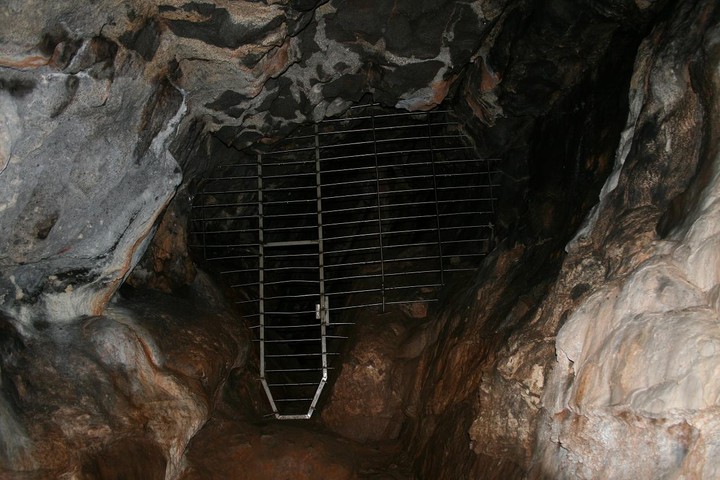
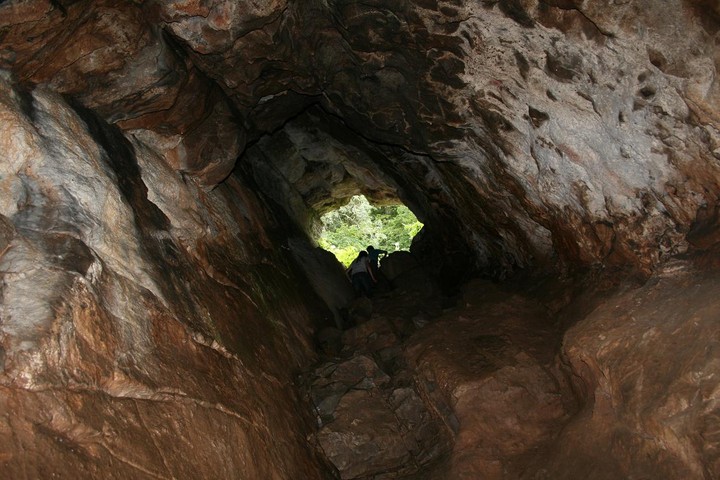
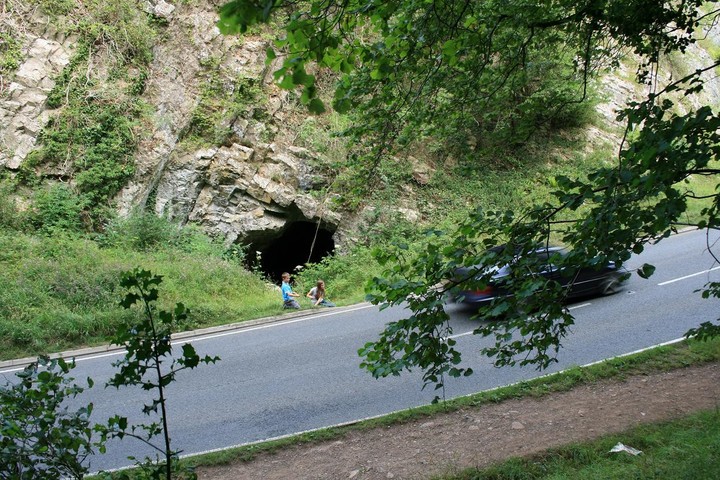
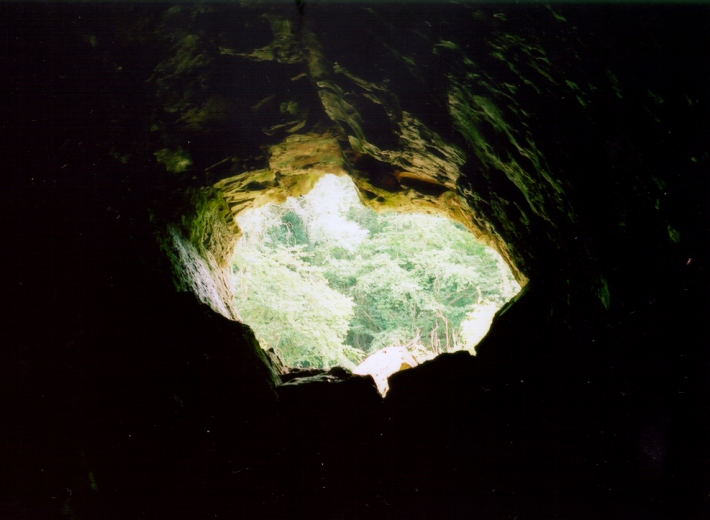
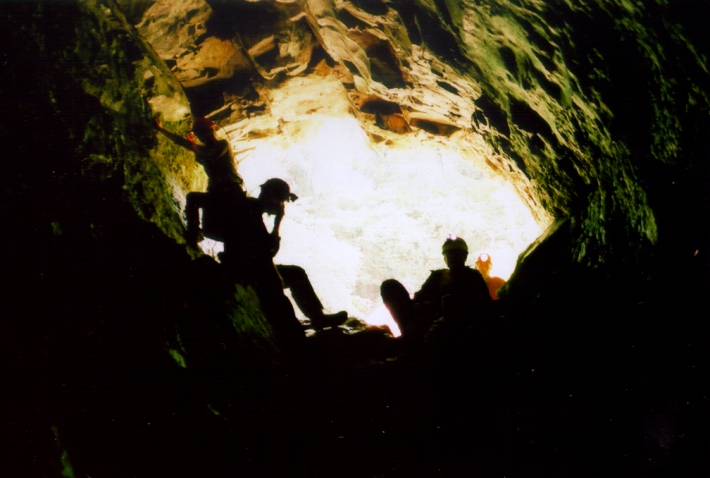
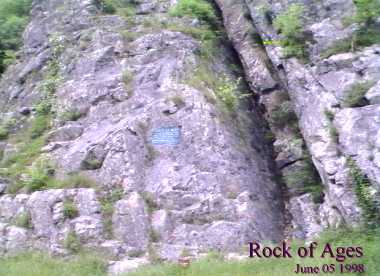
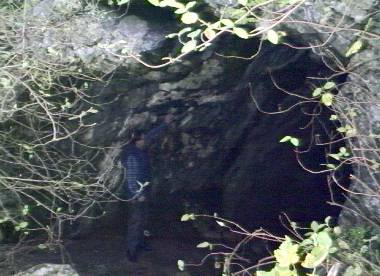
Visited 24.5.14 Directions: From Burrington (on the A368) take the B3134 south and look out for the ‘Rock of Ages’ car park (free) which has an information board and a toilet block. This will be on your left. Directly across the road is the famous rock in question. The cave is on the same side of the road as the car park, just around the bend to the south – two minute walk. After having a look at the ‘Rock of Ages’ and standing in the ‘cleft’ to see how much shelter it provided (not much) I walked across the road and around the bend to Aveline’s Hole. This is a delight – if you like caves of course! The cave is large enough to walk upright in although it does angle down quite steeply and it is slippery underfoot. I was surprised by how far the cave went back. Despite not taking a torch with me there was enough light (once my eyes had adjusted) to enable me to make my way right to the back of the cave. The small chamber at the back is fenced off – presumably to stop the more curious visitor from becoming stuck! Stood at the back of the cave and looking out towards the light at the entrance you couldn’t help but try to imagine what it was like to have stayed here all those years ago. I don’t know why the Rev. Augustus Toplady chose the cleft in the Rock of Ages to shelter from the storm when he could have walked around the corner and sheltered in the cave instead – which would have been far more sensible. Just think, we could have had a very different hymn to sing: ‘Cave of Ages, hole for me, Let me hide myself in thee;’ Well worth a visit when you are in the area visiting the famous Cheddar Gorge. |
Posted by CARL 27th May 2014ce |
Folklore |
Add folklore |
Not strictly about Aveline's Hole, but about another cave also in Burrington Combe:[...the cave] locally known by the name of Goatchurch. Like all the other large caverns in the district, it has its legends. The dwellers in the neighbourhood, who have never cared to explore its recesses, will tell you that a certain dog, put in here, found its way out after many days at Wookey Hole, having lost all its hair in scrambling through the narrow passages. At Cheddar the same legend is appropriated to the Cheddar cave. At Wookey the dog is said to have travelled back to Cheddar.'Cave Hunting' by W Boyd Dawkins, Macmillan's Magazine, October 1870. In 2003 some scratches were found in Goatchurch Cavern. You can see a photo at the fascinating Apotropaios website. It's been suggested that they're 'ritual protection marks' and an invocation to the Virgin Mary - maybe to do with the fact that the local caves were seen to be entrances to Unpleasantness and to be avoided. |
 Posted by Rhiannon
31st March 2009ce Edited 24th April 2009ce |
Miscellaneous |
Add miscellaneous |
|
A gate has been installed in the cave to protect the engraving, after consultations between English Heritage and other interested parties, including the landowner and English Nature. Also note that no visits will be possible until bat hibernation season is over. (From http://www.ubss.org.uk/news.php) --- Reading another report, UBSS have control over the access. |
 Posted by juamei
22nd June 2005ce |

| Experts have just declared Aveline's Hole to be "Britains oldest cemetery". a study of over 800 bone fragments found about 100 years ago have revealed that they are about 10,400 years old. Included amongst the bones is one that show signs of osteoarthritis, the oldest case on record. |
Posted by vulcan 23rd September 2003ce Edited 6th January 2005ce |
| This obvious cave, just up the road from "The Rock Of Ages" was found in 1797 by two men following a rabbit. A small excavation found several human skeletons inside placed on the cave floor. In 1919-27 the University of Bristol Speleological Society more or less cleared the cave and found that the deposits dated from the Late Paleolithic (Cresswellian). |
 Posted by jimit
29th April 2003ce |
| This cave is close to the B3134 (not far from the junction with the A368) just 4 kms North of Cheddar Gorge. It was occupied in palaeolithic times. |
 Posted by pure joy
9th February 2003ce |
Links |
Add a link |
UBSS - Pursuing a rabbit in Burrington Combe': New Research on [...] Aveline's Hole - Schulting,R.Schulting,R., 2005. '… Pursuing a rabbit in Burrington Combe': New Research on the Early Mesolithic burial cave of Aveline's Hole. UBSS Proceedings, 23(3) , pp 171-265 Abstract: The main focus of this paper is the re-analysis of the fragmentary human skeletal assemblage from Aveline's Hole. A brief history of the site's discovery and excavation is presented. A minimum of 21 individuals can be identified in the extant collection, including both sexes and a wide range of ages from neonatal to older adult. Some stress markers are evident in the form of cribra orbitalia, linear enamel hypoplasia and Harris lines. Evidence for other pathologies is very limited, in part no doubt due to the poor preservation and representation of articular ends of longbones and vertebrae. Dental pathology is also low, with caries occurring on only one individual in the surviving assemblage. Interproximal grooves are present on a number of molars, and striations are also seen on some anterior teeth relating to non-dietary activities. Dental microwear analysis examines the occlusal wear on a number of molars in greater detail, provisionally suggesting a softer diet and more important role for plant foods than might have been expected for hunter-gatherers in a north-temperate environment. Stable carbon and nitrogen isotope analysis of 18 individuals shows no secure evidence for any consumption of marine foods, with implications for seasonal and lifetime mobility of the population using Aveline's Hole. In apparent contradiction to the microwear findings, stable nitrogen values are high relative to contemporary fauna and suggest high consumption of animal protein. However, the two methods of palaeodietary analysis operate at very different time-scales, and also may emphasise different foods. Strontium isotope analysis suggests that most individuals interred at the site were drawn from the Mendips and its surrounding area, though some movement to the Chalk Downs may be indicated. AMS dating results further confirm an Early Mesolithic (10000-8500 BP) attribution to the burials, and in fact place the use of the site as a cemetery within a surprisingly brief period, between 8460 and 8140 cal BC, with a good probability that use was concentrated within a period of only 70-180 years. A brief discussion of the surviving faunal assemblage is also presented, including some new findings not noted in the original reports. Attempts to extract pollen from sediment in the medullary cavities of four long bones were partly successful, and the results consistent with an open pine-birch woodland in the area near the time of burial. The same sediments were analysed to determine their origin, which was found to be local to the cave environment. Finally, the wider significance of the site is discussed, with a tentative proposal that increased territoriality relating to rapidly rising sea levels in the early Holocene may be implicated. |
Posted by juamei 12th February 2014ce Edited 12th February 2014ce |

UBSS - A Possible Mesolithic Engraving in Aveline's Hole - Mullan,G.J., and Wilson,L.JMullan,G.J., and Wilson,L.J., 2005. A Possible Mesolithic Engraving in Aveline's Hole, Burrington Combe, North Somerset. UBSS Proceedings, 23(2) , pp 75-85 Abstract: In July 2003, a group of engraved crosses were found in Aveline's Hole, Burrington Combe. Although it has not been possible to apply direct dating techniques to them, the evidence from their appearance and their archaeological context suggests that they may have been engraved during the early Mesolithic at a time when the cave was in use as a cemetery. Evidence for portable art from this site is also reviewed |
Posted by juamei 12th February 2014ce |
BBC News - Engravings found in county caveBBC news story about some Cresswell Crags style rock art found at aveline's hole. |
Posted by juamei 22nd June 2005ce Edited 22nd June 2005ce |
Aveline's Hole - An Early Mesolithic Cemetery Site in the MendipsOne page site by someone who is conducting some of the research on the remains found. |
Posted by juamei 12th July 2004ce |
 Top of page