|
 Log in |
Register Log in |
Register
|

|
|

Beinn na CailleachCairn(s)
|
||||||||||||||||||||||||


 0 discussions


 Show map (inline Google Map)
|
|
|
Images (click to view fullsize) |
 Add an image Add an image |
Photographs:










 Artistic / Interpretive:

|
Fieldnotes |
Add fieldnotes |
|
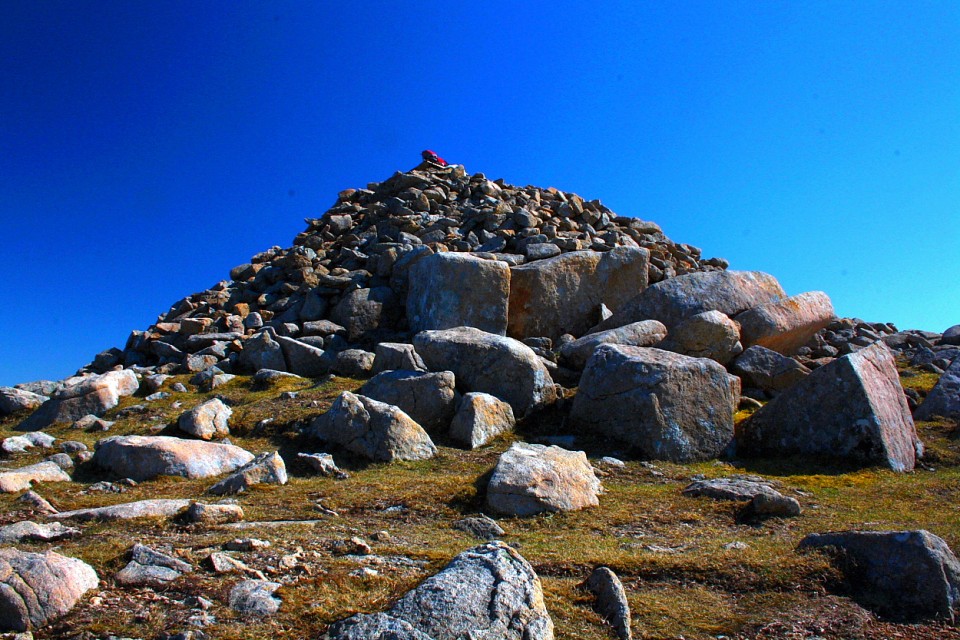
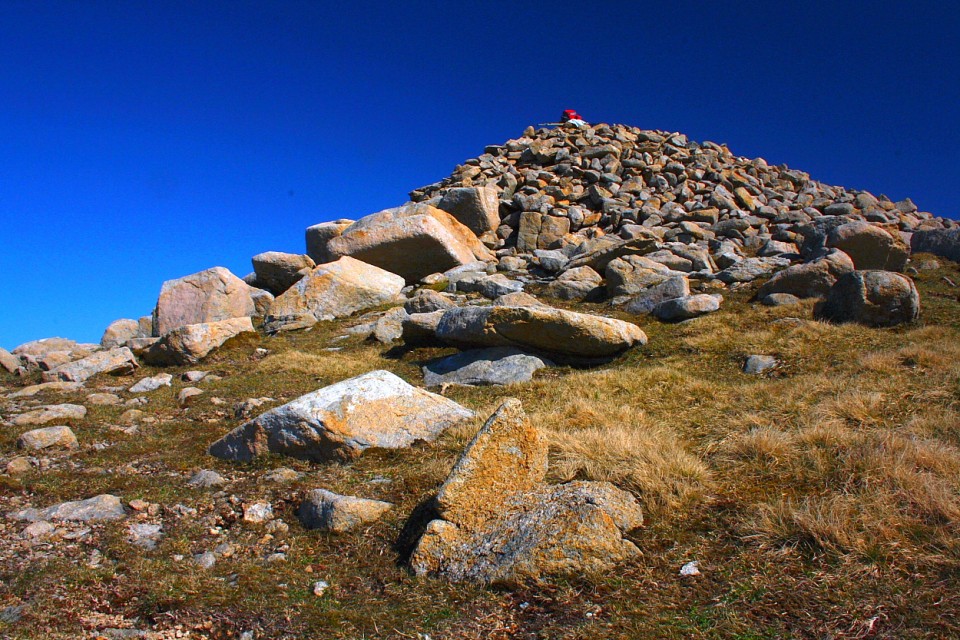
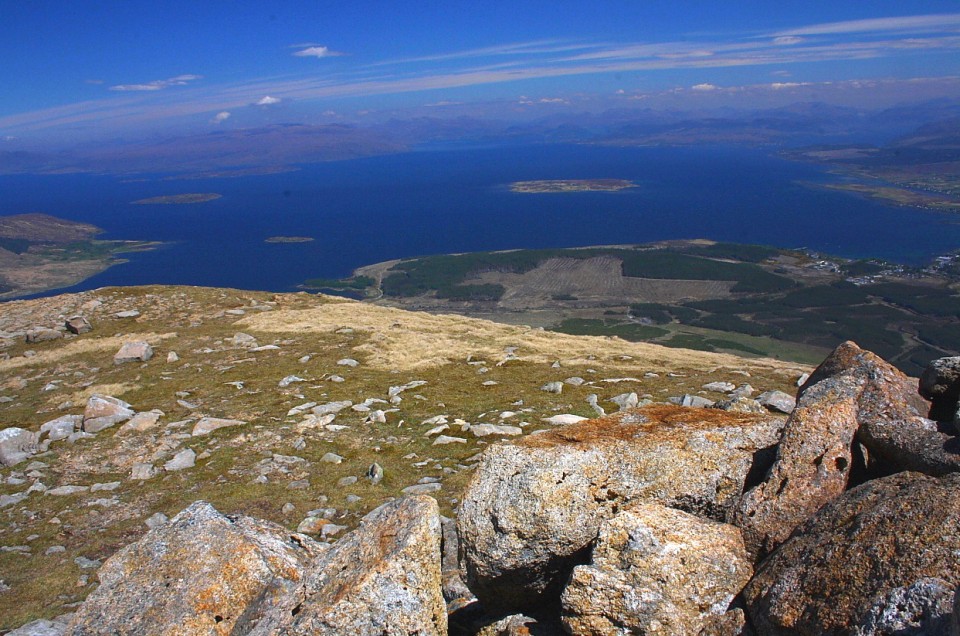
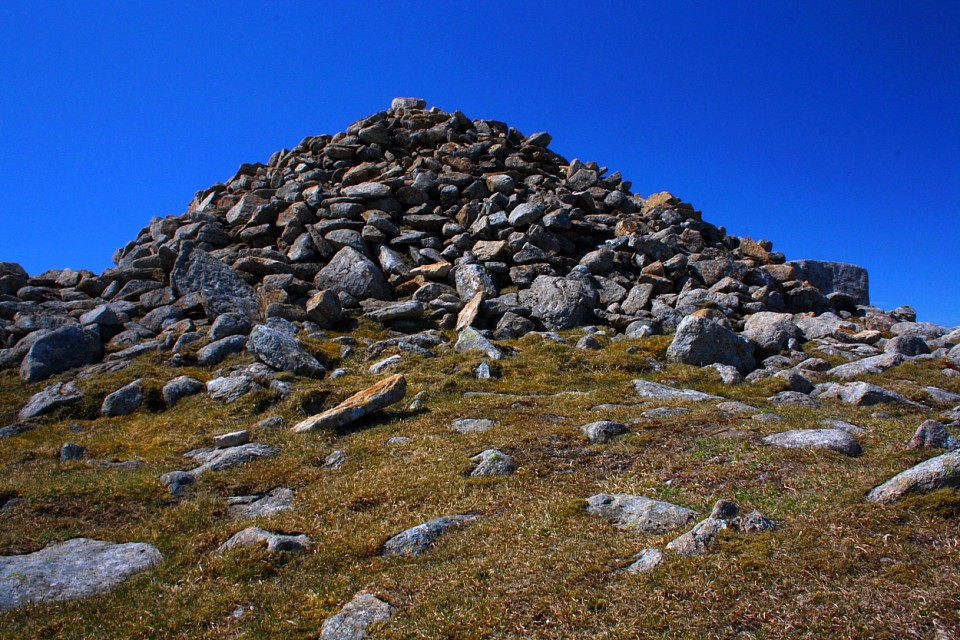
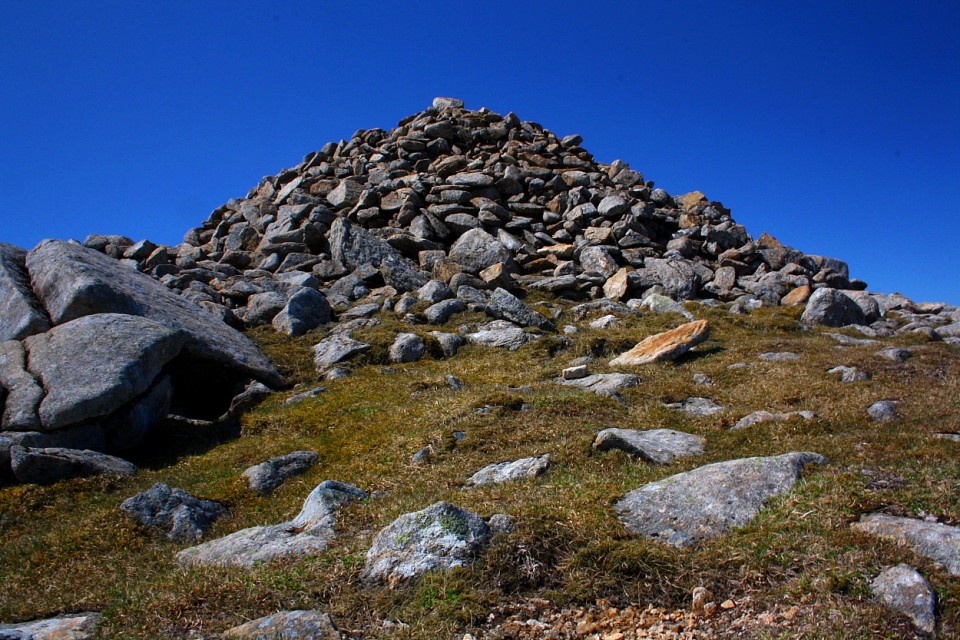
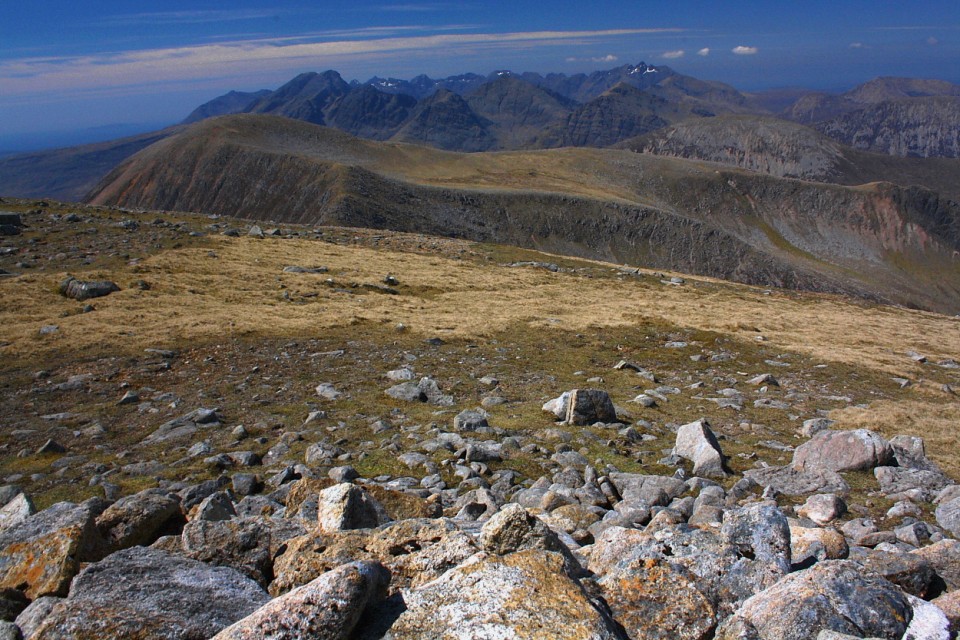
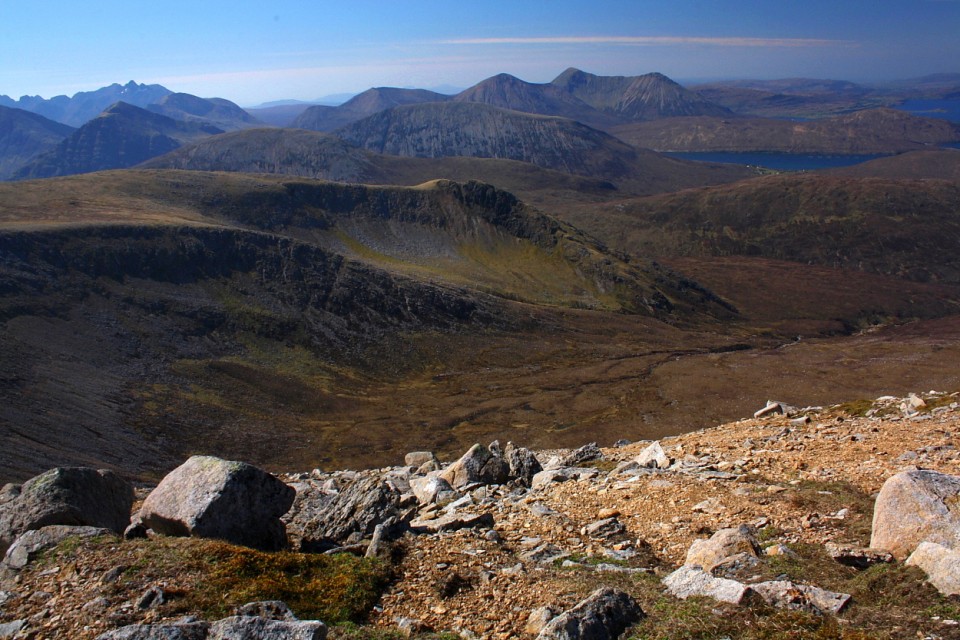
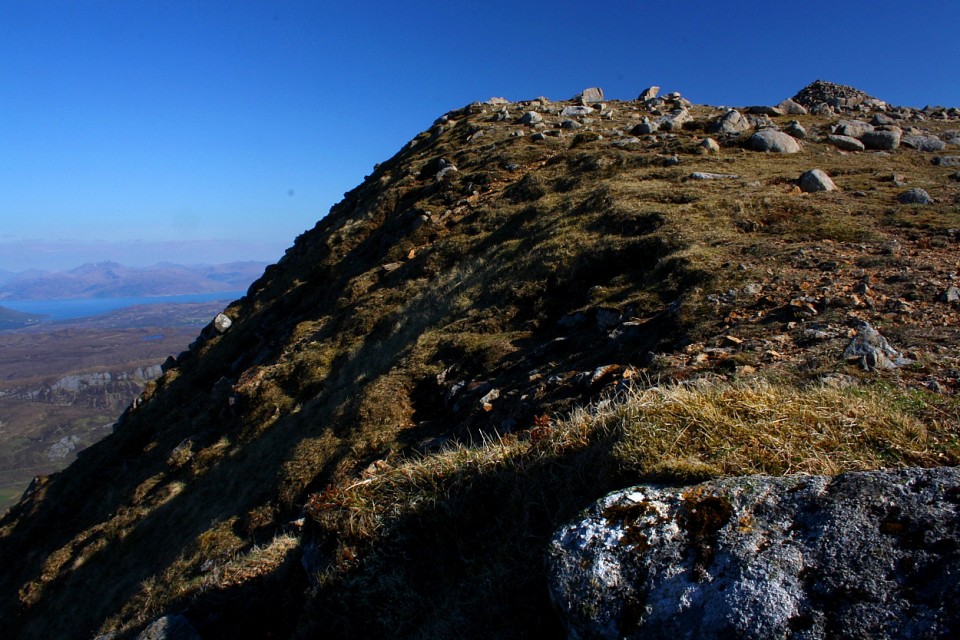
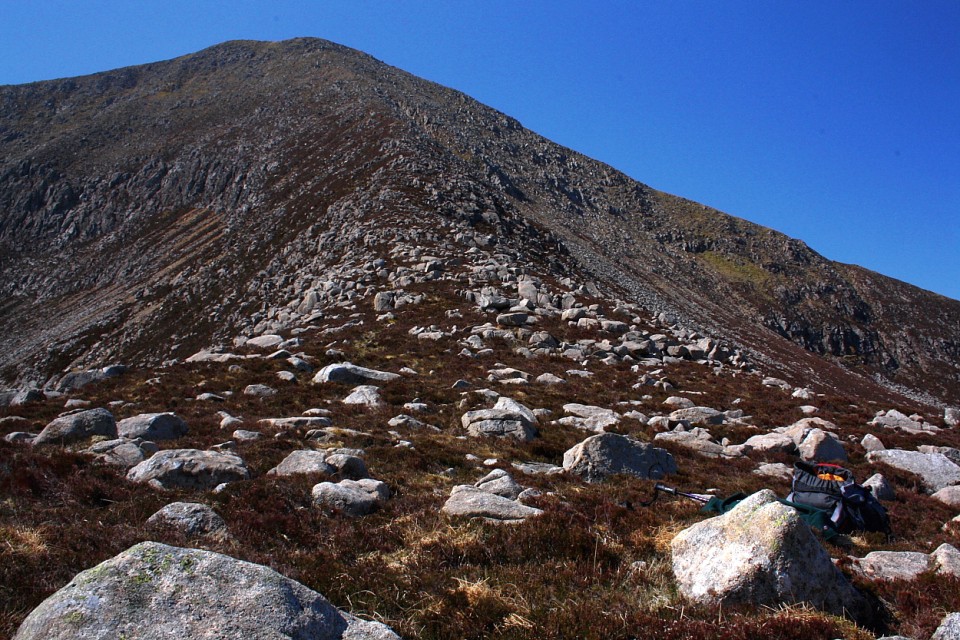
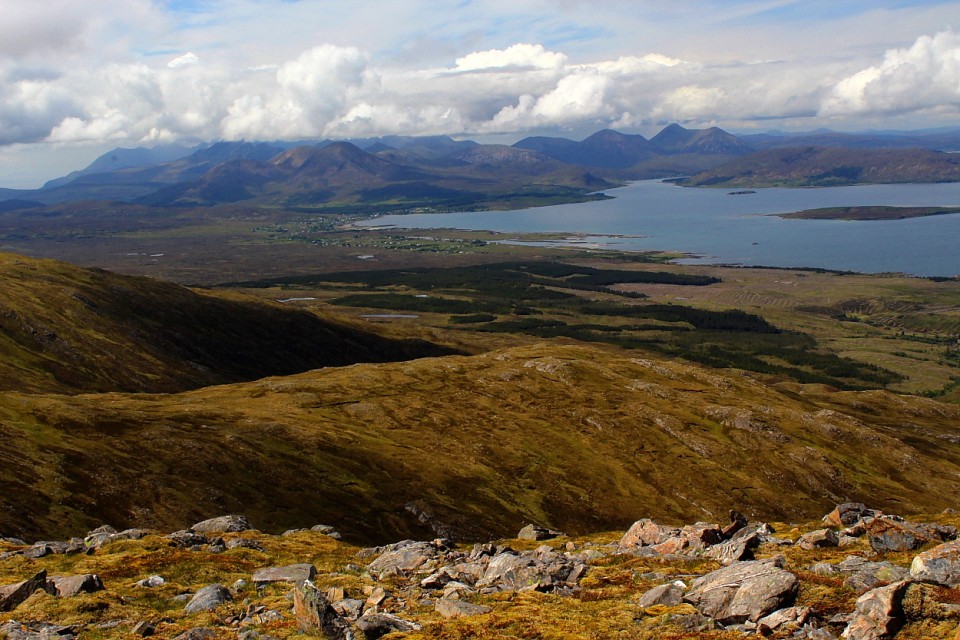
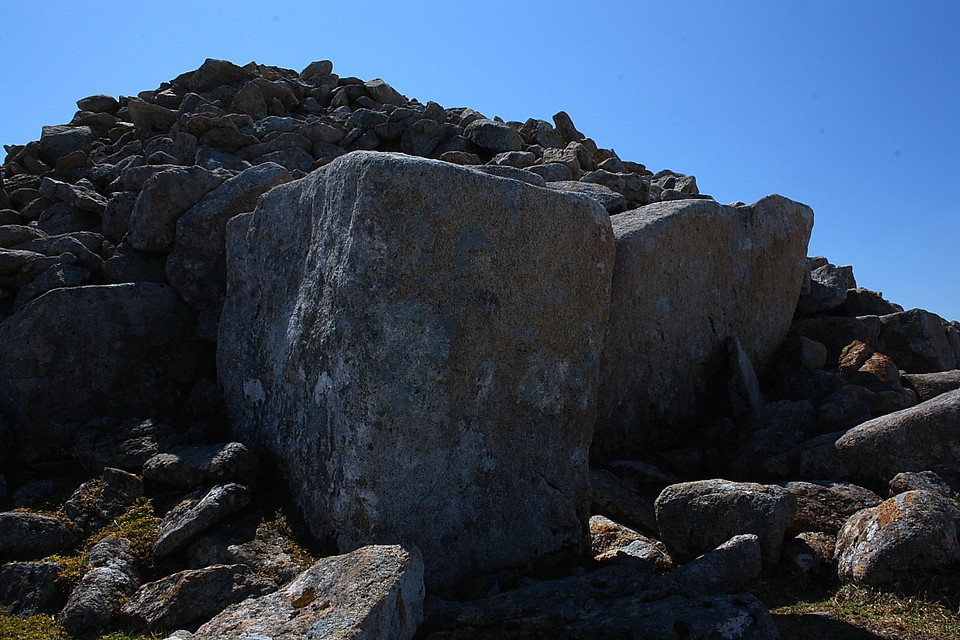
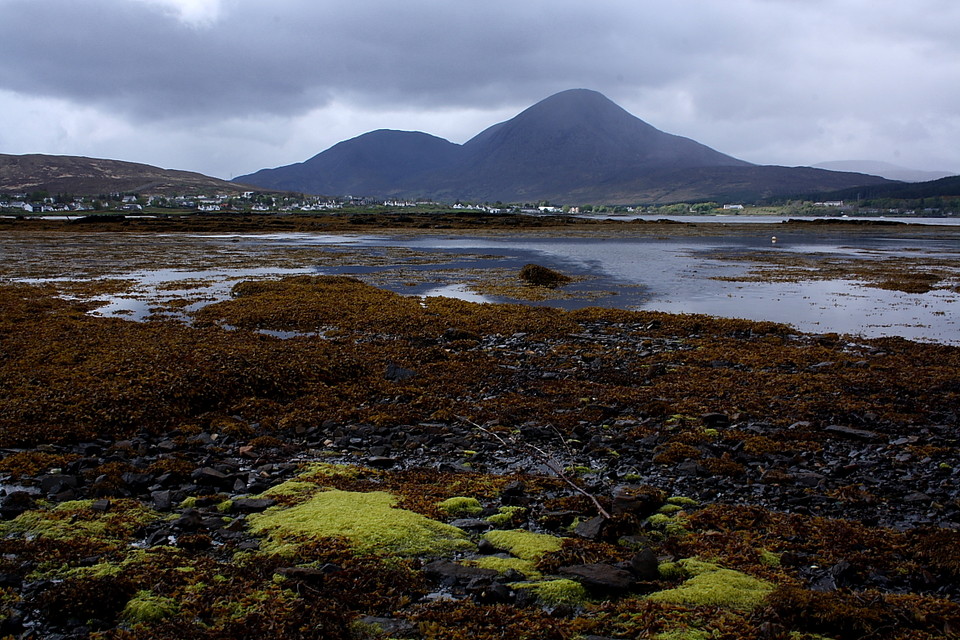
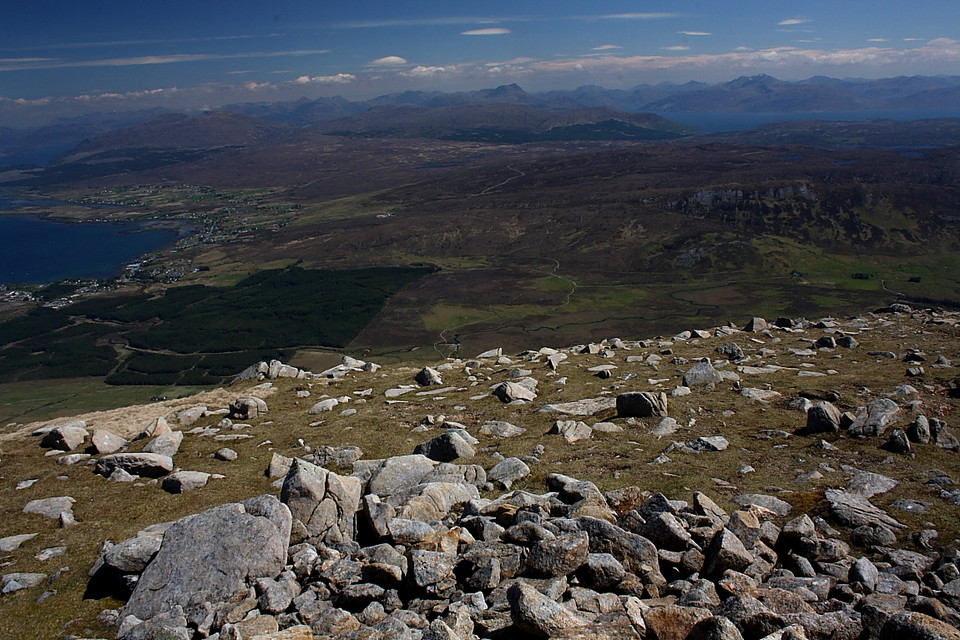
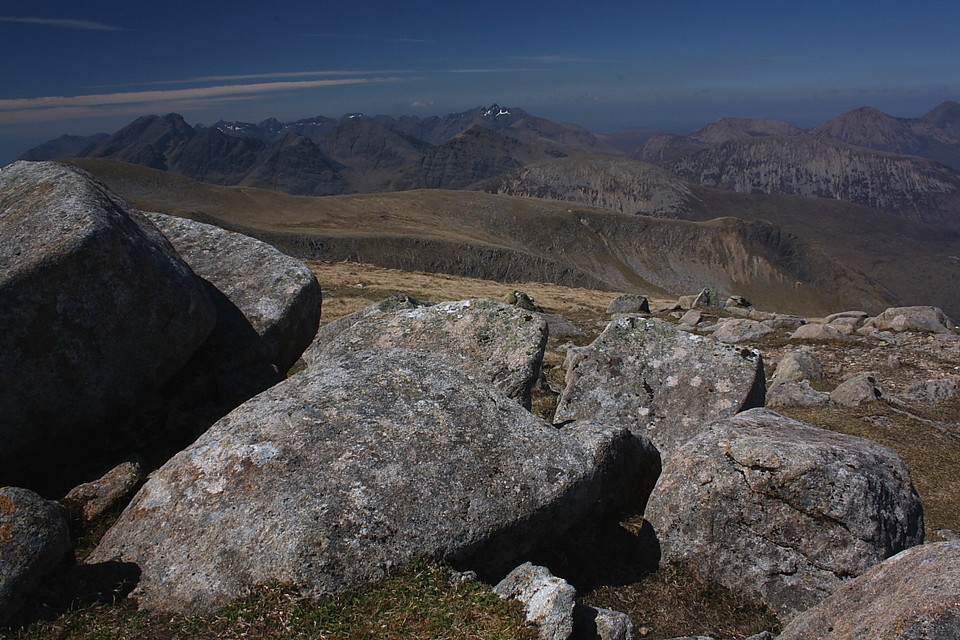
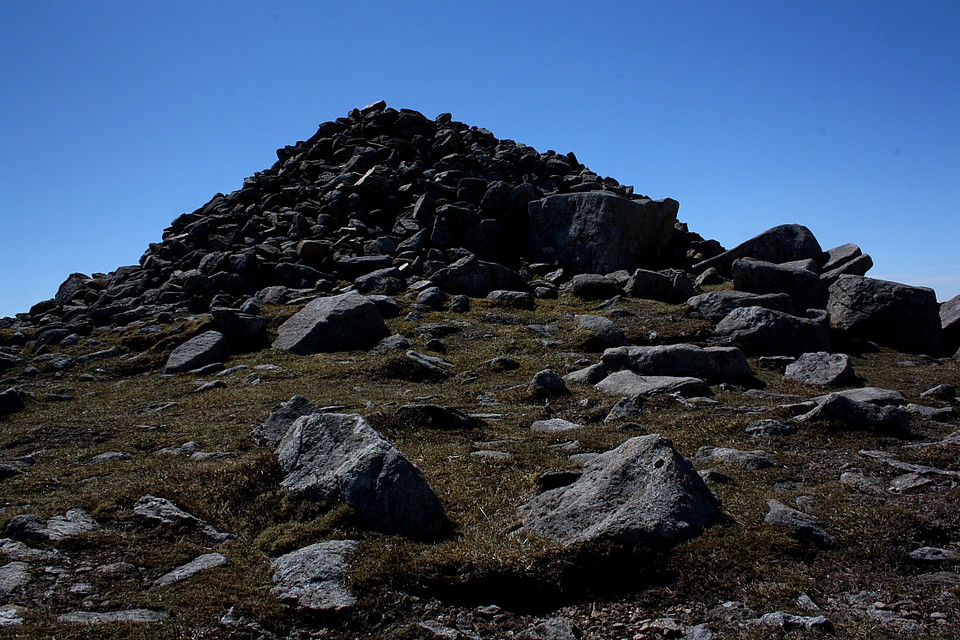
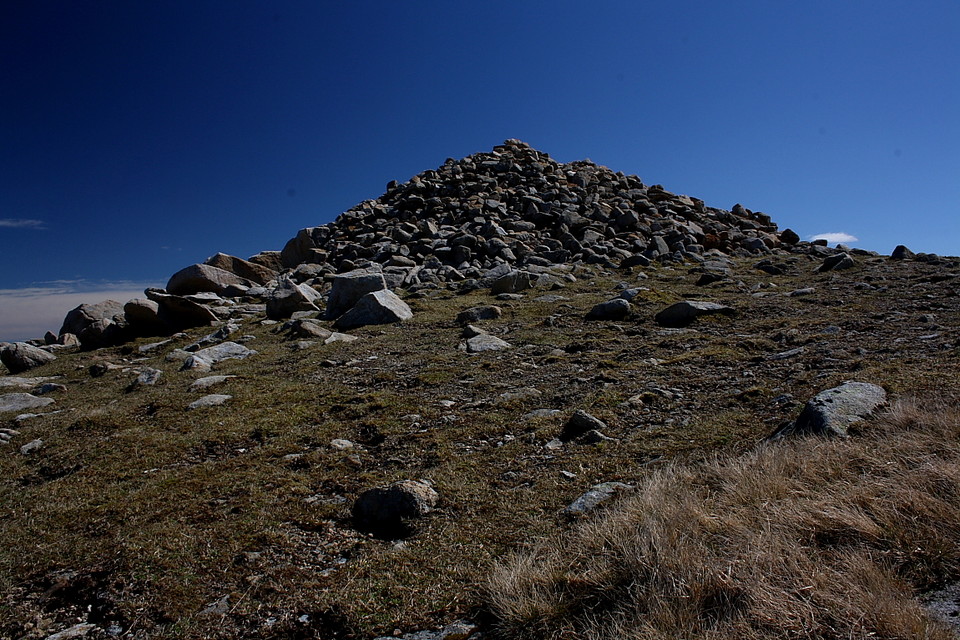
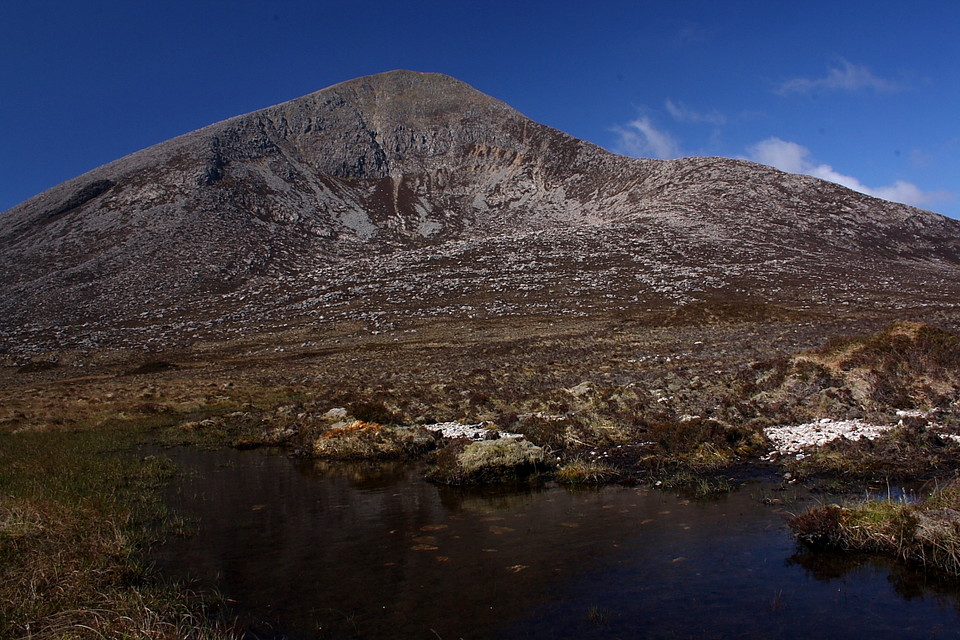
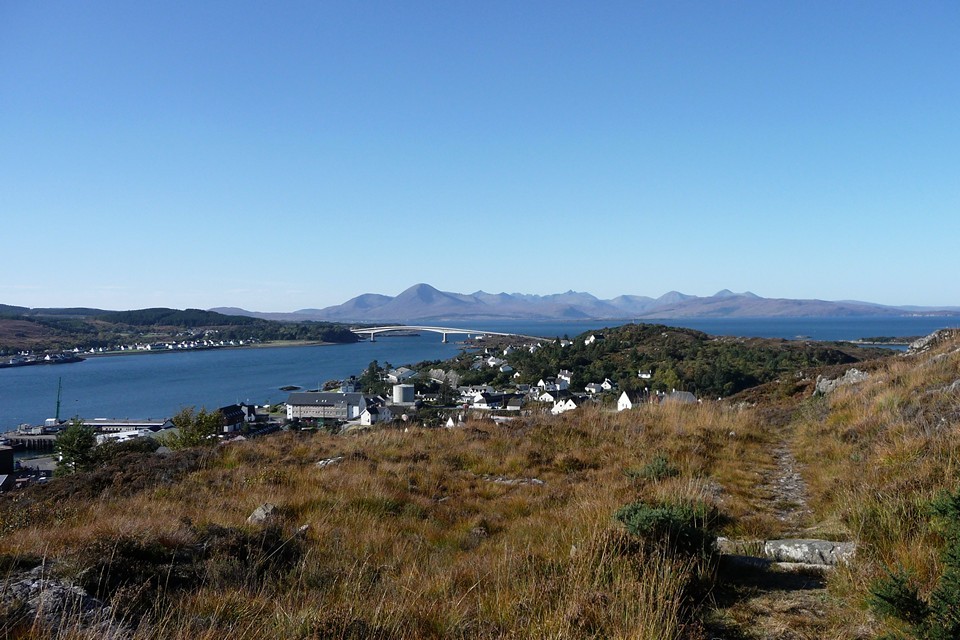
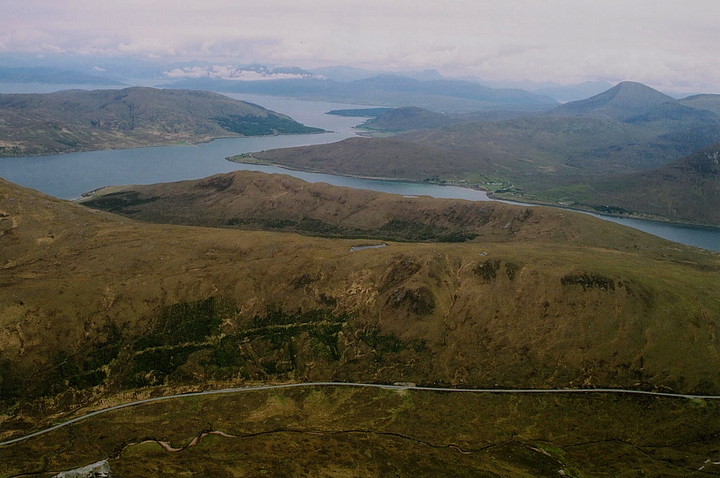
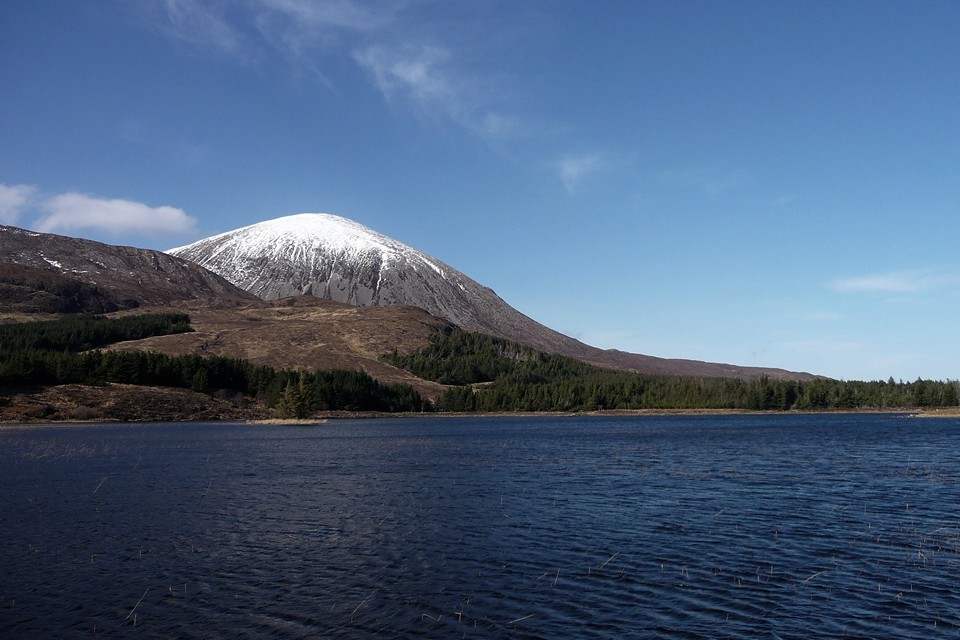
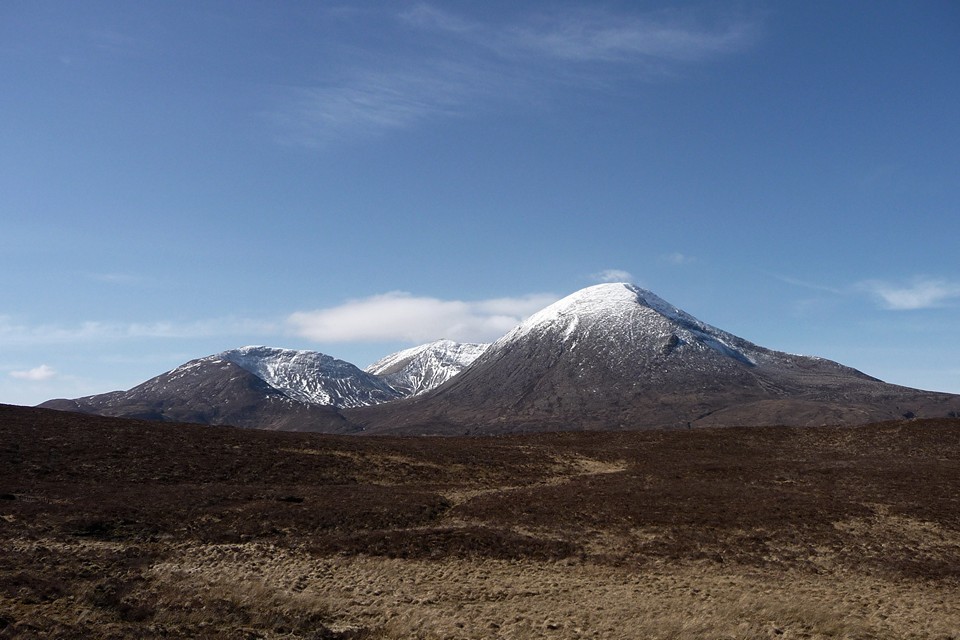
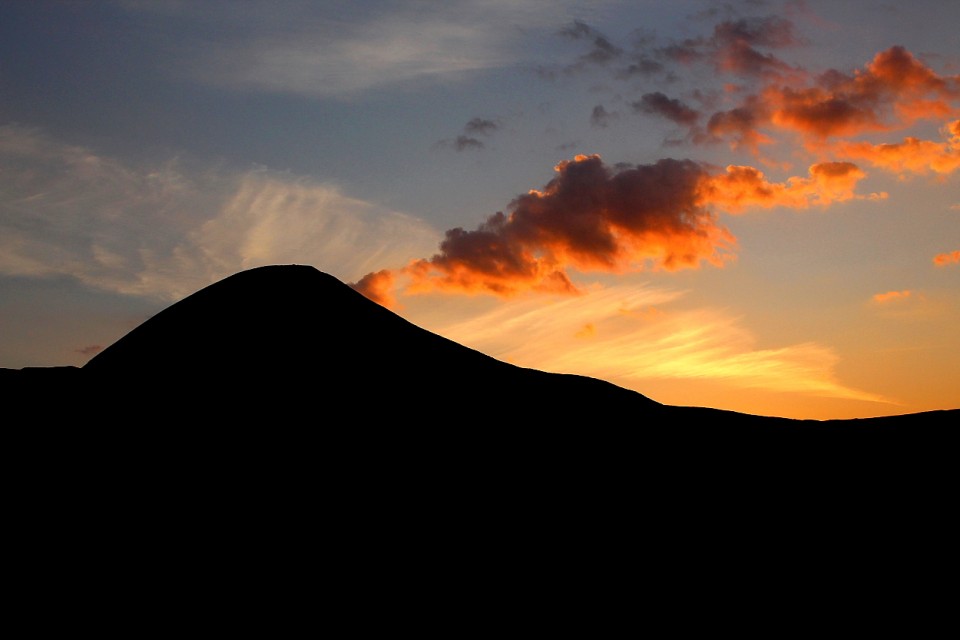
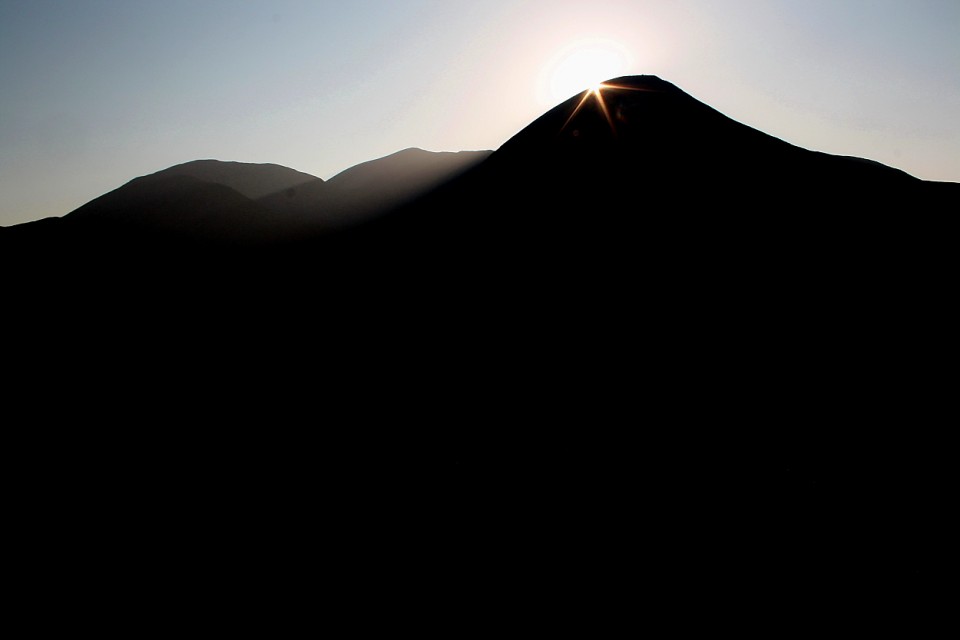
First-time visitors to the wondrous Isle of Skye may, upon heading west from the iconic, graceful bridge spanning Kyle Akin, be forgiven a certain sense of initial deflation - perhaps even mild self-admonishment? - at having apparently been seduced by the legend, the myth... the mystique... that clouds any rational appraisal of 'The Misty Isle'... as comprehensively as the all too frequent cumulo-nimbus obscures its landscape. Where is the all too keenly anticipated scenic splendour? Where, indeed? Persevere, however, for such disappointment is but short-lived, a brief aberration, for Beinn na Caillich soon reassures any initially bemused punter, the mountain offering a strikingly elegant, granite domed - dare I say 'mamillar'? - profile to travellers approaching the bustling town of Broadford. Some will pause here to replenish petrol and provisions; many more tourists will take the B8083 traversing Strath Suardal towards Loch Slapin and Elgol, enjoying some of the finest coastal scenery these British Isles have to offer en route; while other, more intense types (ahem) with a penchant for prehistory may well choose to divert in search of the four chambered cairns which cluster around the peak like chicks to Mother Hen: the massive Liveras cairn overlooking Broadford Bay beyond Corry to the north; Achadh a'Chuirn, hidden away in a local backyard at Waterloo; the excellent An Sithean beside our aforementioned sightseers' Torrin road; or even the monuments subsumed within forestry near the electricity substation at Old Corry. Whatever their bag, all visitors, regardless, cannot fail to notice the 'Hill of the Old Woman' looming high overhead, its red-granite eroded flanks rising straight from sea level and thus appearing much taller than its unexceptional (for Scotland) 2,402ft. I, for one, have rarely seen such an aesthetically pleasing mountain - so graceful, so curvilinear of line. Ironically, perhaps, so unlike the jagged black gabbro summits of The Black Cuillin for which The Isle of Skye is justly famed? It is therefore easy to see why Beinn na Caillich might have been referred to as a 'sacred hill' by some, such is its complete physical dominance of the locality. However, arguably its most intriguing feature is not its enigmatic, seemingly unscalable profile, but rather the placement of a massive cairn near its summit. OK, some muppets, particularly those card-carrying, peak-bagging 'mountaineering' types, might tell you that 'every mountain has a cairn, so what?' Well, for one thing, they are in error - in fact, The Citizen Cairn advises that one should pity such fools lacking even a basic awareness of their prehistoric heritage. Yeah, there are 'marker cairns' erected by walkers for reasons best kept to themselves... and then there are ancient funerary cairns, the final resting places of our Bronze Age ancestors. And then, to be fair, there is the great cairn said in Scottish mythology to be that of 'Saucy Mary' (according to the owner of Achadh a'Chuirn - or did she not say 'Saucy Sue'?), arguably in a league of its own. Now should any of the more perceptive of our visitors heading for the delights of Elgol happen to glance to their right as the receding treeline reveals the mountain in all its splendour, they might, perhaps, note a green mound some way distant crowned by a few upstanding stones... the latter arranged as if placed by human agency. This is the aforementioned An Sithean chambered cairn, surely one of the most gloriously sited Neolithic monuments in all The Highlands? Indeed, such is the welcoming, ethereal vibe here that I choose to park up overnight, lulled to sleep as if within the womb, the only disturbance caused by the soft thuds of lambs 'bonking' into the car during the depth of night. No damage done, however, the creatures equipped with natural padding for such an eventuality. Truly, Nature thinks of everything, does she not? Anyway, dawn arrives true to forecast, wraith-like early morning mist forlornly clinging to the summit of the mountain before quickly dissipating, succumbing inexorably to the heat of the rising sun to reveal Saucy Mary's cairn clearly visible far above. Gazing wistfully at the ridiculously steep-looking flanks and seemingly razor-sharp ridges as I munch my Coco Pops (other cereals are available) I suddenly realise that, like our first-time visitors, I've been seduced by 'Saucy Mary'; find that I'm tentatively discussing with myself the possibility of an approach from the north, or thereabouts. You what? Give me a break.... you want to climb that, you eejit? But the seed, now sown, begins to germinate at a prodigious, accelerating, alarming rate. 'After all, you ain't getting any younger', snipes the outwardly silent voice of introspection. Damn it to blazes.... and - retrospectively, at least - praise it to the heavens. To be fair, I'm by no means the first (relatively) modern antiquarian to wish for an aerial perspective, a certain Thomas Pennant having done so in 1772, noting 'the prospect to the west was that of desolation itself; a savage series of rude mountains, discoloured, black and red, as if by the rage of fire. The serrated tops of Blaven affect with astonishment: and beyond them, the clustered height of Quillin (sic)'. I'm suckered into accepting the challenge. Hey, what could possibly go wrong? So... a minor road signposted 'Old Corry' leaves the A87 a little Sligachan-side of Broadford, plenty of parking space available before the electricity sub-station (incidentally, also the starting point for a visit to the nearby chambered cairns). The mountain rears disconcertingly far above, prompting last-minute thoughts of backing out. 'Only' 2,402ft eh? Ha! As any experienced upland wanderer will confirm, starting from near sea level makes all the difference to those that are - OK - 'not getting any younger'. Before I can countermand my decision, I set off through a break in the forestry cloaking the rough north-eastern slopes, the route an assault course of ankle-twisting tree stumps and timber residue, but nonetheless passable. As is the deer fence which has clearly seen better days. Traversing open hillside now, a westerly bearing sees me arrive at the prosaically named Lochan Beinn na Caillich, a pleasing body of water set within extensive bog. The eastern flank of the mountain overwhelms above and beyond, two steep ridges defining Coire Fearchair. I decide to go with that to the right, for better or worse, although in retrospect a direct approach across boulder fields is probably not the best option, there being a more grassy alternative a little further on. Cresting the ridge, the magnificent vistas northward to Scalpay and northwest towards the fabulous Glamaig (and cohorts) ensure the sweaty struggle is more than worthwhile. From here 'the only way is up', as Yazz euphorically sang back in 1988, the obvious onward route very steep and narrow, particularly during the final stages. However, what with the absence of what the more tedious mountaineer would term 'technical difficulties', the frequent pauses to drink in that scenic grandeur is not a hardship. Clambering - at last - onto the curving summit plateau, the pent-up anticipation of arrival, of seeing the cairn at close quarters, immediately evaporates as like Pennant before me, I'm totally awestruck, completely blown away by the stark, magnificent vista to the west. Sinking to the ground I stare, spellbound, the sheer overwhelming impact of the imagery akin to being hit by the allegorical freight train, the curvaceous Red Cuillin drawing the gaze, beyond Bla Bheinn, to the magical, serrated skyline of Britain's finest mountain range, bar none: The Black Cuillin. If ever there was a vision to enjoy for eternity, this has a pretty good claim. Speaking of which.... ah, yes, the cairn. Regaining my composure I head toward what is clearly a very substantial monument indeed. The approx northern arc is held in situ by several massive blocks of what I assume to be natural outcropping, smaller slabs having apparently been utilised at other points of the circumference as kerb stones. Folklore holds the monument - according to Canmore apparently never 'opened' - to be the final resting place of our 'Saucy Mary', said to be a Norwegian female dignitary of some description, dependent upon source, with a nice little earner on the side (that Arthur Daley would've been proud to call his own) involving levying tolls upon passing ships from her Caistel Maol...and flashing her breasts to reward supplicant sailors. Effective, perhaps, but not very PC. However, bear in mind that QE2 Crossing at Dartford, way down south, has been extracting money from us for over 30 years now. Go figure? Moving swiftly on... while The Citizen Cairn believes there may well be more than a grain of truth in such a legend - the Norse were, of course, hereabouts back in the day and certainly not averse to such extortionary practices - if someone was ever interred (and perhaps still resides?) within Beinn na Caillich's behemoth of a cairn, he/she would surely date from a much earlier epoch in what was to become Scotland's story: The Bronze Age? On balance, The Saucy Saga appears to me reminiscent of the appropriation of the sentinel peaks of Snowdonia's Y Carneddau (Carnedd Llewelyn and Carnedd Dafydd) to the memory of the medieval Welsh Princes, notwithstanding those mountains' confirmed prehistoric pedigree. Whatever the truth, significantly placed a little to the approx north-east of the OS trig pillar, this is clearly no walker's cairn, certainly, when bearing in mind I quite literally see no other soul during c10 hours upon this mountain, time spent under peerless conditions. You do the maths... The sun beats down from a pristine blue sky (yeah, I know, in Scotland?), yet it is bloody freezing up here in the company of the Norwegian ice maiden, a forceful wind requiring the wearing of full winter kit. Wandering around the summit plateau of shattered rock attempting to take it all in I note how the fabulous coastline of Skye offsets the predominantly green and grey of the landscape to great dramatic effect.... drama.... yeah, that is the keynote here, what this mountain is all about. Such theatrics needed to be artificially contrived at places such as Stonehenge, far to the south upon Salisbury Plain - and, to be fair, how! - but, clearly, there was no need, indeed no possibility of improving upon Mother Nature here upon this brutal mountain summit. Isolated from the main bulk of The Red Cuillin and significantly lower than The Black Cuillin's numerous, jagged munros, the location of Beinn na Caillich accords the spellbound traveller a unique, privileged, bird's eye view of this wonderful Isle... a view fit for a king. Or princess, perhaps? .. land and sea in such close proximity as to appear - no, to BE - mutually inclusive. Reluctant, in the extreme, to leave, I note another craggy height overlooking Kyleakin to the east, beyond the seemingly toy town rooftops of Broadford. I check the map, then double-check - surely some mistake, or perhaps the locals having a good-natured laugh at gullible tourists driving around in circles? - since this is ALSO named Beinn na Caillich. The thought occurs; well thoughts actually: 1) does this one possess a cairn (it does, but that's another wondrous story); 2) since Caisteal Maol lies immediately below to the approx northwest, perhaps this was actually the last abode of Saucy Mary? No, on second thoughts, let's leave things as they are since it appears this Beinn na Caillich is actually eulogised as the last resting place of Grainnhe, wife of Fionn, whom students of Celtic mythology will immediately recognise as head of the mystical warrior-giant clan The Fiennes... assuming that, being students, they weren't down the pub during that particular lecture? Goes without saying, right? Also, that there is clearly a touch of local brinkmanship - or rather brink-womanship - inherent here in this corner of Skye. "You say tomato, I say tomato". Pah! Who needs a legendary Norwegian sexpot princess when you've a goddess warrior giant like Lucy Lawless on steroids? Next, they'll be saying the pathetic little French dude with the silly hat is actually buried at Waterloo? Time does its thing, refusing to advance such seemingly epic moments in a frame-by-frame motion, as is the custom of dodgy Hollywood blockbusters. There is no overbearing soundtrack, either, simply an all-pervading silence.. assuming one discounts the curiously synthetic sound of wind upon Triplepoint Ceramic. Consequently, a full six hours spent upon this wondrous spot seems to evaporate into the void, here where the landscape intrudes into the upper realm. Here, where the Bronze Age inhabitants of this idiosyncratic, magical Isle chose to (probably) send their VIPs upon the journey to eternity. I finally bid the great cairn and its magical environs, plus whoever might be lingering around from times long passed, a fond farewell to begin my descent. No need to rush, right? |
 Posted by GLADMAN
27th July 2013ce Edited 4th March 2023ce |
Folklore |
Add folklore |
A very slightly different version is given by Archibald Geikie in his 'The story of a boulder: or, gleanings from the note-book of a field geologist' (1858 p149):The top of Beinn na Cailleaich is flat and smooth, surmounted in the centre by a cairn. Tradition tells that beneath these stones there rest the bones of the nurse of a Norwegian princess. She had accompanied her mistress to "the misty hills of Skye," and eventually died there. But the love of home continued strong with her to the end, for it was her last request that she might be buried on the top of Beinn na Cailleaich, that the clear northern breezes, coming fresh from the land of her childhood, might blow over her grave.And in 'the Gentleman's Magazine' for the first half of 1841, King Haco of Norway's wife, or his nurse, is named specifically. As the article says, "this is a point, however, which, I suspect, we must leave the old ladies to settle between them." I guess suffice to say that the hill hides an auld wife, and an important one - or at least one with Connexions. |
 Posted by Rhiannon
15th November 2007ce Edited 15th November 2007ce |

|
This site should not be confused with Skye's other Beinn na Caillich, although admittedly this is difficult since not only do they both have the same name, but also each has a cairn on the summit which is said to be a woman's grave. "The road to Sligachan winds under the shadow of Beinn na Caillich, on whose summit a cairn can be seen. It marks the grave of a Norse princess who lies forever gazing out to Norway, which she loved and whence she came. How was she ever laid there? What devotion she must have inspired in one at least in a foreign land. It was believed that if she saw danger approaching she would return to warn her children's children." - Otta F. Swire, Skye: The Island and its Legends, 1962, p. 13. Swire also records a story (pp. 9-11) in which a priest from Pabay was walking through this region of Skye on his way to meet with some parishioners, when a crowd of 'little people' waylaid him in the forest. An old man came from amongst their ranks and explained to him that they were the Daoine Sithe (the fairies) and that: "...we have come to beg you to pray for us, that we may become once more God's children and recover our souls. For a long time we have repented of our sins but we dare not say the Pater Noster or any other prayer unless we have your forgiveness." The priest, in his overwhelming generosity of spirit, refused to forgive them, having been taught that "the 'little people' belonged to the Evil One", and declared to them "as soon would my stick become a tree again as God forgive you". The grief of the Daoine Sithe was tangible, audible: "Everywhere round him he could hear as he went a soft, despairing wailing, as of a people without hope. It spread through the forest and up the slopes of Beinn na Caillich on into the hills and did nothing to lessen the trouble in his mind." He went on his way, met with his parishioners and baptized their new-born child. But when he was done there he realised that he had left his staff at the place where he had met the 'little people', and since this crook was both his badge of office and his only possession, he returned to find it. There he discovered that it had transformed itself into a mighty ash tree, taller than every other tree in the forest. Remembering his words to the Daoine Sithe, about his stick becoming a tree again, he fell on his knees and prayed, then began wandering around the forest calling to the 'little people'. Yet he was answered with only their hopeless wailing. So he returned to Pabay and sought permission to live in the forest, permission which he obtained. On returning to the trees: "...he preached continually, day and night, the forgiveness of God to all who would listen, birds, beasts and trees. Men called him mad and he never saw the 'little people' again, but slowly the wailing ceased in the hills." |
 Posted by TomBo
28th June 2004ce Edited 22nd March 2011ce |
Miscellaneous |
Add miscellaneous |
|
Rather non-commital Canmore description of the summit cairn: On the summit of Beinn na Caillich, the conspicuous hill rising to a height of 2403' about 2 1/2 miles west of Broadford, is a cairn of stones measuring some 50' in diameter. The body of the cairn measures 8' in height, but seems to have been originally higher, as the top is surmounted by a cone of stones rising another 6' in height, doubtless of late construction. Although local tradition says that it was erected over the grave of a Norwegian Princess, without excavation it is impossible to say if it is a prehistoric monument. Hill top cairns of large dimensions and at considerable altitudes are found in many parts of Scotland. |
 Posted by thesweetcheat
22nd March 2011ce |
Links |
Add a link |
Beinn na CaillichNG 6018 2337 On the summit of Beinn na Caillich, the conspicuous hill rising to a height of 2403' about 2 1/2 miles west of Broadford, is a cairn of stones measuring some 50' in diameter. The body of the cairn measures 8' in height, but seems to have been originally higher, as the top is surmounted by a cone of stones rising another 6' in height, doubtless of late construction. Although local tradition says that it was erected over the grave of a Norwegian Princess, without excavation it is impossible to say if it is a prehistoric monument. Hill top cairns of large dimensions and at considerable altitudes are found in many parts of Scotland. RCAHMS 1928. A cairn as described by RCAHMS. Visited by OS (A C) 27 June 1961. |
 Posted by Howburn Digger
10th January 2013ce Edited 10th June 2018ce |
 Top of page