|
 Log in |
Register Log in |
Register
|

|
|

The BullstonesStone Circle
|


 Show map (inline Google Map)
|
|
|
Images (click to view fullsize) |
 Add an image Add an image |
Photographs: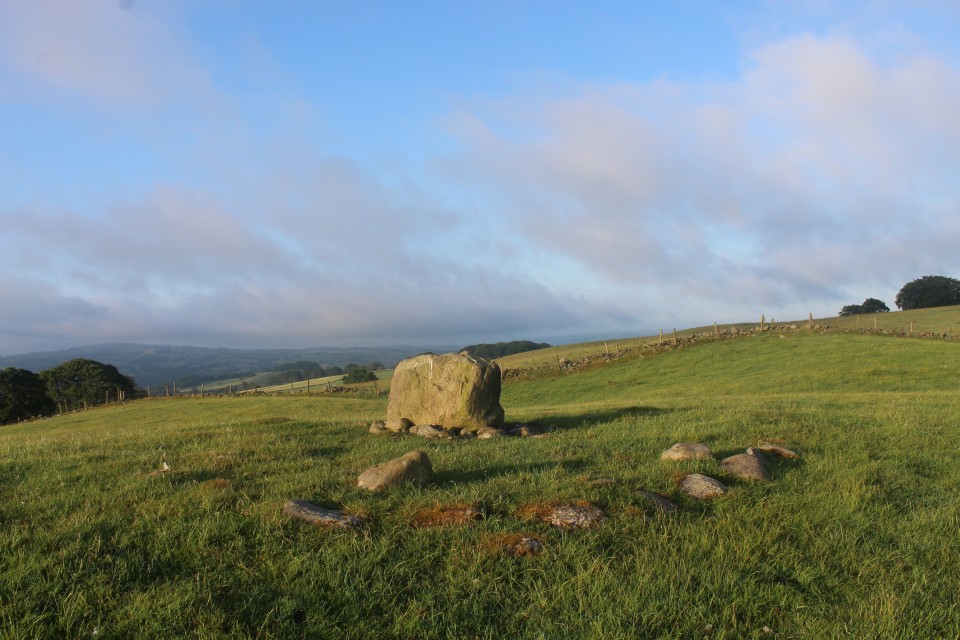
 Artistic / Interpretive: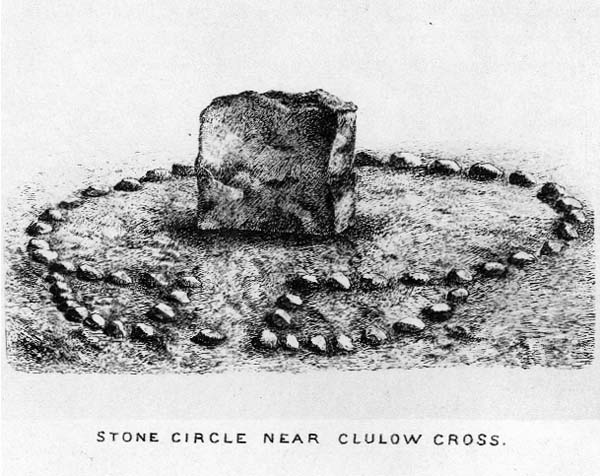
|
Fieldnotes |
Add fieldnotes |
|
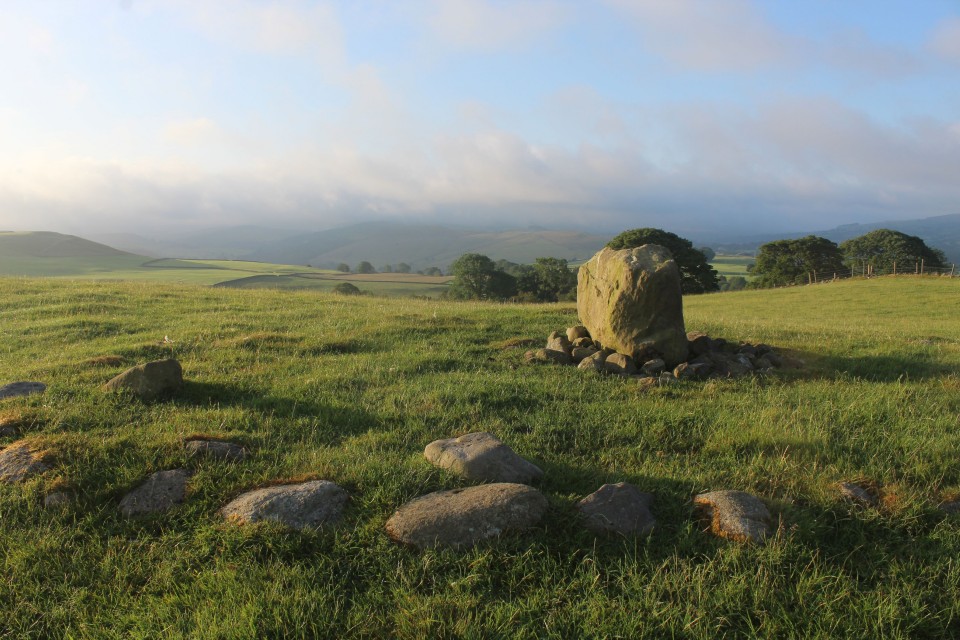
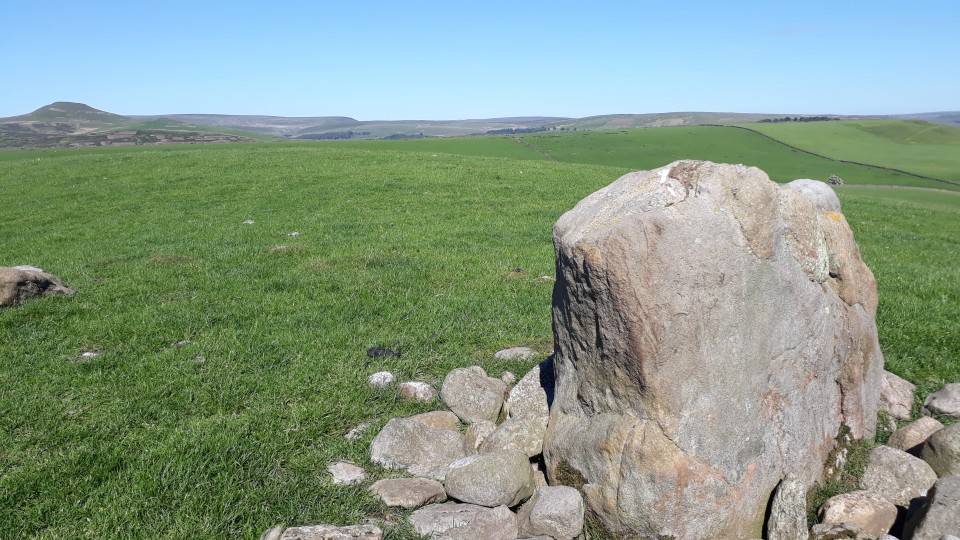
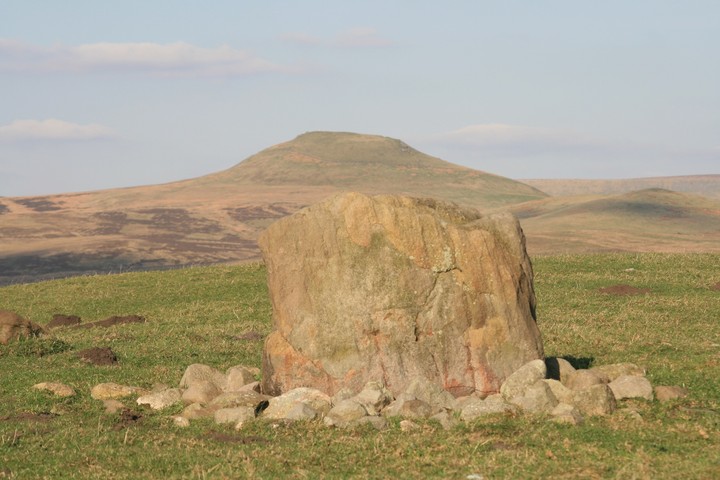
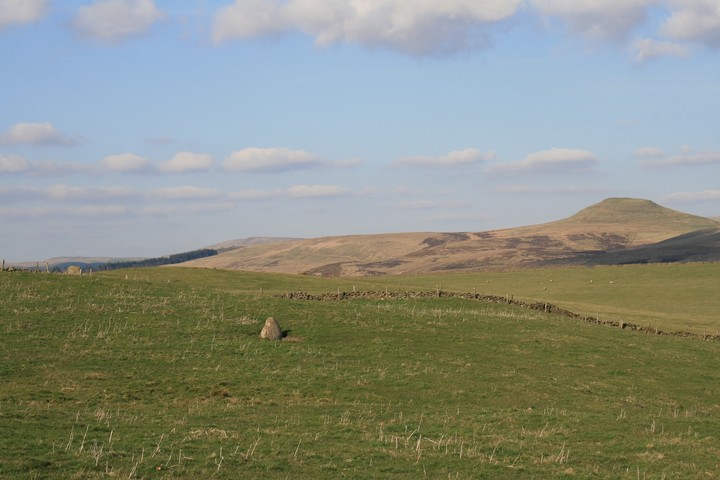
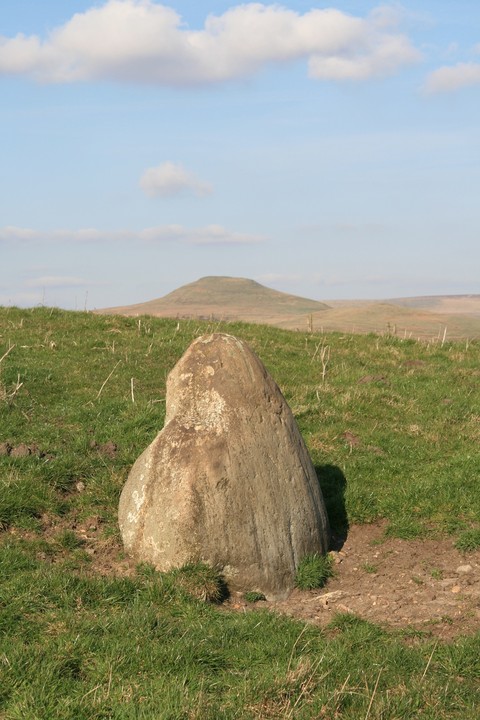
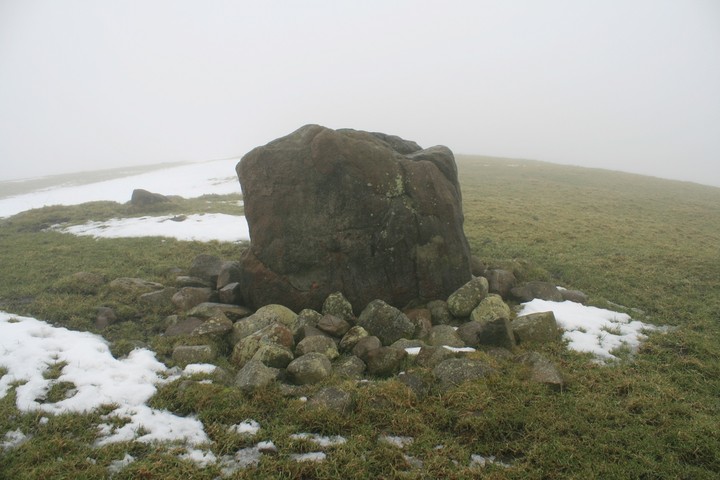
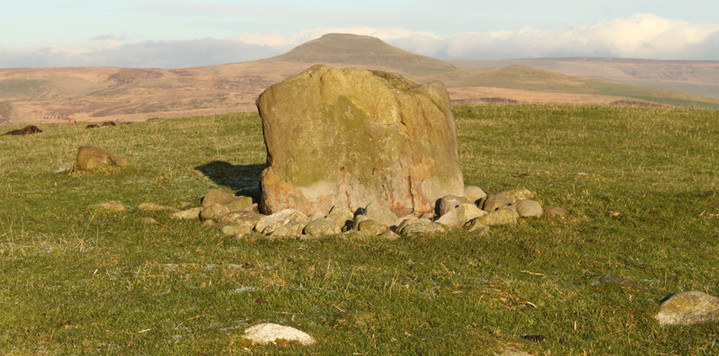
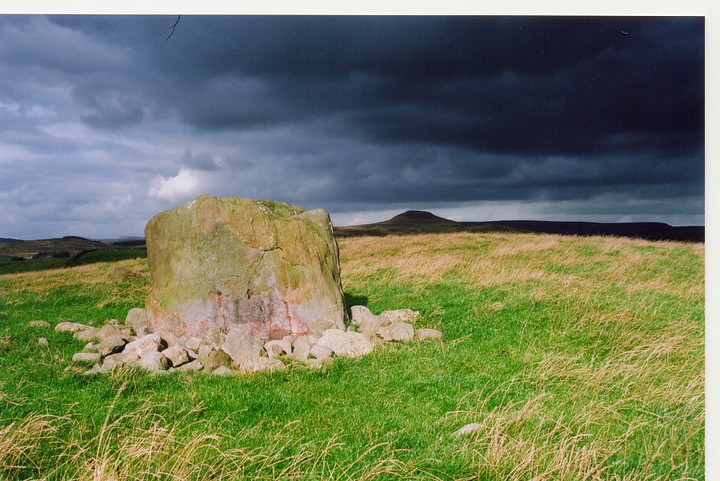
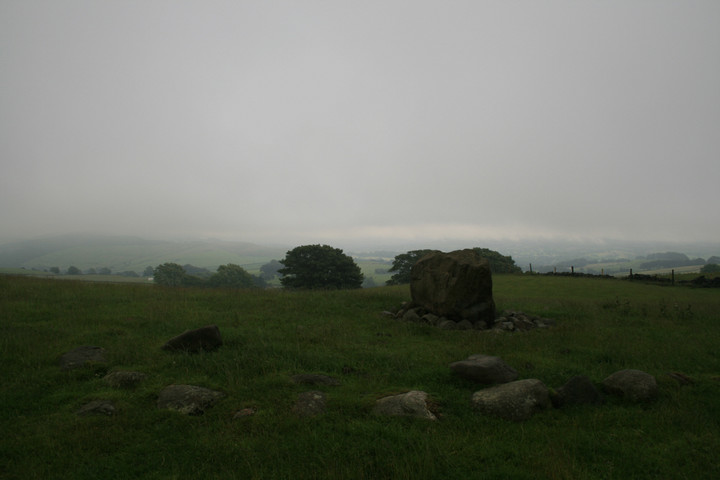
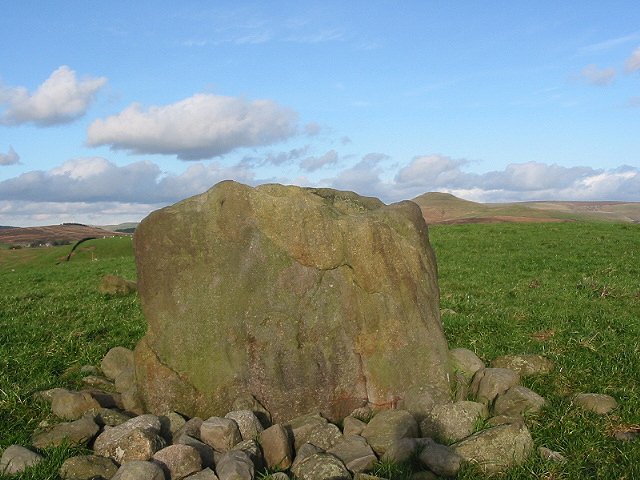
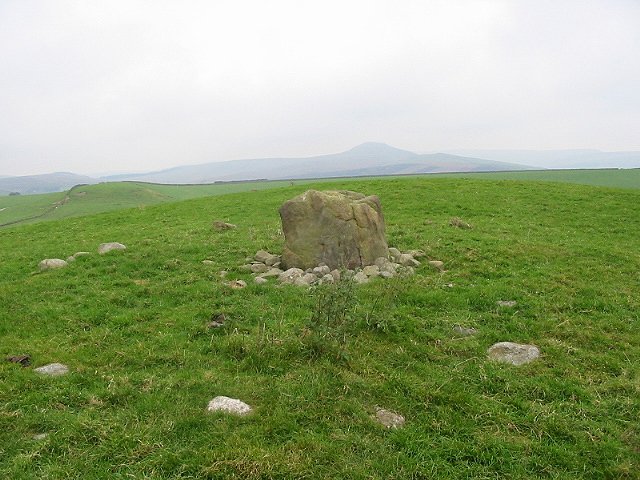
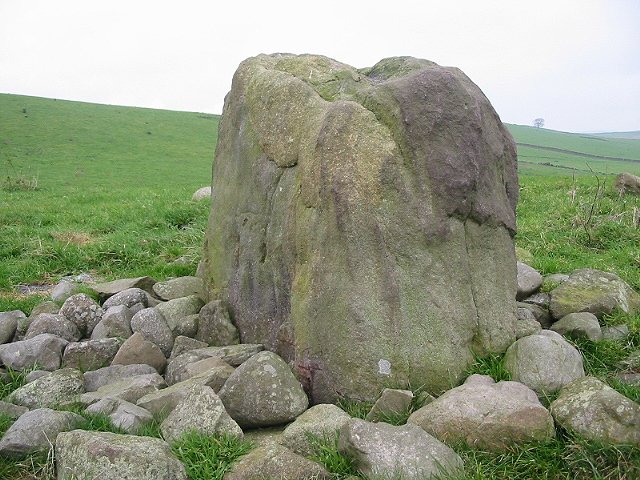
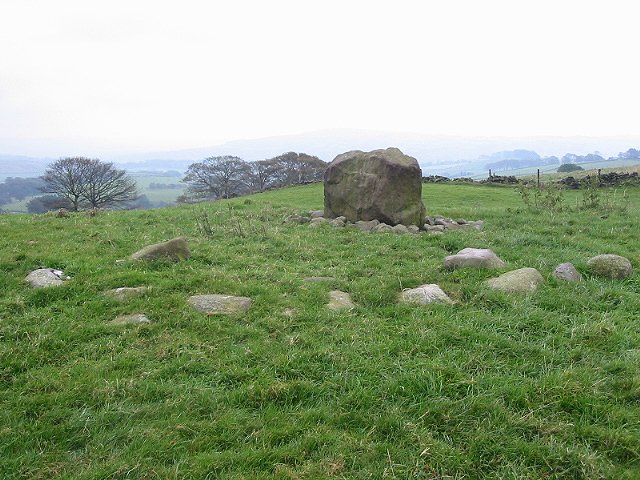
I made this far more difficult than it needed to be to find. Im based at Bosley and this is a few miles away. But I managed to take in quite a few unnecessary bumpy, windy country lanes before i found it. To be fair i had no form of OS map at all and google wasnt playing. On the A54 heading from Congleton to Buxton take the first minor road left after The Four Ways motel. This road is Barlow Hill. Just before the junction with the left hand Withershall lane there is a layby with two public footpath signs. Take the southern one. Follow the FP across two small fields. The stone will appear on the horizon to your right. I got here late afternoon and it was beautiful. The colours of the stone in the late afternoon sun were lovely. And postie was right, the way the stone reflects the silhouette of the mountain/hill beyond is worth note. |
 Posted by blossom
12th June 2021ce |

|
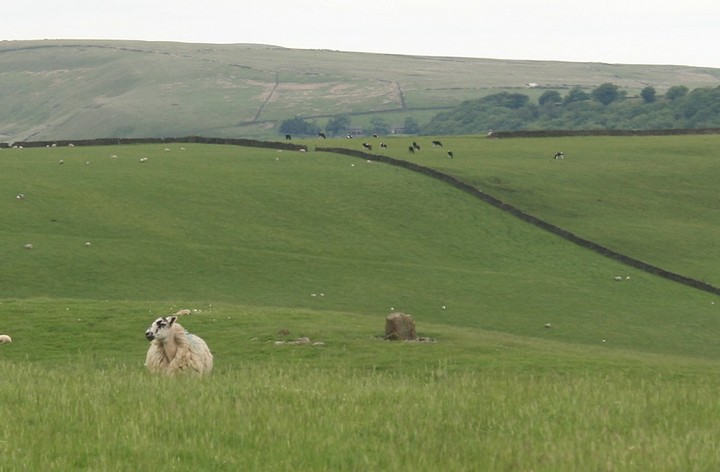
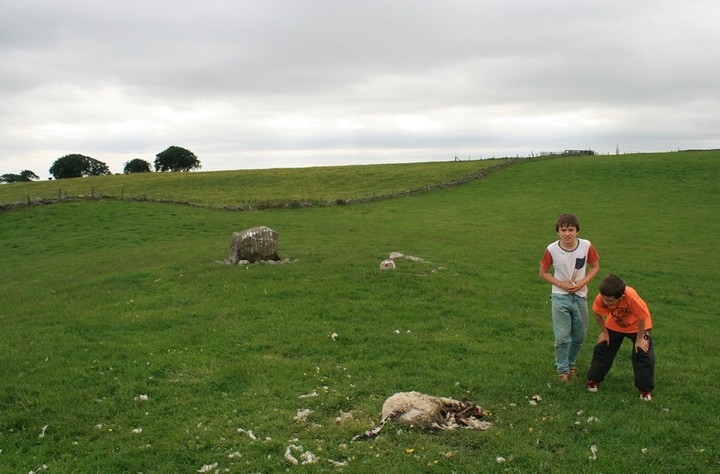
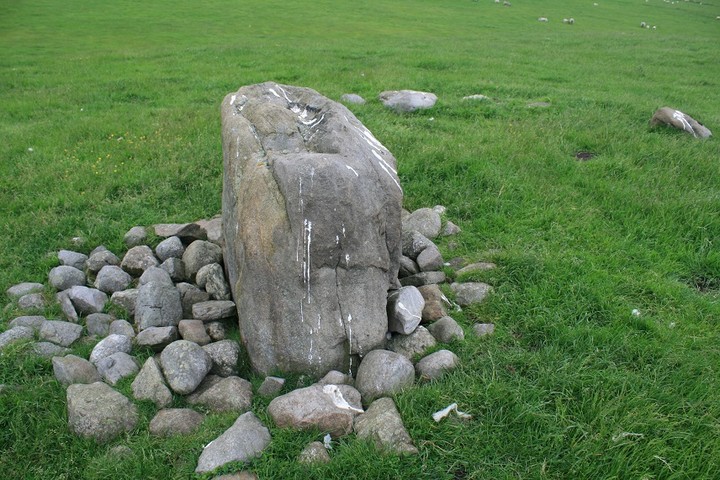
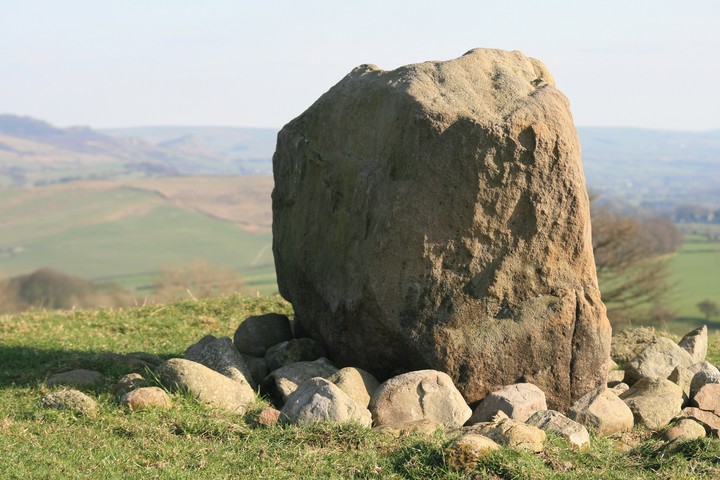
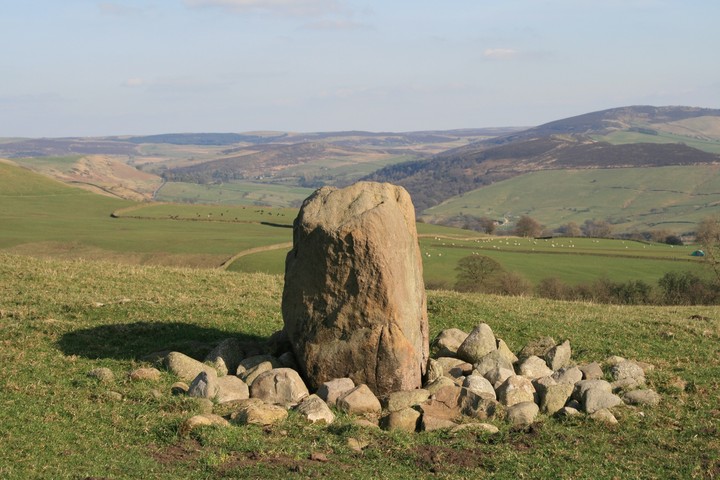
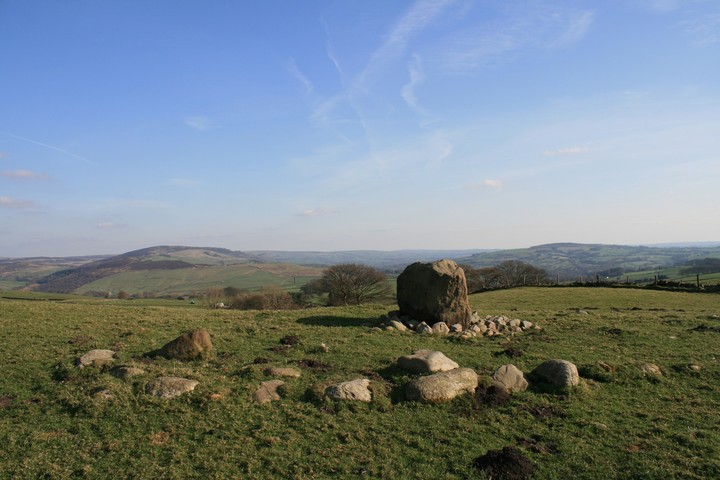
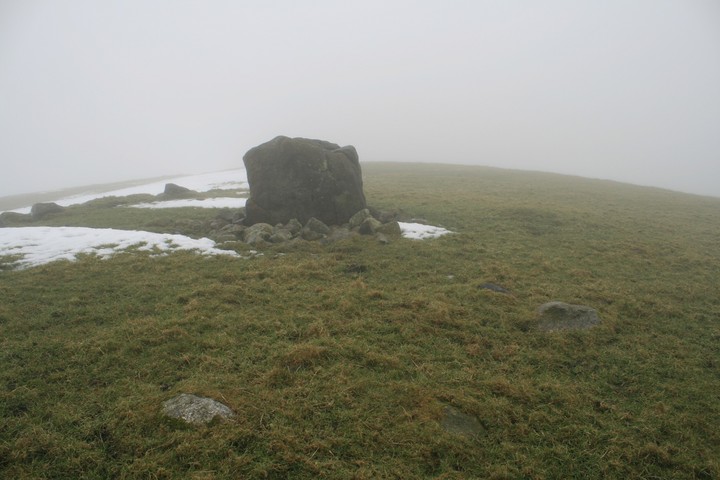
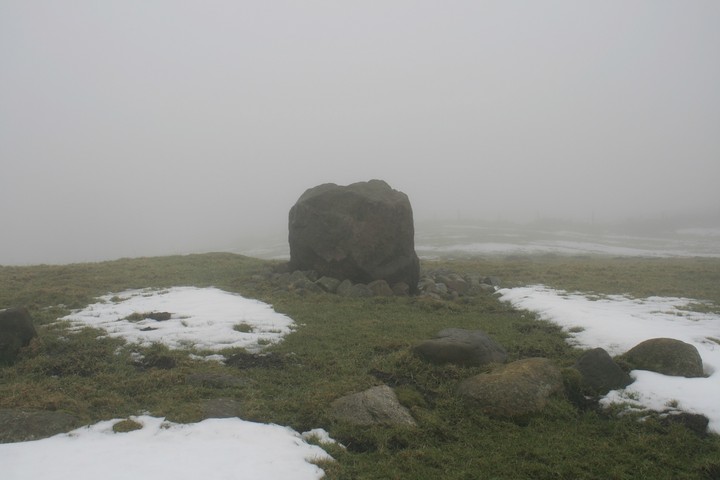
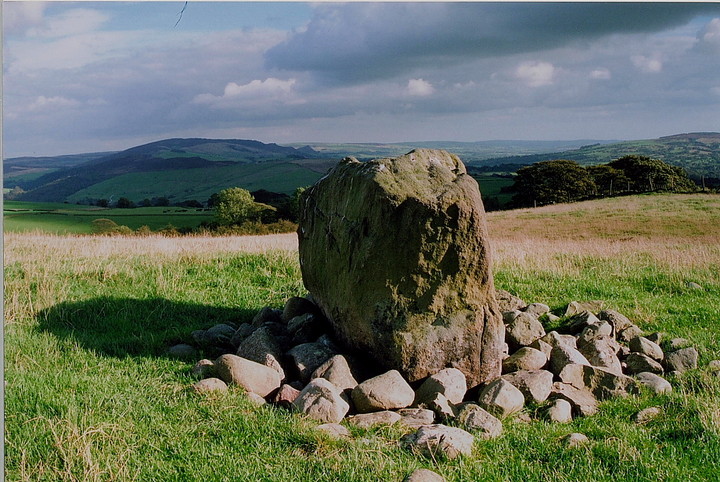
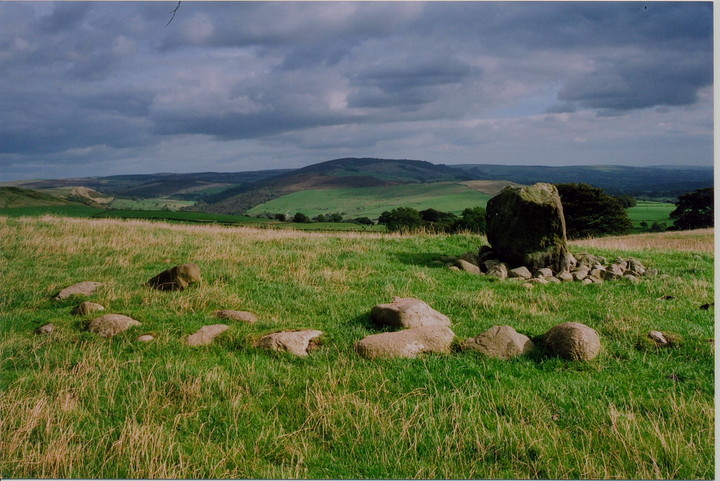
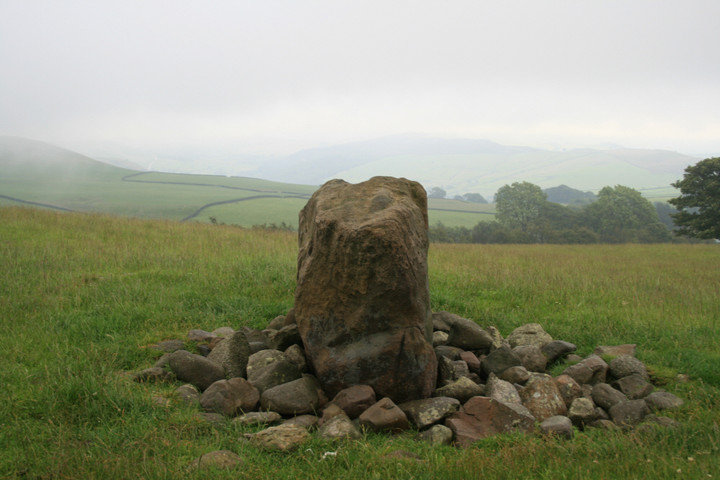
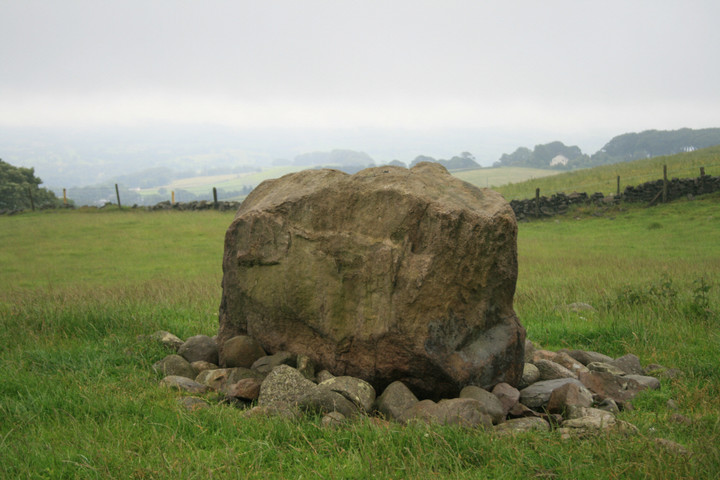
Visited 26.5.13 We parked at the entrance to the farm drive. The metal gate was closed and I assured Karen that ‘no one would be using it at this time of day’ – famous last words! Karen stayed in the car with the children whilst I hopped over the gate and along the sign posted pubic right of way. There was no one about except for me and some strange looking sheep which had square looking faces – no idea what breed they were. I walked across a field before coming off the public footpath and headed towards the high ground where the Bullstones is. Before long the large square stone block came into view. The sun was getting low in the sky and the shadows longer. The sky was deep blue with white fluffy clouds. Extensive views were had in all directions. The stone block is about 1 metre square, standing in the middle of a circle of stones about 8 metres across. This is a fine site and a great way to end the day. I then turned around at the sound of a tractor coming up the drive. I retraced my steps back onto the permissive footpath but it was obvious I had been spotted where I shouldn’t have been. As I got to the drive the tractor stopped and out jumped the farmer. After initially being subject to the usual questions ‘what are you doing here?’ etc the farmer became friendlier as he realised I wasn’t up to no good. In fact by the end of our ‘chat’ he mentioned a few other local sites I may be interested. I was interested but knew my allocated ‘old stoning’ time for today had run out. Still, it was nice of him to mention them. He asked me where I was from. When I told him I was up for the weekend from South Wales he was amazed that I had taken the trouble to visit the Bullstones. He said that he went to Builth (Wells) each year to the horticultural show – to go on the p**s!! He jumped back in his tractor and carried on up the drive onto the main road (Karen had to move) and I closed the gate behind him. ‘Got caught then?’ queried Karen. ‘Yup’ I replied Time for some food……………. |
Posted by CARL 28th May 2013ce |
|
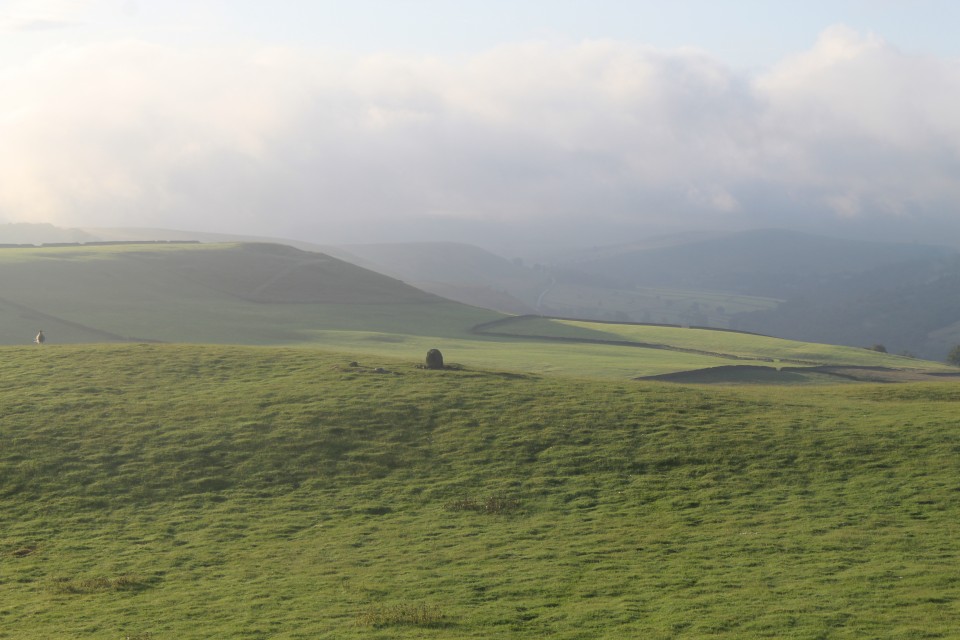
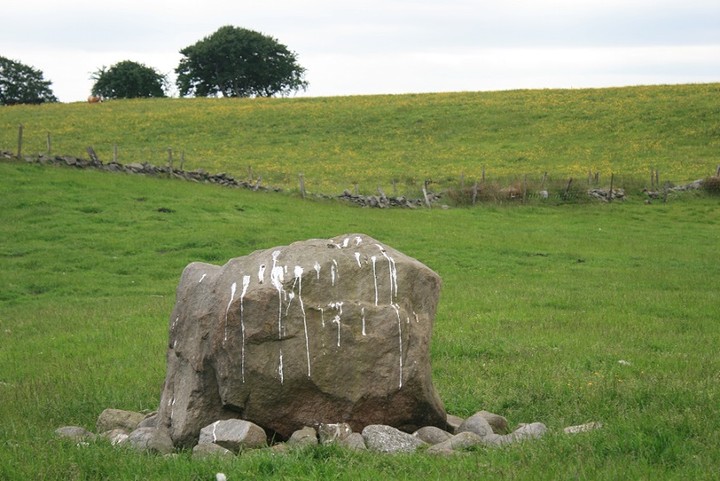
Coming from Congleton to Buxton on the A54, turn left after Cluloe cross, well worth a visit in it's own right, as it stands on a natural knoll that has often been taken as a large barrow. A small area on the right side of the lane is good for one or two cars, from the fence/gate the Bullstones can be seen. I'm walking about a hundred yards down to the stone amid the newest born lambs I've yet seen, keeping my distance the lambs and ewes don't seem to my mind my intrusion into their field. It's sooo good to finally be here in good weather, it's been fog and icey fog the last two times, so the warm sun, expansive views and glut of ancient sites seen today have satiated my need to "get out", didnt much care for the cold wind though. The profile of the central stone is almost exactly the same as that great big hill Shutlingsloe, not the highest point in Cheshire but certainly the most recognisable and with the most "I want to climb that" . Even though it is the most prominent landmark on all the horizon, we mustn't forget all the other sites seen from here, Luds church, The Bawd stone over by the Roaches and Hen cloud, The Allgreave stone and the Bosley Minn stones to name but a few. When you do come to see the Bullstones please don't think they are all that's here, if you are able and willing, climb over the fence and have a look at the possible outlier then a bit further on there is the weird Longgutter circle and the strange semi circle of stones, I once thought the Bullstones was a lonely monument far from anything else but now it's getting possitively crowded up there. This post appears as part of the weblog entry Cheshire's Western Peak Part II
|
 Posted by postman
2nd April 2012ce Edited 2nd April 2012ce |
|
Iv'e heard that permission should be attained from the land owner, but the circle (or what ever it is) is passed on the way to the farmers house which is nigh on a mile further down a bumpy lane, and when asked for premission he seemed to think it strange that someone would want to see a block of stone about this big ( he uses his hands to show how big ) It's a nice stone with good views, though it were a tad foggy when we got here the wind soon cleared it away a bit. |
Posted by postman 5th July 2007ce |
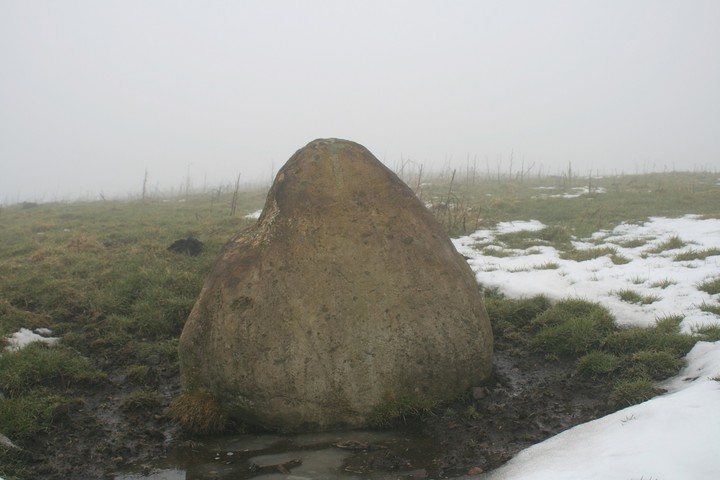
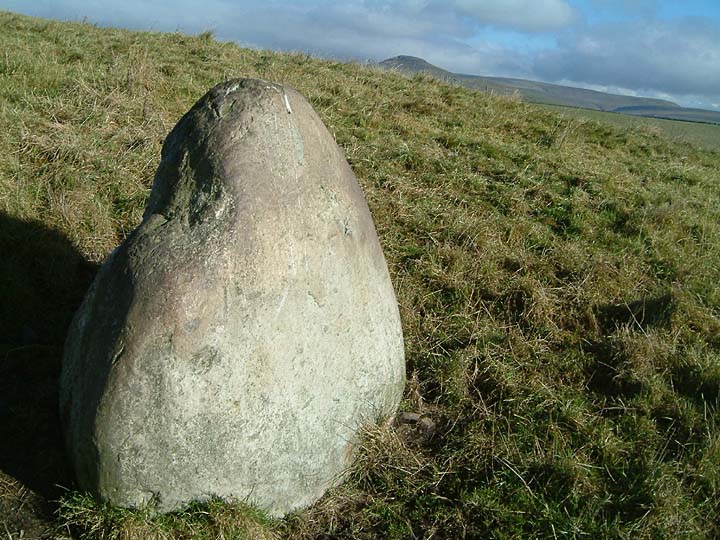
| About 100yds south of the Bullstones and over the field wall is another upright stone, I can find no details or records of the stone, it just looked a tad suspicious being so close to the Bullstones. |
 Posted by stubob
17th August 2003ce |
|
This is a corker..... Down on the SMR as a barrow.....but it does look more like a stone/kerb circle with a central stone. Easy parking at the road junction, by the public footpath that leads below the stones, at SK954679. Views to the North and East are very impressive. |
Posted by stubob 17th October 2002ce Edited 17th January 2008ce |
Miscellaneous |
Add miscellaneous |
|
No muddy digging needed - it is there. The site you talk of exists and is the subject of an article in the current (issue 90) of Northern Earth. It is called The Bullstones. |
Posted by Grendel 8th June 2002ce |

|
This is taken from 'Notes on the Antiquities of Macclesfield' by I Finney (1871). The complete text is at http://freepages.genealogy.rootsweb.com/~finney/isaac/antiquities-of-macclesfield.htm "In a field behind Clulow Cross there is to be seen a stone circle, about five yards in diameter, with a broad upright slab of gritstone placed in the centre of it. For some time past this has been an object of interest to the archæologist, and on Wednesday, Sept. 20, 1871, an excavation was made in the presence of our respected townsman, Mr. Sainter, a gentleman who takes great interest in exploring remains of this description,and who has collected a great many curiosities of antiquity, and, as he informs me, both he and his friends were highly gratified by the discovery, about three feet below the surface, of several pieces of charcoal, along with stones blackened by fire, and also a sepulchral urn, which contained the burnt bones of a young child, also a piece of curved flint that had been calcined. The urn, made of baked clay, proved to be in a crumbling condition, but several of the larger pieces were preserved, and as there was no ornamentation to be seen on the outer surfaces, the burial may be assigned to a very old date- probably prehistoric, or anterior to the period of the occupation of this country by the Romans." Then he mentions another stone: " We may here notice also a very singular stone by the roadside in this neighbourhood, which is called by archæologists " a Maen hir" - merestone, or longstone, which is also of ancient British origin, and tradition has it that this stone was made use of at the time of the plague in 1666 as a barrier or boundary stone to the country people bringing provisions to Macclesfield, where it seems all exchanges were to be made upon this stone by persons appointed to receive and pay the same - hence, since that time, it has been called " The Plague Stone." |
 Posted by Rhiannon
23rd May 2002ce Edited 8th June 2009ce |
Links |
Add a link |
Northern EarthVictoria and Paul Morgan's research into the stones. |
Posted by Rhiannon 19th May 2004ce |
 Top of page