|
 Log in |
Register Log in |
Register
|

|
|

KirkheadsRound Barrow(s) (Destroyed)
|


 Show map (inline Google Map)
|
|
|
News |
 Add news Add news |
|
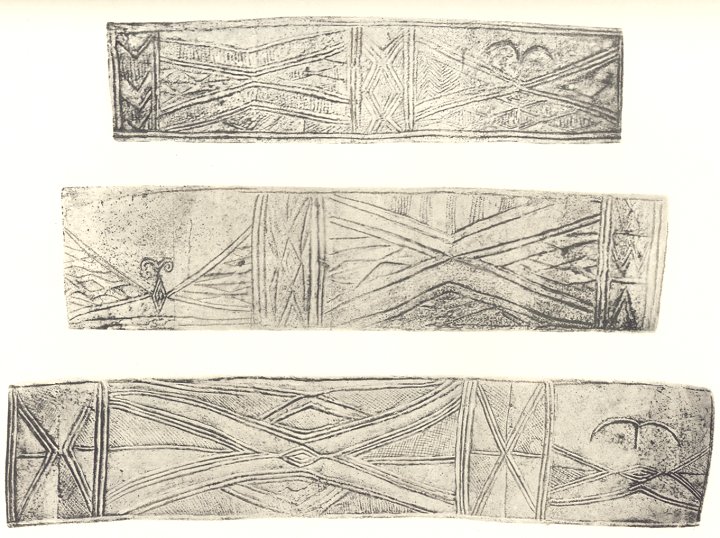
Ancient Carved 'Drums' Give Exact Stonehenge Measurements, Say Archaeologists A set of highly decorated chalk cylinders, carved in Britain more than 4,000 years ago and known as the Folkton drums, could be ancient replicas of measuring devices used for laying out prehistoric monuments like Stonehenge, archaeologists say... https://www.livescience.com/64603-ancient-carved-drums-measure-stonehenge.html |
 Posted by moss
4th February 2019ce |
Images (click to view fullsize) |
Add an image |
Photographs: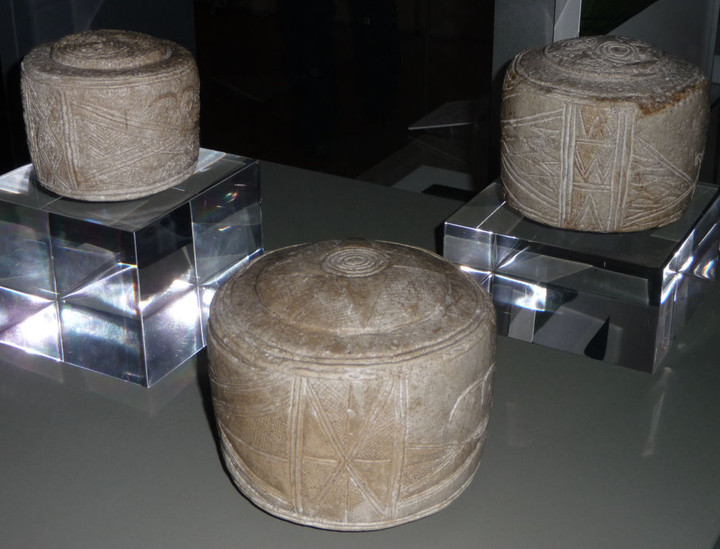
 Maps / Plans / Diagrams: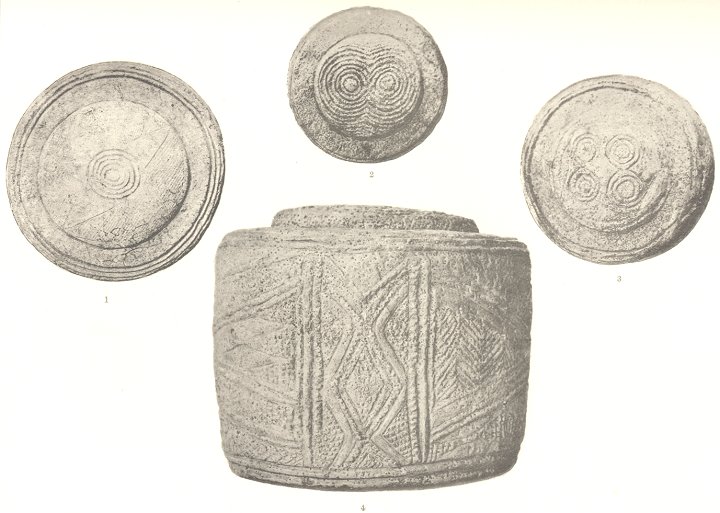
|
Fieldnotes |
Add fieldnotes |
|
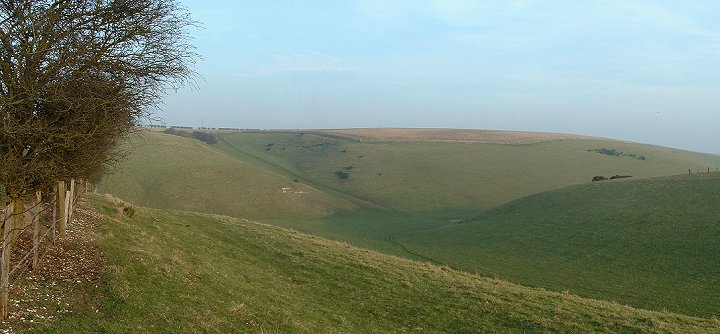
After a quick clamber up and then down we decided upon one last port of call. A trip down the Wolds way to see the Kirkheads and the site of the Folkton Drum Barrow, which according to the TMA, could be aligned with Beacon Hill over eight miles away. There is nothing to see, we followed the Way and were rewarded by some really quite beautiful scenery but the fields were far too full of crops and ploughed out to see anything at all. We headed to the Camp and then back again, I suffered sunburn and my companions hayfever didn't get better. The walk was wonderful though and the area and shape of the hills and valley floor reminded me very much of the Uffington White Horse and the Manger below This post appears as part of the weblog entry Exploring the Gypsey Race! A tour around a forgotten landscape
|
 Posted by notjamesbond
10th June 2004ce |

|
Julian is right when he says there is nothing left to be seen of the Folkton barrow – it was only just over 2 feet tall when Canon Greenwell excavated it in the 1880’s. He is also right when he says the site is worth a visit though, not just because of the chalk drums but for the position of the barrow. As you follow the public right of way from the roadside eastwards, the landscape opens out in front of you as a huge natural crossroads between the hills. The barrow would have overlooked what could have been an important junction of 2 trading routes and it left me speculating on the possibility that there could have been some kind of stone marker at the bottom of the valley, although there is no record of one ever standing here. A word of warning – a sign on a gate warns of a bull in the field – luckily he wasn’t there on the day I visited. |
 Posted by Chris Collyer
26th February 2003ce |
Miscellaneous |
Add miscellaneous |
|
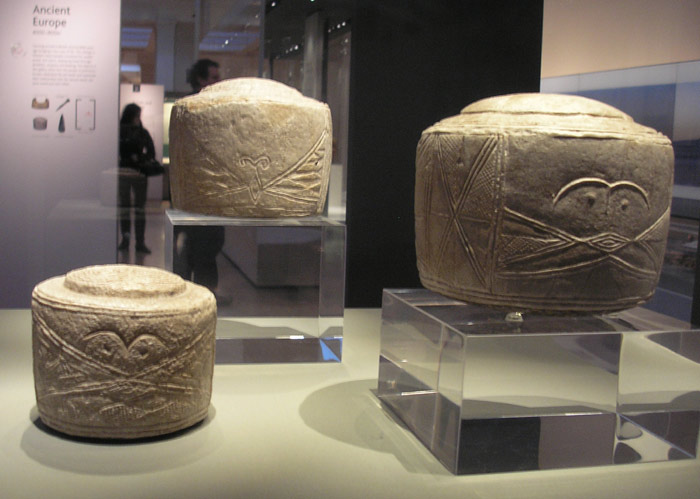
Details of barrow on Pastscape A round barrow excavated in 1889 by Greenwell and again in 1969 by Brewster, the latter due to extensive damage being caused by ploughing. Beneath the mound, Greenwell located two concentric ditch circuits, though Brewster was only able to locate the outermost of the two. Greenwell found several crouched inhumations. At the centre was a disturbed flint cairn containing the bones of an adult male and an adult female, one of them with a Beaker. The barrow is best known for one of the secondary burials. A grave containing a child inhumation was accompanied by three chalk "drums", each decorated with a variety of incised designs. The inhumation would appear to be secondary to, and at best contemporary with, the central Beaker-associated interments, although the decorative motifs incised onto the drums has much in common with those found on later Neolithic Grooved Ware pottery. A considerable quantity of material, mainly pottery and flint, was recovered from the mound. These finds include Peterborough Ware and Bronze Age sherds, plus scrapers and cores. Brewster was able to locate most of the features excavated by Greenwell with the exception of the inner ditch. He also found some additional burials, one of them accompanied by 2 Beakers and 50 jet beads. He also excavated a pit beneath the mound containing two sherds of Early Neolithic bowl pottery. |
 Posted by Chance
9th May 2016ce |

| There are also replicas of the drums in the Hull and East Riding Museum in Hull city centre. |
Posted by Chris Collyer 21st August 2003ce Edited 21st August 2003ce |
|
In TMA there is a photo of the three chalk drums recovered from the barrow but no indication of scale. Buried with the body of a child their heights are only 11.8cm, 10.5cm, 8.6cm and their diameters are 14.6cm, 12.7cm, 10.2cm respectively. Although the tops of the drums appear to form lids, they are in fact solid and not hollow. The apparent markings of eyes, eyebrows and noses have lead some to think that they may be idol figures of some kind, others believe they could be copies of incense cups. Info – Canon Greenwell’s excavation report 1890 Dyer – Discovering Prehistoric England Note, Dyers map reference is wrong. It should be TA not SE. |
Posted by Chris Collyer 26th February 2003ce |
Links |
Add a link |
AntiquityArticle which describes analysis of the drums - they are made of chalk and were therefore probably made locally in Folkton Wold. (Previously they were thought to be Magnesian Limestone, which would have come from further afield.) |
 Posted by Rhiannon
23rd March 2004ce |

British Museum - HighlightsThe drums are on display in the British Museum - run up the stairs in the entrance hall and there you are. |
Posted by Rhiannon 6th June 2003ce Edited 6th July 2009ce |
 Top of page