02/06/2018 - Managed to get proper lost looking for this one. At least now I could go on Mastermind with the 'Backstreets of Largs' as my specialist subject!
Turned out it is dead easy once you look at the map properly and follow a few signs. Head through Douglas Park to the back and arrows point you to the right and the cairn - simple!
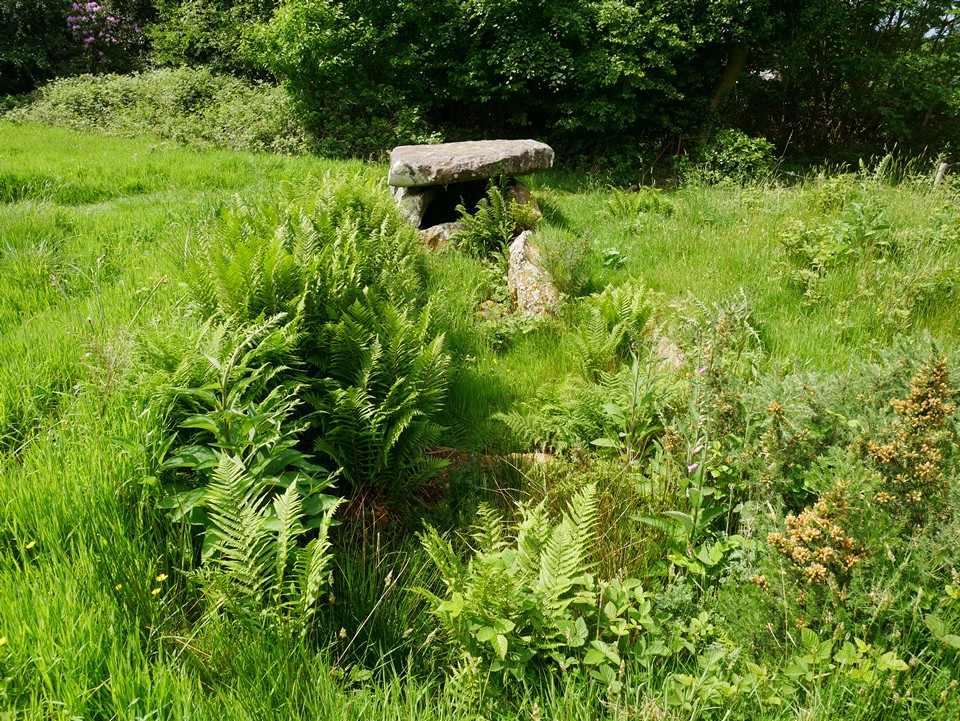
Don't let the town location put you off going to see this one. It's nicely tucked away in a slightly overgrown area of trees and tall grass. Very, very green and sunny today. The heat was something else as well.
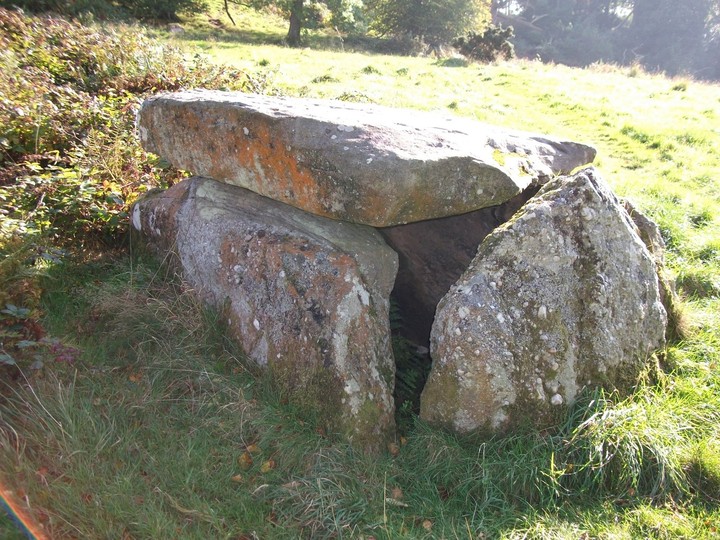
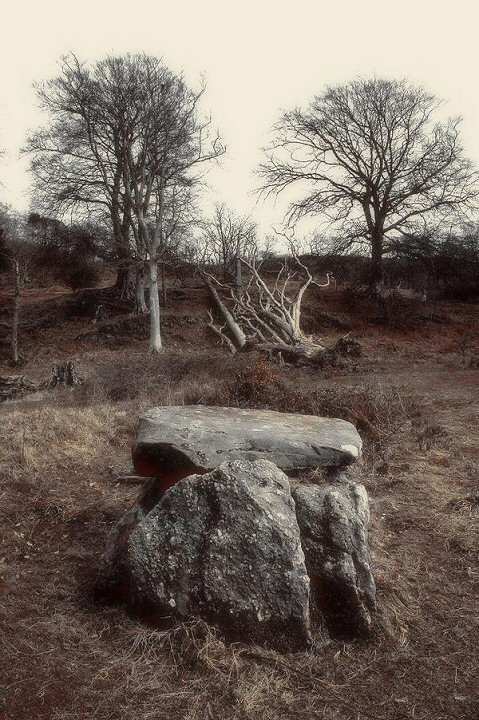
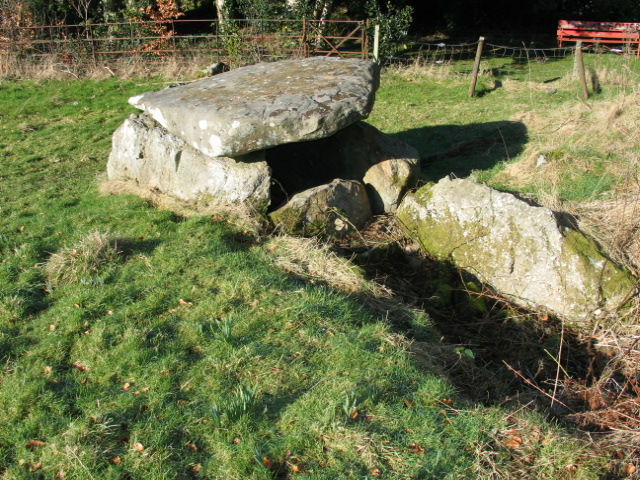
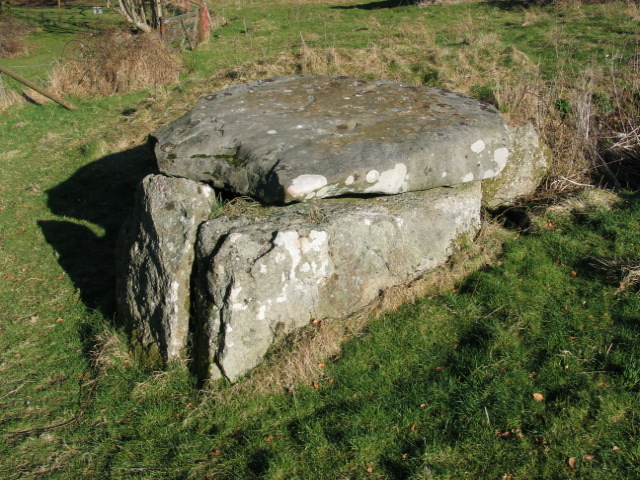
The cairn is great. I liked this one. Bigger than I thought it would be.
There is an uphill path behind it to a viewpoint and hillfort which is well worth doing if you have the time.
The only identifiable Clyde chambered tomb in Ayrshire.
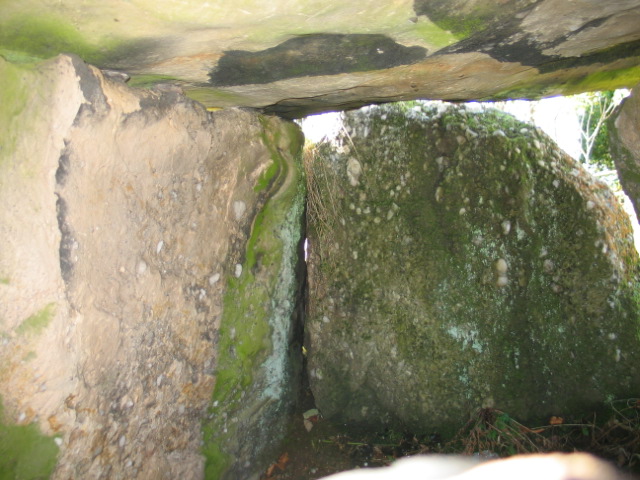
One chamber with one capstone and divided into three compartments remains. The cairn was removed in 1772 when "five stone coffins" were found. There may therefore have been another two-compartment chamber.
It can be seen at the back of Douglas Park at the S end of Largs. Off-street parking is available.
HAILY.-- This place is supposed to have had its name from Helle, a pit or burial place; as here a vast tumulus had been erected over the bodies of the slain, as thought, at the Battle of Largs. It was only discovered, however, about 40 years ago, by Mr. Wilson, when searching for stones to enclose his lands. It was till then known by the name of Margaret's-Law, and was supposed to be natural. It had long been overgrown with rank herbage and brushwood. In the centre of it were found five stone-coffins, or square apartments formed with flat stones set on edge; two of them containing five sculls each, with other human bones, and several earthen urns. The earth and small stones at the bottom were calcined. It is supposed that the sculls and other bones within these coffins were those of the chiefs; whilst the bodies of the common warriors had been thrown promiscuously over them, and then stones, in vast quantity, heaped over all. These amounted to upwards of 5,000 cart loads -- whilst the quantity of bones, which on exposure, soon crumbled into dust, was immense.
A Topographical description of Ayrshire, more particularly of Cunninghame, by George Robertson (1820).
.. the Scots at Largs, in 1263, might have combated the Norwegians under the protection of Saint Margaret, and hence, possibly, the origin of the name Margarets-Law, given to the large cairn near Haily House,—given evidently in comparatively modern times, and that by a local population, under a mistaken belief, which yet continues, that the Norwegian dead (those who fell through the agency of St. Margaret) were interred within it.
In Notes and Queries, July 5th 1873. It all sounds a bit confused, especially when you see that there are a number of Margarets around in history c. the battle at Largs, on both sides.
 Log in |
Register
Log in |
Register


 0 discussions


 Show map (inline Google Map)
 Add an image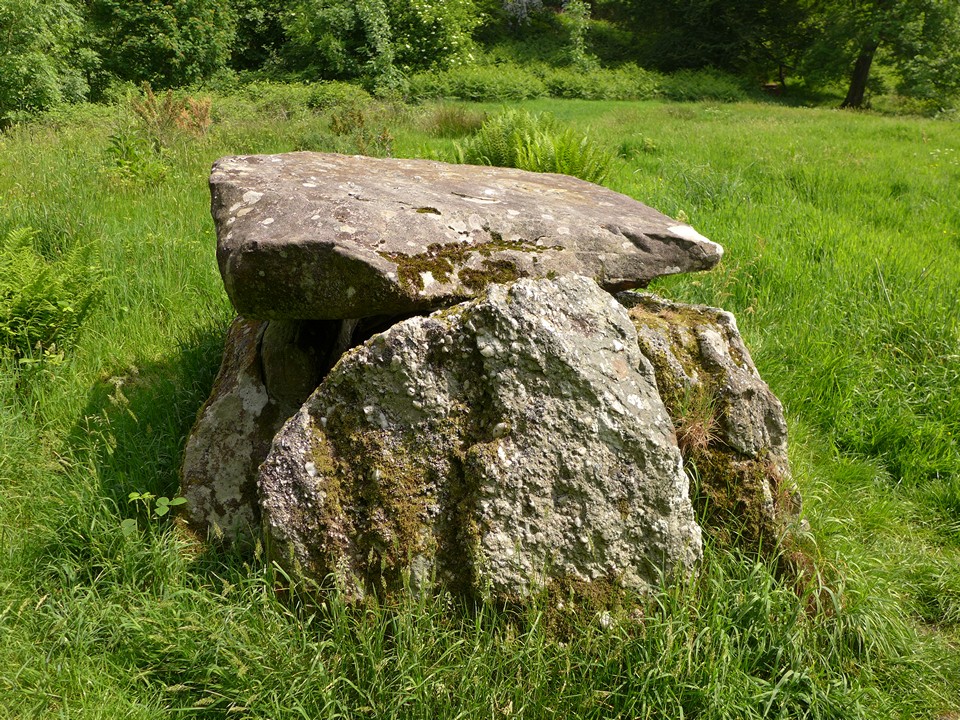

 Posted by thelonious
 Posted by greywether
 Posted by Rhiannon
 Posted by rockartuk
 Top of page