Showing 1-50 of 70 posts. Most recent first | Next 50 
Archaeologists unearth prehistoric ritual area around Bryn Celli Ddu
"Previously unknown Anglesey landscape possibly includes cairn cemetery in what experts described as ‘really exciting stuff’
Archaeologists have uncovered a prehistoric ritual landscape that possibly includes a cairn cemetery around a 5,000-year-old burial mound aligned with the summer solstice sun on Anglesey.
Though far less famous than Stonehenge, the spectacle of sunlight shining down a long narrow passage to light up the inner chamber of Bryn Celli Ddu on the longest day of the year is unforgettable. Excavation now suggests the site had significance for prehistoric people that lasted for millennia after the earth mound was raised over a stone passage grave."
More here...
https://www.theguardian.com/science/2017/jun/21/archeologists-unearth-prehistoric-ritual-area-bryn-celli-ddu-anglesey
|
‘Ancient’ standing stones are linked to 1314 battle
From The Herald Scotland
"A PAIR of “ancient” standing stones situated near a police headquarters were actually erected to mark the first major victory of the Battle of Bannockburn, new evidence suggests.
Radiocarbon dating has revealed the two stones near the entrance to Police Scotland Central Division’s Randolphfield HQ, in Stirling, were erected around the time of the battle in 1314.
It is now thought they mark the spot where Sir Thomas Randolph – Earl of Moray and a commander in Robert the Bruce’s army – routed around 300 English cavalry on the first day of the battle.
It was previously believed that the stones were positioned more than 3,000 years ago in alignment with an ancient burial ground nearby, and possibly used as landmarks in the battle."
More here...
http://www.heraldscotland.com/news/14994252.___Ancient____standing_stones_are_linked_to_1314_battle/?ref=twtrec
|
Amateur archaeologist finds ‘phenomenal’ trove of rock engravings
From The Guardian...
"An amateur archaeologist has tracked down hundreds of prehistoric rock engravings in Scotland in what has been described as a “phenomenal” contribution to the understanding of Britain’s earliest artworks.
Walking in all weathers once or twice a week, George Currie, 66, a musician by trade, has located more than 670 Neolithic and Bronze Age carvings over the past 15 years. He told the Observer: “It was ridiculous … I got tired of recording the stuff. I’ve never come across quite so much.”
There are many more to be found, he believes. Describing the thrill of uncovering ancient artworks that no one has seen for thousands of years, he said: “It’s quite a privilege.”
Currie’s discoveries will be included in the biggest research project into British prehistoric rock art, a five-year, £1m study starting next year. The project will be hosted by Historic Environment Scotland (HES) under the leadership of Dr Tertia Barnett, an honorary fellow of the University of Edinburgh. Rock art is “relatively undervalued and little known”, she said. “This project is very exciting.”
More here...
https://www.theguardian.com/science/2016/sep/17/rock-art-amateur-archaeologist-scotland?CMP=share_btn_fb
|
Bronze Age burial site uncovered in Lancashire field
From the BBC...
"A Bronze Age burial site uncovered after two metal detector enthusiasts found artefacts is set to be excavated.
Matthew Hepworth and David Kierzek discovered a chisel and a dagger in a Lancashire field, 20 years after one of them first explored the site.
This led to the uncovering of an ancient barrow at the site, which lay untouched for thousands of years.
The men will take part in a dig in July, which is being financed with a £49,500 Heritage Lottery Fund grant."
More here...
http://www.bbc.co.uk/news/uk-england-lancashire-35800891
And for an opportunity to join in the dig, the Crowdfunding group page is here...
http://digventures.com/projects/barrowed-time-2016/
|
Stonehenge dig finds 6,000-year-old encampment
"Archaeologists working on a site near Stonehenge say they have found an untouched 6,000-year-old encampment which "could rewrite British history".
David Jacques, from the University of Buckingham, made the discovery at Blick Mead in October, and said the carbon dating results had just been confirmed.
But he also raised concerns about possible damage to the site over plans to build a road tunnel past Stonehenge.
The Department of Transport said it would "consult before any building".
The Blick Mead site is about 1.5 miles (2.4km) from Stonehenge and archaeologists said "scientifically tested charcoal" dug up from the site had "revealed that it dated from around 4000 BC". "
More on the BBC website here...
http://www.bbc.co.uk/news/uk-england-wiltshire-30540914
|
3,500-year-old basket excavated at North Uist beach
From the BBC...
"An artefact thought to be 3,500 years old that was uncovered by the tide on a Western Isles beach has been excavated before being washed away.
The prehistoric basket was discovered in an area of shoreline where the sea has been eroding the land at Baleshare in North Uist.
Archaeologists have managed to remove the object with help from the local community.
It will be examined by AOC Archaeology Group.
The basket appears to contain animal bones covered in a layer of quartz pebbles."
More here...
http://www.bbc.co.uk/news/uk-scotland-highlands-islands-30055116
|
Stonehenge 'complete circle' evidence found
From BBC News...
"Evidence that the outer stone circle at Stonehenge was once complete has been found, because a hosepipe used to water the site was not long enough.
Parch marks in the grass, in an area that had not been watered, have revealed places where two "missing" huge sarsen stones may once have stood.
The marks were spotted by an English Heritage steward who alerted archaeologists to their existence.
Previous scientific techniques such as geophysics failed to find any evidence."
More here...
http://www.bbc.co.uk/news/uk-england-wiltshire-28967538
|

Stonehenge bluestones had acoustic properties, study shows
"The giant bluestones of Stonehenge may have been chosen because of their acoustic properties, claim researchers.
A study shows rocks in the Preseli Hills, the Pembrokeshire source of part of the monument, have a sonic property.
Researcher Paul Devereux said: "It hasn't been considered until now that sound might have been a factor." "
More here...
http://www.bbc.co.uk/news/uk-england-wiltshire-26417976
|
Burrough Hill dig reveals 'sizeable' hoard of Iron Age metal
"A hoard of Iron Age metal found at a Leicestershire site could go on permanent display, archaeologists say.
The dig at Burrough Hill, near Melton Mowbray, has uncovered one of the biggest collections of Iron Age metalwork found in the East Midlands.
The finds include spears, knives, iron brooches, reaping hooks and the decorative bronze trim from a shield.
Burrough Hill is the site of an Iron Age fort but no major excavation had taken place there since the 1970s."
More on the BBC here...
http://www.bbc.co.uk/news/uk-england-leicestershire-22163174
|
Kingsmead Quarry dig unearths Neolithic settlement - BBC
"Four Neolithic houses found in a Berkshire quarry are thought to make up one of the oldest permanent settlements ever found in England.
Archaeologists unearthed the 5,700-year-old foundations at Kingsmead Quarry, near Windsor."
More here...
http://www.bbc.co.uk/news/uk-england-berkshire-21719830
|

|
   
|
Visited 16 August 2012ce while cycle-touring in the Outer Hebrides.
Just to pick up on greywether's comment about signposting, there is now a proper brown "tourist" sign on the B888 road in Dalabrog / Daliburgh to direct interested parties to the roundhouses, though as seems to be the norm on the islands this gives no indication of distance! After following a minor road / track almost to the modern-day burial ground of Cladh Hallan, a further footpath-style sign points the way to the roundhouses which lie a few minutes walk along a sandy track.
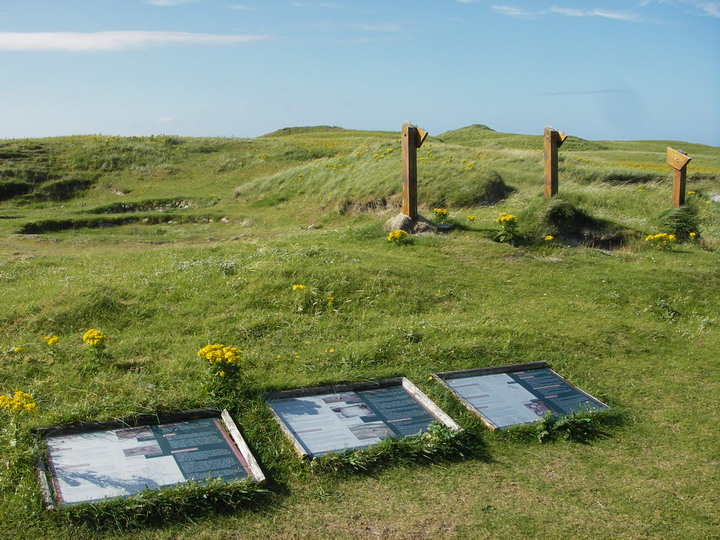
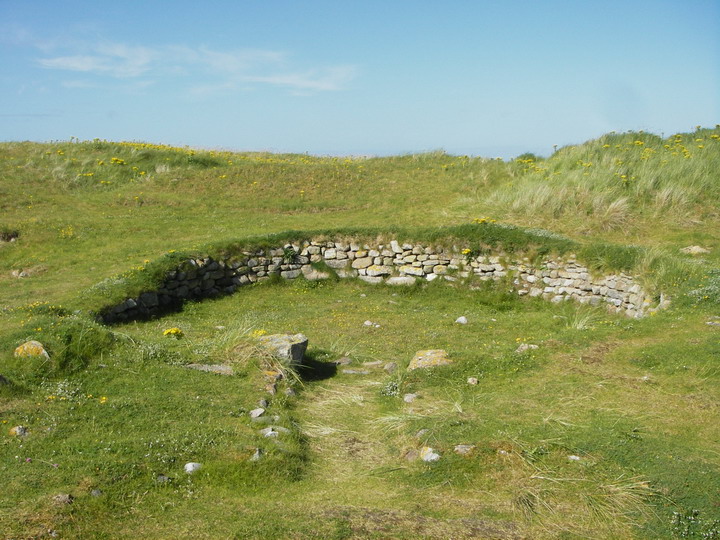
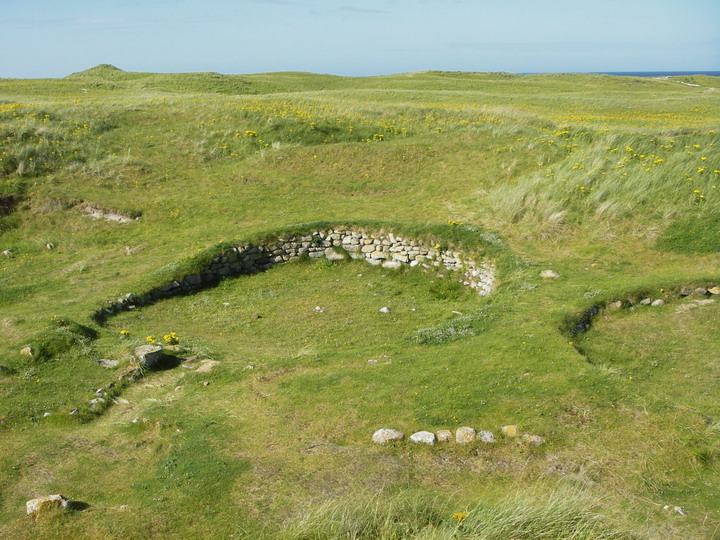
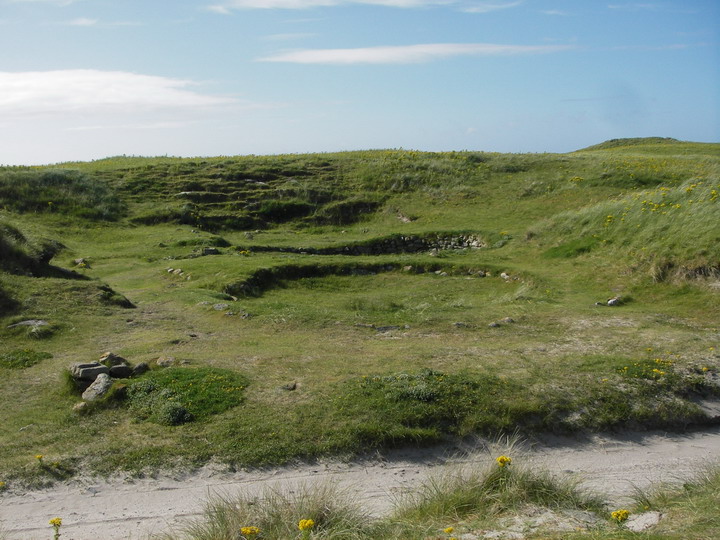
As for the roundhouses themselves, the southernmost has almost completely disappeared back into the dunes, but the central and northern houses are still visible as is the "smokery" just to the NE of the latter. Three interpretation boards have at some stage been set up on the rise overlooking the site from the N, but these have become detached from their supports (presumably blown off by the wind!) and now lie rather sadly, albeit neatly, on the ground.
|
Neolithic acoustics of Stonehenge revealed by academics
Following on from ryaner's post...
"A team of academics have revealed the "sonic experience" that early visitors to Stonehenge would have heard.
Scholars from the Universities of Salford, Huddersfield and Bristol used an American replica of the monument to investigate its audio history.
Salford's Dr Bruno Fazenda said they had found the site reacted to sound "in a way that would have been noticeable to the Neolithic man".
He said the research would allow a "more holistic" view of its past."
More here...
http://www.bbc.co.uk/news/uk-england-17754949
|
Flag Fen archaeology idea brings in public to dig deep
"Renowned Bronze Age archaeological site Flag Fen in Cambridgeshire will host a first-of-its-kind dig that makes the public integral to the project.
The idea combines both "crowdfunding" and "crowdsourcing"; for contributions starting at £125, donors can get their hands very dirty and dig for a day.
The venture's website will also stream live video from the dig as well as host lectures and interviews with experts."
More here...
http://www.bbc.co.uk/news/science-environment-17211285
|
Neolithic finds 'best yet' at Borras Quarry, Wrexham
Fragments of Neolithic pottery and an ancient arrowhead represent the best finds yet from a dig at a quarry near Wrexham, say archaeologists.
Clwyd-Powys Archaeological Trust (CPAT) has been excavating at Tarmac's Borras Quarry site since 2008.
More here...
http://www.bbc.co.uk/news/uk-wales-north-east-wales-14930058
|
       
|
Prehistoric finds on remote St Kilda's Boreray isle
The remains of a permanent settlement which could date back to the Iron Age has been uncovered on a remote Scottish island, according to archaeologists.
It was previously thought Boreray in the St Kilda archipelago was only visited by islanders to hunt seabirds and gather wool from sheep.
Archaeologists have now recorded an extensive agricultural field system and terraces for cultivating crops.
They have also found an intact stone building buried under soil and turf.
More here...
http://www.bbc.co.uk/news/uk-scotland-highlands-islands-13753643
|
Archaeolink Prehistory Park could be saved
Following on from drewbhoy's post...
An Aberdeenshire tourist attraction facing closure after councillors decided to end a six-figure annual subsidy could yet be saved.
The trust that runs the Archaeolink Prehistory Park in Oyne said it was "fairly positive" about its future.
http://www.bbc.co.uk/news/uk-scotland-north-east-orkney-shetland-12932458
|
 
|
   
|
Attempted to visit 25/02/2011ce.
In his book Prehistoric Rock Art in Cumbria, Stan Beckensall describes the site as "a very interesting one, seldom visited as far as I know, although it lies just off a public right of way."
Unfortunately, it would appear that the site will probably remain seldom visited, as access to the adjacent field (from which a gate led to the site) is blocked by a (brand-new?) barbed-wire fence and padlocked field-gate. As there was no stock in either field, I might have been tempted to continue had the field-gate not been padlocked, but as it was I took the hint and just went for a walk instead.
The site can be viewed from another adjacent field to the north (technically off the right of way), but unfortunately it was too misty for decent photography.
|
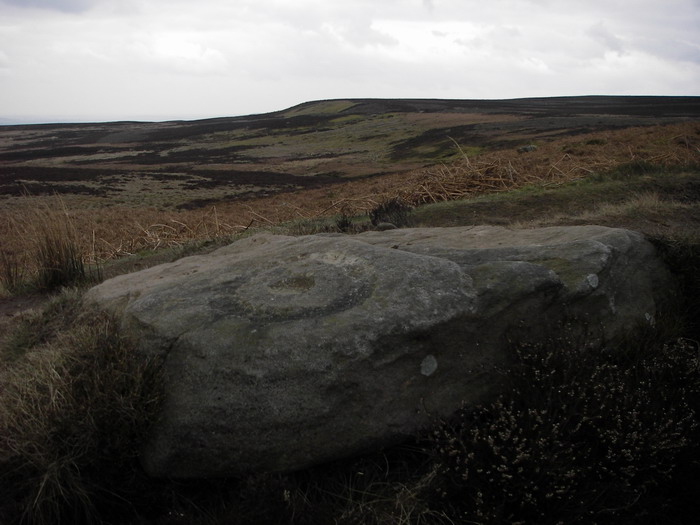
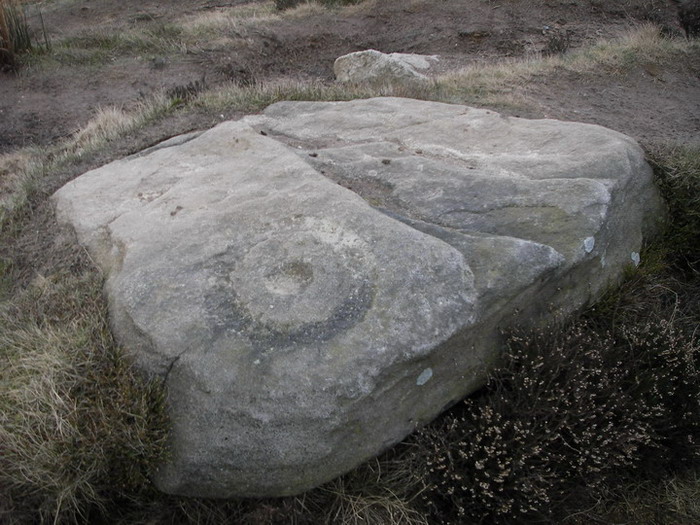
CSI Comes to Rombalds Moor
Investigators made their first expedition onto a wild and windy Rombalds Moor in a project to capture the images from hundreds of ancient carved stones.
The 30-plus CSI – or Carved Stone Investigation – volunteers began their first practical day of training on Saturday for a survey aiming to record prehistoric rock carvings for posterity.
Volunteers will spend the next three years investigating more than 300 carved stones scattered across Rombalds Moor.
As well as detailed written records of the ancient carvings, the teams of five will use photogrammetry techniques to create 3D computerised images of each stone.
The aim is to record the carvings before the destructive power of wind, rain, and growing vegetation erases them permanently.
The intensive survey is taking place with the help of cash from Pennine Prospects' £1.9million Heritage Lottery Fund grant.
Community Archaeologist Gavin Edwards, said: "The survey on Rombalds Moor will be the most comprehensive undertaken in over two decades, and with the help of the volunteers, we will have gathered very valuable information.
"Prehistoric carvings are a unique and valuable part of our heritage, providing a direct link with the people who lived here over 5,000 years ago.
" It is important to try and capture a detailed record of the carved stones and their surrounding landscape both for current studies and to guide conservation management, so we can protect them for future generations. Existing records indicate that over 300 carved panels lie on the moors between the rivers Wharfe and Aire."
Overseeing the volunteers are Tertia Barnett, who has worked on a range of international archaeological projects, rock art expert Kate Sharpe, and rock art researcher Richard Stroud.
Ilkley Gazette 11/02/11
http://www.gazetteandobserver.co.uk/news/news_local/8845120.Volunteers_gearing_up_for_carved_stone_survey/
Telegraph & Argus 11/02/11
http://www.thetelegraphandargus.co.uk/archive/2011/02/11/Ilkley+%26+Wharfedale+News+%28ilkwharfe_news%29/8845120.Volunteers_gearing_up_for_carved_stone_survey/
|
Showing 1-50 of 70 posts. Most recent first | Next 50
Nowt much to tell. Live in Lancashire, would like to live on the Isle of Lewis, enjoy hill-walking, playing on bicycles, attempting to play bass guitar, and spending time at ancient sites (preferably remote ones that have to be walked or mountain-biked to).
|
|
 Log in |
Register
Log in |
Register







 Top of page